
What perennial staple crops should you grow beyond fruit?
Chestnuts and hazels get the attention, but a useful perennial food garden also needs roots and leaves you can harvest sooner. Here is how I would plant chestnut, hazel, groundnut, skirret and perennial brassicas in a Central Texas garden this fall, including the honest drawbacks of each.
September 29, 2026
By Diego Navarro
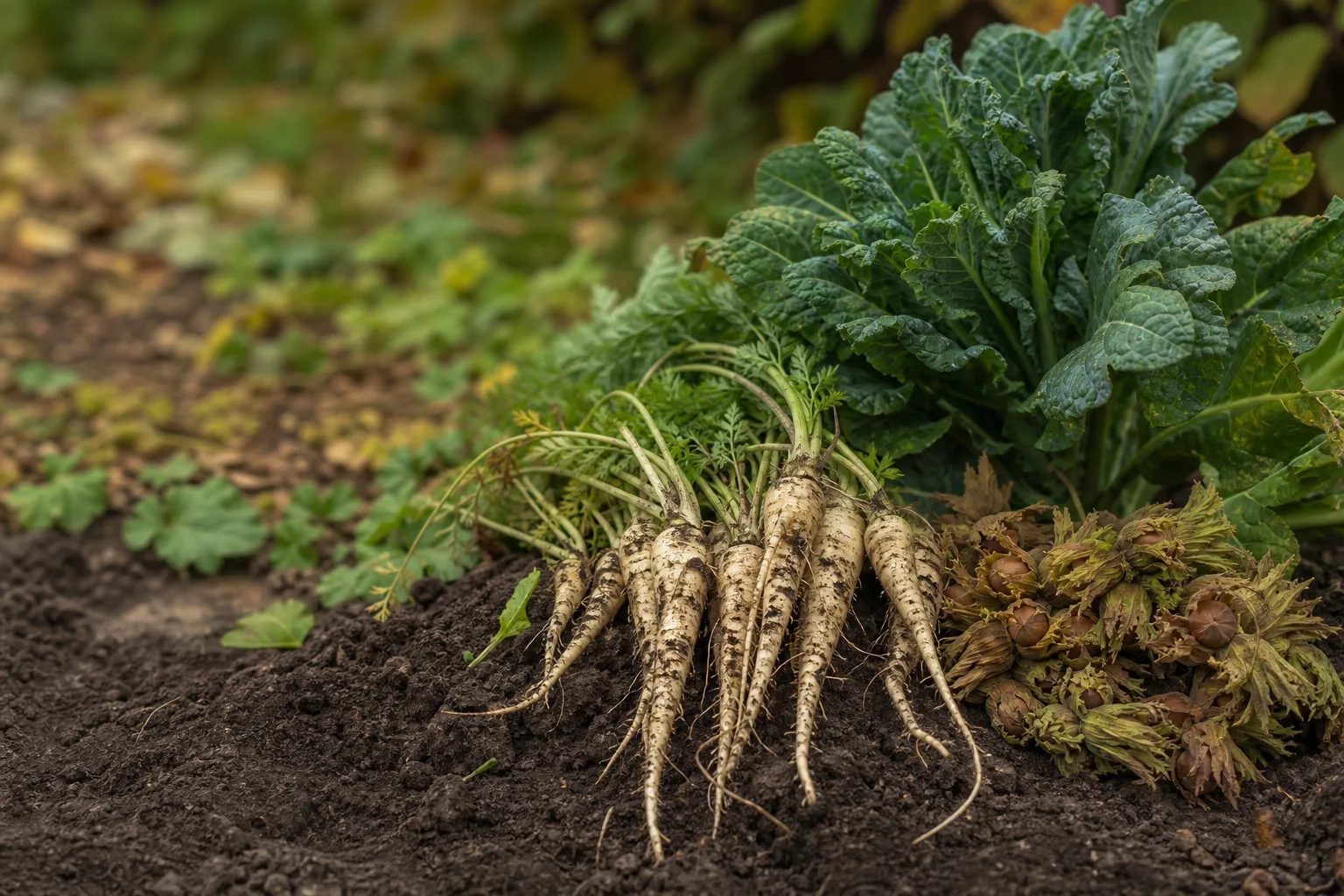
Which perennial staple crops are worth planting beyond fruit?
The best perennial staple garden uses chestnut, hazel, groundnut, skirret and perennial brassicas together, because each fills a different time slot: trees provide future nuts, roots provide stored food, and brassicas provide leaves sooner. I would plant the roots and greens this fall, then give the nut trees their own properly prepared space. That is the useful combination.
Chestnut is the long bet, with the honest drawback that you may wait several years before a meaningful harvest and need room for a mature tree. Hazel bears sooner and fits smaller yards, but squirrels usually understand the business before you do.
Groundnut, meaning Apios americana, makes edible underground tubers and can climb, but it is vigorous enough to escape a polite little bed. Skirret, Sium sisarum, is slower and less familiar, yet its pale roots give you a permanent crop where a carrot bed would need replanting.
Perennial brassicas give you leaves without starting from seed every spring, although heat, caterpillars and old woody stems can make the bed look more permanent than productive. The operation and maintenance plan groups kale type brassicas and other perennial vegetables among crops that can persist with occasional weeding and without yearly resowing.
Why should you combine trees, roots and perennial greens?
A mixed perennial staple garden is stronger than a nut orchard alone because it spreads harvest across years, seasons and plant parts. Chestnut and hazel store food in nuts, groundnut and skirret store food below ground, and perennial brassicas keep producing leaves, but each has a different cost in space, patience or maintenance. Variety is practical insurance.
I would not call this a food forest and then walk away. A chestnut still needs water while establishing, a hazel still needs protection from animals, and a brassica still needs harvesting. The word perennial does not mean immortal. It means you do not begin at zero every year.
In my yard, August is the test. A bed that looks clever in October must still have living leaves after five weeks over 100 degrees, and a tree that receives no deep watering in its first summer is mostly an expensive wooden sign.
Chestnut and hazel are also not interchangeable. Chestnut generally asks for more room and more years, while hazel is easier to fit near a fence, though its nuts can disappear before you finish lunch. That is a real design decision, not a botanical spelling exercise.
Is fall the right time to start these perennial crops?
Fall is the right time in Central Texas to prepare beds, plant hardy roots and greens, and install dormant nut trees if the soil can be worked. October through December gives roots time to settle before summer, but you should delay planting into waterlogged black clay and protect every new planting from deer and careless foot traffic. Start now, not recklessly.
For a root and brassica bed, remove competing grass, loosen the top 12 inches, and add 2 to 3 inches of finished compost before planting. If you hit limestone at 8 inches, do not keep pretending the shovel is winning. Shift the bed, build above the rock, or choose a different crop.
Plant dormant chestnut or hazel after the worst heat has passed, usually from November through January in the Austin area. Keep the planting hole no deeper than the root ball, water the soil slowly, and mulch a 3 foot circle while leaving 3 inches clear around the trunk.
Fall planting does not excuse a dry winter. Check new trees every 10 to 14 days when rain is absent, and check permanent beds weekly until the roots are visibly established. Groundnut and skirret can survive neglect better after establishment, but the first season is not the time to conduct that experiment.
How do chestnut and hazel differ in a home garden?
Choose chestnut when you have a sunny area with room for a long-lived nut tree and can wait several years for substantial harvests; choose hazel when you need a smaller nut planting that can produce sooner but accepts more competition from squirrels. Chestnut costs you space and patience, while hazel costs you harvest protection. I prefer hazel for most small yards.
A chestnut needs a location where its eventual canopy will not shade the vegetable bed, roof or power line. Its tradeoff is simple: the tree can become a serious food-producing structure, but it is a poor choice for a narrow side yard.
Hazel is easier to place as a multi-stemmed shrub near the edge of a garden. Its downside is not theoretical. If you do not protect developing nuts with a cage or timely harvest, wildlife may collect the crop while you are still admiring the leaves.
For either tree, use a 5 foot wide weed-free circle during establishment, rather than planting mint, groundcover or flowers against the trunk. Those companion plants may look productive, but they compete for water exactly where a young tree has the least root volume.
Can groundnut and skirret replace annual root crops?
Groundnut and skirret can reduce yearly replanting, but they do not replace every annual root crop in yield, speed or convenience. Groundnut gives you a vigorous climbing perennial with edible tubers, while skirret gives you clusters of slender roots and a slower harvest; both deserve dedicated beds because digging for one can disturb the other. Permanent does not mean effortless.
Give groundnut a trellis at least 6 feet tall, with a buried edge or large container if you need to contain its spread. The tradeoff is productive vertical growth above ground and a crop that may wander below it, so do not place it beside a carefully spaced onion or carrot row.
Skirret needs soil you can actually dig. Make a bed 18 inches deep if your site allows it, or use a 16 inch tall raised bed over limestone, because forked or compacted soil makes the roots difficult to clean and harvest.
Skirret has a long history as a root crop in Europe and Asia, and one source describes it as a low-investment crop grown along field edges in China. The historical overview of skirret also identifies it as Sium sisarum, a close relative of carrot with a large white taproot.
The drawback is that skirret is not a quick replacement for a grocery sack of carrots. It is a patient crop for a permanent bed, and its roots can be awkward if you let the soil settle hard around them. That is why I would grow a short row first, not dedicate half the garden to a vegetable your family has never tasted.
Which perennial brassicas give the quickest return?
Perennial kale type brassicas give the quickest return among these staple crops because you can harvest leaves before chestnut, hazel or groundnut reaches full production. Plant them 18 to 24 inches apart in a sunny bed, harvest the outside leaves first, and replace plants that become woody or repeatedly fail in summer. Their tradeoff is regular pest and heat management.
The phrase perennial brassica covers useful leafy types, but it does not make every kale plant permanent in every climate. In Central Texas, a plant can survive winter and still collapse during a hot, dry summer, especially in shallow limestone soil.
Use drip irrigation at about 1 gallon per hour per emitter, with two emitters near each new plant, and run it deeply enough to wet the root zone rather than sprinkling the leaves every evening. Drip saves foliage from staying wet, but clogged emitters can quietly kill a bed. Check them with your hands, not with faith.
Harvest every 7 to 10 days during active growth, taking the lower leaves and leaving the central growing point. The benefit is a steady kitchen crop. The cost is that an ignored bed becomes tall, tough and full of caterpillar damage, which is how a good idea turns into a green fence.
What are the real tradeoffs between these perennial staples?
No single perennial staple wins every category, so choose according to your available space, harvest deadline and willingness to protect the crop. I would use hazel for a smaller nut planting, skirret for a trial root bed, groundnut only where spread is manageable, perennial brassicas for near-term leaves, and chestnut only where the site can carry a large tree.
| Crop | Best use | First useful harvest | Honest downside |
|---|---|---|---|
| Chestnut | Long-term nut staple | Several years | Needs substantial space and patience |
| Hazel | Smaller nut planting | Earlier than chestnut | Squirrels can take the crop |
| Groundnut | Perennial tubers and vertical growth | About 2 years | Spreads and is difficult to contain |
| Skirret | Permanent root bed | About 1 to 2 years | Roots are small and need loose soil |
| Perennial brassicas | Regular leafy harvests | Same season to 1 year | Heat, pests and woody stems reduce quality |
Those harvest windows are planning estimates, not promises. Soil, water, plant material and winter damage can move them, especially in a Central Texas garden where one winter is mild and the next one reminds you who owns the calendar.
Use the plant database before ordering so you can check the crop name and growth habit, then reserve the permanent bed for plants that suit your actual soil. If you want help fitting the trees, roots and greens around paths and utilities, you can get a concept for your yard before you start digging.
Who is this perennial staple plan for, and who should skip it?
This plan suits homeowners with a sunny, irrigated corner who can reserve one bed for several years, accept uneven harvests, and protect young plants from deer and squirrels. Skip chestnut, hazel and groundnut if you need food this season, have no room for spreading roots or a tree canopy, or cannot check irrigation during August. Choose the smallest useful piece first.
A renter with a large container can trial skirret or perennial brassicas, but a container dries faster and needs more frequent watering than ground soil. Groundnut is a poor balcony choice unless its growth is contained and its trellis is secure.
A homeowner with black clay should not install a permanent bed at the lowest wet point in the yard. Black clay swells and shrinks, and one wet winter can move a path or drown a root crop that looked fine in October.
You should also skip a nut tree beneath overhead wires or against a foundation. This is not because trees are rude. It is because mature size is a physical fact, and pruning cannot turn a large tree into a polite shrub.
How do you maintain a perennial staple bed after planting?
Maintain the bed with mulch, irrigation checks, seasonal harvest and occasional weeding, but expect to rework plants that become crowded or unproductive. Weed every 2 to 3 weeks during establishment, renew mulch to 2 inches in late spring, and divide or replace declining plants after the main harvest rather than waiting for the whole bed to fail. Permanent crops still need a calendar.
In fall, clear diseased leaves, check tree ties, repair cages and mark the location of underground crops. Do not prune oak trees in Central Texas from February through June because oak wilt risk makes that a bad window. That rule concerns oak work, not a license to shear every perennial plant in sight.
In winter, harvest brassica leaves before a hard freeze if the forecast calls for unusual cold, then remove damaged material after the weather passes. Skirret and groundnut are underground crops, so label their rows before their tops disappear. Otherwise you will dig into them in March while searching for something else.
I learned the value of permanent labeling from my father's twelve foot strip of New Jersey clay, where tomatoes came back in the conversation every spring even when the plants did not. Here, caliche can stop a shovel eight inches down and black clay can move a bed over one wet winter. Mark the crop. Save your back.
What questions should you answer before planting these crops?
The first questions are practical: how much space can stay planted, how soon you need food, whether you can irrigate in August, and whether deer or squirrels will reach the bed. Answer those before buying plants, because a perennial crop is a long relationship with a location, and poor placement charges rent every season.
Which perennial staple crop should a beginner plant first?
Which perennial staple crop should a beginner plant first? Start with a 6 to 10 plant row of perennial brassicas or a small skirret bed, because both show you how your soil, irrigation and harvest habits work before you commit to a tree. Their downside is modest scale, but that is cheaper than correcting a badly placed chestnut.
Can I plant chestnut and hazel in the same small yard?
Can I plant chestnut and hazel in the same small yard? Usually not if the yard has only one sunny planting zone, because chestnut needs long-term canopy room and hazel still needs space for air, harvest and protection. Choose hazel for a smaller site, and reserve chestnut for an open area well away from structures and wires.
Is groundnut safe to plant beside annual vegetables?
Is groundnut safe to plant beside annual vegetables? Plant groundnut beside annual vegetables only when you can contain its runners and dig its tubers without disturbing neighboring rows. A trellis and a defined bed help, but the crop can still spread underground, so its honest downside is management rather than difficulty getting it to grow.
How deep should a skirret bed be?
How deep should a skirret bed be? Prepare at least 16 to 18 inches of loose soil for skirret when your ground is shallow, rocky or compacted, because harvest depends on being able to lift the roots without breaking them. The tradeoff is construction effort, but a shallow bed can produce crooked roots that are frustrating to clean.
Do perennial brassicas need irrigation in Central Texas?
Do perennial brassicas need irrigation in Central Texas? Yes, perennial brassicas need supplemental irrigation during dry heat, especially while establishing and during August temperatures above 100 degrees. Use drip, check the soil 3 inches down, and harvest regularly; the tradeoff is that irrigation equipment needs inspection because a clogged emitter can ruin a permanent bed quietly.
Should I plant all five crops this fall?
Should I plant all five crops this fall? Plant all five this fall only if you have separate space, reliable water and a way to protect young plants from animals. Otherwise start with perennial brassicas, skirret and one hazel, then add groundnut or chestnut after one season shows you where the soil stays workable. Small beats heroic.
Want a plan for your own yard?
Tell us the space and we will put a planting plan together for it. Start at get my concept, or browse what actually grows where you are over on plants.
Frequently asked questions
Which perennial staple crop should a beginner plant first?
Which perennial staple crop should a beginner plant first? Start with a 6 to 10 plant row of perennial brassicas or a small skirret bed, because both show you how your soil, irrigation and harvest habits work before you commit to a tree. Their downside is modest scale, but that is cheaper than correcting a badly placed chestnut.
Can I plant chestnut and hazel in the same small yard?
Can I plant chestnut and hazel in the same small yard? Usually not if the yard has only one sunny planting zone, because chestnut needs long-term canopy room and hazel still needs space for air, harvest and protection. Choose hazel for a smaller site, and reserve chestnut for an open area well away from structures and wires.
Is groundnut safe to plant beside annual vegetables?
Is groundnut safe to plant beside annual vegetables? Plant groundnut beside annual vegetables only when you can contain its runners and dig its tubers without disturbing neighboring rows. A trellis and a defined bed help, but the crop can still spread underground, so its honest downside is management rather than difficulty getting it to grow.
How deep should a skirret bed be?
How deep should a skirret bed be? Prepare at least 16 to 18 inches of loose soil for skirret when your ground is shallow, rocky or compacted, because harvest depends on being able to lift the roots without breaking them. The tradeoff is construction effort, but a shallow bed can produce crooked roots that are frustrating to clean.
Do perennial brassicas need irrigation in Central Texas?
Do perennial brassicas need irrigation in Central Texas? Yes, perennial brassicas need supplemental irrigation during dry heat, especially while establishing and during August temperatures above 100 degrees. Use drip, check the soil 3 inches down, and harvest regularly; the tradeoff is that irrigation equipment needs inspection because a clogged emitter can ruin a permanent bed quietly.
Should I plant all five crops this fall?
Should I plant all five crops this fall? Plant all five this fall only if you have separate space, reliable water and a way to protect young plants from animals. Otherwise start with perennial brassicas, skirret and one hazel, then add groundnut or chestnut after one season shows you where the soil stays workable. Small beats heroic.
Free, no obligation
Ready to design your dream landscape? Start here.
Tell us where you are and we will start a free profile for you, with plants that actually survive your climate and a real sense of what the build would cost.