
Do Nitrogen-Fixing Companions Feed Nearby Plants While They Grow?
Legumes improve soil, but they do not hand living nitrogen directly to nearby plants. Most of the nitrogen becomes available after the legume is cut, winter-killed, or dies and its roots and stems decompose.
September 25, 2026
By Diego Navarro
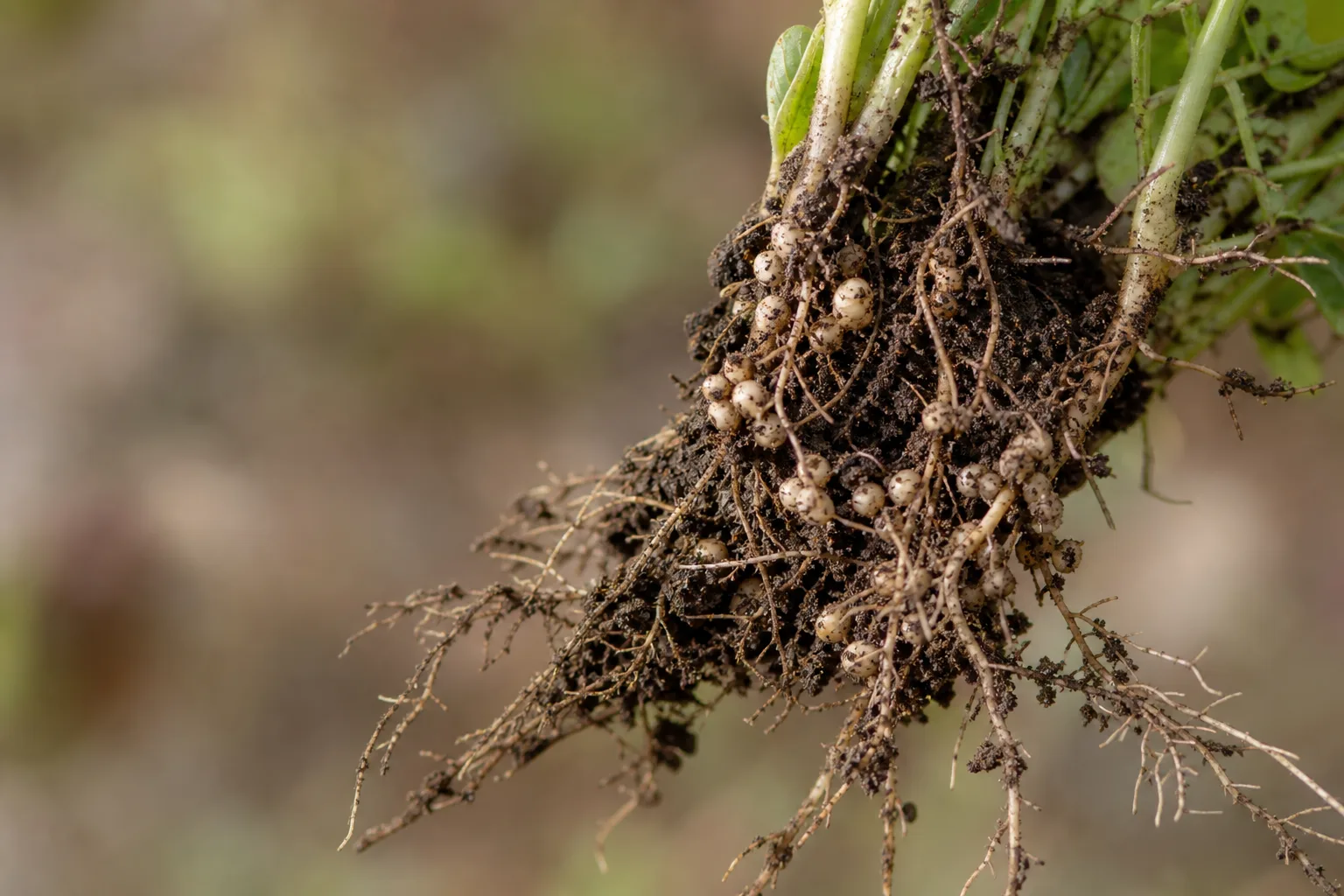
The honest answer is no: a living bean, clover, or vetch plant does not steadily donate useful nitrogen to the vegetable growing beside it. Most of the nitrogen stays in the legume’s roots, stems, and leaves until the plant is cut, winter-killed, or dies and decomposes, so I would use a modest fall cover strip rather than crowding every bed with companions.
That distinction matters in October, especially in Central Texas, where a pretty green carpet can still be competing for water six weeks later. The soil gets the check after the legume is gone. Plants are not running a charity.
How do nitrogen-fixing companions actually help neighboring plants?
Nitrogen-fixing companions host rhizobial bacteria in root nodules, and those bacteria convert atmospheric nitrogen into organic forms held inside the legume. Nearby plants receive little measurable nitrogen while the legume is growing; the larger benefit arrives later, as roots and shoots break down and release nutrients into the soil, according to this orchard companion planting guide.
The companion plant is useful before it dies, just not for the reason people usually claim. Its roots can help hold soil, its foliage can cover bare ground, and its flowers may attract beneficial insects. Those are real services.
The nitrogen is different. A white clover plant beside a young fruit tree is not a tiny fertilizer hose. It is a living storage bin.
The same rule applies to bush beans, pole beans, field peas, hairy vetch, alfalfa, lupines, crimson clover, subterranean clover, and cowpeas. Each has a trade-off, usually competition for water, seasonal timing, or the work of cutting it down before it takes over.
When is most of the nitrogen released from a legume?
Most nitrogen becomes available after the legume’s shoots and roots decompose, usually after you cut it back, let it winter-kill, or allow it to die at the end of its season. The living plant holds the nitrogen in organic tissue, so decomposition, not simple proximity, is the event that feeds the next crop.
For fall planting, I would let the cover establish, then cut or chop it a few weeks before it flowers if you need nitrogen for a spring bed. Leave the residue as a thin surface mulch or mix it into the top few inches of soil, where moisture and soil life can work on it.
Do not expect green leaves cut today to feed broccoli tomorrow. The material has to soften and break down first, and the exact speed depends on moisture, temperature, and how finely you chop it.
The orchard guide gives a useful scale for white clover: about 20 to 38 kilograms of nitrogen per tonne of legume shoot dry matter, with roughly another 30 percent from roots. That is a measure of nitrogen contained in plant material, not a promise that all of it immediately reaches the tree.
Does a living clover plant feed the vegetable beside it?
A living clover plant generally does not provide a measurable nitrogen boost to the vegetable beside it. The clover’s rhizobial partnership fixes nitrogen for the legume’s own growth, while the neighboring crop may gain only after clover roots and foliage die and decompose; until then, both plants can compete for water and other nutrients.
This is where companion-planting advice gets too cheerful. People see a legume growing beside cabbage and assume the cabbage is being fed. In practice, the clover may be using the same shallow moisture that the cabbage needs, especially in a dry Central Texas bed.
White clover also has a clear weakness here: heat and drought. The orchard source describes poor drought and heat tolerance, so I would not plant it as a thick carpet under a tree that already struggles through August.
A modest strip is different from a dense mat. Keep the clover several inches away from vegetable stems, watch the soil moisture, and cut it before flowering if the bed is drying out. The nitrogen benefit comes later. The water bill comes now.
Which nitrogen-fixing companions make sense for a fall garden?
For a fall garden, I would choose a modest strip of crimson clover, white clover, or hairy vetch where the soil can stay reasonably moist, then cut the growth before flowering or let it die back in late fall. Field peas can fit a seasonal vegetable rotation, but every option has a cost in water, space, timing, or removal.
| Companion | Best fall use | Honest downside |
|---|---|---|
| White clover | Low groundcover near an orchard or between beds | Heat and drought can thin it, and it competes for shallow water |
| Crimson clover | Seasonal green manure before a spring bed | It must be cut before flowering if you want to keep it from maturing and reseeding |
| Hairy vetch | Winter cover that produces substantial leafy growth | It can become difficult to remove once tangled and mature |
| Field peas | Short seasonal cover in a vegetable rotation | They are a crop with their own water and space needs, not free fertilizer |
| Beans or cowpeas | Warm-season nitrogen-fixing crop | They do not solve a fall nitrogen shortage after the season is over |
| Alfalfa or lupines | Larger soil-building planting where space allows | They are poor choices for a cramped bed because removal and competition take work |
Crimson clover is useful because it can occupy fall and winter space, but its trade-off is simple: let it run too long and you have a larger cutting job. Hairy vetch makes more foliage, which can mean more potential residue, but tangled mature stems are not a gift when you are trying to prepare a bed.
Beans and cowpeas belong mainly to warm weather, so I would not sow them now for an immediate fall nitrogen transfer. Alfalfa and lupines may suit a larger rotation, but a small homeowner bed usually does not need a plant that behaves like a second project.
The NC State vegetable gardening guidance supports using legumes in rotation and notes that different crops have different nutrient demands. That is the useful part of the advice. Rotation beats decorative crowding.
How should you use a legume under fruit trees?
Use a narrow, manageable strip of clover or vetch beneath the outer part of a fruit tree’s canopy, but keep the trunk area bare and mulched so wet plant material does not sit against the bark. Cut the legume before flowering or allow a late-fall die-back, and do not treat the living groundcover as immediate fertilizer for the tree.
I would keep a bare zone at least 12 inches around the trunk, then place the legume farther out where roots can share space without wrapping the base in damp vegetation. The exact tree spacing depends on the canopy, but the trunk should never disappear into a green mat.
This is especially important in Austin, where a tree can go from wet spring soil to brutally dry August soil without asking permission. White clover may look excellent in November and still fade when heat and drought arrive. Its trade-off is not a footnote. It is the whole maintenance plan.
If you want a concept for the layout, you can get a concept for your yard, then check each proposed plant in the plant database before buying seed. Draw the watering zones first. The plants come after the hose plan.
Should you plant nitrogen fixers beside broccoli and cabbage?
Plant legumes before broccoli or cabbage in a rotation, rather than assuming a living legume beside them will feed them. Broccoli and cabbage are heavy nitrogen users, and they may need available nitrogen while growing, whereas fresh legume residue releases nutrients gradually as it decomposes, according to NC State Extension.
That means a fall legume cover can prepare a later bed, but timing decides whether it helps. Cut the cover a few weeks before planting the heavy feeder, and give the residue time to soften instead of planting cabbage directly into a thick mat.
Everyone says legumes put nitrogen back into the soil. In practice, the next crop gets the benefit only after the plant material breaks down, because the nitrogen is held in living tissue first.
If the cabbage is already planted and pale, a living clover strip is not the emergency answer. The crop needs available nutrition now, not a promise from a plant that is still alive beside it.
How much space should a nitrogen-fixing companion get?
Give a nitrogen-fixing companion enough room that it does not form a dense, thirsty mat around the crop. A practical starting point is a 12 inch bare zone around tree trunks and several inches of separation from vegetable stems, with a narrow strip rather than full-bed coverage when water is limited or the soil is shallow.
There is no magic spacing that works for every legume and every garden. A decomposed granite path beside a bed dries differently from black clay, and caliche may stop roots eight inches down. The plant that behaves politely in a moist raised bed can become a water thief on a thin rocky slope.
For a fall trial, sow one manageable strip, watch it for four to six weeks, and check the soil beneath the cover with your hand. If the soil is dry while the nearby crop is also stressed, cut the companion back. A nitrogen benefit that costs the crop its water is a bad trade.
I learned that lesson from my father’s twelve foot strip of clay along the driveway in New Jersey. We grew tomatoes where the roots had nowhere to go, and every extra plant had to justify its water. Central Texas is less forgiving, so I ask the soil first.
Who should use nitrogen-fixing companions, and who should ignore them?
Nitrogen-fixing companions suit gardeners with a spare bed, a seasonal rotation, moderate moisture, and time to cut or remove the cover before the next crop. They are a poor fit for dry, crowded beds, shallow caliche, trunks surrounded by wet growth, or anyone expecting a living legume to fertilize a nearby vegetable this week.
Use them if you can leave a bed out of production for part of a season and return later to manage the residue. Use them under orchard trees only where irrigation reaches both tree and groundcover, and keep the trunk zone clear.
Ignore the idea if your garden is already fighting for water. In that situation, a thinner mulch layer and better irrigation may serve the plants more reliably than adding another living root system. The companion plant has to earn its place.
You should also skip a dense planting if you cannot mow, chop, or pull it at the right time. A cover that goes to seed or tangles through the bed may cost more labor than the nitrogen is worth.
What should you do with a nitrogen-fixing companion this fall?
This fall, choose one modest strip of clover, hairy vetch, or field peas, keep it away from trunks and crop stems, monitor water for four to six weeks, and cut it a few weeks before flowering or allow late-fall die-back. Leave the residue as mulch or incorporate it shallowly, then wait for decomposition before planting a heavy feeder.
Start with the place you can manage, not the largest empty patch. In Austin, I would rather see a four foot strip watered properly than a whole orchard floor planted dry and abandoned by August.
If the cover is green and growing, it is storing nitrogen. If it is cut and breaking down, it is beginning to return nitrogen. Those are different stages, and your planting calendar should treat them that way.
Do not put fresh, thick residue directly against tree trunks. Do not bury a wet mass so deeply that it turns sour. Keep the layer thin enough to stay in contact with soil without becoming a sealed blanket.
Do nitrogen-fixing plants fertilize nearby vegetables while they are alive?
Do nitrogen-fixing plants fertilize nearby vegetables while they are alive? Usually not in a measurable way. Rhizobial bacteria help the legume fix nitrogen, but most of that nitrogen remains in the plant’s roots and shoots until they decompose, so a living bean or clover beside a vegetable is not a dependable immediate nitrogen source.
When should I cut a fall nitrogen-fixing cover crop?
When should I cut a fall nitrogen-fixing cover crop? Cut it a few weeks before flowering if you want manageable residue and a planned release of nutrients. You can also allow the plant to winter-kill or die in late fall, but mature growth may be harder to remove, especially with hairy vetch, which can tangle and demand more labor.
Can white clover replace fertilizer for a fruit tree?
Can white clover replace fertilizer for a fruit tree? No. White clover can store nitrogen and contribute it slowly as roots and shoots break down, but it does not directly feed the tree while growing, and it may compete for water in heat and drought. Keep a bare, mulched zone around the trunk and use the clover only where irrigation can support both plants.
Should I plant clover directly beside broccoli or cabbage?
Should I plant clover directly beside broccoli or cabbage? I would not plant it directly beside them as a nitrogen strategy. Broccoli and cabbage need available nitrogen during active growth, while clover releases most of its nitrogen after decomposition, so use the legume in a previous rotation or cut it weeks before planting the heavy feeder.
How long does it take for legume residue to release nitrogen?
How long does it take for legume residue to release nitrogen? It takes long enough that you should plan in weeks, not days, and the timing changes with moisture, temperature, and residue size. Cut or chop the plant, leave a thin mulch or mix it shallowly, and wait several weeks before expecting a heavy-feeding crop to benefit.
Are nitrogen-fixing companions worth planting in a dry Central Texas garden?
Are nitrogen-fixing companions worth planting in a dry Central Texas garden? They can be worth it only in a small, irrigated strip where the legume will not compete with stressed crops or trees. White clover has poor heat and drought tolerance, so a dry site may gain more from careful water management and rotation than from a dense living cover.
Want a plan for your own yard?
Tell us the space and we will put a planting plan together for it. Start at get my concept, or browse what actually grows where you are over on plants.
Frequently asked questions
Do nitrogen-fixing plants fertilize nearby vegetables while they are alive?
Do nitrogen-fixing plants fertilize nearby vegetables while they are alive? Usually not in a measurable way. Rhizobial bacteria help the legume fix nitrogen, but most of that nitrogen remains in the plant’s roots and shoots until they decompose, so a living bean or clover beside a vegetable is not a dependable immediate nitrogen source.
When should I cut a fall nitrogen-fixing cover crop?
When should I cut a fall nitrogen-fixing cover crop? Cut it a few weeks before flowering if you want manageable residue and a planned release of nutrients. You can also allow the plant to winter-kill or die in late fall, but mature growth may be harder to remove, especially with hairy vetch, which can tangle and demand more labor.
Can white clover replace fertilizer for a fruit tree?
Can white clover replace fertilizer for a fruit tree? No. White clover can store nitrogen and contribute it slowly as roots and shoots break down, but it does not directly feed the tree while growing, and it may compete for water in heat and drought. Keep a bare, mulched zone around the trunk and use the clover only where irrigation can support both plants.
Should I plant clover directly beside broccoli or cabbage?
Should I plant clover directly beside broccoli or cabbage? I would not plant it directly beside them as a nitrogen strategy. Broccoli and cabbage need available nitrogen during active growth, while clover releases most of its nitrogen after decomposition, so use the legume in a previous rotation or cut it weeks before planting the heavy feeder.
How long does it take for legume residue to release nitrogen?
How long does it take for legume residue to release nitrogen? It takes long enough that you should plan in weeks, not days, and the timing changes with moisture, temperature, and residue size. Cut or chop the plant, leave a thin mulch or mix it shallowly, and wait several weeks before expecting a heavy-feeding crop to benefit.
Are nitrogen-fixing companions worth planting in a dry Central Texas garden?
Are nitrogen-fixing companions worth planting in a dry Central Texas garden? They can be worth it only in a small, irrigated strip where the legume will not compete with stressed crops or trees. White clover has poor heat and drought tolerance, so a dry site may gain more from careful water management and rotation than from a dense living cover.
Free, no obligation
Ready to design your dream landscape? Start here.
Tell us where you are and we will start a free profile for you, with plants that actually survive your climate and a real sense of what the build would cost.