
The Nine Biodynamic Preparations: What BD 500 Through 508 Are and How to Use Them
A plainspoken guide to BD 500 through BD 508, including what each preparation contains, when it is used, and what makes sense for a home garden this fall.
September 27, 2026
By Valeria Navarro
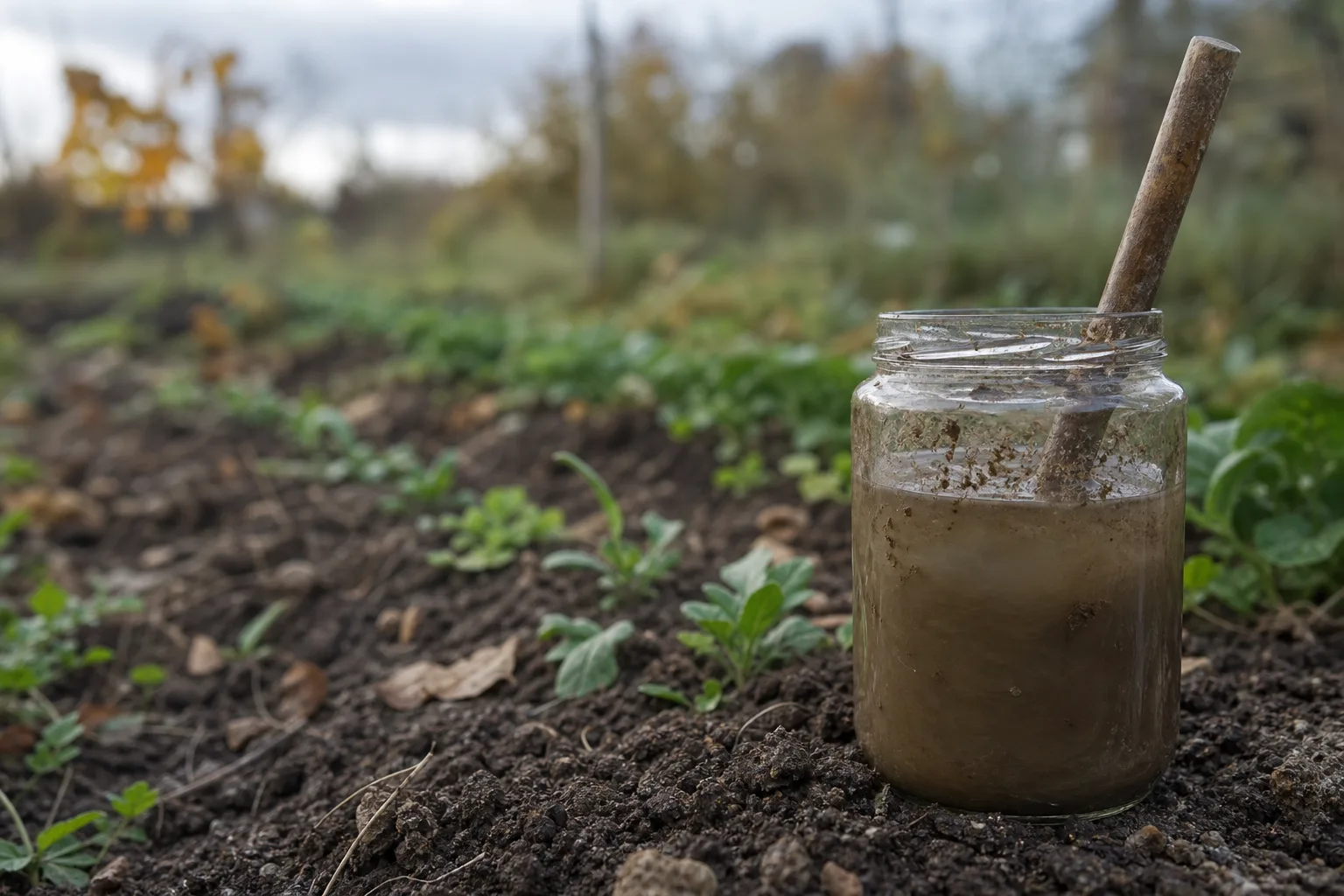
The nine biodynamic preparations are BD 500 through BD 508: BD 500 supports soil and root activity, BD 501 is a fine foliage spray, BD 502 through BD 507 are compost preparations, and BD 508 is a horsetail tea used on foliage and soil. For a home garden in fall, I would start with BD 500, compost preparations, or BD 508, not buy all nine at once.
What are the nine biodynamic preparations?
The nine preparations are numbered tools with different jobs: BD 500 goes to soil, BD 501 goes on leaves, BD 502 through BD 507 go into compost or soil, and BD 508 is a horsetail spray. They are not nine versions of fertilizer, and using every number simply because the set exists is a waste of money for most home gardeners.
BD 500 is cow horn manure. BD 501 is horn silica made with finely ground quartz. BD 502 uses yarrow, BD 503 chamomile, BD 504 stinging nettle, BD 505 oak bark, BD 506 dandelion, BD 507 valerian, and BD 508 horsetail, also called Equisetum arvense in preparation instructions. The basic descriptions and preparation methods are outlined by the Josephine Porter Institute.
These preparations are made through long storage, dilution, stirring, or steeping. That is the point of biodynamics, but it is also the trade-off. A packet is not an instant fix, and home preparation takes clean containers, a calendar, patience, and a willingness to accept a little farmyard smell.
In Austin, I would not treat them as a replacement for compost, mulch, irrigation, airflow, or choosing plants that can survive alkaline clay and a February freeze. I learned that the hard way. Miami taught me to expect water to disappear through sandy fill, while Central Texas holds water in clay and then bakes it into a brick by August.
What should you do with BD 500 this fall?
Use BD 500 on exposed, thawed soil in fall after the worst heat has passed, stirring about 2 ounces into 3 gallons of non-chlorinated water and broadcasting the mixture on a calm afternoon. Its traditional job is to enliven soil and encourage root activity, but the preparation is labor-intensive and should not be mistaken for a measured fertilizer application.
Traditional BD 500 is made by packing fresh cow manure into a cleaned cow horn, sealing it, and burying it over winter. The horn is retrieved in early spring, filled again, covered, and buried for another six months before the manure is stirred into water. That is a long process for a preparation that can smell strongly and demands careful storage.
For use, stir the diluted preparation vigorously for about two hours. A pre-potentized BD 500X may be stirred for about 20 minutes instead. The guidance is roughly 2 ounces per acre in 3 gallons of water, so a small residential garden needs a tiny amount, not a bucket of slurry. More is not automatically better.
Broadcast it on soil that is visible and thawed, ideally on a calm afternoon and, for gardeners following the biodynamic calendar, on a root day. The Bio-dynamic Solutions instructions also describe spring and fall application. In a small bed, focus on the actual soil surface rather than soaking leaves or walking away from basic soil preparation.
If you are standing outside in November, clear fallen leaves from the bed, check that water is not pooling, then apply BD 500 only if you already have the preparation. Do not dig wet clay after rain. You will make clods that sit there until April, and no biodynamic number can charm those clods back into good structure.
How is BD 501 used on foliage?
BD 501 is a fine spray made from finely ground quartz packed into a horn and buried during summer, then stirred in water for about one hour and misted over foliage in the early morning. Its traditional purpose is to sharpen photosynthesis and support fruit ripening, but it is easy to overapply and has little reason to be the first purchase for a fall home garden.
The preparation uses approximately 4 grams of quartz per hectare, stirred into about 30 liters of water. The resulting silica-rich liquid is applied as a fine mist, not poured over the soil like irrigation. A coarse spray wastes material and leaves you with wet foliage, which is a poor choice when nights are cool and air movement is weak.
BD 501 is primarily a growing-season preparation. In fall, I would reserve it for foliage that is still actively growing, especially if you are following a crop plan that includes late fruit development. It is not a frost blanket, not a substitute for row cover, and not a rescue treatment for a plant already collapsing.
Quartz is cheap compared with a season of labor, but the storage, horn, stirring, and spray details add up. If you are choosing between BD 501 and fixing a leaking hose, repairing compacted soil, or giving a crowded bed better spacing, fix the garden first. The leaves cannot photosynthesize their way out of bad drainage.
How do BD 502 through BD 506 work in compost?
BD 502 through BD 506 are compost preparations made from yarrow, chamomile, stinging nettle, oak bark, and dandelion, respectively. Each herb is placed in a suitable clean container, buried for its traditional season, and later used in a small amount of active compost, usually about 1 liter of infused liquid per cubic meter during the hot phase.
BD 502 is yarrow. It is buried in autumn, and its trade-off is the waiting period and the need to source clean plant material. BD 503 is chamomile, traditionally buried in spring; chamomile is familiar and easy to grow, but stuffing and storing the preparation is fussier than simply adding finished compost.
BD 504 is stinging nettle, also buried in spring. Nettle can irritate skin, so gloves are not optional, and its strong smell can bother people who share the yard. BD 505 is oak bark, also prepared in spring; bark is durable, but it takes time to process and does not replace the carbon-rich brown material your pile needs.
BD 506 is dandelion, prepared in spring. Dandelion is common, but digging it from a lawn can disturb turf and bring soil into the preparation. None of these herbs excuses a dry, cold, or airless pile. Keep the compost active, moist like a wrung-out sponge, and mixed well enough to heat before adding the preparation.
For a home pile, apply the measured herb-infused liquid during the hot phase and mix thoroughly. The plant database can help you identify the herbs before gathering them, especially if a volunteer plant in your yard looks similar but is not the intended species.
How do BD 507 and BD 508 fit into fall garden work?
BD 507 is valerian preparation used in compost or diluted for a late-autumn soil spray, while BD 508 is a horsetail tea sprayed on foliage and soil. BD 507 is aimed at frost-protective soil activation in biodynamic practice, and BD 508 is used when mildew pressure is present, but both require specific timing and neither replaces frost protection or sound sanitation.
BD 507 is prepared like the other compost herbs, then added to compost or diluted at about one-half cup per 10 liters of water for a late-autumn soil spray. Valerian has a strong odor, and the preparation takes storage space and time, so it is a poor choice if you only want one simple fall task.
BD 508 is made by steeping dried horsetail, Equisetum arvense, at about 1 kilogram per 10 liters of water for 24 hours. Filter the concentrate and dilute it roughly 1 part concentrate to 10 parts water. Horsetail tea can be messy and requires repeat applications after rain or when disease pressure rises.
Spray BD 508 in the late afternoon or early morning over foliage and soil. Its traditional use is to suppress powdery and downy mildew and supply silica. Do not spray a struggling plant in full sun, do not leave leaf debris harboring disease, and do not pretend a tea fixes crowded planting that never dries.
If you are dealing with mildew this fall, remove badly affected leaves, improve spacing, and water the soil rather than repeatedly wetting the canopy. Then use BD 508 as a supporting practice. Horsetail is useful work, not garden magic.
Who are biodynamic preparations for, and who should ignore them?
Biodynamic preparations suit gardeners who enjoy making compost, tracking seasonal timing, stirring small batches, and treating the garden as a long practice rather than a quick input. They are a poor fit for a renter with no place to bury preparations, a gardener needing immediate disease control, or anyone expecting a substitute for drainage, mulch, irrigation, and plant selection.
This system makes sense if you already compost, have a stable garden area, and want to follow a traditional preparation calendar. It also suits a community garden or small farm where one batch can serve more than one bed. A full set is easier to justify when many cubic meters of compost are being managed.
It makes less sense if you have two tomato pots, no compost pile, and a mildew problem tonight. Buy better airflow and a practical support system before buying seven buried herbs. I have killed enough basil to know that a beautiful theory cannot compensate for a pot that stays soaked.
Austin adds special pressure. Blackland Prairie clay cracks by August, limestone can sit just below a thin skin of soil, deer will eat plants you thought were safe, and water restrictions can change the plan by midsummer. Preparations may be part of your practice, but they do not cancel those facts.
Which biodynamic preparation should you choose first?
Choose the preparation that matches the job in front of you, not the number printed on the label. For most home gardeners standing in the garden during fall, I would choose BD 500 for exposed soil, BD 502 through BD 507 for an active compost pile, or BD 508 for a real mildew problem, while postponing BD 501 unless you have a clear foliage reason.
| Preparation | Main use | Honest downside |
|---|---|---|
| BD 500 | Soil and root activity on exposed soil | Strong smell, long preparation, and careful stirring |
| BD 501 | Fine foliage mist during active growth | Easy to overapply and not a frost or disease cure |
| BD 502 through BD 506 | Supporting the hot phase of active compost | Several herbs, seasonal burial, and storage take time |
| BD 507 | Compost or late-autumn soil spray | Strong odor and limited value without an active compost or soil plan |
| BD 508 | Horsetail spray for mildew pressure | Requires steeping, filtering, dilution, and repeat applications |
Start with one preparation for one reason. If your soil is bare and workable, BD 500 is the clearest fall choice. If your compost is heating, use the compost preparations. If leaves are showing mildew, BD 508 is the most directly relevant, but sanitation and airflow still come first.
For layout, bed edges, and a realistic fall work plan, you can get a concept for your yard before you start burying horns and herbs. Diego and I disagree about gravel often enough, but we agree on this: the garden should be designed around water, access, and maintenance before special preparations enter the picture.
What questions do gardeners ask about BD 500 through BD 508?
The most useful questions are practical: what each preparation does, how much is needed, and whether a small garden needs the entire set. Start with the fall task you can observe today, then choose the preparation that corresponds to soil, compost, foliage, or mildew rather than following a complete set as a rule.
What is BD 500 used for?
BD 500 is used as a diluted soil spray intended to enliven soil and encourage root activity. Stir about 2 ounces in 3 gallons of non-chlorinated water for the traditional field rate, then broadcast it on thawed, exposed soil during a calm afternoon. In a small garden, use only the amount needed for your area because extra preparation does not improve the application.
Can I use BD 500 in a small home garden?
Yes, BD 500 can be used in a small home garden, provided the soil is exposed, thawed, and not waterlogged. The traditional rate is about 2 ounces per acre in 3 gallons of non-chlorinated water, so a residential bed needs a carefully scaled amount. Stir it for roughly two hours, or about 20 minutes for BD 500X, then broadcast it rather than drenching plants.
When should I spray BD 501?
Spray BD 501 in the early morning while foliage is actively growing, using a fine mist made by stirring the quartz preparation in water for about one hour. Its traditional purpose is to support photosynthesis and fruit ripening. In fall, use it only where late growth makes sense, because BD 501 is not frost protection, irrigation, or a treatment for crowded, persistently wet foliage.
How are BD 502 through BD 506 used?
BD 502 through BD 506 are added to the hot phase of active compost after their herb preparations have been stored and infused. They correspond to yarrow, chamomile, stinging nettle, oak bark, and dandelion. A commonly described amount is about 1 liter of herb-infused liquid per cubic meter of compost, mixed thoroughly. They do not replace moisture, air, or balanced carbon and nitrogen materials.
What is BD 508 made from?
BD 508 is made from dried horsetail, Equisetum arvense, steeped in water for about 24 hours. Use roughly 1 kilogram of dried material per 10 liters of water, filter the concentrate, and dilute it about 1 to 10 before spraying foliage and soil. It is used in biodynamic practice for mildew pressure, but repeat applications and good airflow may still be necessary.
Do I need all nine preparations?
No, you do not need all nine preparations for a home garden. Choose BD 500 for exposed soil, BD 502 through BD 507 for an active compost system, BD 508 for mildew pressure, or BD 501 for a specific active-growth foliage purpose. Buying the entire set before identifying a real task creates storage, labor, and expense without improving the basics of your garden.
Fall is a good season to begin slowly. Clear the bed, protect the compost, watch the leaves, and choose one preparation that answers what is actually happening in front of you.
Want a plan for your own yard?
Tell us the space and we will put a planting plan together for it. Start at get my concept, or browse what actually grows where you are over on plants.
Frequently asked questions
What is BD 500 used for?
BD 500 is used as a diluted soil spray intended to enliven soil and encourage root activity. Stir about 2 ounces in 3 gallons of non-chlorinated water for the traditional field rate, then broadcast it on thawed, exposed soil during a calm afternoon. In a small garden, use only the amount needed for your area because extra preparation does not improve the application.
Can I use BD 500 in a small home garden?
Yes, BD 500 can be used in a small home garden, provided the soil is exposed, thawed, and not waterlogged. The traditional rate is about 2 ounces per acre in 3 gallons of non-chlorinated water, so a residential bed needs a carefully scaled amount. Stir it for roughly two hours, or about 20 minutes for BD 500X, then broadcast it rather than drenching plants.
When should I spray BD 501?
Spray BD 501 in the early morning while foliage is actively growing, using a fine mist made by stirring the quartz preparation in water for about one hour. Its traditional purpose is to support photosynthesis and fruit ripening. In fall, use it only where late growth makes sense, because BD 501 is not frost protection, irrigation, or a treatment for crowded, persistently wet foliage.
How are BD 502 through BD 506 used?
BD 502 through BD 506 are added to the hot phase of active compost after their herb preparations have been stored and infused. They correspond to yarrow, chamomile, stinging nettle, oak bark, and dandelion. A commonly described amount is about 1 liter of herb-infused liquid per cubic meter of compost, mixed thoroughly. They do not replace moisture, air, or balanced carbon and nitrogen materials.
What is BD 508 made from?
BD 508 is made from dried horsetail, *Equisetum arvense*, steeped in water for about 24 hours. Use roughly 1 kilogram of dried material per 10 liters of water, filter the concentrate, and dilute it about 1 to 10 before spraying foliage and soil. It is used in biodynamic practice for mildew pressure, but repeat applications and good airflow may still be necessary.
Do I need all nine preparations?
No, you do not need all nine preparations for a home garden. Choose BD 500 for exposed soil, BD 502 through BD 507 for an active compost system, BD 508 for mildew pressure, or BD 501 for a specific active-growth foliage purpose. Buying the entire set before identifying a real task creates storage, labor, and expense without improving the basics of your garden.
Free, no obligation
Ready to design your dream landscape? Start here.
Tell us where you are and we will start a free profile for you, with plants that actually survive your climate and a real sense of what the build would cost.