
Neem Oil: What It Does, What It Does Not, and When Not to Spray It
Neem oil is not a fast pest killer, and spraying it in Austin heat can damage the plant you meant to protect. Here is when it helps, when it misses, and how to use it carefully this fall.
September 29, 2026
By Diego Navarro
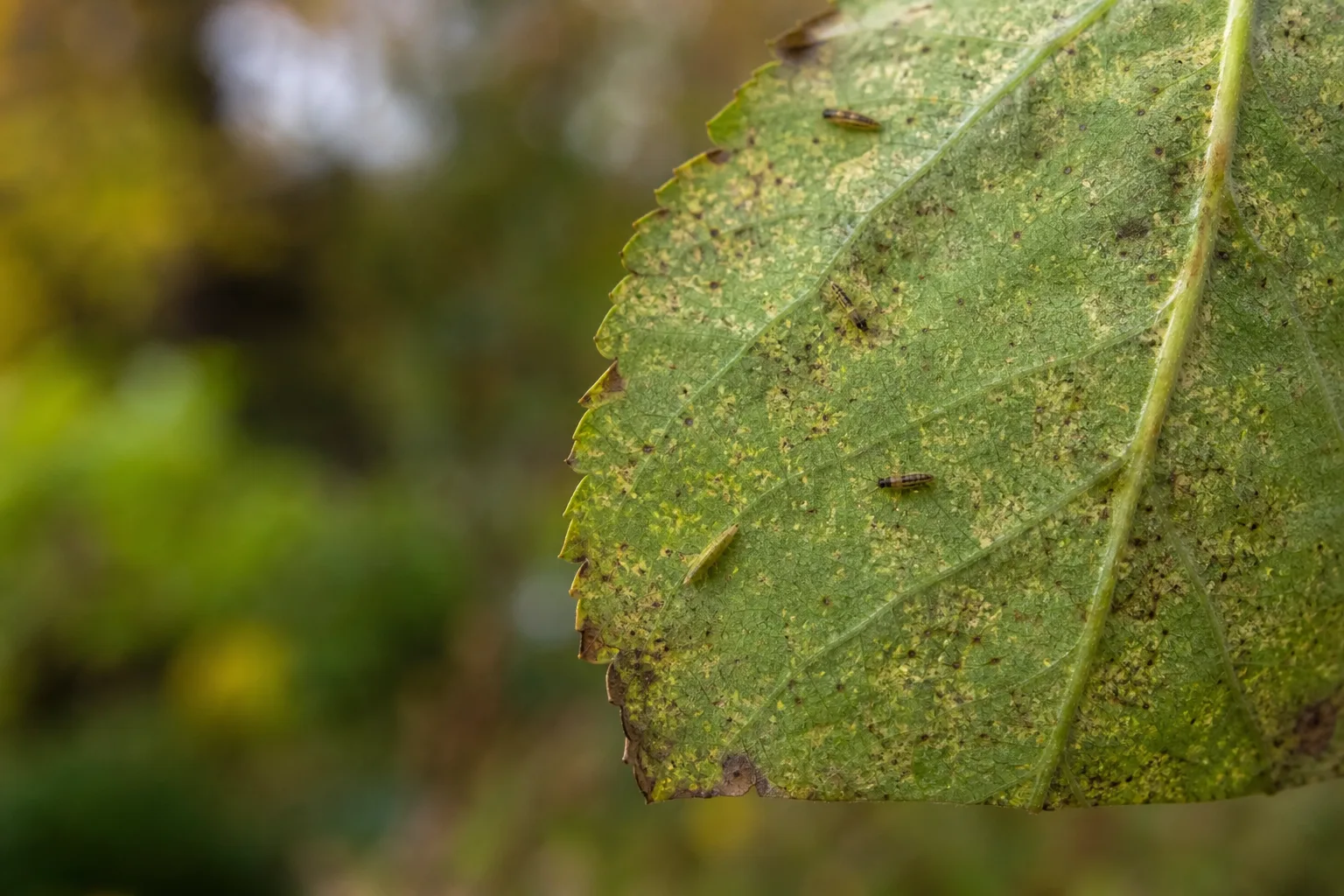
Neem oil is mainly an antifeedant and insect growth disruptor, not a fast contact poison. It works only where the spray reaches, does not act systemically, and can scorch leaves when sprayed above roughly 85 to 90°F, in direct sun, or on drought-stressed plants, so apply it to watered plants in early morning or late afternoon and test one leaf first.
What does neem oil actually do to garden pests?
Neem oil mainly reduces feeding and disrupts insect growth rather than knocking pests down immediately. Its azadirachtin interferes with insect hormones, affects molting, and can reduce egg viability, but it works only on pests that eat treated foliage or are directly coated by the spray. That is why neem is a slow tool, not an emergency button.
The useful effect is biological, not theatrical. A treated pest may keep moving for a while, then feed less, develop poorly, or fail to produce viable eggs. Research on thrips describes reduced feeding within hours and reduced egg viability after 48 hours of exposure, with thorough coverage still required (source).
Neem oil has a real trade-off: it asks you to wait. If a caterpillar is stripping a plant today, neem may reduce future feeding, but hand removal or a product labeled for that pest may solve the immediate damage faster.
I learned that distinction in my father's twelve foot strip of New Jersey clay, where a young tomato could look doomed before breakfast and still be standing by supper. The lesson was not that every spray is bad. It was that a spray has a job, and neem's job is not instant rescue.
Does neem oil kill insects on contact?
Neem oil can affect pests that are directly coated, but it should not be treated as a reliable contact knockdown spray. It does not reach insects hidden under curled leaves, inside dense growth, or elsewhere on the plant, and it does not kill pests that the spray never touches or that do not feed on treated foliage.
That limitation matters with thrips, which hide in flowers and tight plant growth. It also matters with caterpillars tucked beneath leaves. A glossy top surface is not thorough coverage if the pest is living underneath it.
The word “natural” does not change the coverage problem. Neem oil has a trade-off here: reaching the pest requires careful spraying, but careful spraying also increases the chance of wetting sensitive foliage if you keep chasing every hidden insect.
For a pest that is visible and reachable, spray the upper and lower leaf surfaces according to the product label. For a pest you cannot reach, neem is the wrong answer unless you can first improve access without tearing up the plant.
Does neem oil work systemically or stay in the soil?
Neem oil does not act systemically, so it does not travel through the plant to protect new leaves or hidden pests. It also does not persist in soil as a long-term treatment; its foliar half-life is about 48 hours, which means the residue declines rather than providing weeks of internal protection.
That short life is useful and inconvenient. You are not creating a permanent chemical shield, but you also cannot spray once and expect new growth to remain protected through the rest of fall.
The trade-off is repeat work. If pests return and the product label allows it, applications are generally spaced every two to three weeks, not every other day (source). Spraying more often does not turn neem into a systemic insecticide.
Everyone says a “natural” product is gentle enough to use freely. In practice, repeated wetting can still stress foliage, especially when weather is warm or the plant is already short of water. More is not more. It is just more wet leaves.
When should you not spray neem oil in fall?
Do not spray neem oil in direct midday sun, during high heat, or on a plant that is wilted, drought-stressed, newly transplanted, thin-leafed, or delicate. A practical ceiling is roughly 85 to 90°F, and the safest timing is early morning or late afternoon after the plant has been watered and before strong sunlight reaches wet leaves.
For an Austin garden in fall, check the actual temperature before reaching for the bottle. A September afternoon can still behave like summer, even when the calendar says otherwise. If the leaves are hot, limp, or already showing scorch, wait.
Neem oil has a plain downside: it can burn foliage when timing is wrong. Sources specifically warn that peak sunlight can scorch leaves and recommend avoiding high heat and applying to well-watered, unstressed plants (source).
Do not spray simply because the bottle is already in your hand. If the plant is dry, water it and give it time to recover. If tomorrow is forecast to be hot, wait for a cooler evening and test first.
How do you test neem oil before spraying a whole plant?
Test neem oil on one leaf before treating the whole plant, then wait 24 hours for browning, spotting, wilting, or other injury. Use a properly mixed product according to its label, place the test on a representative leaf, and do not proceed if that small area reacts badly.
The test is not busywork. Leaf thickness, plant stress, weather, and the particular product formulation can change the result. A tender new leaf may react differently from a tougher mature leaf, so choose a leaf that represents the part you plan to spray.
The honest trade-off is time. You lose one day before treating the plant, but you may save the entire plant from oil injury. A scorched leaf cannot be talked back into being green.
If the plant is newly transplanted or drought-stressed, testing does not make spraying automatically safe. Wait until it is watered and stable, then test under the same temperature and light conditions you expect during the full application.
Which pests can neem oil help control, and which can it miss?
Neem oil is most useful against pests that feed on sprayed foliage and remain reachable during application, including some thrips and caterpillar pests. It can miss insects hidden in tight growth, pests on unsprayed plant parts, and any infestation where the damage is moving faster than neem's feeding and growth disruption can act.
Thrips are a good example of both promise and failure. Neem may suppress feeding and affect development, but the spray must reach the insects and the treatment may need careful repetition. A single casual pass over the top of a plant is not a thrips strategy.
Caterpillars also show the limit. Neem can affect caterpillars when they consume treated foliage, but it is not instant, and large caterpillars may continue eating before the slower effect matters (source). The trade-off is patience in exchange for a lower-speed approach.
Ask yourself a blunt question: can you see where the pest is feeding, and can the spray reach that surface? If the answer is no, choose physical removal or a treatment specifically labeled for the pest and crop instead of hoping oil will find it.
| Option | What it does | Best timing | Honest downside |
|---|---|---|---|
| Neem oil | Suppresses feeding and disrupts insect growth on contacted or treated foliage | Cool early morning or late afternoon, on watered plants | Slow action, incomplete coverage, and possible leaf scorch |
| Hand removal | Removes visible pests immediately | Any safe time when pests are easy to reach | It takes repeated inspection and misses hidden insects |
| Labeled pest treatment | May provide a more targeted response for a named pest | Follow the product label and weather restrictions | The wrong product wastes money and may harm non-target insects |
Does neem oil harm beneficial insects?
Neem oil generally does not harm most beneficial insects unless they are sprayed directly, but direct coverage is still a serious risk. Do not coat bees, predators, or other helpful insects while treating a plant, and avoid spraying flowers or active insect visitors when you can solve the pest problem another way.
This is where precision matters more than the label's comfort. A product can be less disruptive than a broad contact poison and still hurt an insect that is wet with the spray. “Usually safe” is not permission to spray every moving thing.
Neem oil's trade-off is that its selectivity depends partly on your technique. Spray the affected foliage, avoid open flowers, and inspect the plant first. If beneficial insects are already doing the work, leave them alone and monitor the damage.
The same rule applies to a small fall garden and a large landscape: do not spray on a schedule just because the calendar says it is time. Spray only when you have identified a real pest problem and can target the affected plant surfaces.
Who is neem oil for, and who should skip it this fall?
Neem oil suits a gardener with a reachable pest, a watered and established plant, a cool application window, and enough patience to wait for reduced feeding instead of instant knockdown. Skip it for heat-stressed plants, newly transplanted growth, delicate thin leaves, hidden infestations, flowering areas full of beneficial insects, and damage that needs immediate control.
It is also a reasonable option when you can inspect the plant every few days and repeat only at the label interval, usually two to three weeks if needed. That gives the treatment time to work without turning the foliage into an oil project.
If your garden is in full afternoon sun above 85°F, do not force the application. If the soil is dry and the plant is wilted, do not spray first and water later. Neem oil has one job, and rescuing a thirsty plant is not it.
For plant identification and pest matching, use the plant database before choosing a treatment. If the problem is larger than one plant and you need a layout that improves access for inspection, get a concept for your yard so the spray is not your only plan.
How should you use neem oil on a plant today?
Use neem oil only after identifying the pest, checking the temperature, watering the plant if it is dry, and testing one leaf for 24 hours. Spray in early morning or late afternoon below roughly 85 to 90°F, cover reachable foliage without soaking flowers or beneficial insects, and repeat only every two to three weeks if the label permits.
Here is the fall sequence I would use. First, inspect the upper and lower leaf surfaces. Second, decide whether hand removal solves the visible problem. Third, check that the plant is not wilted, newly transplanted, or heat-stressed.
Next, read the product label for mixing and crop directions, then test one leaf. If there is no injury after 24 hours, apply during the cool window and stop once the affected surfaces are covered. Do not keep spraying until the leaves shine like furniture.
Neem oil has a cost beyond the bottle: a bad application can burn leaves and set the plant back while the pest keeps going. In a Central Texas fall, the safest spray is often the one you postpone until the weather and the plant are both ready.
How often can you spray neem oil on garden plants?
You can generally spray neem oil every two to three weeks if pests remain, the product label allows it, and the plant shows no injury. Do not spray daily or treat on a fixed schedule without a pest problem, because neem is not systemic, does not persist for weeks, and repeated applications can add stress to foliage.
The interval gives the treatment time to affect feeding and development. It also gives you a chance to inspect whether the pest is actually declining. If the plant looks worse after application, stop and reassess instead of adding another coat.
How often can you spray neem oil on garden plants? You can generally spray neem oil every two to three weeks if pests remain, the product label allows it, and the plant shows no injury. Do not spray daily or treat on a fixed schedule without a pest problem, because neem is not systemic, does not persist for weeks, and repeated applications can add stress to foliage.
Can neem oil burn plant leaves?
Neem oil can burn plant leaves when applied in high heat, direct midday sun, or to drought-stressed, newly transplanted, thin-leafed, or delicate plants. Apply to watered, unstressed plants in early morning or late afternoon, keep below roughly 85 to 90°F, and test one leaf for 24 hours before treating the rest.
Can neem oil burn plant leaves? Neem oil can burn plant leaves when applied in high heat, direct midday sun, or to drought-stressed, newly transplanted, thin-leafed, or delicate plants. Apply to watered, unstressed plants in early morning or late afternoon, keep below roughly 85 to 90°F, and test one leaf for 24 hours before treating the rest.
The short version is still the right one: neem is a slow, targeted tool, not a knockdown spray. In fall, stand in the garden, look at the weather and the leaves, and decide whether the plant needs treatment or simply needs you to leave it alone for one more day.
Want a plan for your own yard?
Tell us the space and we will put a planting plan together for it. Start at get my concept, or browse what actually grows where you are over on plants.
Frequently asked questions
How often can you spray neem oil on garden plants?
You can generally spray neem oil every two to three weeks if pests remain, the product label allows it, and the plant shows no injury. Do not spray daily or treat on a fixed schedule without a pest problem, because neem is not systemic, does not persist for weeks, and repeated applications can add stress to foliage.
Can neem oil burn plant leaves?
Neem oil can burn plant leaves when applied in high heat, direct midday sun, or to drought-stressed, newly transplanted, thin-leafed, or delicate plants. Apply to watered, unstressed plants in early morning or late afternoon, keep below roughly 85 to 90°F, and test one leaf for 24 hours before treating the rest.
Does neem oil kill insects on contact?
Neem oil can affect pests that are directly coated, but it should not be treated as a reliable contact knockdown spray. It does not reach insects hidden under curled leaves, inside dense growth, or elsewhere on the plant, and it does not kill pests that the spray never touches or that do not feed on treated foliage.
Does neem oil work systemically or stay in the soil?
Neem oil does not act systemically, so it does not travel through the plant to protect new leaves or hidden pests. It also does not persist in soil as a long-term treatment; its foliar half-life is about 48 hours, which means the residue declines rather than providing weeks of internal protection.
When should you not spray neem oil in fall?
Do not spray neem oil in direct midday sun, during high heat, or on a plant that is wilted, drought-stressed, newly transplanted, thin-leafed, or delicate. A practical ceiling is roughly 85 to 90°F, and the safest timing is early morning or late afternoon after the plant has been watered and before strong sunlight reaches wet leaves.
Does neem oil harm beneficial insects?
Neem oil generally does not harm most beneficial insects unless they are sprayed directly, but direct coverage is still a serious risk. Do not coat bees, predators, or other helpful insects while treating a plant, and avoid spraying flowers or active insect visitors when you can solve the pest problem another way.
Free, no obligation
Ready to design your dream landscape? Start here.
Tell us where you are and we will start a free profile for you, with plants that actually survive your climate and a real sense of what the build would cost.