
Should You Cut Strawberry Runners or Let Them Grow?
Strawberry runners can make a fuller bed, or they can help your existing plants produce more fruit. They cannot do both jobs at full strength in the same season. Here is what to do with runners this fall, depending on whether your priority is next year’s harvest, new plants, or a larger strawberry patch.
September 26, 2026
By Valeria Navarro
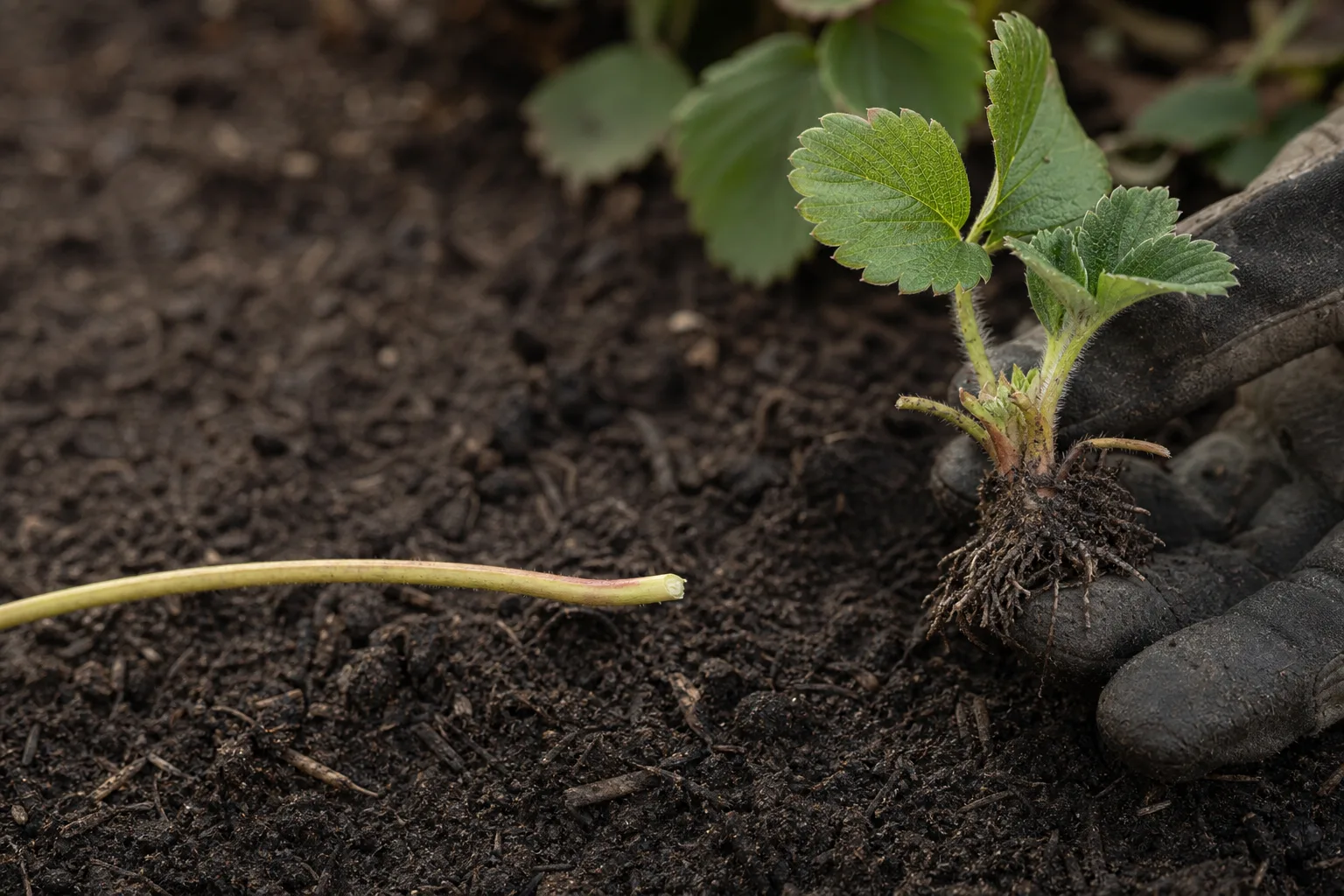
Strawberry runners are either your next plants or your current season’s fruit, not both at full strength. This fall, keep only the vigorous runners you need for gaps or a new bed, root those carefully, and cut the rest so established plants enter winter with a clear job.
Should I cut strawberry runners or let them grow?
Cut most strawberry runners if your priority is fruit, and keep only a few strong runners if your priority is making new plants. A runner diverts energy into a daughter plant, so allowing every runner to root creates a crowded bed and reduces the yield or berry size you wanted from the mother plants.
That is the whole argument. You cannot maximize both in one growing season. I would rather make this decision plainly than let a patch become a tangle and call it natural gardening.
The runner trade-off is documented here: pruning sends more of the plant’s energy toward fruit, while allowing runners to develop builds a new stand. In practice, I keep two or three healthy runners only when I can name their destination.
Ask yourself one question: do you need berries next spring, or do you need replacement plants? If the answer is berries, snip runners now. If the answer is plants, root selected runners and accept that those mother plants are doing propagation work instead of giving you their maximum crop.
What should I do with strawberry runners in fall?
In fall, remove excess runners, root the few you want in well-drained nutrient-rich soil, and keep watering them consistently until they establish. Trim the remaining foliage to about 1 inch above the soil at season’s end, which reduces winter runner emergence and prepares the strawberry bed for its next cycle.
Use sharp scissors and make a clean cut where each unwanted runner leaves the mother plant. Do not yank it. Pulling can disturb the crown or newly rooted daughter plant, and a damaged crown is an expensive little mistake.
For a runner you are saving, place the daughter plant in prepared soil while it is still attached to the mother plant. Once roots form, cut the connecting stem. This gives the new plant a better chance than tossing an unrooted runner into dry soil and hoping for a miracle.
The scissors are cheap and precise, but they require you to inspect the bed by hand. A mower can trim a large bed quickly, yet it also removes every runner and can catch plants you meant to save, so I use it only when propagation is not part of the plan.
How many strawberry runners should I keep for new plants?
Keep only enough strawberry runners to fill known gaps or start the number of new plants you can care for, usually a few vigorous daughters rather than every runner in the bed. Once plants are spaced about 4 to 6 inches apart, trim excess runners because overcrowding lowers productivity and makes the bed harder to manage.
Choose runners with a healthy green daughter plant and a strong connection to a vigorous mother. Do not save every tiny or weak plant just because it is attached. A weak daughter costs water and space before it ever earns either one.
For a gap, pin the daughter plant into prepared soil and water consistently until it roots. The trade-off is time: each selected runner needs attention for several weeks, and poorly drained soil can rot the new roots before the plant settles.
I grew up watching pots crowd onto hot Miami concrete, where sandy fill drained before I finished watering. Austin is the opposite headache. Clay can hold water, then set hard, so a runner needs a prepared planting spot rather than a casual tuck into the ground.
How far apart should strawberry plants be?
Keep strawberry plants about 4 to 6 inches apart when managing runners for a productive bed. Letting daughters fill every open inch creates crowding, and crowded plants compete for water and nutrients while producing a patch that is harder to inspect, trim, and harvest.
Measure from crown to crown, not from the end of one leaf to the next. The crown is the central growing point, so burying it too deeply while planting a rooted runner creates another problem instead of solving the spacing one.
Everyone says a strawberry bed should fill itself naturally. In practice, uncontrolled runners can push the bed past its useful spacing because the plant is trying to colonize available ground, not design an efficient harvest row.
Use a ruler or your hand as a rough guide, then correct the bed after the main fruiting period. For exact variety and planting information, check the plant database, because variety, plant age, and vigor change how quickly a patch fills.
Should June-bearing strawberries make runners this fall?
June-bearing strawberries should make runners after their main late-spring harvest, so fall is a good time to keep selected daughters and remove the rest. If a June-bearing plant is in its first year, remove all runners and flower buds to direct energy into roots and leaves for a larger crop the following spring.
That first-year rule feels harsh. It works because the plant is building its body instead of being asked to fruit and reproduce at once. You lose the early berries, but you give the plant a better foundation for the next crop.
After the late-spring harvest, allow useful runners to form roots, then trim them back until the bed stays near the 4 to 6 inch spacing. June-bearing plants often produce a flush of runners after fruiting, which makes that post-harvest inspection worth doing.
The downside is timing. If you wait until winter to decide, runners may already be tangled, rooted in poor places, or crowding the mother plants, and moving them becomes more disruptive than selecting them early.
Should I remove runners from everbearing or day-neutral strawberries?
Remove most runners from everbearing and day-neutral strawberries throughout the growing season if you want large, abundant berries. Keep a few vigorous runners only for gaps or a new bed, because these types fruit continuously or consistently and lose productive energy when they are allowed to make too many daughter plants.
Everbearing plants give you repeated fruiting, but that does not make them unlimited. Their advantage is a longer harvest pattern, not permission to let every runner stay. More runners mean more plants competing in the same bed.
Day-neutral plants also need discipline. Remove most runners once the bed reaches the 4 to 6 inch spacing, then save only the daughters you can root and maintain. The trade-off is clear: fewer runners now means better berry production from the plants already occupying the bed.
Here is the choice I would make in fall:
| Strawberry type or goal | What I would do with runners | Honest downside |
|---|---|---|
| First-year June-bearing plants | Cut all runners and remove flower buds | You give up the first crop |
| Established June-bearing plants | Save selected runners after the late-spring harvest | The mother plants produce fewer berries while runners root |
| Everbearing plants | Remove most runners and keep a few for gaps | You must inspect and snip runners repeatedly |
| Day-neutral plants | Remove most runners once spacing reaches 4 to 6 inches | New bed expansion is slower |
| Starting a new bed | Root only vigorous daughters in prepared soil | The selected runners need consistent water for several weeks |
The comparison reflects the propagation and fruiting trade-off described by this strawberry runner guide. A full bed is not automatically a productive bed.
Who should manage runners for plants, and who should ignore that plan?
Manage runners for new plants if you have empty spaces, want to replace an aging section, or can prepare a second bed and water it consistently for several weeks. Ignore propagation this season if your bed is already crowded, your priority is fruit, or you cannot monitor rooted daughters through fall and winter.
This plan suits a gardener with a clear planting location and enough time to check runners every week. It also suits someone renewing a bed in stages, saving a few daughters now instead of buying an entire new batch later.
It does not suit a small crowded bed where plants already sit closer than 4 inches apart. It also does not suit a dry corner that receives irregular water. A runner is not free. It needs soil, moisture, and room, and the mother plant pays part of that bill.
If you want a new layout but cannot decide how many plants belong there, use the free get a concept for your yard tool before rooting runners everywhere. Diego and I disagree about gravel often, but we agree that a planting plan should come before the plants.
How do I root strawberry runners without weakening the mother plant?
Root strawberry runners by placing the daughter plant on prepared, well-drained, nutrient-rich soil while it remains attached to the mother plant, then watering consistently until roots form. Keep only the strongest daughters, and cut the connecting stem after rooting so the new plant can establish independently.
Prepare the spot first. Improve the planting area so it drains instead of holding cold, soggy water, especially in heavy clay. Do not bury the crown, because the central growing point needs to remain at soil level.
A small pin or light piece of wire can hold the daughter against the soil. The runner stem should rest naturally, not be bent sharply or buried along its whole length. The daughter is the plant you are establishing; the connecting stem is temporary support.
Give the new plant consistent water while it roots. Overwatering is not kindness, especially in soil that stays wet through a freeze. Underwatering is just as poor, because a runner with fresh roots cannot recover from repeated drying as easily as an established crown.
When should I cut strawberry foliage and leftover runners?
At the end of the growing season, usually late summer to early fall, trim strawberry foliage to about 1 inch above the soil and remove leftover runners. This cleanup reduces runner emergence for winter and prepares the plants for the next cycle, but it should happen after you have rooted every daughter you intend to keep.
Walk the bed first. Mark or protect the runners you selected, then cut the unwanted ones and trim the foliage. If you cut first, you may remove the very plants you meant to save.
The 1 inch height matters because cutting into the crown can injure the plant. A mower is fast for a large established bed, but the downside is blunt control, so I prefer hand scissors when there are saved runners mixed among the plants.
Do not use fall cleanup as an excuse to erase every living leaf weeks too early. The research supports end-of-season trimming, and the practical point is sequence: choose daughters, root them, cut extras, then trim the old foliage.
What are the most common strawberry runner mistakes?
The most common mistakes are keeping every runner, cutting useful runners before they root, ignoring the 4 to 6 inch spacing, and trimming foliage before choosing replacement plants. Each mistake comes from trying to get a larger bed and a larger crop at the same time, which strawberry plants cannot deliver in one season.
Another mistake is treating all varieties alike. First-year June-bearing plants need runners and flower buds removed for establishment, while established June-bearing plants can produce useful runners after their main crop. Everbearing and day-neutral plants need most runners removed during their longer fruiting period.
Gardeners also wait too long. A runner that has rooted in a crowded or poorly drained spot is harder to move, and a daughter left without steady water may fail before winter. Check weekly while runners are active.
Finally, do not confuse activity with success. A bed covered in runners looks busy, but the goal is either a productive fruiting bed or a deliberate new stand. Pick one job for this season, and the strawberries will be much easier to manage.
Can I maximize strawberry fruit and new plants in the same season?
You cannot maximize strawberry fruit and new plants in the same season because runners direct energy into daughter plants instead of berries. For the biggest harvest, remove most runners; for propagation, keep selected vigorous runners, root them in prepared soil, and accept a smaller or less abundant crop from the mother plants.
The practical solution is alternating seasons or sections. Use one season to prune for fruit, then save strong runners to renew or expand the bed, rather than asking every plant to fruit heavily and reproduce heavily at once.
That is not a failure of technique. It is the plant’s budget. Energy spent making runners is energy not spent making the maximum crop, and energy spent on a large crop is not available for unlimited propagation.
I have killed enough basil to respect a clear job description for every plant. Give your strawberries one job this fall, keep the spacing near 4 to 6 inches, and make the cut cleanly.
What should I do with strawberry runners in fall?
In fall, remove excess runners, root the few you want in well-drained nutrient-rich soil, and keep watering them consistently until they establish. Trim the remaining foliage to about 1 inch above the soil at season’s end, which reduces winter runner emergence and prepares the strawberry bed for its next cycle.
Save only daughters with healthy growth and a clear destination. Cut the rest with sharp scissors rather than pulling them from the crown. The goal is a clean bed, not a pile of hopeful stems.
How many strawberry runners should I keep for new plants?
Keep only enough strawberry runners to fill known gaps or start the number of new plants you can care for, usually a few vigorous daughters rather than every runner in the bed. Once plants are spaced about 4 to 6 inches apart, trim excess runners because overcrowding lowers productivity and makes the bed harder to manage.
Measure crown to crown, root selected daughters in prepared soil, and discard weak or surplus runners. Every saved plant needs space, water, and several weeks of attention before it earns a place in the bed.
Should June-bearing strawberries make runners this fall?
June-bearing strawberries should make runners after their main late-spring harvest, so fall is a good time to keep selected daughters and remove the rest. If a June-bearing plant is in its first year, remove all runners and flower buds to direct energy into roots and leaves for a larger crop the following spring.
Let useful runners root after harvest, then trim them back to maintain 4 to 6 inch spacing. First-year plants are the exception because their job is establishment, not a full crop and a new generation at once.
Should I remove runners from everbearing or day-neutral strawberries?
Remove most runners from everbearing and day-neutral strawberries throughout the growing season if you want large, abundant berries. Keep a few vigorous runners only for gaps or a new bed, because these types fruit continuously or consistently and lose productive energy when they are allowed to make too many daughter plants.
Once the bed reaches 4 to 6 inch spacing, remove additional runners. The trade-off is fewer replacement plants now, but better fruit production from the established plants.
How do I root strawberry runners without weakening the mother plant?
Root strawberry runners by placing the daughter plant on prepared, well-drained, nutrient-rich soil while it remains attached to the mother plant, then watering consistently until roots form. Keep only the strongest daughters, and cut the connecting stem after rooting so the new plant can establish independently.
Keep the crown at soil level, hold the daughter gently against the soil, and avoid burying the runner stem along its entire length. Cut the connection only after the daughter has rooted.
Can I maximize strawberry fruit and new plants in the same season?
You cannot maximize strawberry fruit and new plants in the same season because runners direct energy into daughter plants instead of berries. For the biggest harvest, remove most runners; for propagation, keep selected vigorous runners, root them in prepared soil, and accept a smaller or less abundant crop from the mother plants.
Alternate the jobs by season or by section of the garden. That simple choice keeps a strawberry bed productive without turning propagation into a permanent drain on fruit production.
More questions people ask about this
What should I do with strawberry runners in fall?
In fall, remove excess runners, root the few you want in well-drained nutrient-rich soil, and keep watering them consistently until they establish. Trim the remaining foliage to about 1 inch above the soil at season’s end, which reduces winter runner emergence and prepares the strawberry bed for the next cycle.
Want a plan for your own yard?
Tell us the space and we will put a planting plan together for it. Start at get my concept, or browse what actually grows where you are over on plants.
Frequently asked questions
What should I do with strawberry runners in fall?
In fall, remove excess runners, root the few you want in well-drained nutrient-rich soil, and keep watering them consistently until they establish. Trim the remaining foliage to about 1 inch above the soil at season’s end, which reduces winter runner emergence and prepares the strawberry bed for the next cycle.
How many strawberry runners should I keep for new plants?
Keep only enough strawberry runners to fill known gaps or start the number of new plants you can care for, usually a few vigorous daughters rather than every runner in the bed. Once plants are spaced about 4 to 6 inches apart, trim excess runners because overcrowding lowers productivity and makes the bed harder to manage.
Should June-bearing strawberries make runners this fall?
June-bearing strawberries should make runners after their main late-spring harvest, so fall is a good time to keep selected daughters and remove the rest. If a June-bearing plant is in its first year, remove all runners and flower buds to direct energy into roots and leaves for a larger crop the following spring.
Should I remove runners from everbearing or day-neutral strawberries?
Remove most runners from everbearing and day-neutral strawberries throughout the growing season if you want large, abundant berries. Keep a few vigorous runners only for gaps or a new bed, because these types fruit continuously or consistently and lose productive energy when they are allowed to make too many daughter plants.
How do I root strawberry runners without weakening the mother plant?
Root strawberry runners by placing the daughter plant on prepared, well-drained, nutrient-rich soil while it remains attached to the mother plant, then watering consistently until roots form. Keep only the strongest daughters, and cut the connecting stem after rooting so the new plant can establish independently.
Can I maximize strawberry fruit and new plants in the same season?
You cannot maximize strawberry fruit and new plants in the same season because runners direct energy into daughter plants instead of berries. For the biggest harvest, remove most runners; for propagation, keep selected vigorous runners, root them in prepared soil, and accept a smaller or less abundant crop from the mother plants.
Free, no obligation
Ready to design your dream landscape? Start here.
Tell us where you are and we will start a free profile for you, with plants that actually survive your climate and a real sense of what the build would cost.