
Can You Build Low-Profile Hugelkultur Under HOA Height Rules?
A practical fall guide to building a 6 to 12 inch hugelkultur bed that keeps the woody core, saves space, and looks intentional enough for a suburban HOA.
September 21, 2026
By Valeria Navarro
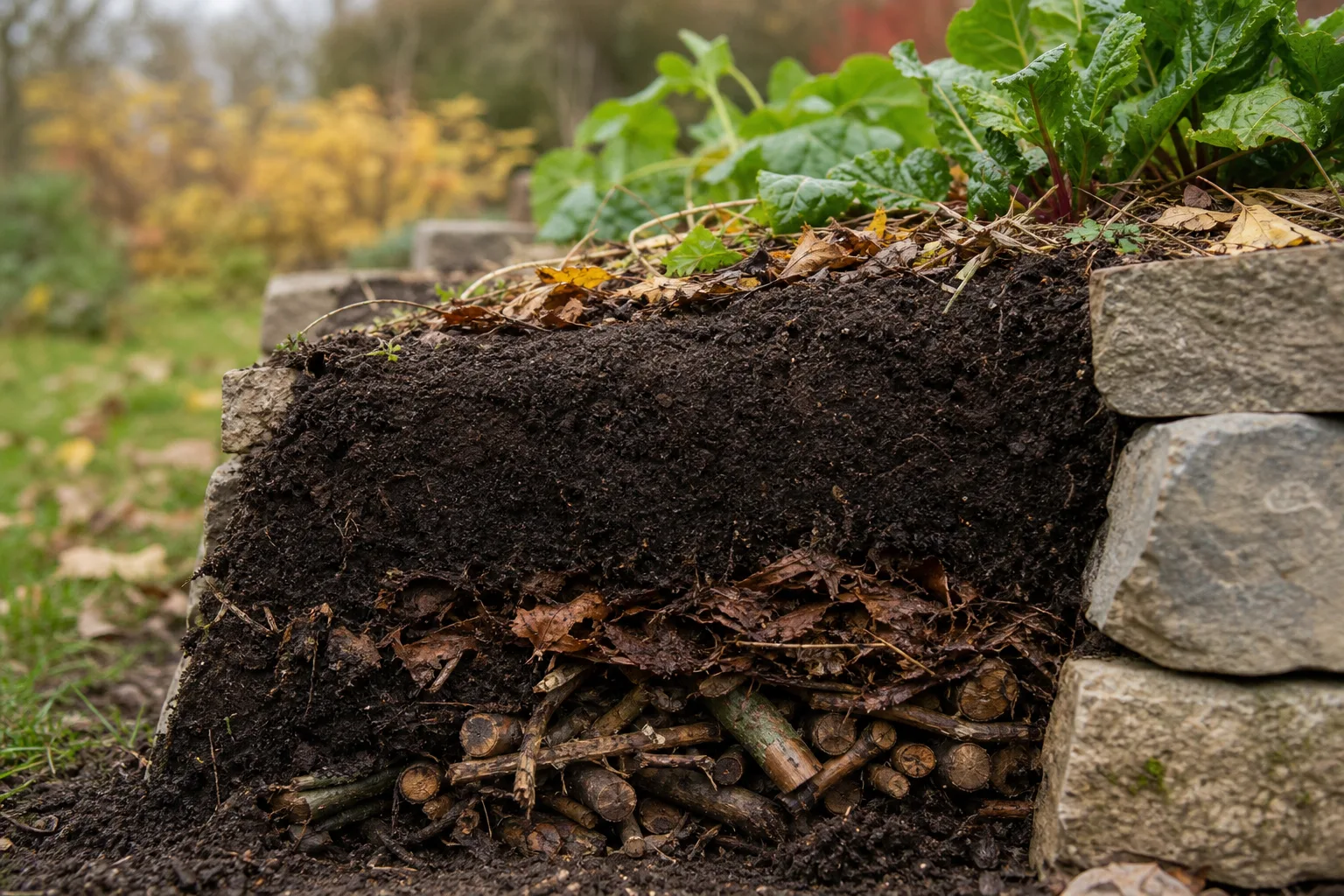
You do not need a two-meter mound to get the useful part of hugelkultur. I would build a 6 to 12 inch bed over at least 6 by 3 feet, keep the wood core shallow, and spend my effort on good soil, thorough watering, and a crisp edge that an HOA can understand.
Is low-profile hugelkultur still worth building?
Yes, a low-profile hugelkultur bed can still hold woody material, release nutrients as it decomposes, improve soil structure, and reduce irrigation needs over time. The trade-off is simple: you get less vertical growing space and less of the mound’s dramatic microclimate, but you gain a bed that fits a suburban yard and usually looks far more intentional.
The giant mound is the internet’s favorite photograph. It is not the only working design. Research on suburban hugelkultur commonly points to a footprint of at least 6 by 3 feet, while other guidance notes that in-ground or nearly flat hugel beds can be planted soon after construction and do not have to look like mounds. The Druids Garden explains that in-ground hugel beds can be planted almost immediately and work in many garden settings.
In Austin, this flatter shape makes sense. We have thin soil over limestone in some yards, heavy alkaline clay in others, and summer soil that can swing from sticky to brick-hard. A low bed gives the wood room to do its slow work without asking you to create a three-foot structure that may settle, spread, or invite an HOA letter.
I have killed plants by treating every mound like a miracle. It is not a miracle. It is buried wood, organic cover, soil, water, and time, arranged so the decomposition happens where roots can use it.
How tall should a suburban hugelkultur bed be?
Build it 6 to 12 inches high, with a footprint of at least 6 by 3 feet. That height keeps the bed within many ordinary HOA landscape limits while leaving enough room for a woody base, a coarse middle layer, and 4 to 6 inches of topsoil where roots can establish immediately.
Everyone says hugelkultur needs a mound at least 3 feet tall. In practice, that is one version, not a law. A broader, lower bed spreads the wood over more ground, so the total volume still matters even though the profile stays modest. The Hennepin County Master Gardeners describe the commonly recommended minimum footprint as 6 by 3 feet.
For a bed 6 feet by 3 feet, 8 inches high, you are working with about 12 cubic feet of total bed volume before settlement. That is enough space for a shallow wood layer, leaves or straw, and a substantial planting layer without turning the front yard into a fort.
Do not build the soil cap first and then discover your wood has eaten all the depth. Measure the finished height from the existing grade. If your HOA limit is 12 inches, I would target 8 to 10 inches so settling, mulch, and edging do not push you over the line.
How do you build a low-profile hugelkultur bed this fall?
Clear the footprint, loosen the ground, lay two layers of plain cardboard, add shredded logs, branches, or small logs, cover them with leaves or straw, and finish with 4 to 6 inches of quality topsoil. Water every layer as you build, then water the completed bed thoroughly so decomposition begins before winter settles in.
Mark the bed first with a hose or garden line. Keep it at least 6 by 3 feet, and choose a location with the light your future plants need. A vegetable bed needs more sun than a shade shrub, and no amount of buried wood fixes the wrong exposure.
Remove grass and obvious perennial weeds. Use a garden fork to loosen the ground rather than turning the whole area into a mud project. Lay two overlapping cardboard layers, wet them well, and avoid glossy or heavily printed cardboard when you have another option.
Place the wood low and broad. Shredded logs and branches settle faster than whole logs, while small whole logs create larger air spaces and may take longer to break down. Do not make a hollow pile with a thin skin of soil on top. That bed will dry unevenly and collapse under your first serious rain.
Add a coarse layer of leaves or straw, then add 4 to 6 inches of topsoil. Shape the surface with a slight crown so water does not sit in the center. The Druids Garden recommends cardboard and woody material as part of the layered construction approach.
What wood and cover material should you use?
Use untreated, undecayed branches, shredded logs, or small whole logs, then cover them with leaves or straw and topsoil. The honest downside is that fresh, chunky wood can tie up space and settle unevenly while it decomposes, so a shallow bed needs smaller pieces and a generous soil cap more than a dramatic mound does.
Use what you already have from ordinary pruning when possible. Branches are useful. Shredded logs are useful. Whole small logs are useful if they fit the footprint without creating air pockets that your soil cannot bridge.
Do not bury painted, treated, or chemically contaminated wood. This guide’s research supports woody debris, leaves, straw, and topsoil, not a treasure hunt through questionable construction scraps. If the material smells like a garage or carries an unknown coating, leave it out.
Fresh wood is not free magic. It may settle and decompose slowly, and the bed can lose height during the first year. That is why I prefer a 4 to 6 inch soil layer and a low starting profile. You have room to top-dress later without exceeding an HOA height limit.
Leaves and straw both work as coarse organic cover, but they have a downside. Leaves can mat when wet, and straw can blow into the neighbor’s yard before the soil cap is installed. Wet either material as you build and keep the layer covered the same day.
Will an HOA allow a low-profile hugelkultur bed?
An HOA is more likely to accept a 6 to 12 inch hugelkultur bed when it has a tidy outline, contained materials, and a finished surface that reads as landscaping. No design is automatically approved, so check your governing documents before digging and submit a simple sketch showing the footprint, finished height, edging, and planting plan.
“Low profile” is not the same as “automatically legal.” Many associations care about visible height, front-yard appearance, drainage, maintenance, and approved materials. Your board may use a different measurement or require architectural approval even for a small bed.
Make the design easy to approve. Show a 6 by 3 foot or larger rectangle, a finished height under 12 inches, a stone or wood edge, and a top layer of soil with plants rather than exposed branches. The suburban front-lawn guidance from Hennepin County discusses hugelkultur as a landscape feature, not only as a backyard vegetable mound.
Use edging, but understand its trade-off. Stone edging looks permanent and contains soil well, but it costs more and may also need approval. Untreated wood edging is lighter and easier to install, but it rots and may look rough after two or three wet seasons.
Take photographs before construction. Keep your sketch, material list, and final dimensions. If someone asks what the bed is, “a low raised planting bed with a buried woody core” will land better than pointing at a pile and saying “hügel.”
Who is a low-profile hugelkultur bed for, and who should skip it?
This method suits homeowners with a 6 by 3 foot or larger planting area, woody pruning debris, a need to improve tired soil, and an HOA or small yard that makes a tall mound impractical. Skip it if you need a perfectly level bed, cannot water during the first few weeks, or your rules prohibit raised beds or visible edging.
It suits a new homeowner starting with compacted soil. It suits a gardener trying to use branches instead of hauling every bit of organic material away. It suits a front-yard design where the bed must look deliberate from the sidewalk.
It does not suit a narrow strip beside a foundation, a spot where water already pools, or a space with only 2 feet of usable width. A tiny hugel has too little volume to justify the layers, and wet wood against a foundation is a needless risk.
It also may not suit you if you want instant precision. The bed can settle. Soil can shift. Leaves can migrate. I like it for broad, informal planting areas, not for a razor-straight geometric border where every inch matters.
You can use the plant database to choose plants that match your light and soil conditions before you build. That step saves money, because a perfect bed in the wrong light is still a sad little theater set.
How should you plant and water the bed after construction?
Plant into the 4 to 6 inch soil cap, then water the entire bed deeply and keep it consistently moist during the first few weeks. The wood core needs moisture to begin decomposing, and new roots need a stable soil layer before the bed can gradually require less irrigation.
Build this in fall while the weather is mild enough to work comfortably and before Austin’s winter freeze risk arrives. October and early November are practical targets here, but the calendar matters less than having several weeks for the bed to settle and receive water before a hard freeze.
Water as each layer goes in, not only at the end. Dry cardboard can shed water. Dry leaves can float or blow. Dry wood makes a brand-new bed behave like a thirsty sponge until it is thoroughly wetted.
Plant modestly the first season. Herbs, vegetables, and ornamental shrubs can all fit the method, but every plant brings a trade-off. A shrub occupies space for years and makes future repairs awkward, while quick vegetables demand more water and attention during their short growing window.
Keep mulch thin enough that stems do not stay wet. If the bed settles by an inch or two, add topsoil or compost-like organic material at the surface rather than rebuilding the entire core. The point is gradual improvement, not a yearly demolition.
How does low-profile hugelkultur compare with other raised-bed choices?
Low-profile hugelkultur is my choice when you have woody debris and want a contained bed with a long-term soil benefit, but it is not the fastest or cleanest option for every yard. A conventional raised bed gives you more predictable depth, while an in-ground hugel is cheaper and less visible but harder to define neatly.
| Option | Best use | Honest downside |
|---|---|---|
| Low-profile hugelkultur | HOA-conscious yards with branches or logs available | Settles unevenly and needs careful watering at first |
| Conventional raised bed | Predictable vegetable growing depth | Requires more purchased soil and has no woody core benefit |
| In-ground hugelkultur | Naturalistic beds where visible structure is unwanted | Harder to contain and less comfortable to work in |
| Tall hugelkultur mound | Large spaces where height and broad planting surfaces matter | Often conflicts with suburban appearance rules and takes more space |
A conventional raised bed wins if you need exact dimensions and immediate root depth. Its downside is cost: you buy more soil, and the structure itself may need repair.
An in-ground hugel wins if you want the least visible structure. Its downside is that it can be harder to edge and may be less comfortable to plant, weed, and harvest.
A tall mound wins only when you have room and permission. I would not force that design into a suburban front yard simply because a tutorial made it look impressive. The benefit is not proportional to the drama.
Does low-profile hugelkultur really reduce watering?
It can reduce irrigation needs over time because decomposing wood holds water and releases nutrients into the surrounding soil, but the new bed usually needs more tending and watering during its first year. Do not install it during a drought restriction and assume it will water itself; the future savings begin with consistent moisture now.
The first weeks are the awkward part. Water deeply enough to wet the cardboard, wood, coarse cover, and soil cap. Check below the surface with your finger or a narrow trowel because a damp top inch can hide a dry wood layer underneath.
In Austin, water restrictions may change by season and neighborhood. Follow your current utility rules. If your household cannot keep the bed watered during establishment, wait for a workable window instead of making a thirsty project and calling it resilient.
The wood also improves structure as organisms break it down. That is useful in compacted soil, but decomposition takes time. Anyone promising instant drought-proof gardening is selling you a fantasy with a shovel nearby.
For a basic layout, you can get a concept for your yard before choosing the bed location, especially if the bed needs to sit in a front yard with a walkway, utility access, or sightline to the street.
What should you do this week if you want to build one?
This week, measure a 6 by 3 foot footprint, check your HOA rules, gather clean woody material, and photograph the existing area before you disturb it. If the rules allow the form, build 6 to 12 inches high, finish the edge neatly, and water the completed bed thoroughly rather than waiting for rain to do the work.
Start with paperwork. Read the sections on raised beds, berms, front-yard landscaping, edging, and visible structures. If the language is unclear, ask the association before buying stone or hauling soil.
Next, gather enough material for a broad, shallow profile. Do not collect one enormous log and call the project done. You need a layer that covers the footprint, a coarse organic layer, and enough topsoil to provide 4 to 6 inches of planting depth.
Then build in one day if possible. Cardboard exposed to wind is a headache. Straw exposed to wind is a neighborhood event. Finish with soil, shape the surface, install the edge, and take a final photograph with a tape measure visible.
Finally, plant conservatively. Give the bed time to settle. If your first basil dies, do not blame hugelkultur immediately. I have killed basil in better soil than this, and sometimes the honest answer is too much heat, too little water, or a gardener who got distracted singing in the yard.
What is the simplest HOA-friendly hugelkultur design?
The simplest HOA-friendly design is a 6 by 3 foot bed finished at 8 to 10 inches high, with two layers of cardboard, a shallow base of clean branches or shredded logs, wet leaves or straw above, 4 to 6 inches of topsoil, and a tidy stone or wood edge. It keeps the core, lowers the profile, and looks intentional.
That is the version I would build in a suburban Austin yard this fall. It is not flashy. It is practical, repairable, and much easier to explain to a neighbor who sees a finished planting bed instead of a pile of tree debris.
The main mistake is chasing height. Tall mounds need more room, more containment, and more explanation. A broad low bed gives the decomposing wood enough volume while respecting the visual limits of a small property.
Keep the bed away from foundation drainage, leave access around it, and do not let the edge creep into a walkway. Good design is what makes the ecology acceptable to regular people. That is not selling out. That is getting the garden built.
What are the most common questions about low-profile hugelkultur?
The most common questions concern height, wood choice, HOA approval, planting depth, water, and settling. The answers come down to the same practical rules: use a broad footprint, keep the finished profile modest, cover the wood completely, water during establishment, and check your own association’s documents before construction.
Can you build hugelkultur only 6 to 12 inches tall?
Yes, you can build hugelkultur only 6 to 12 inches tall if you spread it over at least a 6 by 3 foot footprint and include a real woody layer. The bed will not provide the same height or broad surface area as a three-foot mound, but it can still support moisture retention, nutrient release, and improved soil structure while fitting a suburban landscape.
How much topsoil does a low-profile hugelkultur bed need?
A low-profile hugelkultur bed needs 4 to 6 inches of topsoil above the coarse organic layer. That cap gives vegetables, herbs, and ornamental plants a usable planting zone while the wood below begins decomposing. If the bed settles during the first year, add soil at the surface rather than exposing the woody core.
Will an HOA approve a low-profile hugelkultur bed?
An HOA may approve a low-profile hugelkultur bed when it stays within the association’s height rules and has a tidy edge, finished soil surface, and intentional planting plan. Approval is never automatic, so check the governing documents first and submit the footprint, finished height, materials, and planting sketch before construction.
What kind of wood can go in a hugelkultur bed?
You can use clean, untreated branches, shredded logs, or small whole logs in a hugelkultur bed. Avoid painted, treated, or unknown wood because the available research supports ordinary woody debris, not questionable construction scraps. Chunkier wood lasts longer and creates more air space, while smaller pieces settle sooner but provide less dramatic structure.
How often should you water a new low-profile hugelkultur bed?
You should water a new low-profile hugelkultur bed thoroughly during construction and consistently during the first few weeks. The cardboard, wood, leaves, straw, and soil cap all need to become moist so decomposition can begin. Check below the surface instead of trusting a damp top inch, especially during Austin’s dry fall weather.
Will a low-profile hugelkultur bed settle?
Yes, a low-profile hugelkultur bed will likely settle as the wood and coarse organic materials decompose. Starting at 8 to 10 inches instead of the maximum allowed height leaves room for movement, and keeping 4 to 6 inches of topsoil on top lets you repair the surface without rebuilding the entire bed.
Want a plan for your own yard?
Tell us the space and we will put a planting plan together for it. Start at get my concept, or browse what actually grows where you are over on plants.
Frequently asked questions
Can you build hugelkultur only 6 to 12 inches tall?
Yes, you can build hugelkultur only 6 to 12 inches tall if you spread it over at least a 6 by 3 foot footprint and include a real woody layer. The bed will not provide the same height or broad surface area as a three-foot mound, but it can still support moisture retention, nutrient release, and improved soil structure while fitting a suburban landscape.
How much topsoil does a low-profile hugelkultur bed need?
A low-profile hugelkultur bed needs 4 to 6 inches of topsoil above the coarse organic layer. That cap gives vegetables, herbs, and ornamental plants a usable planting zone while the wood below begins decomposing. If the bed settles during the first year, add soil at the surface rather than exposing the woody core.
Will an HOA approve a low-profile hugelkultur bed?
An HOA may approve a low-profile hugelkultur bed when it stays within the association’s height rules and has a tidy edge, finished soil surface, and intentional planting plan. Approval is never automatic, so check the governing documents first and submit the footprint, finished height, materials, and planting sketch before construction.
What kind of wood can go in a hugelkultur bed?
You can use clean, untreated branches, shredded logs, or small whole logs in a hugelkultur bed. Avoid painted, treated, or unknown wood because the available research supports ordinary woody debris, not questionable construction scraps. Chunkier wood lasts longer and creates more air space, while smaller pieces settle sooner but provide less dramatic structure.
How often should you water a new low-profile hugelkultur bed?
You should water a new low-profile hugelkultur bed thoroughly during construction and consistently during the first few weeks. The cardboard, wood, leaves, straw, and soil cap all need to become moist so decomposition can begin. Check below the surface instead of trusting a damp top inch, especially during Austin’s dry fall weather.
Will a low-profile hugelkultur bed settle?
Yes, a low-profile hugelkultur bed will likely settle as the wood and coarse organic materials decompose. Starting at 8 to 10 inches instead of the maximum allowed height leaves room for movement, and keeping 4 to 6 inches of topsoil on top lets you repair the surface without rebuilding the entire bed.
Free, no obligation
Ready to design your dream landscape? Start here.
Tell us where you are and we will start a free profile for you, with plants that actually survive your climate and a real sense of what the build would cost.