
Should You Leave the Leaves for Fireflies and Native Bees?
A tidy yard does not need to be a leafless yard. Here is how to leave enough fall litter for fireflies, native bees, and other beneficial insects without turning your garden into a soggy mess.
September 20, 2026
By Valeria Navarro
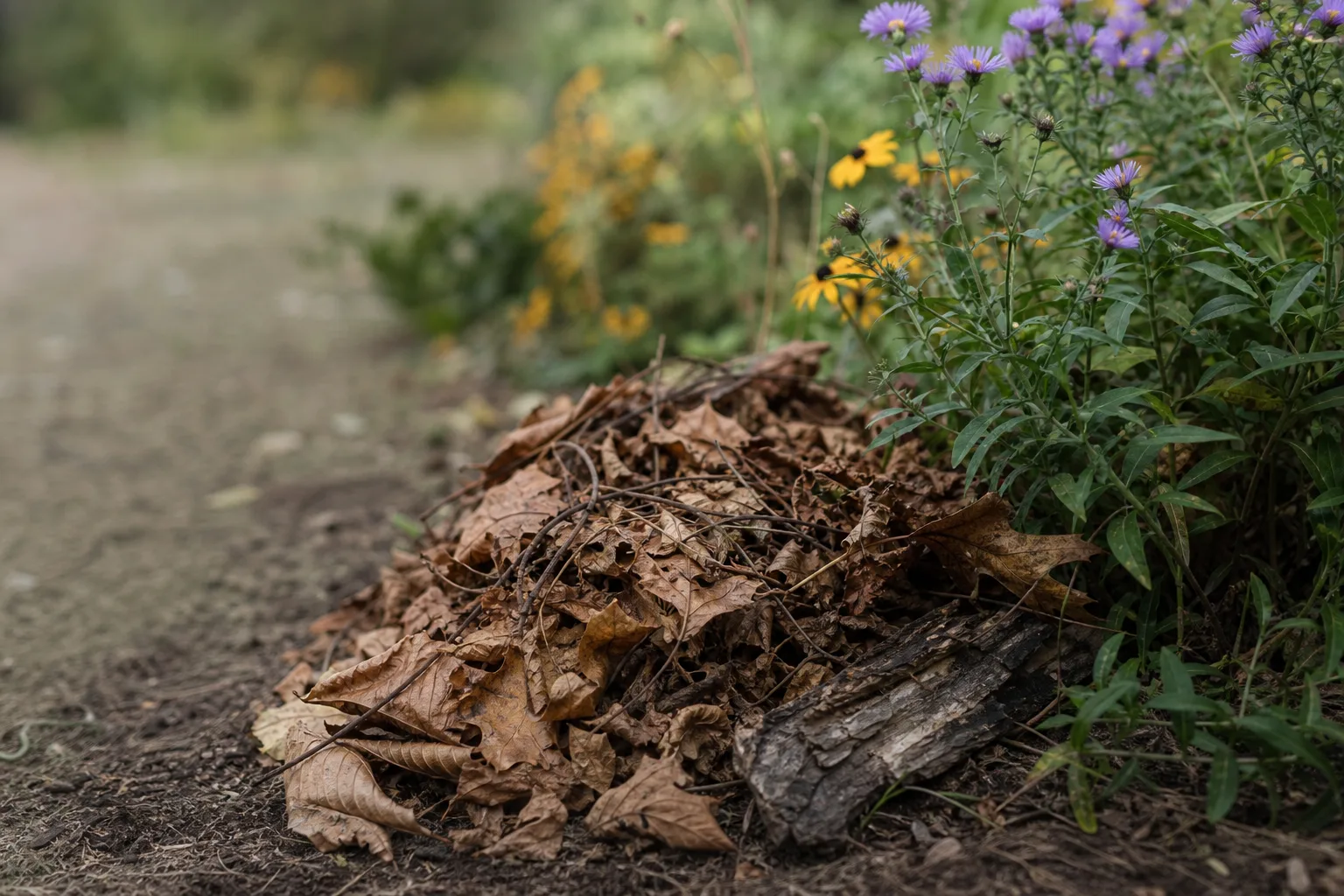
Yes, you should leave some fall leaves in your yard for winter habitat, but you do not need to abandon every tidy edge and pathway. Rake a few small piles, each no larger than one foot across, near native flowers or a garden border, then leave them dry, pesticide-free, and undisturbed until spring.
Why should you leave leaves for fireflies and native bees?
Fireflies and many native bees spend winter in protected places such as leaf litter, dried plant stems, downed sticks, and logs. Leaving a modest amount of this debris gives beneficial insects a place to shelter until spring, while clearing every leaf removes habitat they may need to return safely. New England Botanic Garden describes these materials as important year-round habitat.
This is the part tidy-yard advice often misses. A leaf is not just trash waiting for the curb. It can be insulation, cover, and a little roof over an insect’s winter home.
Native bees do not all nest in the same place, either. Some use soil, some use stems, and some use small cavities in wood or bark. I am not asking you to make your whole yard wild. I am asking you to stop treating every brown thing as a problem.
I grew up watching August rain hit my abuela’s crowded patio in Miami, where sandy fill drained before you finished watering. Austin taught me the opposite lesson. Leaves can sit on alkaline clay, hold moisture, and become a slick little rot pocket, so the answer here is a modest pile, not a blanket over every inch.
How many leaves should you leave in a tidy yard?
Leave a few small piles rather than a continuous layer across the property. Keep each pile no larger than one foot across, use dry leaves with some shredded stems and small sticks, and place the piles in sunny, sheltered spots near native flowering plants or a garden border so they provide habitat without taking over the yard.
One foot across is small enough to manage and large enough to create cover. Make two or three piles if your yard has room. You can rake them behind a border, beside a fence, or at the edge of a planting bed.
Do not build a mountain against your house, under a wet downspout, or over a drain. That is not habitat design. That is how you create damp debris and then wonder why the bed smells strange in January.
Everyone says a tidy yard means removing everything. In practice, a few intentional piles look more cared for than a whole lawn covered in leaves, because the eye reads a clear edge and a defined pocket as design.
Where should you place fall leaf piles?
Place fall leaf piles in sunny, sheltered locations near native flowering plants, garden borders, or the quieter edge of a bed. A little sun helps the material dry after rain, while nearby stems, logs, or bark add crevices and shelter for insects that use different overwintering spaces.
A south or southeast-facing border can work well in an Austin yard if water does not collect there. Avoid the lowest part of a Blackland Prairie clay bed, where rain can sit and the soil can set hard as a brick by August.
Keep the piles away from regular foot traffic. Repeated boots and wheelbarrows crush the cover and disturb anything tucked beneath it before spring.
Near native flowers is useful because the emerging insects will be close to future forage, but do not assume one flower supports every pollinator. Native plants can have specific relationships with local insects, so use the plant database to choose regionally suitable plants for your light, soil, and water conditions.
Can you use leaves on vegetable beds and perennial borders?
Yes, whole or chopped leaves can be spread in a two-inch-deep layer over vegetable beds or around flowering perennials. That layer protects the soil surface, helps retain moisture and warmth, and gives insects cover beneath it, but it should not be packed against stems or used where wet leaves will smother small plants.
The two-inch depth matters. A thin scattering disappears after the first wind, while a heavy layer can stay wet and compacted. The recommended use of a two-inch layer for vegetable gardens is also described by Farm and Dairy.
Chopped leaves are less likely to blow around and can settle between plants. The trade-off is that you need a mower or shredder, and chopped leaves break down faster, so they may provide less obvious winter structure than whole leaves mixed with stems and sticks.
For flowering perennials, leave a little space around crowns and stems. Leaves touching a plant’s base for months can stay damp, especially after an Austin winter rain followed by a freeze. I have killed plants by being generous with mulch and stingy with air. Once was enough.
Should you add sticks, logs, or bark to leaf piles?
Add a few coarse sticks, short logs, or pieces of bark among the leaves if they are clean and dry. These materials create extra crevices for beetles and solitary bees, and they keep a small pile from collapsing into a dense, wet mat, but they take space and can look untidy if scattered without a defined border.
Use a few pieces, not a stack of firewood. A short log or slab of bark tucked beside a one-foot leaf pile gives the insects more texture without turning the bed into a storage area.
Do not bring in treated lumber, painted wood, or material with a pesticide history. The goal is a safe shelter, not a mystery box from the back of somebody’s garage.
A narrow strip of gravel or a simple stone edge can make the habitat look intentional. Diego and I disagree about gravel often enough to make it a household sport, but here I want just enough edging to hold the shape, not a desert of decorative rock.
Who is leaving leaf litter for, and who should skip it?
This approach suits homeowners with a defined border, a few native flowering plants, and enough space to leave two or three one-foot piles untouched through winter. Skip it in a drainage path, against a damp foundation, over a frequently used lawn, or anywhere you cannot prevent pesticide applications, heavy foot traffic, or repeated cleanup.
It works especially well for a small front-yard border, a backyard vegetable bed, or the far side of a pollinator planting. You can keep the sidewalk, porch, driveway, and lawn edge crisp while reserving a few quiet pockets for habitat.
Skip whole-leaf piles where wind sends them into storm drains or where water already pools after rain. In those places, chop the leaves and use a measured two-inch layer in a bed, or compost them instead. Composting is useful, but it removes the immediate leaf shelter from that spot, so it is not the same choice.
If your yard service sprays insecticide, ask exactly which areas will be treated and keep the habitat piles outside that zone. The research calls for keeping overwintering areas free of pesticides and excessive foot traffic. That is not fussy. It is the basic condition of the plan.
| Leaf habitat option | Best use | Honest downside |
|---|---|---|
| Small whole-leaf pile | A sheltered border near native flowers | It can blow apart and look messy after wind |
| Two-inch layer of chopped leaves | Vegetable beds and perennial borders | It takes equipment and can compact if applied too wet |
| Leaves mixed with sticks or bark | Habitat with extra crevices | It needs more space and a deliberate edge |
| Composting leaves | Areas that must stay visually clear | The insects lose that winter shelter in the original bed |
How do you keep leaf habitat neat through winter?
Keep leaf habitat neat by defining its footprint, limiting each pile to one foot across, and clearing only the material that blocks paths, drains, doors, or lawn use. Leave the chosen piles undisturbed through winter, because repeated raking defeats the shelter you created for fireflies and native bees.
Rake the leaves into place in fall, then stop fussing with them. Mark the edge with two or three stones, a short border, or the existing line of a planting bed. A clear boundary does more for visual order than daily tidying.
Leave dried plant stems standing where they do not obstruct a path. The New England Botanic Garden notes that many pollinators and other beneficial insects overwinter in dried stems, downed logs, and leaf litter, so cutting every stem to the ground removes more than winter color.
In spring, wait until temperatures are consistently mild before moving the piles. Do not drag them across emerging flowers in February just because we had one warm afternoon. Austin can give you sunshine in a T-shirt and a hard freeze before breakfast, as the February 2021 freeze made painfully clear.
What should you do with leaves right now this fall?
This fall, rake leaves off paths, drains, and lawn areas first, then sort the rest into two or three habitat piles no larger than one foot across. Add a few dry stems or coarse sticks, place the piles in sunny sheltered spots near native flowers, and leave them alone through winter unless they become wet, compacted, or unsafe.
Start with the simple version. You do not need a special bin, a purchased insect hotel, or a full yard conversion. You need a defined corner, dry leaves, a little structure, and the discipline not to rake it again tomorrow.
If you have vegetable beds, spread whole or chopped leaves two inches deep. If you have flowering perennials, keep the layer off the crowns and stems. If you have only lawn, use the border or a small bed rather than leaving leaves where they will smother grass.
Ask yourself one honest question: can this spot stay undisturbed until spring? If the answer is no, choose another spot. Good habitat is not just what you add. It is what you allow to remain.
Are small leaf piles enough for overwintering fireflies and native bees?
Yes, small leaf piles can provide useful overwintering cover for fireflies and many native bees, especially when combined with dried stems, downed sticks, bark, or logs. They are not a complete habitat by themselves, but a few undisturbed piles give insects shelter that a fully cleared yard cannot provide.
The goal is not to promise that every firefly will stay in your yard. Habitat needs differ across life stages and insect species. A leaf pile is one piece of a living garden, alongside native plants, clean shelter, and freedom from pesticides.
Native flowers matter after winter because many native pollinators rely on specific host plants for habitat and forage. Choose plants suited to your local growing conditions rather than buying a random flower because the tag says pollinator friendly.
You can use get a concept for your yard if you need help placing a tidy habitat pocket beside a path, vegetable bed, or flowering border. I would rather see one small place you maintain well than a grand plan that gets raked bare by November.
Frequently asked questions about leaving leaves for winter habitat?
Why should you leave leaves for fireflies and native bees?
You should leave leaves because fireflies and many native bees use leaf litter, dried stems, downed sticks, and logs as protected overwintering sites. Clearing every leaf removes that shelter. A few small, dry piles near native flowers or a garden border support habitat while keeping the rest of the yard tidy and usable.
How many leaves should you leave in a tidy yard?
Leave two or three small piles, each no larger than one foot across, rather than covering the entire yard. Use dry leaves with some stems and small sticks, and place them where they will not block paths or drains. This gives insects shelter without creating a broad, wet layer across the property.
Can you use leaves on vegetable beds and perennial borders?
Yes, spread whole or chopped leaves in a two-inch-deep layer on vegetable beds or around flowering perennials. The layer helps retain moisture and warmth while giving insects cover. Keep leaves away from plant crowns and stems, and avoid applying them where rainwater already pools or the material will stay soggy.
Should you add sticks, logs, or bark to leaf piles?
Yes, add a few clean, coarse sticks, short logs, or pieces of bark to create extra crevices and keep the pile from becoming a dense mat. Do not use painted, treated, or chemically contaminated wood. The trade-off is visual and practical: these materials need a defined space and may look less polished than leaves alone.
Who is leaving leaf litter for, and who should skip it?
Leave leaf litter for a yard with a defined border, nearby native flowers, and a place that can remain undisturbed through winter. Skip it in drainage paths, against damp foundations, on heavily used lawns, or anywhere pesticides and constant foot traffic will reach the pile. Use measured leaf layers or compost in those locations instead.
What should you do with leaves right now this fall?
Rake leaves away from paths, drains, doors, and lawn areas, then make two or three one-foot piles in sunny, sheltered spots near native flowers or a garden border. Add dry stems or coarse sticks, leave the piles undisturbed through winter, and use a two-inch layer on vegetable beds if that location stays well drained.
Want a plan for your own yard?
Tell us the space and we will put a planting plan together for it. Start at get my concept, or browse what actually grows where you are over on plants.
Frequently asked questions
Why should you leave leaves for fireflies and native bees?
You should leave leaves because fireflies and many native bees use leaf litter, dried stems, downed sticks, and logs as protected overwintering sites. Clearing every leaf removes that shelter. A few small, dry piles near native flowers or a garden border support habitat while keeping the rest of the yard tidy and usable.
How many leaves should you leave in a tidy yard?
Leave two or three small piles, each no larger than one foot across, rather than covering the entire yard. Use dry leaves with some stems and small sticks, and place them where they will not block paths or drains. This gives insects shelter without creating a broad, wet layer across the property.
Can you use leaves on vegetable beds and perennial borders?
Yes, spread whole or chopped leaves in a two-inch-deep layer on vegetable beds or around flowering perennials. The layer helps retain moisture and warmth while giving insects cover. Keep leaves away from plant crowns and stems, and avoid applying them where rainwater already pools or the material will stay soggy.
Should you add sticks, logs, or bark to leaf piles?
Yes, add a few clean, coarse sticks, short logs, or pieces of bark to create extra crevices and keep the pile from becoming a dense mat. Do not use painted, treated, or chemically contaminated wood. The trade-off is visual and practical: these materials need a defined space and may look less polished than leaves alone.
Who is leaving leaf litter for, and who should skip it?
Leave leaf litter for a yard with a defined border, nearby native flowers, and a place that can remain undisturbed through winter. Skip it in drainage paths, against damp foundations, on heavily used lawns, or anywhere pesticides and constant foot traffic will reach the pile. Use measured leaf layers or compost in those locations instead.
What should you do with leaves right now this fall?
Rake leaves away from paths, drains, doors, and lawn areas, then make two or three one-foot piles in sunny, sheltered spots near native flowers or a garden border. Add dry stems or coarse sticks, leave the piles undisturbed through winter, and use a two-inch layer on vegetable beds if that location stays well drained.
Free, no obligation
Ready to design your dream landscape? Start here.
Tell us where you are and we will start a free profile for you, with plants that actually survive your climate and a real sense of what the build would cost.