
Leaf Mold, the Free Soil Amendment Everyone Rakes to the Curb
Fallen leaves become excellent soil amendment when you give them a full year to break down. Here is how to build, tend, and use a leaf mold pile this fall.
September 18, 2026
By Diego Navarro
Is leaf mold really worth waiting a year for?
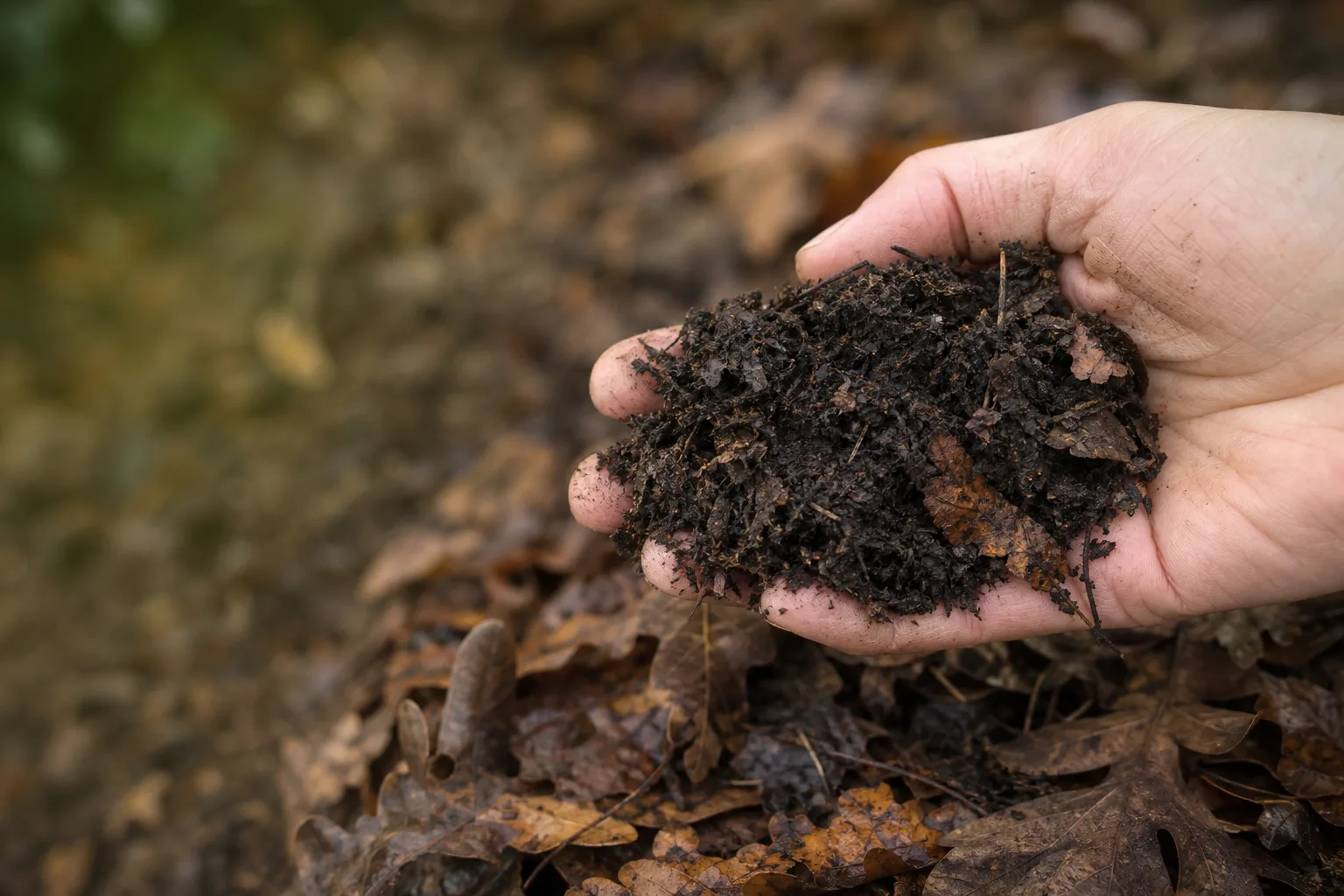
Yes, leaf mold is worth waiting a year for because slow-decayed leaves become a dark, crumbly amendment that adds lift, friability, and water-holding capacity to soil. It is my first choice for improving tired beds, sandy ground, and heavy Central Texas soil, provided you can give the pile twelve months and keep it slightly damp. Free still takes time.
Fresh leaves are not finished leaf mold. They can tie up nitrogen while they break down, so do not spread a thick layer of whole leaves directly over a bed where you expect plants to grow now.
Finished leaf mold works differently. It adds organic matter and creates a more open soil texture, which helps air and water move through the root zone. Fine Gardening describes leaf mold as a way to build healthy soil and increase water holding.
I learned the value of slow amendments from my father’s twelve-foot strip of New Jersey clay, where every handful of good material mattered. In Austin, the soil argues back harder, but the answer is still steady organic matter. Not a miracle bag.
How do you start a leaf mold pile this fall?
Start a leaf mold pile this fall by choosing a shaded or partly shaded place, gathering fallen leaves into a loose pile or bin, dampening them lightly, and covering the pile while leaving enough ventilation for air exchange. Make the pile at least 3 feet wide if possible, because a tiny pile dries out quickly and breaks down slowly.
A wire bin is my preference because it holds leaves without sealing them into a wet brick. Its downside is that it looks less tidy than a purchased compost tumbler, and it needs a cover to keep wind from redistributing your work across the yard.
A simple pile costs nothing, but wind and neighborhood pets can scatter it. A lidded bin costs money and still will not make leaf mold faster, because this process depends on slow decomposition rather than constant heating.
Rake leaves into the pile as they fall in October and November. Remove obvious trash and thick sticks, but do not spend an afternoon trying to make every leaf identical. Nature has never requested that level of paperwork.
Should you shred leaves before making leaf mold?
Shredding leaves is useful but not required for leaf mold. Smaller pieces usually make a more compact pile and expose more surface area for decomposition, while whole leaves are easier to gather and still produce good leaf mold if the pile stays damp and gets stirred occasionally. The tradeoff is extra equipment, noise, and work.
If you already own a mower, run it over a thin layer of leaves once or twice before collecting them. That method saves storage space, but it can leave fine pieces that blow away before you get them into the bin.
If you rake whole leaves into a 3-foot pile, expect the material to settle noticeably during the first month. Add more leaves as the pile drops, then dampen the new layer so the outside does not become a dry shell.
I would not buy a dedicated shredder for this job alone. The machine is another thing to store, maintain, and explain to Valeria when the garage has somehow acquired one more seasonal appliance.
How damp should a leaf mold pile be?
A leaf mold pile should be slightly damp throughout, similar to a wrung-out sponge rather than dripping wet. Check the center every two to four weeks during dry weather, add water if the leaves feel crisp, and cover the pile so rain does not turn the bottom into a stagnant mass. Too dry slows decomposition, while too wet removes air.
In Austin, check it more often from June through September because heat and wind can dry the outer foot quickly. In a rainy fall, check the pile after heavy storms instead of automatically adding water.
A hose works, but a gentle spray is better than flooding the pile. Flooding creates a wet lower layer that can compact, smell, and become difficult to mix.
The cover has a job, but it should not become a sealed plastic vault. Use a cover that keeps pests and excessive rain out while allowing some ventilation. The tradeoff is that a breathable cover needs checking after windy weather.
How often should you stir or turn leaf mold?
Stir or turn leaf mold occasionally, about once every four to six weeks during the first year, to redistribute moisture and expose dry outer leaves to the damp center. Leaf mold does not need the frequent turning required by a hot compost pile, and turning it weekly only creates extra labor without shortening the wait in a useful way.
Use a garden fork for a loose pile or lift sections of a wire bin into a second bin. A fork is inexpensive and simple, but it can tear through a compacted wet layer instead of actually mixing it.
When you turn the pile, look for two things: dry leaves at the edges and waterlogged material at the bottom. Add a little water to dry sections and loosen wet sections before returning them.
Everyone says more turning means faster compost. In practice, leaf mold is a slower, cooler process, so the pile benefits more from stable moisture and air than from constant disturbance. That is why I check the calendar instead of chasing every leaf with a fork.
How long does leaf mold take to finish?
Leaf mold usually takes about one year to finish, although the timing depends on leaf size, moisture, airflow, and pile size. It is ready when the material is dark, crumbly, earthy, and free of recognizable leaves; if you can still identify most of what you collected, give it more time.
A pile started in November may be usable the following November, but do not promise yourself an exact harvest date. Dry conditions can stretch the process beyond twelve months, while smaller shredded leaves may break down sooner.
Finished material should not look like fresh raked leaves with a little dark dust mixed through. That is partly decomposed material, and I would return it to the pile rather than spread it thickly around active plants.
Sifting improves the finished product. A 1/2-inch screen removes sticks and large fragments, but the downside is labor, and the oversize pieces need another season in the pile. You are not creating a laboratory medium. You are making good soil amendment from yard waste.
How should you use finished leaf mold in the garden?
Use finished leaf mold as a surface layer, soil amendment, or ingredient in a growing medium after visible leaves have disappeared. Spread 2 to 3 inches over a bed, mix it into the top 6 inches of loam, or apply a thinner top-dressing around established plants, then cover it lightly with straw if wind is likely to move it.
As a surface layer, leaf mold helps retain moisture and suppress weeds, but it does not eliminate weeds and can blow across an exposed bed before rain settles it. Straw holds it in place, though straw can look untidy and may introduce seeds.
In sandy soil, mix leaf mold into the top 6 inches rather than leaving all of it on top. The material can make a more welcoming environment for soil organisms, a point also described in this discussion of leaf mold and sandy soil, but leaf mold is not a complete fertilizer.
In heavy black clay, do not bury a 3-inch layer in one deep pocket and expect it to fix drainage. Blend it through the root zone, because isolated layers can hold water unevenly. Down here, a shovel can hit limestone eight inches down, so use the soil you actually have instead of digging an imaginary perfect bed.
If you are deciding what to do with the material, this is the short version:
| Use | Best application | Honest downside |
|---|---|---|
| Surface mulch | Spread 2 to 3 inches over beds and paths | It can blow away before rain settles it |
| Soil amendment | Mix into the top 6 inches of loam or garden soil | It takes labor to blend evenly |
| Seedling or potting ingredient | Mix finished, sifted leaf mold into a growing medium | It is variable and should not be treated as a measured fertilizer |
Who is leaf mold for, and who should ignore it?
Leaf mold suits homeowners with fallen leaves, a little outdoor space, and patience for a twelve-month process; it is especially useful for sandy soil, tired beds, or heavy ground that needs more air and water-holding capacity. Ignore it if you need amendment this weekend, cannot keep a pile slightly damp, or have nowhere to contain windblown leaves.
This is a strong choice for a small backyard because the raw material is already on site. It is also a good fit for someone who fills several municipal leaf bags each fall and then buys bagged organic matter in spring. That exchange makes no financial sense unless your curbside program is charging you by the hour for raking.
It is a poor fit for a balcony gardener with no outdoor storage, or for a new bed needed immediately for a planting date three weeks away. Buy or make a different finished amendment for that job, and start leaf mold for next year.
If you are unsure which plants and soil uses suit your finished material, the plant database can help you compare growing conditions before you spread it everywhere. The amendment improves soil, but every plant still has an opinion.
What should you do with leaves today?
Today, rake the leaves into a 3-foot-wide pile or ventilated bin, remove trash and thick sticks, dampen the pile lightly, and cover it without sealing it shut. Mark the start date in your calendar for four weeks from now, when you will check moisture and stir the pile, then plan to inspect it again next fall.
Do not bag every leaf for the curb before deciding whether some can serve your beds. Keep leaves away from drains and walking surfaces, but a contained pile in a side yard is a useful material stockpile, not a failure of housekeeping.
If your yard has difficult grades, limestone, or a bed layout you are still guessing at, you can get a concept for your yard before deciding where the bin and future amended beds should go. Put the pile where you can reach it with a hose and a fork. That is the design principle.
Ask yourself one honest question: will you still be willing to tend this pile in August? If yes, start it now. If no, make it smaller, place it closer, or do not pretend the far corner of the yard is suddenly part of your routine.
What are the most common leaf mold questions?
Leaf mold rewards a simple routine: contain the leaves, keep them slightly damp, give them air, and wait until the material is dark and crumbly. The questions below cover the mistakes I see most often, especially the temptation to use unfinished leaves as though time were optional.
How long does leaf mold take to finish?
Leaf mold usually takes about one year to finish, although the timing depends on leaf size, moisture, airflow, and pile size. It is ready when the material is dark, crumbly, earthy, and free of recognizable leaves; if you can still identify most of what you collected, give it more time. A dry pile may take longer.
Can I put fresh leaves directly on my garden beds?
You can place a thin layer of fresh leaves on a bed, but do not spread them thickly where active plants need available nitrogen. Fresh leaves can tie up nitrogen as they decompose, so use finished leaf mold for a 2 to 3 inch amendment layer and keep unfinished leaves in a contained pile instead.
How damp should a leaf mold pile be?
A leaf mold pile should be slightly damp throughout, similar to a wrung-out sponge rather than dripping wet. Check the center every two to four weeks during dry weather, add water if the leaves feel crisp, and cover the pile so rain does not turn the bottom into a stagnant mass.
Does leaf mold replace compost or fertilizer?
Leaf mold does not replace compost or fertilizer because it is mainly a soil-structure and moisture amendment rather than a complete nutrient source. Use it to add lift, friability, and water holding, then follow the needs of the specific bed and plants instead of asking one pile of leaves to do every job.
How thick should I spread finished leaf mold?
Spread finished leaf mold 2 to 3 inches over a bed as a surface layer, or mix it into the top 6 inches of loam or garden soil. A thicker layer can be harder to blend and may shift unevenly, while a thinner layer still helps but gives you less material to work through the root zone.
Should I buy a leaf mold bin?
You do not need to buy a leaf mold bin because a loose pile or simple wire enclosure can hold the material. A purchased bin may look neater and contain leaves better, but it costs money and does not remove the need to check moisture, provide airflow, stir occasionally, and wait about a year.
Want a plan for your own yard?
Tell us the space and we will put a planting plan together for it. Start at get my concept, or browse what actually grows where you are over on plants.
Frequently asked questions
How long does leaf mold take to finish?
Leaf mold usually takes about one year to finish, although the timing depends on leaf size, moisture, airflow, and pile size. It is ready when the material is dark, crumbly, earthy, and free of recognizable leaves; if you can still identify most of what you collected, give it more time. A dry pile may take longer.
Can I put fresh leaves directly on my garden beds?
You can place a thin layer of fresh leaves on a bed, but do not spread them thickly where active plants need available nitrogen. Fresh leaves can tie up nitrogen as they decompose, so use finished leaf mold for a 2 to 3 inch amendment layer and keep unfinished leaves in a contained pile instead.
How damp should a leaf mold pile be?
A leaf mold pile should be slightly damp throughout, similar to a wrung-out sponge rather than dripping wet. Check the center every two to four weeks during dry weather, add water if the leaves feel crisp, and cover the pile so rain does not turn the bottom into a stagnant mass.
Does leaf mold replace compost or fertilizer?
Leaf mold does not replace compost or fertilizer because it is mainly a soil-structure and moisture amendment rather than a complete nutrient source. Use it to add lift, friability, and water holding, then follow the needs of the specific bed and plants instead of asking one pile of leaves to do every job.
How thick should I spread finished leaf mold?
Spread finished leaf mold 2 to 3 inches over a bed as a surface layer, or mix it into the top 6 inches of loam or garden soil. A thicker layer can be harder to blend and may shift unevenly, while a thinner layer still helps but gives you less material to work through the root zone.
Should I buy a leaf mold bin?
You do not need to buy a leaf mold bin because a loose pile or simple wire enclosure can hold the material. A purchased bin may look neater and contain leaves better, but it costs money and does not remove the need to check moisture, provide airflow, stir occasionally, and wait about a year.
Free, no obligation
Ready to design your dream landscape? Start here.
Tell us where you are and we will start a free profile for you, with plants that actually survive your climate and a real sense of what the build would cost.