
Landscape Design Near Me: How to Hire the Right Local Pro
Looking for landscape design near you? Here is how to compare designers, contractors, costs, plans, sustainable materials, and phased yard work before you sign anything.
September 19, 2026
By Valeria Navarro
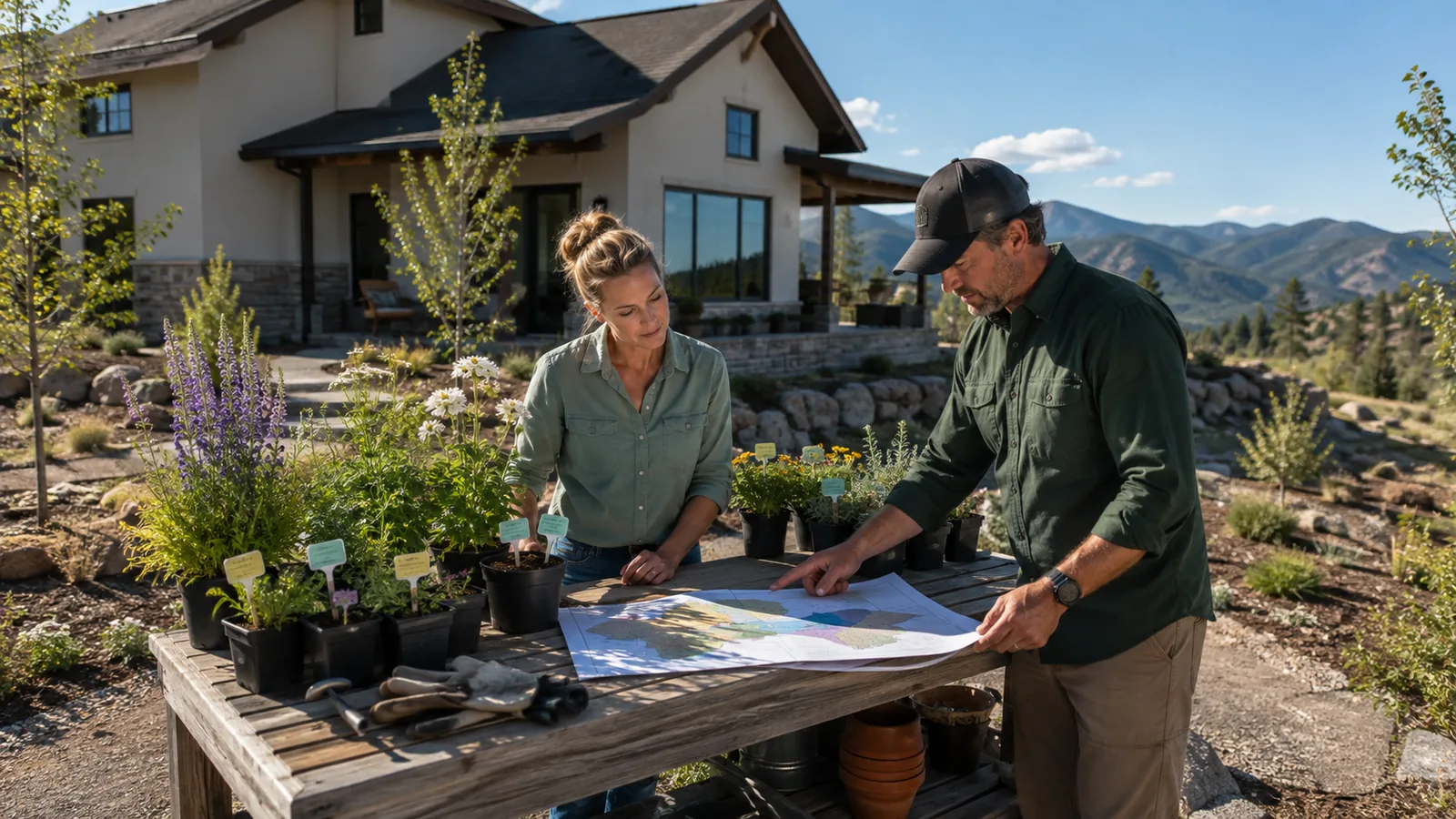
The best landscape design near you comes from a local designer who measures the property, draws a scaled plan, explains the trade-offs, and gives you a written scope before installation. I would hire that person before hiring the cheapest crew, because a pretty planting list cannot fix bad drainage, wrong sun exposure, or a patio placed where water already collects.
How do I find landscape design near me?
Search locally, then verify that the person can design as well as install. Ask for a site visit, a measured plan, plant and material recommendations, a written scope, and examples of completed work in conditions like yours. A real designer should talk about drainage, utilities, sun, shade, slope, maintenance, and phasing before talking about decorative pots.
Start with a local landscape pro directory, then check whether each listing describes design, installation, maintenance, or all three. Those are different jobs. A maintenance crew may keep beds tidy but never produce a construction-ready plan. A contractor may build beautifully but still need a designer for plant placement and long-term structure.
Ask for two or three local referrals. Look at gardens after at least one hot season, not only fresh installations with fluffy mulch and nursery-green plants. In Austin, February 2021 is still part of the conversation. I want to know what survived, what was replaced, and why.
The Sustainable Landscape Services program at Denver Botanic Gardens describes consultation, practical design guidance, and resource-conscious landscape work as separate parts of a professional service. That is the standard I would use, even though Austin is not Denver.
What does a landscape designer near me actually do?
A landscape designer turns your yard, budget, routines, and site problems into a plan that can be built in the right order. The work may include measuring, layout, outdoor rooms, planting design, material selection, drainage thinking, sourcing, contractor coordination, and phased installation. It should reduce expensive guessing, not simply add more plants.
The first visit should include questions about how you use the yard. Do you eat outside? Need room for children or dogs? Want a path to the compost? Hate pruning? Those answers matter more than a fashionable style name.
A useful plan divides the property into outdoor rooms without building walls. Dining, lounging, play, garden beds, and circulation can feel distinct through paving, planting, grade, or furniture placement. The Garden Design planning guide recommends sketching permanent features, measuring them, and transferring the information to graph paper at scale, while also noting windows, doors, utilities, sun, shade, wind, and slopes.
Some designers only provide drawings. Others source materials, supervise crews, and return for planting or follow-up. Put those deliverables in writing. Otherwise, “design included” can mean one cheerful conversation and a plant list that does not fit your yard.
How much does landscape design near me cost?
There is no honest single price for landscape design near you because a planting refresh, a measured master plan, and a full hardscape project require different amounts of time and construction. Use a written scope instead of a vague starting number. A public homeowner discussion records quotes of $15,000 to $30,000 for larger landscape work, while one first phase cost $3,000, so the range is wide and project-specific. Source
For your first call, separate design fees from installation costs. Ask whether the fee covers a site measure, scaled drawing, plant schedule, material specifications, revisions, permitting help, contractor bids, and construction observation. Ask what happens if the work is paused for six months.
Here is the budget structure I would request. These are planning categories, not promises of Austin pricing:
| Project path | What it may include | Honest downside |
|---|---|---|
| Design only | Site measure, scaled concept, planting and material direction | You still coordinate bids, sourcing, and construction |
| Design plus one phase | Plan, selected materials, installation of a defined area | Later phases may not match if the scope changes |
| Full design and build | Design, sourcing, crew coordination, and installation | Highest commitment before you learn how the yard performs |
| Small refresh | Cleanup, reshaping, mulch, gravel, and a few new plants | It can improve appearance without solving deeper drainage or grading problems |
If money is tight, I prefer a master plan with two or three build phases. First solve access, drainage, and circulation. Then install the main hardscape. Plant the structure afterward. That keeps you from paying twice because the bed moved six feet after the patio was built.
What should a landscape designer measure before giving me a quote?
Before quoting, a designer should record the house, existing trees, patios, fences, utilities, windows, doors, faucets, outlets, sun and shade, wind exposure, slopes, and major drainage patterns. A rough sketch is only the beginning. Accurate measurements transferred to a scaled plan reveal conflicts that a walk-through conversation can easily miss.
Stand outside with graph paper and sketch the property this fall. Mark the permanent things first. Then measure them. The graph paper method is inexpensive, but it takes your time and can be inaccurate if you guess angles or miss a utility line.
Ask the designer to show you the base plan before discussing plants. In my Austin yard, thin soil over limestone can make excavation a different conversation from one season to the next. Blackland Prairie clay can hold water, then crack open by August. A plan that ignores both will cost you in repairs and replacements.
You should also receive notes on sun and shade by season. A bed that looks sunny in November may sit under a tree canopy in June. A west-facing wall may turn a tender planting into a crispy little sermon by 4 p.m.
Is a local landscape designer better than a general landscaper?
A local landscape designer is usually the better first hire when your yard has several uses, difficult drainage, existing trees, slope, limited water, or a phased budget. A general landscaper may be enough for defined cleanup or straightforward installation. The right choice depends on whether you need a plan, physical labor, or both, and whether the person can explain the difference.
Here is my rule of thumb. If you are changing the shape or purpose of the yard, hire design help first. If you already have a measured plan and material list, an experienced installer may be all you need.
Everyone says local knowledge means knowing which plants sell at the nursery. In practice, it means understanding how the site behaves in July, after a thunderstorm, during a water restriction, and after a February freeze. Ask what the designer has learned from failures. I have killed plants too. That answer tells you more than a perfect portfolio.
A sustainable service should also discuss water, soil, material sourcing, and long-term maintenance. The Denver Botanic Gardens describes sustainable landscape consultation as guidance that helps landowners adopt practical practices and improve horticultural results, not as a single decorative style. Read the program description.
What should I ask a landscape designer before signing?
Ask what you will receive, who is responsible for permits and utility checks, how revisions are billed, which contractor performs the work, how substitutions are approved, and what maintenance the finished garden needs. Also ask for a written payment schedule, insurance information, an installation timeline, and a process for damage, plant failure, or missed scope.
Use these questions in the first meeting:
- Is this a design fee, an installation estimate, or both?
- Will you create a scaled plan with measurements?
- Who calls 811 or confirms utility locations before digging?
- Which parts of the plan are essential, and which are optional?
- What changes if we build the project in two or three phases?
- Who sources plants and materials, and can I approve substitutions?
- What maintenance hours should I expect each month?
- How will you handle drainage after the first heavy rain?
- What is excluded from this price?
- What warranty or replacement policy is written into the contract?
Do not sign a proposal that says “landscape installation” without quantities. You want square feet of paving, cubic yards of soil or mulch, linear feet of edging, plant counts, container sizes, irrigation zones, demolition, disposal, and finish grading described plainly.
A good contractor welcomes questions. A bad one gets slippery around exclusions. That is not a personality quirk. It is your money trying to leave through a side door.
What sustainable landscape choices work for a local yard?
Sustainable landscape choices reduce unnecessary runoff, water use, replacement planting, and maintenance without pretending the yard needs no care. Start with drainage, healthy soil practices, mulch, efficient irrigation, and plants suited to the region. In Austin, that means planning for drought and heat while leaving room for hard freezes, deer pressure, alkaline soil, and heavy rain.
Permeable pea gravel can work for paths, driveway areas, and patio edges because it allows water to move through rather than sending every drop downhill. Its downside is real: it shifts under wheels, migrates into lawns, and needs edging and periodic raking. If you want a smooth dining surface, gravel may irritate you before dessert.
Mulch helps protect soil and slow evaporation, but it must be replenished and kept away from trunks and siding. Drip irrigation puts water close to roots, but emitters clog, rodents can damage lines, and a system still needs seasonal adjustment. Neither is a magic button.
Native plant groupings can support regional conditions and reduce the drama of constant replacement, but “native” does not mean every plant fits every exposure or soil. Check mature size, sun, water, and deer pressure in the plant database before approving a planting schedule.
Should I use raised beds, containers, or a vertical garden?
Raised beds, containers, and vertical gardens suit small yards, poor soil, patios, and households that need a clear growing zone. They create useful structure and can add planting space without digging through limestone. Their downside is extra watering, filling, repairs, and monitoring, so they are not automatically lower maintenance than a ground bed.
Raised beds give you control over soil depth and shape. They also dry out faster than native ground, can become expensive to fill, and may need replacement boards. Containers are flexible and excellent near a kitchen door, but roots overheat in small pots and watering becomes a summer chore.
Vertical gardens save floor space, but their irrigation and attachment systems need attention. A wall can also magnify heat and wind. Use one where access is easy, not on the far side of the yard where you will forget it exists by July.
Dwarf trees can add height without overwhelming a small property, yet their mature canopy and root space still require planning. “Dwarf” does not mean tiny forever. The same goes for layered planting. It creates depth, but more layers mean more pruning decisions and more plant replacements if the exposure is wrong.
Who is landscape design near me for, and who should ignore it?
Landscape design near you suits homeowners changing the yard’s layout, adding outdoor rooms, solving repeated drainage problems, coordinating several trades, or spending money in phases. Ignore a full design service if you only need leaves removed, one shrub replaced, or an existing bed refreshed from a clear written list. Match the service to the problem.
Hire design help if the patio, path, fence, utilities, trees, and planting areas compete for space. Hire it if your yard feels busy but still does not function. Hire it if you keep buying plants that die because the site was never mapped.
Skip the full process for a small, defined task with no layout change. A garden maintenance crew may be the right tool for pruning, cleanup, or mulch installation. A contractor with your existing plan may be right for construction. You do not need a master plan to replace three dead annuals.
You need a master plan when the mistakes are permanent. That is the line. Spend on clarity before stone, irrigation, raised beds, or a tree that will cast shade for the next twenty years.
What should I ask a landscape designer before signing?
Ask what the design fee includes, whether the drawing is scaled, how site measurements and utilities are handled, which materials and quantities are specified, how substitutions work, and who manages installation. Confirm exclusions, payment dates, insurance, timing, maintenance, and plant replacement terms in writing before any deposit changes hands.
Is a landscape designer worth it for a small yard?
A landscape designer can be worth it for a small yard when every foot must serve a purpose or when drainage, slope, utilities, and circulation conflict. A short site measure and scaled concept may prevent an oversized patio or a crowded planting bed. For one simple cleanup, design help may cost more than the problem requires.
How many landscape design quotes should I get?
Get two or three comparable landscape design quotes, each based on the same written wish list and site information. Comparing totals alone is misleading because one quote may include a scaled plan, sourcing, and construction oversight while another includes only installation. Ask each pro to identify exclusions and price the same first phase.
Should I hire a landscape designer or a landscape contractor?
Hire a landscape designer first if you need the yard planned, divided into outdoor rooms, or built in phases. Hire a landscape contractor when you already have a clear, measured plan and need physical installation. Some firms do both, but confirm who creates the design and who carries responsibility for construction changes.
What should be included in a landscape design contract?
A landscape design contract should include the site measure, drawing or plans, plant and material specifications, revision limit, fee, payment schedule, timeline, exclusions, sourcing responsibilities, utility and permit responsibilities, installation scope, and any warranty. If the contract only says “landscaping,” ask for quantities and deliverables before signing.
Can I phase a landscape design project over several years?
You can phase a landscape design project over several years, and a master plan makes that safer. Build drainage, access, utilities, and primary hardscape before delicate planting areas that may be disturbed later. Ask the designer to identify which phases depend on one another, because a cheap first phase can become expensive if it blocks the next one.
When should I contact a landscape designer in Austin?
Contact a landscape designer in Austin during fall or winter if you want time for measuring, planning, pricing, and scheduling spring work. Standing in the yard now helps you notice drainage, shade, wind, and the spaces you actually use. Do not wait until April hail or a July heat wave exposes a plan you never made.
Want a plan for your own yard?
Tell us the space and we will put a planting plan together for it. Start at get my concept, or browse what actually grows where you are over on plants.
Frequently asked questions
Is a landscape designer worth it for a small yard?
A landscape designer can be worth it for a small yard when every foot must serve a purpose or when drainage, slope, utilities, and circulation conflict. A short site measure and scaled concept may prevent an oversized patio or a crowded planting bed. For one simple cleanup, design help may cost more than the problem requires.
How many landscape design quotes should I get?
Get two or three comparable landscape design quotes, each based on the same written wish list and site information. Comparing totals alone is misleading because one quote may include a scaled plan, sourcing, and construction oversight while another includes only installation. Ask each pro to identify exclusions and price the same first phase.
Should I hire a landscape designer or a landscape contractor?
Hire a landscape designer first if you need the yard planned, divided into outdoor rooms, or built in phases. Hire a landscape contractor when you already have a clear, measured plan and need physical installation. Some firms do both, but confirm who creates the design and who carries responsibility for construction changes.
What should be included in a landscape design contract?
A landscape design contract should include the site measure, drawing or plans, plant and material specifications, revision limit, fee, payment schedule, timeline, exclusions, sourcing responsibilities, utility and permit responsibilities, installation scope, and any warranty. If the contract only says “landscaping,” ask for quantities and deliverables before signing.
Can I phase a landscape design project over several years?
You can phase a landscape design project over several years, and a master plan makes that safer. Build drainage, access, utilities, and primary hardscape before delicate planting areas that may be disturbed later. Ask the designer to identify which phases depend on one another, because a cheap first phase can become expensive if it blocks the next one.
When should I contact a landscape designer in Austin?
Contact a landscape designer in Austin during fall or winter if you want time for measuring, planning, pricing, and scheduling spring work. Standing in the yard now helps you notice drainage, shade, wind, and the spaces you actually use. Do not wait until April hail or a July heat wave exposes a plan you never made.
Free, no obligation
Ready to design your dream landscape? Start here.
Tell us where you are and we will start a free profile for you, with plants that actually survive your climate and a real sense of what the build would cost.