
Landscape Design: A Practical Plan for a Yard That Works
Good landscape design starts with a measured site plan, not a cart full of plants. Here is how to turn your yard into useful outdoor rooms with clear paths, focal points, layered planting, and materials that fit your climate and budget.
October 2, 2026
By Valeria Navarro
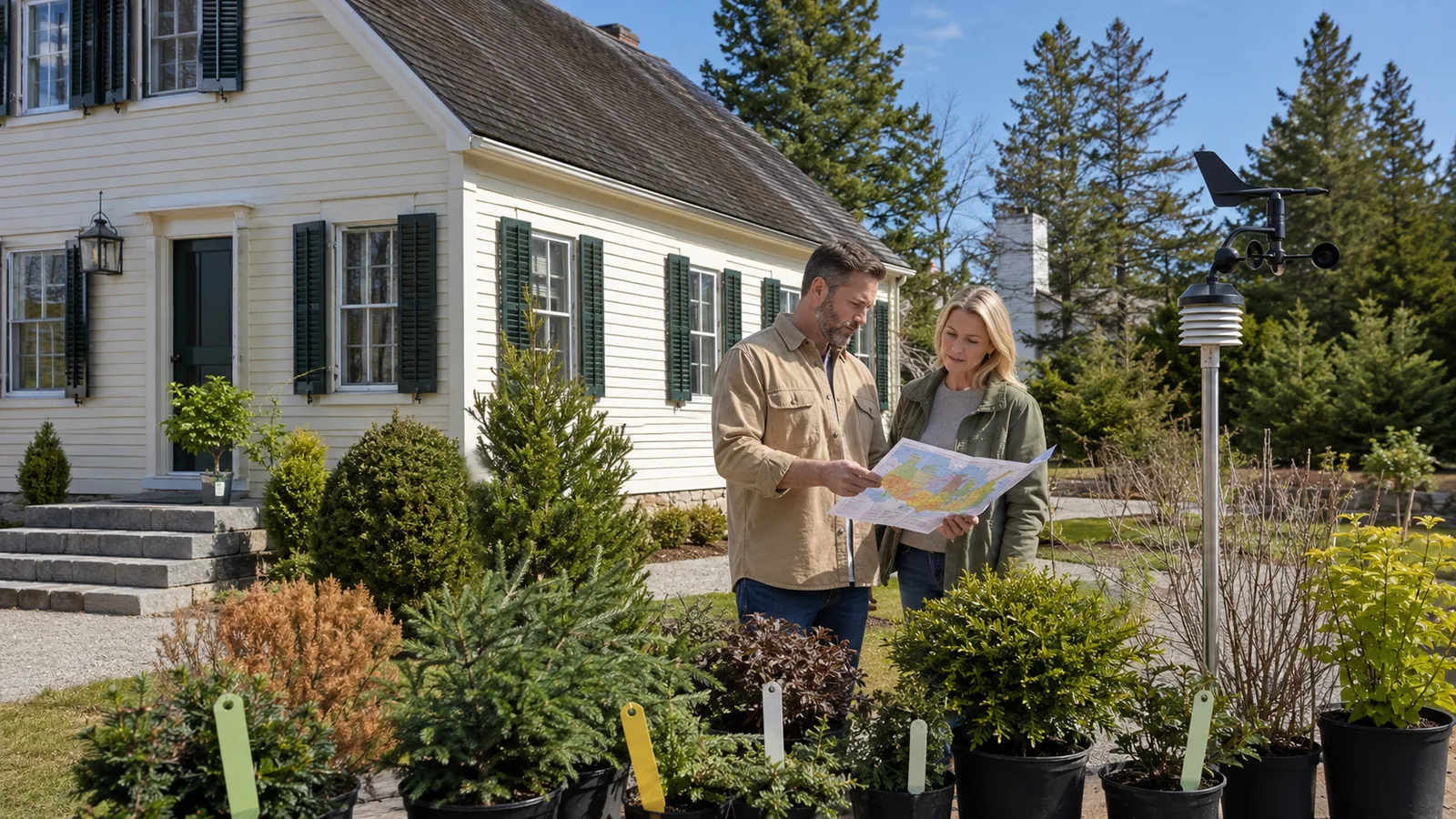
Landscape design starts with a measured plan, not a shopping cart full of plants. Divide your yard into useful outdoor rooms, connect them with clear paths, and choose every material and plant for your sun, soil, drainage, budget, and water limits.
How do I start a landscape design project?
Start this fall by photographing the yard, choosing one style, and drawing every permanent feature before buying anything. A rough property sketch should show the house, large trees and shrubs that stay, paved areas, slopes, doors, windows, water faucets, and electrical outlets, then become a measured plan on graph paper. Garden Design recommends this same outline, measure, and transfer sequence.
Stand outside at 9 a.m., noon, and 4 p.m. for one clear day. Mark full sun, bright shade, deep shade, wind, soggy spots, and places where water runs after rain.
In Austin, also mark the thin soil over limestone, caliche, and the Blackland Prairie clay that cracks in August. Do not assume a plant bed has the same soil as the lawn. It usually does not.
Use a tape measure, pencil, phone camera, and one sheet of graph paper. Graph paper is cheap and precise, but it gets wet and cannot show changing sun, so keep a clean master copy indoors and take photos outside.
What should I include in a landscape design plan?
Include the house, property lines, existing plants, utilities, drainage, grades, views, and the routes people already use. Then add the activities you want, such as cooking, eating, children’s play, sitting, storage, or a quiet corner, because a landscape plan should make the yard more useful as well as more beautiful. Reader’s Digest describes landscape design as a way to increase beauty, value, and usefulness.
Measure from two fixed points so every feature can be relocated accurately. Record the width of doors and gates. A path that looks generous on paper can feel pinched beside a wall or table.
Test drainage after a real rain. Watch where water collects for 24 hours, and note where soil dries first. A drainage observation costs nothing, but waiting for a contractor to discover the problem costs time and often a second excavation.
Make a plant wish list only after the inventory. Research plants that suit your local climate and the exact light in each bed through the plant database. The database saves you from treating a sunny limestone edge like a damp patio corner, which is how many expensive plant funerals begin.
How do I divide a yard into outdoor rooms?
Divide the yard by activity, not by random beds. Put cooking near the house, dining beside cooking, play where it can be seen, and a sitting nook near the view you want to frame. Separate rooms with plant beds, walls, arbors, level changes, or paved paths so each zone feels intentional without making the yard feel chopped up.
A patio is useful, but its hard surface can reflect heat and increase runoff. A fire pit creates a strong gathering place, but it needs clearances, safe fuel storage, and a surface that will not scorch. A cozy nook gives privacy, but privacy screens can block breezes and make a small yard feel smaller.
Use a simple sequence: arrival, movement, destination. The front walk should lead to the door. A side path should lead to the backyard. A garden path should lead somewhere worth stopping, not end beside a hose bib.
In Austin, keep outdoor rooms flexible for heat. Place the dining area where afternoon shade is possible, and reserve the hottest western edge for structures or plants that can take reflected heat. Everybody says the prettiest spot should be the patio. In practice, the shadiest useful spot wins in July.
How do focal points improve landscape design?
A focal point gives the eye a destination and helps connect separate areas. Choose one strong feature at the end of a view, beside a turn, or beyond a seating area, then let quieter beds support it. A sculpture, striking tree, water feature, or colorful chair grouping can all work. Pretty Purple Door explains how focal points guide movement and create interest.
Use one major focal point in a small yard and two or three in a larger one. More than that becomes visual shouting. I like a simple chair or a sculptural container at the end of a path because it can move later if the plan changes.
A water feature sounds romantic. It also needs cleaning, electricity, and regular attention, so it is a poor choice if you will resent weekly maintenance. A sculpture needs no watering, but it costs money upfront and can look disconnected unless its color or shape repeats elsewhere.
Ask yourself, what should someone notice from the kitchen window? Answer that question before placing the focal point. You are designing views from inside the house, not only photographs from the sidewalk.
How should I layer plants in a landscape design?
Layer plants from tall at the back, to medium in the middle, to short at the front, while repeating a few colors or plant forms through the yard. Grouping the same plant in odd numbers such as 3, 5, or 7 creates more impact than scattering single specimens. Pretty Purple Door recommends masses and odd-number groupings for stronger visual effect.
Use the mature width on the label, not the nursery pot size. Space a mature 3-foot plant about 3 feet from its neighbor when a full mass is wanted. Tighter spacing fills faster but increases pruning, disease pressure, and replacement costs.
Tall evergreen screening gives privacy, but it takes space and can compete for water. Low ground cover reduces bare soil, but it can spread into paths and require edging. A small tree creates shade over time, but roots, canopy width, and leaf cleanup belong on the plan now.
Do not plant a row of twelve different things because you love twelve different things. I have killed plenty of plants by giving each one a lonely little stage. Repetition is calmer, easier to water, and kinder to a budget.
Which sustainable landscape design choices are worth it?
Choose native or drought-tolerant plants matched to your site, add a rain garden where runoff naturally collects, and use permeable walkways where practical. These choices can reduce irrigation and runoff, but none is maintenance-free. Sustainability is a fit between the site and the design, not a label you attach after buying materials.
A rain garden can hold stormwater, but it must be located where water can safely collect and drain, not against the foundation. It may look unfinished during establishment, and it needs weeding while plants fill in.
Permeable paving allows water to move through the surface, but the base must be installed correctly and kept free of fine sediment. It often costs more to install than plain concrete. Concrete is cheaper and easier to sweep, but it sheds water and can make a hot yard hotter.
Native plants support a regional design, but native does not mean right for every corner. A plant native to a wet bottomland will struggle on a dry limestone slope. Research each choice in the plant database, then confirm mature size, light, drainage, and water needs before ordering.
What landscape design approach should I choose for my budget?
I would choose a phased, low-water outdoor-room plan over a one-week makeover. Install drainage and circulation first, then the main sitting or dining area, then trees and structural planting, and finally smaller plants and decoration. Phasing protects your budget because it lets you test how the yard behaves before covering every inch.
| Approach | Best use | Honest downside |
|---|---|---|
| Phased outdoor rooms | A homeowner who wants function now and planting over time | The yard may look unfinished for 6 to 18 months |
| Full landscape installation | A clear plan with available funds and a firm construction schedule | One wrong site decision is expensive to correct |
| Plant-first makeover | A small bed with reliable soil and drainage | Plants may hide access problems and crowd each other |
| DIY scaled plan with hired construction | A homeowner who can measure and make design decisions | Errors in grade, drainage, or utilities can cost more than design fees |
Start with the expensive, difficult-to-move work. Paths, steps, drainage, patios, lighting routes, and irrigation sleeves come before decorative pots. Diego and I disagree about gravel often, but he is right about one thing: moving a finished path is not a cute afternoon project.
Set a fall budget in three columns: must have, useful later, and pretty if money remains. Keep 10 to 15 percent for surprises, especially if excavation may hit limestone or buried concrete.
If you cannot see how the rooms connect, use get a concept for your yard before purchasing materials. A concept is cheaper than rebuilding a patio because the dining table blocked the only comfortable route.
Who is landscape design for, and who should skip a full plan?
A full landscape design suits a homeowner changing circulation, adding a patio, solving drainage, replacing a lawn, or coordinating several beds over more than one season. Skip a large master plan for now if you only need to refresh one small bed, rent the property, or cannot yet describe how you use the yard.
A measured plan is especially useful for a first-time homeowner because it turns vague excitement into decisions. It also helps a contractor price the same project you are imagining, not a different project built from a rushed conversation.
A renter can still map containers, shade, access, and daily use, but permanent walls and large trees are usually poor investments. A homeowner with severe drainage trouble should solve water movement before choosing decorative planting.
Start smaller if the yard overwhelms you. Pick one outdoor room, measure it, observe it for two weeks, and make that space work. A good plan can grow. A bad impulse purchase just grows roots.
What should I do in my yard this fall for landscape design?
This fall, finish the site inventory, measure the property, mark sun and drainage, and draw two or three scaled layouts before buying plants. Install or repair paths and drainage first, plant structural choices next, and leave small decorative planting until the plan survives a winter and you understand how February cold, spring hail, and summer heat affect the site.
Take photos from the front door, kitchen, favorite chair, and property gate. Circle the views you want to frame and cross out the views you want to screen. A plan should serve the way you actually look at the yard.
Choose one theme that guides materials and planting. Themes can be simple or complex, but they help keep the plant list and hardscape from arguing with each other, as the University of Florida landscape guidance explains. (https://ask.ifas.ufl.edu/publication/EP375)
In my Austin yard, fall is when I stop pretending every sunny bed is equal. One gets afternoon shade from the house, another gets reflected heat from limestone, and both punish the same plant in completely different ways. That is the useful work now: notice first, draw second, buy last.
What are the most common landscape design questions?
The most useful answers are practical: measure before planting, design for mature size, group repeated plants, and solve water movement before decoration. The questions below cover the mistakes I see most often in new plans, especially yards where a beautiful idea has not yet met clay soil, summer heat, or a real path width.
How much does landscape design cost?
Landscape design costs depend on whether you are drawing one bed yourself, paying for a concept, or commissioning construction documents. The safest first expense is a measured site plan because it reduces planting mistakes and gives every later decision a reference. Set aside 10 to 15 percent of the project budget for surprises such as limestone, drainage repairs, or utility conflicts.
How do I plan a landscape design for a small backyard?
Plan a small backyard around one main use, such as dining, play, or sitting, then make the path and storage serve that use. Use one focal point and repeated planting instead of many separate features. Every wall, screen, and large plant consumes space, so choose privacy and openness deliberately rather than trying to have both everywhere.
Should I choose plants before drawing the landscape design?
No, draw the landscape design before choosing plants. First record sun, shade, drainage, mature tree locations, utilities, and activity zones, then select plants that fit each location. Buying plants first often creates crowded beds, blocked paths, and expensive replacements because a nursery pot does not reveal mature width or the conditions beneath the soil.
How many focal points should a landscape design have?
Use one major focal point in a small yard and two or three in a larger yard, placed along important views or paths. Too many focal points compete and make the space feel restless. A focal point can be a chair grouping, sculpture, tree, or water feature, but each option has a maintenance or cost trade-off.
Are native plants always best for landscape design?
Native plants are not always best for every spot, although they can support a climate-responsive design when matched to the site. A wet-site native may fail on a dry limestone slope, while a drought-tolerant choice may fail in heavy shade. Check mature size, light, drainage, and water needs before planting any species.
What should I do first in landscape design?
First, make a site inventory and scaled drawing. Photograph the yard, measure permanent features, mark doors and windows, record sun and shade, identify drainage and utilities, and note existing plants. After that, place outdoor rooms and circulation, then choose hardscape and plants. This order prevents decoration from hiding a basic access or water problem.
Want a plan for your own yard?
Tell us the space and we will put a planting plan together for it. Start at get my concept, or browse what actually grows where you are over on plants.
Frequently asked questions
How much does landscape design cost?
Landscape design costs depend on whether you are drawing one bed yourself, paying for a concept, or commissioning construction documents. The safest first expense is a measured site plan because it reduces planting mistakes and gives every later decision a reference. Set aside 10 to 15 percent of the project budget for surprises such as limestone, drainage repairs, or utility conflicts.
How do I plan a landscape design for a small backyard?
Plan a small backyard around one main use, such as dining, play, or sitting, then make the path and storage serve that use. Use one focal point and repeated planting instead of many separate features. Every wall, screen, and large plant consumes space, so choose privacy and openness deliberately rather than trying to have both everywhere.
Should I choose plants before drawing the landscape design?
No, draw the landscape design before choosing plants. First record sun, shade, drainage, mature tree locations, utilities, and activity zones, then select plants that fit each location. Buying plants first often creates crowded beds, blocked paths, and expensive replacements because a nursery pot does not reveal mature width or the conditions beneath the soil.
How many focal points should a landscape design have?
Use one major focal point in a small yard and two or three in a larger yard, placed along important views or paths. Too many focal points compete and make the space feel restless. A focal point can be a chair grouping, sculpture, tree, or water feature, but each option has a maintenance or cost trade-off.
Are native plants always best for landscape design?
Native plants are not always best for every spot, although they can support a climate-responsive design when matched to the site. A wet-site native may fail on a dry limestone slope, while a drought-tolerant choice may fail in heavy shade. Check mature size, light, drainage, and water needs before planting any species.
What should I do first in landscape design?
First, make a site inventory and scaled drawing. Photograph the yard, measure permanent features, mark doors and windows, record sun and shade, identify drainage and utilities, and note existing plants. After that, place outdoor rooms and circulation, then choose hardscape and plants. This order prevents decoration from hiding a basic access or water problem.
Free, no obligation
Ready to design your dream landscape? Start here.
Tell us where you are and we will start a free profile for you, with plants that actually survive your climate and a real sense of what the build would cost.