
Insect Hotels: What Works and What Is Decoration?
Most commercial bee hotels look helpful but create crowded, damp nesting spaces that can spread parasites and disease. Here is what to build, what to remove this fall, and how to give native solitary bees cleaner habitat with less fuss.
September 26, 2026
By Valeria Navarro
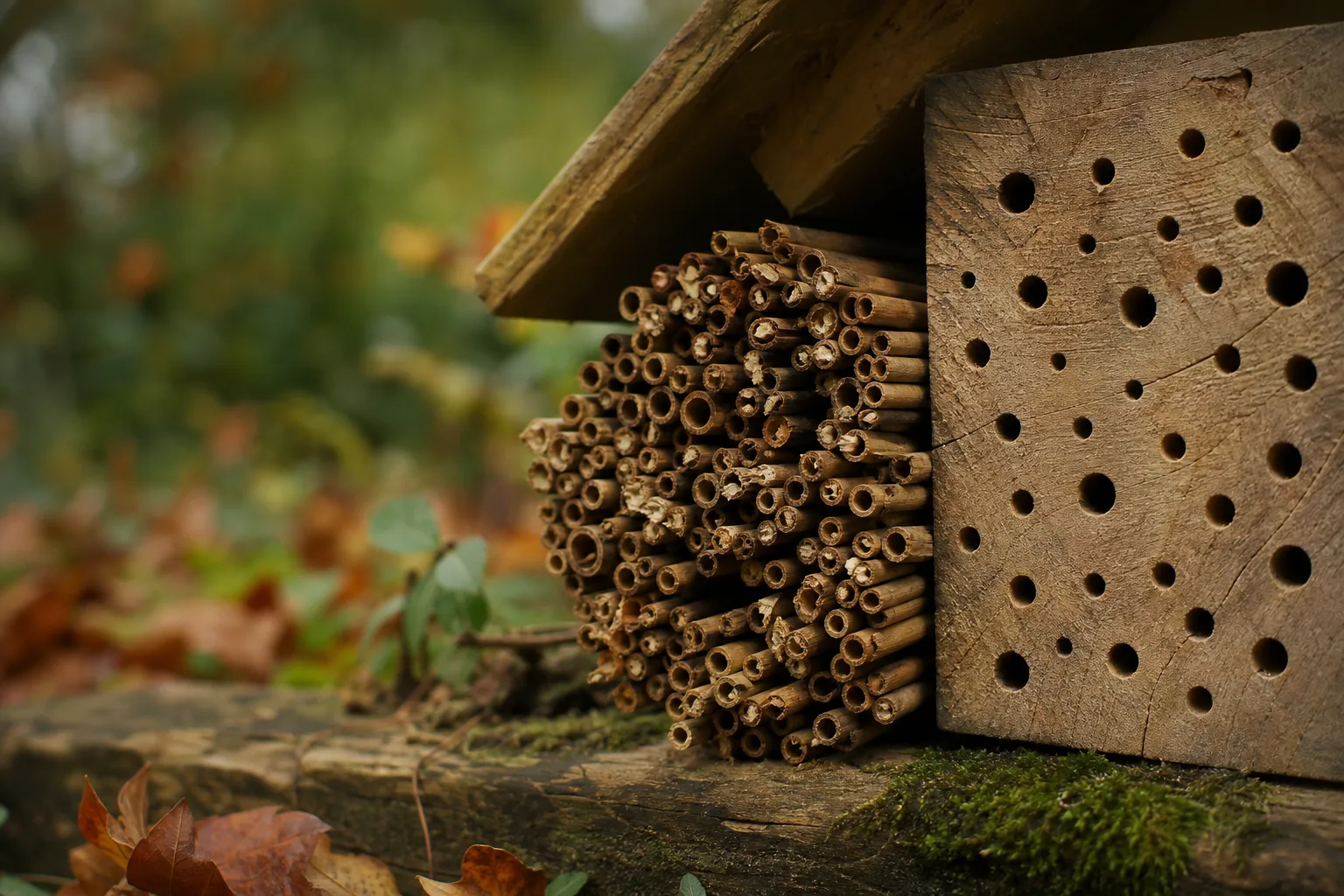
Most commercial bee hotels are built wrong: they pack too many holes into one damp, permanent box, which can help parasites and disease move from nest to nest. Build a small, cleanable shelter from hollow stems or untreated wood, then place it in a sunny southeast-facing spot and service it every fall.
Are commercial bee hotels actually good for native solitary bees?
Commercial bee hotels can help native solitary bees only if they provide clean, dry, removable cavities in several sizes. Many fail because their dense holes, glued decorations, and permanent construction trap moisture and concentrate parasites, so I would rather build a modest hotel than buy the prettiest one on the garden-center shelf.
Solitary bees do not live in a hive. A female finds a cavity, provisions individual chambers with pollen, lays eggs, and seals each chamber. That makes the nest useful, but it also means one contaminated block can expose many developing bees.
The biggest problem is crowding. Holes packed shoulder to shoulder make it easier for mono-wasps, Houdini flies, pollen mites, and chalk-brood fungi to move through a concentrated nesting site. A hotel that looks busy may be functioning like a poorly ventilated apartment building.
I killed my first basil by treating a sunny pot like a Miami plant and ignoring what Austin clay does after a storm. Bee hotels punish the same kind of wishful thinking. Cute is not a habitat plan, mi gente.
The research-backed approach is simple: offer different cavity sizes, keep them dry, and make the nesting material removable. A general bug hotel guide also supports using natural materials to invite native bees and other garden creatures, but not every material that looks rustic belongs inside a bee nest.
What should a useful bee hotel contain?
A useful bee hotel contains hollow plant stems, bamboo canes, reed or straw sections, or an untreated wooden block drilled with holes from 4 to 10 millimeters wide. These materials create real nesting cavities, while loose sand, gravel, plastic packing, and other fillers mostly add clutter or retain moisture without giving bees a usable nest.
Choose stems that are dry, clean, and open at one end. Cut them into matching sections and bundle them tightly enough that they do not wobble, but loosely enough that you can remove them next year.
Bamboo works, but it is not magic. Its smooth interior can be useful, while thick walls make some pieces hard to inspect and replace. The trade-off is maintenance: if you cannot pull out a wet or moldy cane, that cane has no business in the hotel.
Wood blocks need cleanly drilled holes with several diameters between 4 and 10 millimeters. Smaller cavities suit smaller bees, while larger cavities can suit larger species, but a giant block full of holes is still a crowded hotel if you cannot clean or rotate it.
Use untreated wood only. Paint, stain, solvent, or pressure-treatment residues are not worth bringing close to developing insects, and painted surfaces can also make annual inspection harder. Untreated wood weathers faster, so its honest cost is replacement every few years rather than pretending the box will last forever.
Which insect hotel decorations should you leave out?
Leave loose sand, gravel, synthetic packing material, plastic tubes, and damp filler out of a bee hotel because they do not create dependable nesting space and can hold moisture around the cavities. A thin layer of dry bark or a simple decorative wooden frame is fine, but decoration must stay outside the nesting area.
Those pinecones, pebbles, and curled cardboard tubes may look charming in a craft photo. Unless they provide a dry cavity that an insect can actually use, they are stage dressing. The bee is not shopping for a theme.
Loose sand can shift into openings. Gravel takes up space without forming a protected tunnel. Synthetic packing materials can hold condensation or shed fibers, and damp organic filler can become a moldy pocket beside active nests.
Dry bark has a narrower job. It can sit as a visual layer around the outside of a structure, but it should not block entrances or touch the nesting stems. Its trade-off is that bark breaks down and can become damp, so remove it if it stays wet after rain.
A wooden frame can make a simple bundle look finished without compromising the cavities. The trade-off is that a frame adds another surface to inspect, and an ornate one can make removal harder, which is why I favor plain construction over craft-store drama.
Where should you place an insect hotel in the garden?
Place an insect hotel in a sunny, sheltered location with its entrances facing southeast, about 3 to 6 feet above the ground if that height keeps it dry and easy to inspect. Southeast exposure helps cavities warm in spring, while shelter from driving rain protects stems and wood from staying wet.
For an Austin garden, look for a wall, fence, or sturdy post that catches morning sun but is not exposed to afternoon irrigation. A south or southeast-facing location is more useful than a shady corner under Ashe juniper, even if that corner looks wonderfully natural.
Keep the hotel away from sprinkler spray and roof runoff. Blackland Prairie clay already holds water, then cracks by August, so do not place the structure where splashback can keep the lower stems muddy through winter.
Mount it firmly. A swinging bundle can loosen, rub against its frame, or open gaps for rain. The trade-off with a rigid mount is that you have to unfasten it during cleaning, so use screws or ties you can undo without smashing the nesting material.
Do not hide it behind a thick hedge. You want to observe sealed holes, moisture, and damage. You also want nearby flowers, because a cavity is only useful if bees can forage without crossing half the neighborhood.
How many holes and cavity sizes should a bee hotel have?
Use a moderate number of clean cavities rather than one large, densely drilled block, with hole diameters ranging from 4 to 10 millimeters. The goal is variety without crowding, because concentrated nests can increase parasite and disease pressure and make every inspection harder.
I would start with a small hotel of roughly 20 to 40 total cavities for a home garden. That number is a practical design choice, not a promise that every hole will be occupied. A smaller structure is easier to clean, replace, and monitor than a decorative wall of 200 holes.
Space holes so wood between them does not split and so you can see each entrance. Follow the grain when drilling, clear the sawdust, and reject any cavity with splintered edges. A bee should enter a tunnel, not crawl through a tiny wooden minefield.
Here is the trade-off between the common options:
| Nesting option | What works | Honest downside |
|---|---|---|
| Removable hollow stems | Natural cavities, easy annual replacement, several sizes | Stems can crack, mold, or loosen if exposed to rain |
| Untreated drilled wood | Stable structure and controlled hole sizes | Harder to sanitize if holes are permanent, and it eventually weathers |
| Bamboo sections | Durable, hollow, and widely available | Thick walls and fixed pieces can make inspection difficult |
| Commercial mixed-material hotel | Convenient and attractive | Often overcrowded, damp, glued together, and difficult to clean |
I would choose removable stems first, then add a small untreated wood block if I could remove or rotate it. The popular rule says “more holes means more bees.” In practice, more holes can mean more parasites, more wet material, and more work you will not want to do in July.
How do you clean and maintain a bee hotel in fall?
Clean and maintain a bee hotel in fall by removing damp, moldy, cracked, or occupied sections only when you can do so without destroying active nests, washing reusable parts with hot water, and drying everything completely before storage or replacement. Fall is the right inspection season because the summer nesting rush has ended.
Start now. Remove loose decorative filler, check the back and roof for water, and separate any section that smells musty or shows visible mold. Do not keep a compromised cane because you feel guilty about throwing away a “natural” material.
Wash reusable wooden or metal components with hot water and scrub away residue. Let them dry completely in moving air before rebuilding the hotel. Wet wood put back into a box is not clean wood. It is a delayed problem.
Replace sections that remain damp or cannot be opened and inspected. Removable stems are useful because you can rotate them out instead of trying to disinfect a deep tunnel. The trade-off is buying or cutting fresh material each year, but that cost is smaller than maintaining a permanent disease reservoir.
A product review source specifically mentions a fall tube swap to reduce parasite cycles, which supports replacing removable tubes rather than treating them as permanent furniture: the fall tube swap recommendation. I would still trust the physical condition of your hotel over a calendar rule. If it is damp in October, it needs attention now.
Which plants help solitary bees use a hotel?
Solitary bees need flowers near their nesting cavities, so plant a succession of bee balm, purple coneflower, mountain mint, sunflower, elderberry, joe-pye weed, or raspberry, while accepting that each plant has a cost in space, water, height, or seasonal mess. The cited North Texas guidance also recommends leaving dead stems 8 to 24 inches tall as natural nesting sites: native bee nesting guidance.
For this fall, do not cut every flower stalk to the soil. Leave selected dead stems 8 to 24 inches tall, especially sturdy hollow stems that can stand through winter. That little patch may become a nest cavity without any hotel at all.
Bee balm gives you flowers and hollow stalks, but it can spread and look rough after bloom. Purple coneflower supports forage and stands through dry weather, but its seed heads can flop. Sunflower is generous and cheerful, but it needs room, sun, and regular water while establishing.
Mountain mint can spread and become woody. Elderberry needs more space than most homeowners expect. Joe-pye weed gets tall and wants moisture. Raspberry offers hollow stems, but its thorns and suckering habit make it a poor choice beside a narrow walkway.
That is the point. A hotel is not a substitute for food. If your yard has no flowers from spring through fall, a beautifully drilled box is an empty restaurant. Use the plant database to check mature size, sun, and water needs before you add a forage plant beside the hotel.
Who should build an insect hotel, and who should skip one?
An insect hotel suits a gardener who can inspect it each fall, replace damp nesting material, leave some dead stems standing, and provide nearby flowers. Skip it if you want a zero-maintenance ornament, cannot keep it dry, or will mount a large permanent box and never open it again.
Build one if you enjoy watching small insects, have a sunny wall or post, and can spend about 30 minutes in fall checking the structure. It also suits a small yard, because a compact bundle can provide habitat without needing a large planting bed.
Skip one if your only available location is under a dripping gutter or in deep shade. Skip it if children or pets will constantly knock it down. Skip it if you are buying a 200-hole hotel because the number feels impressive.
What if you are unsure whether native bees even live nearby? Start with flowers and standing stems first. One source notes that not every garden will attract bees, so a hotel should not be treated as a guarantee of occupancy. Get a concept for your yard if you need help fitting forage, stems, and a small structure into the space you have.
The honest position is this: habitat without maintenance is not automatically habitat. Sometimes a patch of coneflower, a few standing stems, and dry soil will do more for your garden than a fancy insect hotel nailed to a fence.
What should you do with an insect hotel this fall?
This fall, make the hotel smaller, cleaner, and more open to inspection: remove decorative filler, replace damp stems, wash reusable parts with hot water, dry them fully, and leave selected flower stalks 8 to 24 inches tall. Rebuild in a sunny southeast-facing spot before spring, using 4 to 10 millimeter cavities and no crowded permanent block.
Here are the questions I hear most often.
Are commercial bee hotels actually good for native solitary bees?
Commercial bee hotels are helpful only when they provide clean, dry, removable cavities in several sizes. Many decorative models fail because they are crowded, difficult to clean, or packed with materials that retain moisture. A small hotel made from replaceable stems or untreated wood is usually a safer choice than a permanent mixed-material box.
What should a useful bee hotel contain?
A useful bee hotel should contain hollow plant stems, bamboo, reed, straw sections, or untreated wood drilled with holes from 4 to 10 millimeters wide. The pieces should be dry, stable, and removable for inspection. Loose sand, gravel, plastic packing, and damp filler do not provide dependable nesting space.
How should you clean a bee hotel in fall?
Clean a bee hotel in fall by removing wet or moldy sections, washing reusable parts with hot water, and letting everything dry completely before reassembly. Replace any tube or stem that stays damp or cannot be inspected. A fall tube swap can reduce parasite cycles, but physical moisture and damage should guide the decision.
Where should you place an insect hotel?
Place an insect hotel in a sunny, sheltered spot with the entrance facing southeast, away from sprinkler spray and roof runoff. Mount it securely where you can inspect it, usually 3 to 6 feet high if that location stays dry. Nearby flowers matter because nesting cavities cannot help bees that have no forage.
Should you leave dead flower stems in the garden?
Yes, leave selected dead flower stems 8 to 24 inches tall after fall pruning because hollow stalks can become natural nesting cavities. Do not cut every bed to the ground. The trade-off is a tidier garden versus better habitat, and I choose a deliberate patch of standing stems over a spotless bed.
Do bee hotels need annual maintenance?
Yes, bee hotels need annual maintenance because damp, moldy, or crowded nesting material can support parasites and disease. Inspect the structure each fall, replace compromised stems, wash reusable parts with hot water, and dry them completely. If you cannot commit to that work, plant flowers and leave hollow stems instead.
A little structure is good. A little restraint is better. The cleanest bee hotel in your yard may be the one you can actually take apart before the next wet season.
Want a plan for your own yard?
Tell us the space and we will put a planting plan together for it. Start at get my concept, or browse what actually grows where you are over on plants.
Frequently asked questions
Are commercial bee hotels actually good for native solitary bees?
Commercial bee hotels are helpful only when they provide clean, dry, removable cavities in several sizes. Many decorative models fail because they are crowded, difficult to clean, or packed with materials that retain moisture. A small hotel made from replaceable stems or untreated wood is usually a safer choice than a permanent mixed-material box.
What should a useful bee hotel contain?
A useful bee hotel should contain hollow plant stems, bamboo, reed, straw sections, or untreated wood drilled with holes from 4 to 10 millimeters wide. The pieces should be dry, stable, and removable for inspection. Loose sand, gravel, plastic packing, and damp filler do not provide dependable nesting space.
How should you clean a bee hotel in fall?
Clean a bee hotel in fall by removing wet or moldy sections, washing reusable parts with hot water, and letting everything dry completely before reassembly. Replace any tube or stem that stays damp or cannot be inspected. A fall tube swap can reduce parasite cycles, but physical moisture and damage should guide the decision.
Where should you place an insect hotel?
Place an insect hotel in a sunny, sheltered spot with the entrance facing southeast, away from sprinkler spray and roof runoff. Mount it securely where you can inspect it, usually 3 to 6 feet high if that location stays dry. Nearby flowers matter because nesting cavities cannot help bees that have no forage.
Should you leave dead flower stems in the garden?
Yes, leave selected dead flower stems 8 to 24 inches tall after fall pruning because hollow stalks can become natural nesting cavities. Do not cut every bed to the ground. The trade-off is a tidier garden versus better habitat, and I choose a deliberate patch of standing stems over a spotless bed.
Do bee hotels need annual maintenance?
Yes, bee hotels need annual maintenance because damp, moldy, or crowded nesting material can support parasites and disease. Inspect the structure each fall, replace compromised stems, wash reusable parts with hot water, and dry them completely. If you cannot commit to that work, plant flowers and leave hollow stems instead.
Free, no obligation
Ready to design your dream landscape? Start here.
Tell us where you are and we will start a free profile for you, with plants that actually survive your climate and a real sense of what the build would cost.