
How to Identify and Treat Slugs and Snails in Fall
Find out whether slugs or snails are chewing your plants, then use beer traps, iron phosphate bait, and the habitat changes that actually reduce the problem.
September 23, 2026
By Valeria Navarro
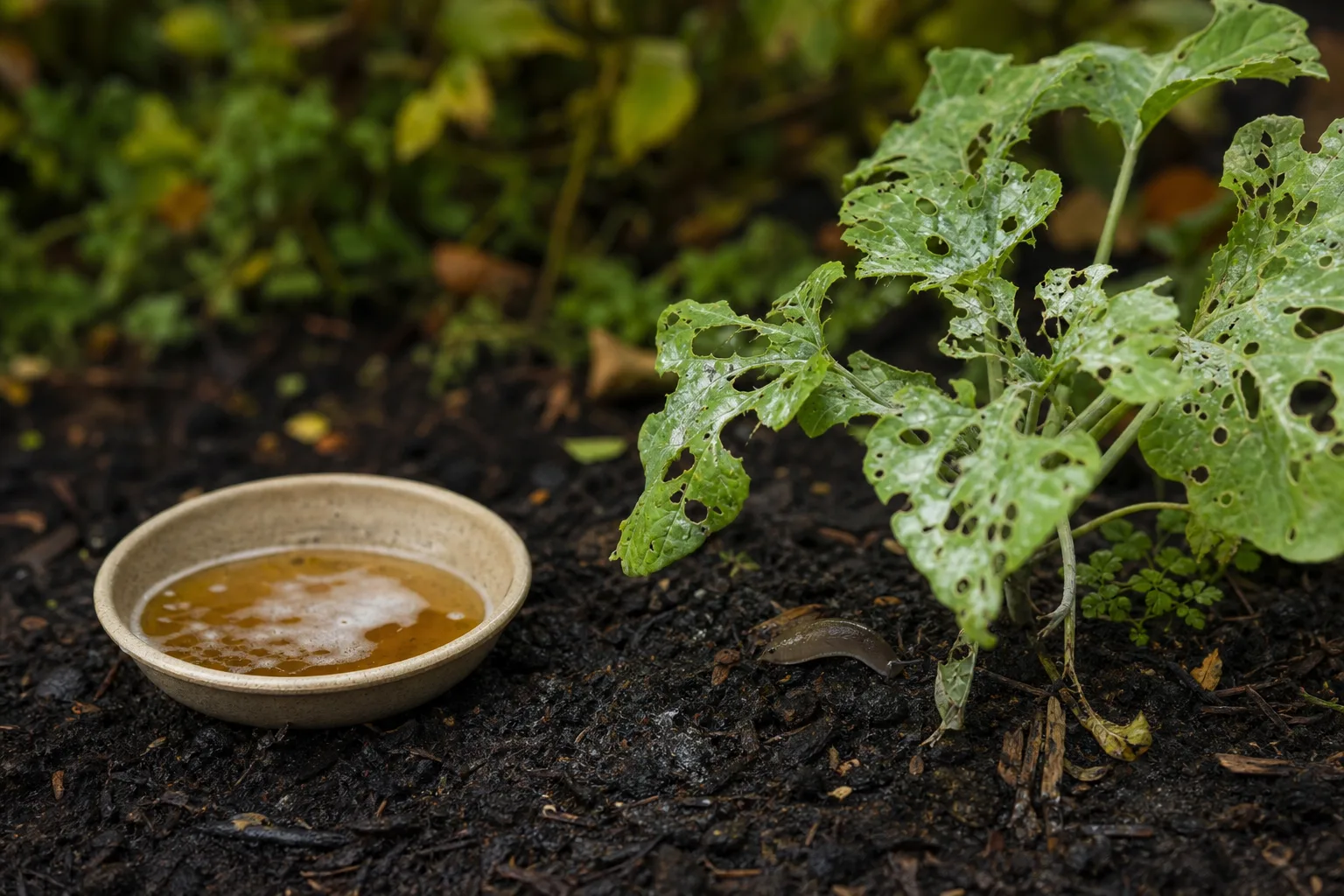
How can you tell if slugs or snails are eating your plants?
Slugs and snails leave silvery gray slime trails, ragged holes in young leaves, and missing edges on tender growth. Snails also leave their coiled shells behind. Check the garden at dusk, because that is when you are most likely to catch the pests moving toward vulnerable plants.
Look under leaves. Check beneath pots, boards, dense mulch, and fallen leaves. A leaf with a few neat holes may have another culprit, but a shiny trail leading away from it is a strong clue.
Do not wait for the damage to become dramatic. Young seedlings can be chewed down quickly, especially where the soil surface stays damp and shelter is close by. I have killed enough basil through neglect to know the difference between a mystery and a missed evening inspection.
In Austin, fall is a useful moment to look closely. The garden is not yet in the hard, cracked August rhythm, and you can still remove the hiding places before the next round of tender planting.
What should you do first when you find slugs or snails?
Start by removing the shelter around the damaged plants, not by spraying everything in sight. Clear decaying leaves, excessive mulch, and garden debris, then reduce over-watering and improve drainage where soil stays wet. After that, set a trap or bait so the pests already present have fewer places to hide.
This order matters. A trap beside a damp pile of leaves is an invitation with snacks nearby. The pests can shelter all day and return to the same plant after dark.
Pull away only the excess material. A thin, tidy layer is different from a wet blanket pressed against seedlings. The goal is open soil around the plant crown, not a bare, dusty desert.
Do you have a saucer, board, or dense clump of debris sitting against the bed? Move it this afternoon. Then inspect again at dusk. Small changes made in October can save you from chasing fresh damage for weeks.
Do beer traps really work for slugs and snails?
Beer traps can reduce slugs and snails around a small vulnerable planting when you place shallow dishes or plastic cups at dusk. Fill each container halfway with strong-smelling beer, set it a few centimeters deep near the plants, replace the lure every few days, and dispose of trapped pests promptly.
Use a low container that pests can reach. Do not bury the entire cup so deeply that soil or mulch falls into it. The lure needs to remain available, and the trap needs checking rather than becoming one more forgotten garden object.
Beer is not my whole plan. It catches pests that approach the lure, but it does not remove the damp shelter, fallen leaves, or over-watered soil that keeps the population comfortable. That is why the habitat work comes first.
The supplied reference list includes a page where “beer” and “garden” appear as word-puzzle terms in this reference, but that page is not evidence for slug control. I am using the practical instructions provided for this guide, not pretending a puzzle page tested a beer trap.
Is iron phosphate bait safe and effective for slugs?
Iron phosphate pellets or granules, often sold as Sluggo or SlugPellet, provide a low-toxicity bait that kills slugs and snails after they ingest it. Use the product exactly at its label rate, because the label controls application, and keep in mind that bait treats the pests present but does not correct wet shelter.
This is the treatment I would choose for a bed where hand removal and habitat cleanup are not enough. Scatter it according to the label rather than building little piles beside every plant. More product is not a smarter application.
The research supplied for this guide describes iron phosphate bait as safe for pets and wildlife while lethal when eaten by molluscs. Even so, store the package securely and follow every label direction. “Low toxicity” is not permission to use a product carelessly.
Sluggo and SlugPellet are product names, and the trade-off is simple: they are convenient and targeted, but you pay for that convenience and must reapply or reassess when the label says to do so. A pellet cannot dry a soggy bed.
Which habitat changes reduce slugs and snails long term?
The strongest long-term control is habitat modification: remove excessive mulch, decaying leaf litter, and garden debris, keep soil well drained, and avoid over-watering. These changes reduce the cool, damp shelter slugs and snails use, so they matter more than relying on one trap or one round of bait.
Start with the plant most damaged. Clear a visible ring around it. Move fallen leaves out of the bed, especially where they are wet and packed together, and check whether a pot or edging piece is holding moisture against the soil.
Everyone says to water deeply and forget it. In practice, repeated watering that leaves the bed wet gives slugs a better workplace, because the shelter remains available after you finish. Water only as needed for the planting, then let the surface stop staying soggy.
Drainage has a special attitude in Central Texas. Clay can hold water and then set like a brick, while limestone and caliche may sit close underneath. If a bed drains slowly, changing the surrounding conditions is more useful than blaming the plant for attracting pests.
Do sand, eggshells, and diatomaceous earth stop slugs?
Coarse sand, crushed eggshells, and diatomaceous earth can create a barrier around garden beds, but they are maintenance tools rather than a cure. Place a continuous dry band around vulnerable plants or beds, then renew it after it becomes wet or breaks apart, because a damp or interrupted barrier loses its value.
The word is continuous. A thin gap beside the edging is a little doorway. Keep the material around the planting rather than touching delicate stems, and inspect the ring after rain or watering.
Coarse sand is inexpensive, but it takes room and may scatter. Crushed eggshells reuse a kitchen scrap, but they are not magic armor. Diatomaceous earth can help as a dry barrier, but moisture reduces the condition that makes it useful, so it needs attention after wet weather.
I prefer cleanup plus iron phosphate over spending money on a perfect-looking ring. Barriers make sense around a small seedling bed. They are a poor use of your Saturday if the entire garden is full of wet leaf litter behind them.
Who should use this approach, and who should ignore it?
This approach suits homeowners with a small or medium bed, visible slug or snail damage, damp hiding places, and a willingness to inspect at dusk for two weeks. Ignore the beer-first approach if you have not removed shelter, cannot check traps every few days, or are dealing with a bed that stays waterlogged after reasonable watering.
Use habitat cleanup first if the damage is scattered and the garden is crowded with debris. Add a beer trap when you want a visible way to reduce pests near a few vulnerable plants. Choose iron phosphate bait when repeated damage continues and you need a labeled product used according to directions.
A barrier is best for one precious patch, such as a tray of young seedlings. It is not a sensible whole-yard strategy. Rosemary, thyme, and sage may make an area less inviting, but each takes space, needs its own growing conditions, and will not rescue a wet bed overnight.
If you are gardening in a rental or cannot change drainage, use removable cleanup, traps, and labeled bait. If you have a large, neglected area, start with one bed. A manageable win beats a heroic Saturday followed by three weeks of abandonment.
What is the best fall treatment plan for slugs and snails?
In fall, inspect at dusk, clear wet shelter the same day, and place a shallow beer trap near the damaged planting. If feeding continues, apply iron phosphate granules or pellets at the label rate, then maintain drainage and remove new debris for two weeks before deciding whether the problem is improving.
Here is the sequence I use:
- Find slime trails, ragged holes, and shells before sunset.
- Remove excessive mulch, decaying leaves, and garden debris.
- Set a half-filled beer trap a few centimeters deep at dusk.
- Replace the beer every few days and dispose of trapped pests promptly.
- Apply iron phosphate according to the label if damage continues.
- Check the bed again after two weeks and repeat cleanup as needed.
Do not scatter bait and walk away forever. Fall leaves arrive in layers, and each new layer can recreate the damp shelter you just removed. The garden changes every week, so your control plan has to keep up.
For plant choices suited to your conditions, use the plant database before adding another tender favorite to a problem bed. If the bed layout itself is part of the trouble, you can get a concept for your yard that leaves room for drainage and inspection.
Which slug and snail control option should you choose?
Choose habitat cleanup as the foundation, beer traps for visible short-term reduction, iron phosphate for continued feeding, and barriers for small protected areas. No option wins alone. The honest choice depends on whether your main problem is shelter, active feeding, or a few valuable seedlings that need a temporary boundary.
| Option | Best use | Honest downside |
|---|---|---|
| Habitat changes | Long-term reduction around beds | Takes labor and must be maintained as debris returns |
| Beer traps | Small plantings and visible trapping at dusk | Need checking and fresh lure every few days |
| Iron phosphate bait | Continued damage after cleanup | Costs money and must follow the label |
| Coarse sand, eggshells, or diatomaceous earth | Small beds and seedling protection | Wet weather and gaps reduce barrier performance |
I would spend my first hour on cleanup, not on buying three products. Then I would use a trap to learn whether activity is still present. If the leaves keep disappearing, iron phosphate is the practical next step.
Natural predators such as ground beetles and birds can also help make the garden less welcoming to pests. The trade-off is that predators are not a switch you control, and they will not replace drainage, cleanup, or a properly used bait when a seedling bed is being chewed every night.
Are rosemary, thyme, and sage worth planting for slug control?
Rosemary, thyme, and sage may make a garden less inviting to slugs and snails, but they are supporting players, not a treatment. Plant them where their growing needs fit, while still removing wet debris and controlling active feeding. Their trade-off is space, time, and the risk of expecting herbs to solve a shelter problem.
Rosemary can become a woody, spreading plant that needs room. Thyme stays smaller, but a small herb cannot protect an entire bed. Sage adds useful foliage, yet it still needs suitable conditions and will not stop pests already hiding under mulch.
Plant herbs for the kitchen first, then accept any pest-repelling effect as a bonus. I cook with what I grow, so that is a trade I like. But I will not sacrifice drainage or crowd a bed with rosemary and call the pest problem handled.
For a complete fall review, the plant database can help you compare plants before you add them to a damp or heavily shaded spot.
What are the most common mistakes with slug and snail control?
The common mistakes are treating only the visible holes, leaving wet debris in place, over-watering, forgetting to refresh beer traps, and spreading bait without reading the label. These errors cost time because they remove neither the shelter nor the conditions that keep slugs and snails returning after dark.
A shiny trail is information. Use it to trace the route toward shelter. A pile of leaves beside the damaged plant matters more than a decorative barrier that stops two inches short of the bed edge.
Another mistake is treating one evening as proof. Inspect at dusk, check again over the next two weeks, and adjust based on fresh trails and new holes. You are managing a moving garden, not pressing a button.
The other supplied reference is a page about homemade fertiliser here. It does not establish slug or snail treatment, so I am not borrowing pest claims from it. Use the slug research and the product label for this job.
How often should you check beer traps for slugs and snails?
Check beer traps at least every few days and replace the beer with fresh, strong-smelling beer as needed. Set them at dusk in shallow dishes or plastic cups half-filled with beer and a few centimeters deep. Dispose of trapped pests promptly instead of leaving the container beside the bed.
A trap is a monitoring tool as much as a control tool. If it catches pests, you know activity is present. If leaves keep showing new holes but the trap is empty, inspect the placement, nearby shelter, and whether another pest is responsible.
Do not let old beer become a forgotten cup in the garden. The trade-off of this cheap method is regular attention. If you will not check it, choose cleanup and a labeled iron phosphate bait instead.
How should you use iron phosphate pellets around plants?
Use iron phosphate pellets or granules according to the product label, including the stated rate and placement instructions. Products commonly sold as Sluggo or SlugPellet are low-toxicity baits described in the research as safe for pets and wildlife, but they still need careful storage and label-directed use.
Apply only what the label calls for. Do not assume that a thicker layer works faster. Remove competing shelter so the bait is part of a clear plan rather than the only action in a crowded, wet bed.
Reassess after application. Fresh slime trails and new ragged holes mean the problem is still active, the habitat remains favorable, or the treatment needs to be repeated under label directions. Iron phosphate is useful. It is not a substitute for noticing what your garden is doing.
Do you have a seedling bed that needs help tonight? Clear the debris first, set a beer trap at dusk, and use iron phosphate only as directed if feeding continues. That is the sensible fall rhythm, cariño, not a panic dump of pellets.
More questions people ask about this
Can beer traps alone solve a slug problem?
Beer traps can reduce slugs and snails around a small vulnerable planting, but they rarely solve the problem alone. Clear excessive mulch, decaying leaves, and garden debris first, then use traps at dusk and refresh the lure every few days so the bed becomes less inviting.
What habitat changes reduce slugs and snails long term?
Remove excessive mulch, decaying leaf litter, and garden debris, keep the soil well drained, and avoid over-watering. These changes reduce the damp shelter slugs and snails use, so they usually matter more over time than relying on one trap or one application of bait.
Are rosemary, thyme, and sage worth planting for slug control?
Rosemary, thyme, and sage may make a garden less inviting to slugs and snails, but they are supporting players, not a treatment. Plant them where their growing needs fit, while still removing wet debris and controlling active feeding around vulnerable plants.
Do sand, eggshells, and diatomaceous earth stop slugs?
Coarse sand, crushed eggshells, and diatomaceous earth can create a barrier around garden beds, but they are maintenance tools rather than a cure. Keep the band continuous and renew it after wet weather or when it breaks apart, because moisture and gaps reduce its value.
Want a plan for your own yard?
Tell us the space and we will put a planting plan together for it. Start at get my concept, or browse what actually grows where you are over on plants.
Frequently asked questions
How often should you check beer traps for slugs and snails?
Check beer traps at least every few days and replace the beer with fresh, strong-smelling beer as needed. Set them at dusk in shallow dishes or plastic cups half-filled with beer and a few centimeters deep. Dispose of trapped pests promptly instead of leaving the container beside the bed.
How should you use iron phosphate pellets around plants?
Use iron phosphate pellets or granules according to the product label, including the stated rate and placement instructions. Products commonly sold as Sluggo or SlugPellet are low-toxicity baits described in the research as safe for pets and wildlife, but they still need careful storage and label-directed use.
Can beer traps alone solve a slug problem?
Beer traps can reduce slugs and snails around a small vulnerable planting, but they rarely solve the problem alone. Clear excessive mulch, decaying leaves, and garden debris first, then use traps at dusk and refresh the lure every few days so the bed becomes less inviting.
What habitat changes reduce slugs and snails long term?
Remove excessive mulch, decaying leaf litter, and garden debris, keep the soil well drained, and avoid over-watering. These changes reduce the damp shelter slugs and snails use, so they usually matter more over time than relying on one trap or one application of bait.
Are rosemary, thyme, and sage worth planting for slug control?
Rosemary, thyme, and sage may make a garden less inviting to slugs and snails, but they are supporting players, not a treatment. Plant them where their growing needs fit, while still removing wet debris and controlling active feeding around vulnerable plants.
Do sand, eggshells, and diatomaceous earth stop slugs?
Coarse sand, crushed eggshells, and diatomaceous earth can create a barrier around garden beds, but they are maintenance tools rather than a cure. Keep the band continuous and renew it after wet weather or when it breaks apart, because moisture and gaps reduce its value.
Free, no obligation
Ready to design your dream landscape? Start here.
Tell us where you are and we will start a free profile for you, with plants that actually survive your climate and a real sense of what the build would cost.