
How to Identify and Treat Gophers, Voles and Moles: Which Is Which?
Gophers, voles and moles leave different evidence and need different control. Learn what to look for in your garden this fall, then match the animal to the treatment that actually fits.
September 21, 2026
By Valeria Navarro
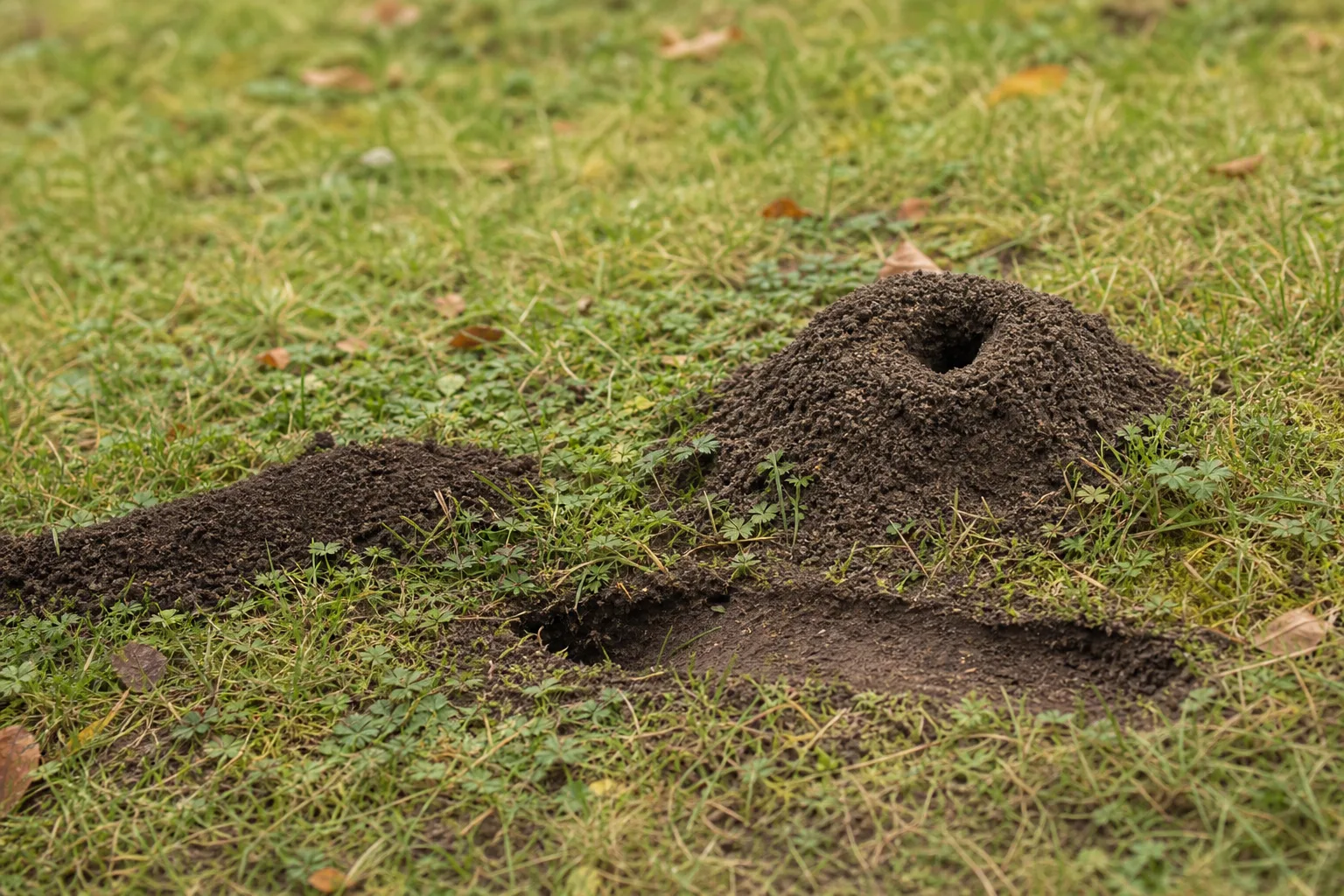
Gophers, voles and moles are three different animals creating three different garden problems, so the right treatment starts with the evidence, not the mound. Gophers chew roots, voles gnaw crowns and seedlings, and moles hunt worms and insects.
Which animal is making these holes and mounds?
Gophers leave raised mounds with one funnel-shaped opening and usually damage roots below ground. Voles leave shallow runways across grass and mulch, while moles create smooth, rounded hills and narrow surface tunnels. That distinction matters because a gopher trap will not solve a vole runway, and a mole may not be eating your plants at all.
Start by looking at the shape, not just the size. Gopher mounds are built from soil pushed up from a deeper, straighter tunnel system. Molehills are smoother and rounder, with surface tunnels often less than 1 inch wide. Vole paths look like little roads pressed through grass or ground cover.
I also check the plant before I reach for a product. Pull gently on a wilted seedling. If roots are chewed or missing, suspect gopher damage. If grass crowns and tender stems are gnawed at ground level, suspect voles. If the soil is tunneled but roots are intact, a mole is more likely.
A useful field guide from Ag Proud makes the same central point: similar habitats can hide very different animals, so identification comes before control.
How can you identify a gopher in the garden?
A gopher is most likely responsible for a raised mound topped with one funnel-shaped opening leading to a deep, straight tunnel system. Look for large, shovel-shaped front claws, visible cheek pouches, and chewed roots. Gophers live below ground and can remove or damage a plant without leaving much evidence above the soil.
The opening is the giveaway. Gopher soil is often piled into a mound, and the entrance has a distinct funnel shape rather than a smooth little hill. Probe carefully around the mound to locate the runway, as described for a gopher bait applicator by Gemplers.
You may never see the animal. That is normal. I have killed plants by blaming the wrong pest, and a missing root ball is a much better clue than trying to catch a glimpse of a brown back at sunrise.
Gophers are root eaters, so inspect the damage before replacing the plant. A shrub that wilts even though the soil is moist may have lost roots underground. In Austin, that can look like heat stress, especially during a dry October after a long summer, so check below the soil instead of watering blindly.
How can you identify a vole in the garden?
A vole looks more like a small mouse than a mole, with a short, hairy tail and no visible cheek pouches. Voles make shallow surface runways that criss-cross lawns and beds, then gnaw grass crowns and tender seedlings. Their damage is low and messy, not a deep root tunnel with a large soil mound.
Look under cover first. Grass clippings, weeds, thick mulch and dense ground cover can hide the runways. If you find narrow tracks pressed into the surface and stems chewed near the soil line, the vole case gets stronger.
The first treatment is not poison. Trim grass, remove weeds, pull back mulch, and keep the soil from staying unnecessarily wet. This costs time and leaves bare soil that some gardeners dislike, but it removes the protected travel lanes voles use.
Snap traps can work for voles, but they need careful placement where children and pets cannot reach them. The trade-off is checking them regularly and accepting that a trap is a hands-on solution. Vole-specific bait stations are another option, but they add expense and require you to follow the product label exactly.
How can you identify a mole, and is it eating my plants?
A mole is identified by smooth, rounded molehills and a network of surface tunnels usually less than 1 inch wide. Moles feed on earthworms and insects rather than plant roots, so the tunnel may disturb a bed without being the reason a plant died. Check the roots before blaming the mole.
Moles and voles get lumped together constantly. The names even sound like they belong in the same little cartoon family. They do not share the same feeding pattern, and treating a mole like a vole can waste money while the real root-chewer keeps working.
Press a tunnel flat with your shoe and check it again later. An active tunnel is the one that matters for a trap. This is a practical test, but the trade-off is patience because a flattened tunnel gives you no instant answer.
Mole-specific traps include choker, scissor-jaw and harpoon styles. They work best in active tunnels, but they require accurate placement and a willingness to monitor the spot. Repellent granules and vibrating stakes can disrupt movement, though they focus on making an area less appealing rather than removing the animal immediately.
Who is this three-animal plan for, and who should ignore it?
This plan suits a homeowner who sees fresh fall damage and can inspect a mound, runway or tunnel before treating it. It is especially useful for raised beds, lawns and young plantings where one wrong product can cost several weeks of growth. Ignore a one-size-fits-all treatment plan if you have not identified the animal first.
Use the gopher section if a plant is losing roots or a mound has a funnel-shaped opening. Use the vole section if grass, mulch or seedlings show shallow runways and low gnawing. Use the mole section if you see smooth hills and narrow tunnels but no chewed roots.
This approach is also for readers who want to reduce damage without turning the whole garden into a chemical experiment. It is not a promise of instant results. Traps take placement and checking, barriers take digging, and habitat cleanup takes a Saturday you might rather spend cooking.
If the animal is in a place where traps or bait could endanger children, pets or wildlife, choose a professional control service or a nonlethal barrier plan. I will always take a slower safe fix over a fast mystery pellet scattered around a bed.
What should you do about gophers this fall?
For gophers, confirm the runway, then choose a specialized gopher trap, baited pellets placed in the runway, or an underground wire barrier around the garden bed. Traps remove the immediate problem, while barriers protect a defined planting area. The best choice depends on whether you need removal now or long-term root protection.
Harpoon, scissor-jaw and live-capture traps are the main options listed in the research. A trap avoids putting bait into the soil, but it costs time because you must locate the tunnel entrance, set it correctly and check it. Live capture sounds gentle, but it still requires handling and relocation decisions.
Baited poison pellets can reach gophers in their runways, especially where the tunnel is difficult to trap. The downside is obvious: bait is a hazard if it is accessible to pets or wildlife, so use only a product labeled for the target animal and follow every label direction. Never scatter pellets casually on the surface.
Hardware-cloth barriers protect a bed by putting wire below ground around its edges. They are effective for a contained bed, but the trade-off is digging and cost, and gaps at gates or corners defeat the whole idea. For a new raised bed, I prefer installing the barrier before adding soil rather than excavating later.
| Animal | Best first control | Honest downside |
|---|---|---|
| Gopher | Specialized trap or underground wire barrier | Traps require accurate tunnel placement, and barriers require digging |
| Vole | Reduce cover, then use snap traps or a vole-specific bait station | Cleanup takes time, and traps need frequent checking |
| Mole | Mole-specific trap in an active tunnel | Finding an active tunnel and setting the trap takes patience |
What should you do about voles this fall?
For voles, start by reducing cover before using a control product: trim grass, remove weeds and excess mulch, and keep the soil from staying wet. Then use snap traps or vole-specific bait stations where the runways are active. Perimeter rodenticide is a later option, not the first move.
Fall is a good time to see the damage because summer growth is thinning and surface paths are easier to spot. Cut grass back from beds, remove hiding places, and leave a clear strip where you can inspect the soil. The trade-off is less softness and privacy around a bed, but you gain visibility.
Snap traps are direct and inexpensive compared with repeated product applications. Their downside is regular checking and careful placement. A vole-specific bait station protects the bait from some exposure, but it adds cost and still requires strict label use.
Low-toxicity rodenticide around the perimeter may be considered if cleanup and trapping are not enough. I would keep it outside the planting area and treat it as a controlled boundary method, not a cure for poor habitat. A neat bed with hidden weeds is still a vole hotel, qué horror.
Which treatment works best for moles?
For moles, place a mole-specific choker, scissor-jaw or harpoon trap in an active surface tunnel. Repellent granules or vibrating stakes can disrupt movement, and keeping soil less moist can make the area less attractive. These methods target mole behavior, but trapping is the clearest removal option when you need the tunnel activity to stop.
Flatten one or more tunnels and watch for renewed activity before setting a trap. An old tunnel is just a scar in the soil. A fresh tunnel tells you where the animal is moving, which makes the placement worth your time.
Repellent granules are easier to apply than a trap, but they may shift the problem rather than remove the mole. The trade-off is convenience versus certainty. Vibrating stakes also focus on disruption, and their downside is that they do not address an animal already feeding through another part of the yard.
Encouraging natural predators such as owls or hawks can support long-term control, but it is not an emergency treatment for a mole under your bed this afternoon. Keeping soil less moist may also make the space less attractive, though you still need to water plants according to their actual needs rather than drying out a whole garden.
How can you keep gophers, voles and moles from returning?
Prevention starts with matching the barrier or habitat change to the animal: underground wire for gophers, reduced cover for voles, and less moist soil plus disrupted routes for moles. No single repellent prevents all three. Inspect beds weekly in fall so fresh damage is handled before it becomes a winter project.
For gophers, protect the planting zone with underground hardware cloth and close gaps around bed edges. Hardware cloth costs more than surface mulch, but it protects roots for years if installed continuously. A barrier with an open corner is decoration, not protection.
For voles, keep grass and weeds trimmed and avoid thick mulch touching seedlings. This makes the bed easier to inspect, but the exposed edge may need more watering during warm spells. In Central Texas clay, that is where you check moisture rather than following a rigid schedule, because the soil can hold water and then bake hard.
For moles, avoid keeping the entire yard constantly damp just to discourage one animal. Instead, watch for active tunnels, use targeted traps or repellents, and accept that a healthy soil food web can attract earthworms and insects. The goal is a workable garden, not a sterile one.
If you are rebuilding a bed or deciding where a barrier belongs, the plant database can help you check mature plant size and root-zone needs before you dig. For a whole-yard layout, you can also get a concept for your yard before Diego and I have our usual gravel disagreement.
What are the most common mistakes with these three animals?
The biggest mistake is treating every mound as a gopher problem. The next is using a mole treatment on a vole, or blaming a mole for root damage it does not cause. Identify the opening, runway, tunnel and plant damage first, then choose one targeted method and give it time to work.
Everyone says a mound means gopher. In practice, the mound shape and the damage tell you more, because moles make smooth hills and voles may leave no mound at all. A shovel is not a diagnosis, amiga.
Another mistake is watering a dying plant without checking the roots. Gophers can chew roots below ground, while a mole mainly hunts worms and insects. More water may leave already disturbed soil wetter and harder to read.
Finally, people buy a repellent because it feels easy. Granules and vibrating stakes can disrupt movement, but they may not remove the animal. Traps are more work, barriers are more expensive, and cleanup is less dramatic, but each one matches a particular problem better.
How should you identify and treat these pests today?
Today, inspect the newest damage, photograph the mound or runway, and check one affected plant below the soil line. Choose gopher control for funnel-shaped mounds and root damage, vole control for shallow runways and gnawed crowns, and mole control for smooth hills and narrow active tunnels. Do not apply one treatment to all three.
Take five minutes. Mark fresh tunnels with a stick, flatten one mole tunnel, inspect one root ball, and clear cover from one vole-prone edge. Those small checks give you better information than buying three products and hoping one behaves like a miracle.
Then pick one response. A gopher trap, a vole cleanup and snap-trap plan, or a mole trap in an active tunnel is enough for the first round. Write down the date, because fall treatment gets confusing once rain, irrigation and leaf drop change the evidence.
How can I tell a gopher from a mole?
A gopher makes a raised mound with one funnel-shaped opening and often leaves chewed or missing roots. A mole makes smooth, rounded hills and narrow surface tunnels, usually less than 1 inch wide, while feeding on earthworms and insects rather than plant roots. Check the opening shape and the root damage before choosing a treatment.
Do voles make underground mounds?
Voles usually make shallow surface runways rather than the raised, funnel-opening mounds associated with gophers. Look for small paths crossing grass or mulch and gnawing on grass crowns and tender seedlings. Trim cover, remove weeds and excess mulch, then use snap traps or vole-specific bait stations if activity continues.
Should I use poison pellets for gophers?
Poison pellets can be placed in gopher runways, but they should never be scattered casually on the soil surface. Their trade-off is reduced trapping effort and increased concern about access by pets and wildlife. Use only a product labeled for gophers, place it as directed in the runway, and follow the label exactly.
Are moles eating my vegetable roots?
Moles generally feed on earthworms and insects rather than vegetable roots, so their tunnels may disturb a bed without causing the root damage. Check the roots before blaming a mole. If roots are chewed or missing, investigate gophers; if grass crowns and seedlings are gnawed, investigate voles.
What is the first step for a vole problem?
The first step for a vole problem is reducing cover. Trim grass, remove weeds, pull back excess mulch, and keep the soil from staying unnecessarily wet so shallow runways are visible and less protected. After cleanup, use snap traps or vole-specific bait stations in active areas, with safe placement and regular checks.
Do vibrating stakes remove moles?
Vibrating stakes are intended to disrupt mole movement rather than remove the animal immediately. They can be easier than digging for an active tunnel, but their downside is uncertainty because a mole may shift routes instead of leaving the property. Use them as a disturbance method, while mole-specific traps target active tunnels directly.
Want a plan for your own yard?
Tell us the space and we will put a planting plan together for it. Start at get my concept, or browse what actually grows where you are over on plants.
Frequently asked questions
How can I tell a gopher from a mole?
A gopher makes a raised mound with one funnel-shaped opening and often leaves chewed or missing roots. A mole makes smooth, rounded hills and narrow surface tunnels, usually less than 1 inch wide, while feeding on earthworms and insects rather than plant roots. Check the opening shape and the root damage before choosing a treatment.
Do voles make underground mounds?
Voles usually make shallow surface runways rather than the raised, funnel-opening mounds associated with gophers. Look for small paths crossing grass or mulch and gnawing on grass crowns and tender seedlings. Trim cover, remove weeds and excess mulch, then use snap traps or vole-specific bait stations if activity continues.
Should I use poison pellets for gophers?
Poison pellets can be placed in gopher runways, but they should never be scattered casually on the soil surface. Their trade-off is reduced trapping effort and increased concern about access by pets and wildlife. Use only a product labeled for gophers, place it as directed in the runway, and follow the label exactly.
Are moles eating my vegetable roots?
Moles generally feed on earthworms and insects rather than vegetable roots, so their tunnels may disturb a bed without causing the root damage. Check the roots before blaming a mole. If roots are chewed or missing, investigate gophers; if grass crowns and seedlings are gnawed, investigate voles.
What is the first step for a vole problem?
The first step for a vole problem is reducing cover. Trim grass, remove weeds, pull back excess mulch, and keep the soil from staying unnecessarily wet so shallow runways are visible and less protected. After cleanup, use snap traps or vole-specific bait stations in active areas, with safe placement and regular checks.
Do vibrating stakes remove moles?
Vibrating stakes are intended to disrupt mole movement rather than remove the animal immediately. They can be easier than digging for an active tunnel, but their downside is uncertainty because a mole may shift routes instead of leaving the property. Use them as a disturbance method, while mole-specific traps target active tunnels directly.
Free, no obligation
Ready to design your dream landscape? Start here.
Tell us where you are and we will start a free profile for you, with plants that actually survive your climate and a real sense of what the build would cost.