
How to Identify and Treat Botrytis Gray Mold
Botrytis gray mold is usually a humidity and airflow problem before it is a spray problem. Learn how to identify the first water-soaked lesions, remove infected tissue safely, dry a crowded canopy, and choose treatment options that fit a greenhouse or dense fall planting.
September 25, 2026
By Valeria Navarro
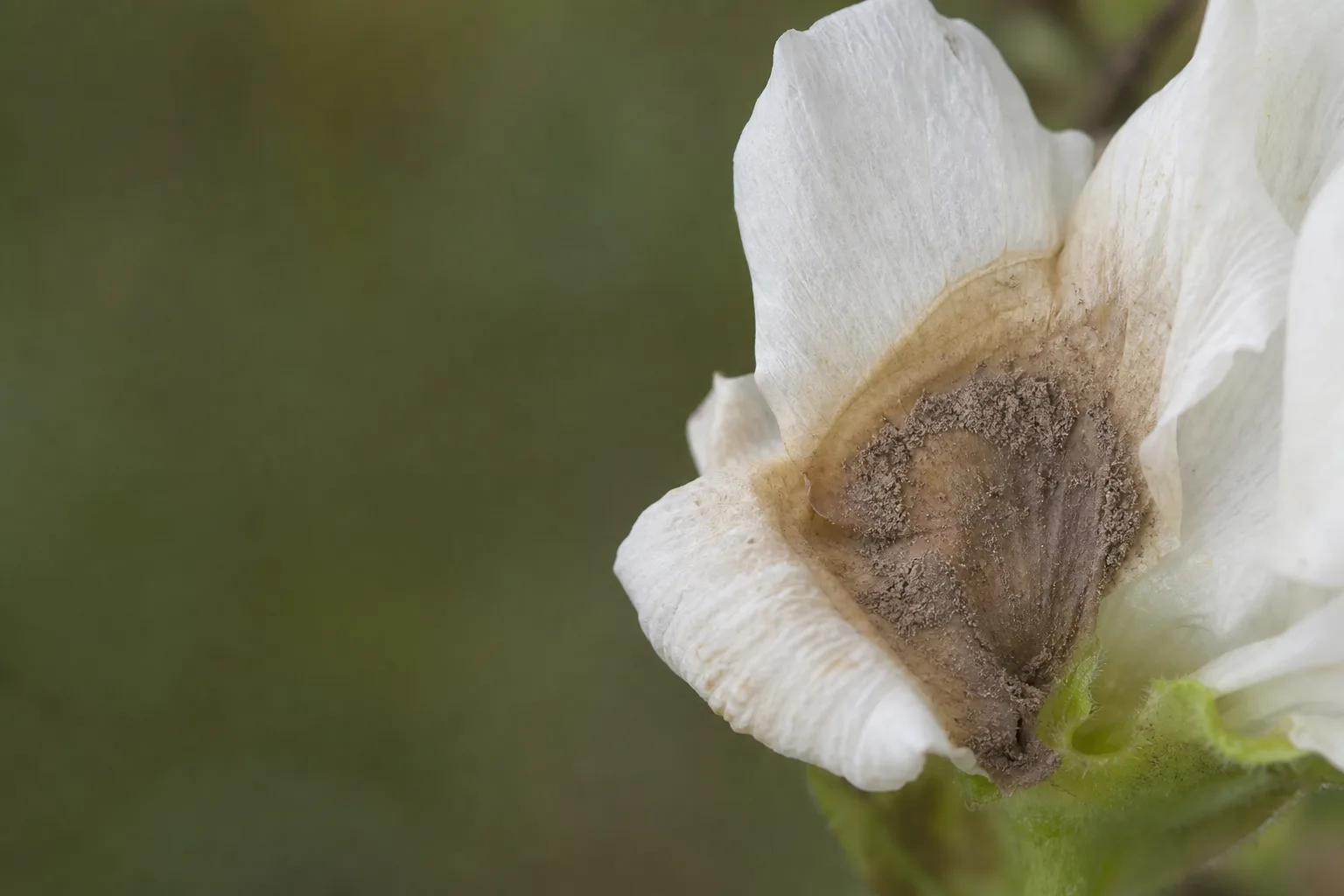
Botrytis gray mold starts as a humidity and airflow problem, so spraying alone will not fix it. Look for water-soaked tan or brown lesions that become gray, powdery spores within 24 to 48 hours, then remove the infected tissue, dry the canopy, and use a labeled fungicide only as part of the cleanup.
What does Botrytis gray mold look like?
Botrytis gray mold first appears as a water-soaked, tan, or brown lesion on a leaf, stem, bud, flower, or fruit. Within 24 to 48 hours, the damaged area can develop gray-brown, velvety to powdery fungal growth that releases spores when disturbed. It often begins on wounded or aging tissue. The Leaf Journal describes this same progression.
Check the plant early in the day, especially after cool nights, rain, or a long humid spell. A soft brown flower petal stuck inside a dense canopy is a classic starting point.
Botrytis is not the same as powdery mildew. Powdery mildew usually looks like a dry white coating on the surface, while gray mold often follows damaged or dying tissue and produces gray spore masses in a wet, crowded place. The Kentucky greenhouse guide shows how gray mold commonly affects dead tissue and buds.
Do not poke a mature patch just to see what happens. Those clouds are spores, and every puff can seed another wet flower, pruning wound, or fallen petal.
Why does Botrytis spread so quickly in fall?
Botrytis spreads quickly in fall because cool conditions, high humidity, wet foliage, and limited airflow keep plant surfaces damp. Relative humidity above 85 percent raises the risk, while a canopy target below 65 to 70 percent gives gray mold much less opportunity to establish. Closed greenhouses and dense vertical plantings are especially vulnerable.
The pathogen is opportunistic. It needs an entry site, such as a pruning cut, insect injury, cracked fruit, or senescing flower tissue. That is why a thick planting can look fine one afternoon and show several gray patches after a cool, wet night.
The rule of thumb says to water plants in the morning. In practice, morning watering only helps if the leaves can dry quickly. In a greenhouse with still air, a 7 a.m. splash can leave foliage wet for hours, so airflow matters more than the clock by itself.
In Austin, fall can feel gentle outside while a protected planting stays damp. A greenhouse door closed overnight, a packed trellis, or a tray sitting against a wall can create a small Botrytis climate even when the surrounding garden feels dry.
Is this a humidity and airflow problem or a spray problem?
Botrytis gray mold is primarily a humidity and airflow problem, not a spray problem. Fungicides can protect healthy tissue or slow disease when used at the first sign, but they will not make wet leaves dry, remove infected debris, or open a crowded canopy. Fix the growing conditions first, then choose a labeled product if needed.
Aim for canopy relative humidity below 65 to 70 percent whenever practical, and do not allow it to stay above 93 percent for extended periods. A small hygrometer at plant height tells you more than the humidity reading across the room.
Open greenhouse vents when weather allows. An exhaust fan removes humid air, while a horizontal-air-flow fan keeps air moving through the canopy. The trade-off is electricity, noise, and the need to avoid blasting one plant with a drying stream while another sits still.
Dehumidifiers can help in enclosed spaces, but they cost more to run and add heat. Passive airflow screens use less energy, but they cannot replace active ventilation during a long damp spell. I would spend first on spacing and ventilation, not on a shelf full of sprays.
What should you remove first when you see gray mold?
Remove heavily infected tissue immediately, and cut at least 2 inches below each visible lesion with a sterilized tool. Bag the material and discard it away from the garden rather than composting it. If a whole plant is heavily covered, removing the plant can be safer than carrying a spore reservoir through the rest of the planting.
Pause fans briefly while removing a plant with obvious gray spore masses. That limits the chance of blowing spores across nearby foliage. Once the infected material is contained, resume airflow so the remaining canopy can dry.
Sterilize pruners between cuts and again when the job is finished. Clean benches, trays, pots, and other work surfaces with a bleach or hydrogen-peroxide solution suitable for that surface. Bleach works, but it can corrode metal and damage fabrics, so rinse or follow the product label where required.
Pick up fallen petals, fruit, and leaves. Spent flowers are not harmless decoration in a humid greenhouse. They become food for the pathogen, and leaving them under the plant keeps the spore source in place.
How can you open a crowded planting without stressing it?
Open a crowded planting by removing the most congested, damaged, and aging tissue first, then create visible channels for air between stems and leaves. Thin gradually rather than stripping half the plant in one session, because large fresh pruning wounds can become new entry points for Botrytis.
Space containers so leaves do not touch continuously. In a vertical garden, stagger pockets and prune growth that seals the face of the structure. Strategic spacing and horizontal airflow are especially useful in dense vertical plantings, as this vertical garden management guide explains.
Trellising can lift foliage and improve circulation, but it takes installation time and can create tight folds where stems rub. Pruning opens the canopy faster, but every cut is a wound, so use clean tools and avoid pruning right before a forecasted wet spell.
Do you have a dense patch that never dries by noon? That is your answer. Remove one layer of overlapping growth, move the container away from the wall, and check the humidity again the next morning.
How should you water a garden with Botrytis?
Water at soil level with drip irrigation or a careful hand stream, keep foliage dry, and water early enough for any accidental splash to dry quickly. Avoid overhead watering during an active gray mold problem. Drip irrigation reduces leaf wetness, but clogged emitters and uneven delivery can leave some plants too dry while others stay overly wet.
Do not water by habit. Check the growing medium and the plant’s actual need, because repeated small splashes can keep the canopy humid without properly watering the root zone.
A wand aimed at the soil is cheaper than installing drip lines, but it requires attention and can still splash nearby leaves. Drip systems save labor and keep foliage drier, yet tubing costs money and needs seasonal inspection.
Greenhouse benches also matter. Water that drains into a tray and sits there adds humidity below the canopy. Empty standing water, keep containers off wet surfaces, and leave enough space for air to move under the leaves.
Which Botrytis treatments work best, and what do they cost you?
The most reliable treatment is a combination of sanitation, drier air, open spacing, and a fungicide labeled for the specific plant and disease. Copper-based sprays, neem oil, sulfur formulations, and biological products containing Bacillus subtilis or Trichoderma species may be options, but each has limits, so follow the label rate, crop restrictions, reentry directions, and harvest interval.
| Treatment option | Best use | Honest downside |
|---|---|---|
| Copper-based spray | Early protection and surface treatment | Can injure foliage if misapplied, and it will not cure tissue already covered in gray mold |
| Neem oil | A labeled option for some ornamental situations | Can burn foliage in heat or sun and is not a substitute for removing infected tissue |
| Sulfur formulation | Preventative use where the label permits it | Can injure plants in heat and should not be combined casually with oils |
| Bacillus subtilis or Trichoderma biological product | Preventative support before disease builds | Works best with regular applications and sanitation, not as a rescue for a collapsing plant |
Copper, neem, and sulfur are products, not magic erasers. Their trade-offs include leaf injury, timing limits, repeated applications, and crop-label restrictions. Biological products can fit a preventative program, but they also need consistent use and good conditions.
Apply at the first sign of disease if the label permits it, then consider a preventative spray after a major humidity spike. Do not spray a wet canopy and assume the work is done. A product applied to a closed, dripping greenhouse is money spent inside the same problem.
Who is this Botrytis plan for, and who should ignore it?
This plan suits gardeners managing a greenhouse, propagation shelf, hydroponic room, dense vertical garden, or crowded fall planting where leaves remain wet and humidity rises overnight. Ignore the spray-heavy part if you have one isolated outdoor lesion and can solve the issue by removing tissue, opening space, and keeping foliage dry.
It also suits anyone who has lost flowers or young plants after a cool, damp week. You need a hygrometer, clean pruners, a waste bag, and the willingness to remove ugly tissue today instead of waiting for a prettier solution.
If a plant is heavily infected, removal is often the honest choice. Keeping it because you paid for it can cost the neighboring plants too. The trade-off is emotional and practical, but one collapsing plant can maintain a large spore reservoir.
Use our plant database to check whether the plant has a label-approved product or a spacing requirement that changes your plan. If the whole bed is packed too tightly, you can also get a concept for your yard before rebuilding the layout next season.
What should you do today, and what should you monitor next week?
Today, isolate the affected plant, remove gray growth and nearby damaged tissue, clean your tools, clear fallen debris, and measure humidity at canopy height. Over the next seven days, inspect buds, stems, leaves, and fruit daily, especially after a humid night, while keeping air moving and foliage dry.
Do not wait until the weekend. Gray mold can move from an early water-soaked spot to visible gray spores in 24 to 48 hours. Morning scouting lets you catch the tan lesion before it becomes a little gray chimney.
Write down the humidity reading and the time the leaves dry. If the canopy stays above 85 percent humidity, increase ventilation or reduce density. If it stays below 65 to 70 percent and the foliage dries quickly, you have changed the conditions that made the disease comfortable.
I learned this the hard way on my abuela’s Miami patio, where sandy fill drained before I finished watering. Austin clay does the opposite, holding water and then setting like a brick, so I no longer treat every wilt as a reason to water. I check the root zone, the canopy, and the air first.
How can I tell Botrytis gray mold from powdery mildew?
Botrytis gray mold usually begins as a water-soaked tan or brown lesion and develops gray-brown, velvety or powdery spores on damaged or aging tissue within 24 to 48 hours. Powdery mildew is generally a white surface coating. Check the damaged tissue, not just the color, before choosing a treatment.
Should I remove a plant with Botrytis gray mold?
Remove a plant with Botrytis gray mold when infection is widespread, the canopy is collapsing, or gray spores cover several stems and flowers. Bag it and discard it away from the garden. A lightly affected plant may be saved by cutting at least 2 inches below lesions, cleaning tools, and correcting humidity immediately.
What humidity prevents Botrytis gray mold?
Keep canopy relative humidity below 65 to 70 percent to reduce Botrytis risk, and avoid extended periods above 93 percent. A reading above 85 percent is a warning in a greenhouse or dense planting. Use ventilation, air movement, spacing, and less leaf wetness rather than relying on a fungicide alone.
Can I compost plants infected with Botrytis gray mold?
Do not compost plants heavily covered with Botrytis gray mold in a typical home compost pile. Bag the infected material and discard it away from the garden because gray spore masses can maintain a disease source. Also remove fallen petals, leaves, and fruit from beneath the plant instead of leaving them in place.
Is neem oil enough to treat Botrytis gray mold?
Neem oil is not enough to treat Botrytis gray mold by itself. It may be a labeled option in some ornamental situations, but infected tissue still needs removal, tools and surfaces need cleaning, and the canopy needs drier air and better circulation. Neem oil can burn foliage in heat or sun, so follow the label.
What is the fastest way to stop Botrytis gray mold in a greenhouse?
The fastest way to stop Botrytis gray mold in a greenhouse is to isolate or remove the affected plant, cut out lesions at least 2 inches below visible damage, discard debris, clean tools and surfaces, and lower humidity through ventilation and airflow. Then use a labeled fungicide if appropriate, while scouting every day for one week.
Want a plan for your own yard?
Tell us the space and we will put a planting plan together for it. Start at get my concept, or browse what actually grows where you are over on plants.
Frequently asked questions
How can I tell Botrytis gray mold from powdery mildew?
Botrytis gray mold usually begins as a water-soaked tan or brown lesion and develops gray-brown, velvety or powdery spores on damaged or aging tissue within 24 to 48 hours. Powdery mildew is generally a white surface coating. Check the damaged tissue, not just the color, before choosing a treatment.
Should I remove a plant with Botrytis gray mold?
Remove a plant with Botrytis gray mold when infection is widespread, the canopy is collapsing, or gray spores cover several stems and flowers. Bag it and discard it away from the garden. A lightly affected plant may be saved by cutting at least 2 inches below lesions, cleaning tools, and correcting humidity immediately.
What humidity prevents Botrytis gray mold?
Keep canopy relative humidity below 65 to 70 percent to reduce Botrytis risk, and avoid extended periods above 93 percent. A reading above 85 percent is a warning in a greenhouse or dense planting. Use ventilation, air movement, spacing, and less leaf wetness rather than relying on a fungicide alone.
Can I compost plants infected with Botrytis gray mold?
Do not compost plants heavily covered with Botrytis gray mold in a typical home compost pile. Bag the infected material and discard it away from the garden because gray spore masses can maintain a disease source. Also remove fallen petals, leaves, and fruit from beneath the plant instead of leaving them in place.
Is neem oil enough to treat Botrytis gray mold?
Neem oil is not enough to treat Botrytis gray mold by itself. It may be a labeled option in some ornamental situations, but infected tissue still needs removal, tools and surfaces need cleaning, and the canopy needs drier air and better circulation. Neem oil can burn foliage in heat or sun, so follow the label.
What is the fastest way to stop Botrytis gray mold in a greenhouse?
The fastest way to stop Botrytis gray mold in a greenhouse is to isolate or remove the affected plant, cut out lesions at least 2 inches below visible damage, discard debris, clean tools and surfaces, and lower humidity through ventilation and airflow. Then use a labeled fungicide if appropriate, while scouting every day for one week.
Free, no obligation
Ready to design your dream landscape? Start here.
Tell us where you are and we will start a free profile for you, with plants that actually survive your climate and a real sense of what the build would cost.