
How Can You Identify a Garden Pest by Its Damage Pattern?
You may never see the pest, but its feeding style leaves clues. Learn how chewing, rasping, sucking, and mining damage differ, then match each pattern to the right fall garden response.
September 27, 2026
By Valeria Navarro
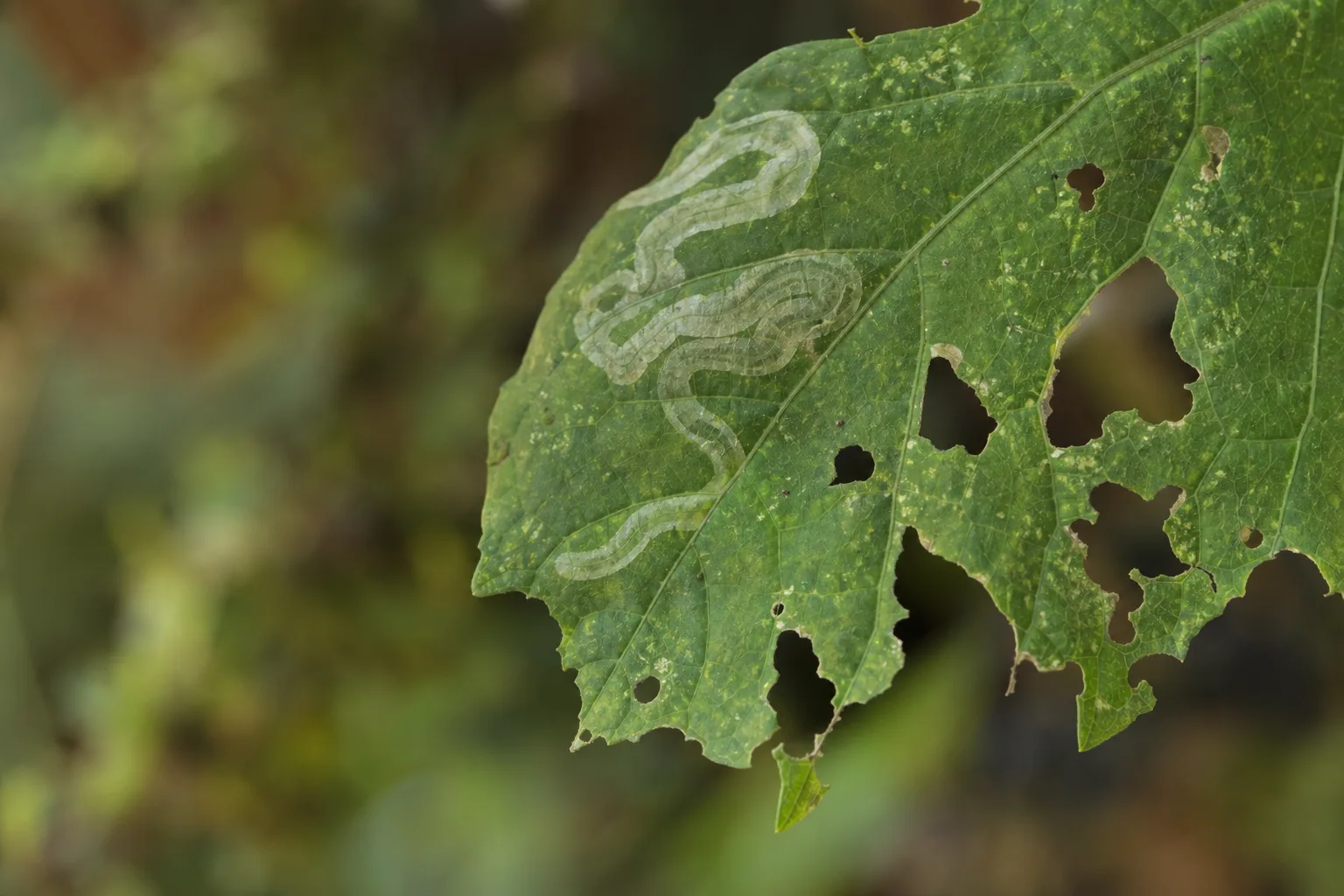
Start with the damage, not the spray bottle. Large holes mean chewing, smooth scraped patches mean rasping, pale stipples and sticky leaves mean sucking, and winding tunnels inside a leaf mean mining. That distinction saves your fall garden from the wrong treatment and saves you from chasing a pest that was never there.
What does the shape of leaf damage tell you about a hidden pest?
The shape tells you how the pest eats. Chewers remove pieces from the leaf, raspers scrape tissue from the surface, suckers puncture cells and drain fluid, and miners feed between the leaf’s two skins. Look at the edge, the surface, and the inside before you decide what to do.
Everyone says, “Find the bug first.” In practice, the bug is often tucked under a leaf, active after dark, or already gone. The feeding pattern stays behind.
Start at the top of the plant and work downward. Check new growth, leaf undersides, stems, and the soil line. Take one photograph before treatment so you can compare the same leaf in three days.
A ragged hole is not the same clue as a translucent trail. That sounds obvious, but I have absolutely sprayed a plant for the wrong pest. We all have a dead basil story. Mine involved a bottle, a sunny afternoon, and much more confidence than evidence.
Are large holes and ragged edges caused by chewing insects?
Large holes, bite-size gaps, scalloped edges, and leaves reduced to veins usually point to a chewing insect such as a caterpillar, beetle, grasshopper, or earwig. The missing tissue is the clue. Look for dark droppings, fresh bites, caterpillar webbing, or insects hiding beneath leaves and in mulch.
Caterpillars can make round holes or eat whole sections between veins. Beetles often leave repeated small or medium holes. Grasshoppers remove larger chunks from several leaves, while earwigs can chew irregular holes and ragged margins. An earwig damage guide also notes that earwigs may be garden helpers as well as leaf chewers, so do not treat every one as an emergency.
Hand-pick large chewers and drop them into a container of soapy water. The trade-off is time. It works best on a small bed, not on twenty raised beds at the community garden, and you need to repeat the inspection for seven to ten days.
Do not use soapy water as a leaf spray unless the product is made for plants. Household detergent can burn foliage, especially in Austin’s bright October sun. If a caterpillar is feeding on one sacrificial plant and damage is minor, leave it alone and watch whether the plant keeps growing.
How can you tell slug and snail rasping from ordinary chewing?
Slug and snail damage looks chewed but smoother, with thin strips scraped from the leaf surface or narrow sections removed along the edge. Irregular silvery-gray margins, fresh slime trails, and damage that appears overnight are the strongest clues. The missing tissue is scraped away rather than bitten cleanly.
Look at ground level first. Check beneath pots, boards, dense mulch, and low leaves. Search with a flashlight after sunset or early in the morning, because the culprit may be resting while you are standing over the damage at noon.
Copper barriers can discourage slugs and snails, but they cost money and must remain continuous around the bed. One gap under a gate is enough for the little criminals to stroll through. Iron-phosphate bait is another option, but it still needs careful placement and repeated use after heavy rain.
Reduce hiding places by pulling dead leaves away from seedlings and keeping mulch a few inches back from stems. The trade-off is that bare soil dries faster, so you may water more often. Do not confuse every silver mark with a slug trail. A true trail is glossy and often continues across the leaf or nearby pot.
What does stippling, yellowing, or sticky honeydew mean?
Tiny pale dots, yellowing, bronzing, curled leaves, sticky honeydew, or black sooty mold usually indicate a sucking pest. Aphids, whiteflies, leafhoppers, mealybugs, and scale pierce plant cells and remove fluids. Check new growth and leaf undersides for clusters, shed skins, cottony bodies, or clouds of insects when you disturb the plant.
Stippling looks like hundreds of pinpricks rather than holes. Bronzing can become obvious before you see the insects. Leafhoppers may also cause yellowing and crinkled leaves, a pattern documented for potato leafhopper damage in beans and peas by NC State Extension.
Honeydew is not the pest. It is the sticky waste left behind by some sucking insects. Sooty-black mold grows on that surface. Wipe one leaf with a damp cloth, then inspect above it for aphids, whiteflies, or scale because ants may be visiting the sweetness.
Insecticidal soap can work on exposed soft-bodied insects, but it must contact them and may burn tender leaves. Neem oil may help with some pests, but it can harm beneficial insects and needs careful label use. Horticultural oil can smother exposed insects, though hot weather and wet foliage raise the risk of leaf injury. I would rather identify the cluster first than coat the whole garden.
How do winding trails prove that a leaf miner is inside?
Winding serpentine trails, blotchy translucent patches, or brown and white tunnels between the leaf surfaces point to a leaf miner. The larva is feeding inside the leaf, so you usually will not find it on top or underneath. Mines expand as the larva grows and may turn black after the insect exits.
Hold the leaf toward the light. A fresh mine can look pale and transparent, with a darker thread or speck inside. A dried brown patch may be old damage. Do not mistake a fungal spot for a mine if there is no tunnel or translucent path.
Remove and destroy affected leaves when only a few are involved. Do not compost them unless your compost reliably reaches temperatures that destroy pests. Fine mesh row covers can keep adult flies away from new plants, but they must go on before adults lay eggs and must be secured at the soil line.
A targeted systemic insecticide is reserved for severe damage, and it has a serious downside: it can affect insects that visit the plant after treatment. For a fall kitchen garden, I usually choose removal and row cover first. You lose some leaves. You keep the response narrower.
Can damage patterns be confused with disease, weather, or poor watering?
Yes. Damage patterns can overlap with disease, hail, sunscald, nutrient stress, and watering problems, so confirm the texture before treating. Holes with clean missing tissue suggest feeding, while spots remain attached to the leaf and weather injury often affects the exposed side of several plants at once.
April hail is a familiar Austin troublemaker, but you are standing in the fall garden now, so look for fresh evidence. Hail makes tears and bruises across the canopy. It does not usually create new serpentine tunnels three weeks later.
A leaf with yellow edges and deep wrinkles may reflect a sucking pest, while a leaf with evenly pale color can reflect root stress or nutrition. The difference is distribution. Pests often gather on young growth or leaf undersides, while watering trouble follows the whole plant or the wettest part of the bed.
Bore marks are a different pattern again. Brownish-black holes or marks on fruit can confirm a pest entry point, as described in this report on custard apple damage from Dawn. Do not treat a fruit borer like a leaf miner, because the target and timing are different.
What should you do in the fall after identifying the damage?
In fall, inspect twice a week, remove the most damaged leaves, and use the least disruptive control that matches the feeding signature. Cooler nights slow some pests but do not erase them, while fresh seedlings can be damaged quickly. Recheck treated plants after three days and again after one week.
For chewing, hand-pick visible insects and decide whether the plant is still growing. For rasping, search after dark and place barriers around the bed. For sucking, wash sturdy foliage with a firm water stream before considering a labeled soap or oil. For mining, remove affected leaves and cover new growth.
Here is the practical match-up I use:
| Damage signature | Likely feeder | First response | Honest downside |
|---|---|---|---|
| Large holes, ragged edges, skeletonized leaves | Caterpillars, beetles, grasshoppers, earwigs | Hand-pick and drop large insects into soapy water | Repeated inspection takes time, and some chewing will remain |
| Smooth scraped strips, silvery margins, slime | Slugs and snails | Search at night, then use a copper barrier or iron-phosphate bait | Barriers need continuous coverage, and bait needs replacement |
| Stippling, curling, yellowing, honeydew | Aphids, whiteflies, leafhoppers, mealybugs, scale | Wash foliage and inspect undersides before using insecticidal soap or oil | Soap and oils can burn leaves and harm beneficial insects |
| Winding or blotchy tunnels inside leaves | Leaf miners | Remove leaves and use fine mesh row covers on new plants | Covers must be installed early, and leaf removal reduces foliage |
If you are unsure, circle the damaged area with a pencil and take a photo today. That sounds almost comically simple. It gives you a record of whether the mark is spreading, which is far more useful than a panic spray.
Who should use damage-pattern identification, and who should skip it?
Damage-pattern identification suits homeowners with edible beds, young transplants, pollinator plantings, or a few valuable containers who want targeted treatment. Skip the detailed process for a plant already collapsing from a severe infestation, a regulated agricultural problem, or damage that clearly comes from construction, animals, or irrigation failure.
This method is especially useful when you garden under water restrictions and cannot afford to keep replacing plants. It also suits anyone sharing space with bees, lacewings, lady beetles, birds, or children, because you can limit treatment to the actual problem.
It is less useful if you never inspect the garden between treatments. A signature changes as damage ages. A fresh mine can be translucent, then brown. A sticky leaf can dry clean after rain. You need two minutes with the plant, not a perfect entomology degree.
For a new bed, use the plant database to check the plant’s usual growth habit and find out whether the damaged part is a leaf, stem, or fruit. If you are planning the whole layout, get a concept for your yard before placing high-value plants where deer, reflected heat, or wet clay will make every pest problem harder.
What is the fastest inspection routine when you cannot find the pest?
Use a five-minute top-to-bottom inspection: view the whole plant, check the newest leaves, turn over mature leaves, examine stems and soil level, then inspect after sunset if you see smooth scraping. Match the damage to a feeding style before touching a product. That sequence catches most clues without dismantling the bed.
First, look at the size and shape of missing tissue. Large holes suggest chewers. Narrow scraped edges suggest raspers. Tiny stipples or honeydew suggest suckers. Internal tunnels suggest miners.
Next, check timing. Damage that appears after one night points you toward slugs, snails, or nocturnal chewers. Damage that slowly expands inside a leaf points toward a miner. Damage concentrated on fresh growth often points toward a sucking insect.
Finally, inspect one healthy plant beside one damaged plant. The comparison matters. In Austin, alkaline clay can hold water after a storm and set hard as it dries, so a stressed plant may show yellowing that has nothing to do with insects. The leaf still has the final say, but you have to read it.
What are the most common questions about identifying unseen garden pests?
The best answer is usually already on the leaf. These questions cover the four feeding signatures, the right first response, and the fall timing that keeps a small problem from becoming a whole-bed problem.
How do I identify a pest if I never see the insect?
How do I identify a pest if I never see the insect?
Identify it by the feeding signature: large holes indicate chewing, smooth scraped strips and slime indicate rasping, stippling or honeydew indicate sucking, and winding internal trails indicate mining. Inspect top and bottom leaf surfaces, stems, soil, and the plant after dark, then photograph the same damage again in three days.
Are holes in leaves always caused by caterpillars?
Are holes in leaves always caused by caterpillars?
No. Caterpillars are one possibility, but beetles, grasshoppers, and earwigs can also chew holes. Ragged edges, missing sections, and skeletonized leaves point to chewing, so inspect for droppings and hiding insects before choosing a treatment. Hand-picking is the narrowest first response for a small fall garden.
How can I tell slug damage from beetle damage?
How can I tell slug damage from beetle damage?
Slug damage is usually smoother and may include silvery slime trails, especially along low leaves and edges. Beetle damage is more often a series of distinct holes or bites without slime. Search for slugs and snails after sunset, while beetles may be found on foliage during daylight.
What does sticky residue on leaves mean?
What does sticky residue on leaves mean?
Sticky residue usually means honeydew from a sucking insect such as aphids, whiteflies, leafhoppers, mealybugs, or scale. Look above the sticky area and underneath nearby leaves for insects. Wash sturdy foliage first, then consider insecticidal soap or horticultural oil only if the label allows use on that plant.
Can a leaf miner be treated by spraying the leaf surface?
Can a leaf miner be treated by spraying the leaf surface?
Usually, spraying the leaf surface will not reach a larva feeding between the leaf layers. Remove and destroy mined leaves, protect new plants with fine mesh row covers, and reserve a targeted systemic insecticide for severe damage. The trade-off is that removal sacrifices some photosynthesis but limits the treatment area.
Should I remove every damaged leaf in the fall?
Should I remove every damaged leaf in the fall?
No. Remove leaves that are heavily mined, mostly skeletonized, or carrying an active pest cluster, but keep lightly damaged leaves that still make energy for the plant. Removing too much foliage can slow recovery. Reinspect after three days and remove more only when damage continues.
The garden is always telling you something. A hole is a sentence. A tunnel is a sentence. Read the grammar before you reach for the bottle, and your fall garden will get a calmer, more accurate answer.
Want a plan for your own yard?
Tell us the space and we will put a planting plan together for it. Start at get my concept, or browse what actually grows where you are over on plants.
Frequently asked questions
How do I identify a pest if I never see the insect?
Identify it by the feeding signature: large holes indicate chewing, smooth scraped strips and slime indicate rasping, stippling or honeydew indicate sucking, and winding internal trails indicate mining. Inspect top and bottom leaf surfaces, stems, soil, and the plant after dark, then photograph the same damage again in three days.
Are holes in leaves always caused by caterpillars?
No. Caterpillars are one possibility, but beetles, grasshoppers, and earwigs can also chew holes. Ragged edges, missing sections, and skeletonized leaves point to chewing, so inspect for droppings and hiding insects before choosing a treatment. Hand-picking is the narrowest first response for a small fall garden.
How can I tell slug damage from beetle damage?
Slug damage is usually smoother and may include silvery slime trails, especially along low leaves and edges. Beetle damage is more often a series of distinct holes or bites without slime. Search for slugs and snails after sunset, while beetles may be found on foliage during daylight.
What does sticky residue on leaves mean?
Sticky residue usually means honeydew from a sucking insect such as aphids, whiteflies, leafhoppers, mealybugs, or scale. Look above the sticky area and underneath nearby leaves for insects. Wash sturdy foliage first, then consider insecticidal soap or horticultural oil only if the label allows use on that plant.
Can a leaf miner be treated by spraying the leaf surface?
Usually, spraying the leaf surface will not reach a larva feeding between the leaf layers. Remove and destroy mined leaves, protect new plants with fine mesh row covers, and reserve a targeted systemic insecticide for severe damage. The trade-off is that removal sacrifices some photosynthesis but limits the treatment area.
Should I remove every damaged leaf in the fall?
No. Remove leaves that are heavily mined, mostly skeletonized, or carrying an active pest cluster, but keep lightly damaged leaves that still make energy for the plant. Removing too much foliage can slow recovery. Reinspect after three days and remove more only when damage continues.
Free, no obligation
Ready to design your dream landscape? Start here.
Tell us where you are and we will start a free profile for you, with plants that actually survive your climate and a real sense of what the build would cost.