
How Do You Identify and Treat Armyworms Before They Destroy a Lawn?
Armyworms can turn a green lawn brown overnight, especially in fall. Here is how to confirm the caterpillars, expose them, choose a treatment, and keep the damage from spreading.
September 26, 2026
By Diego Navarro
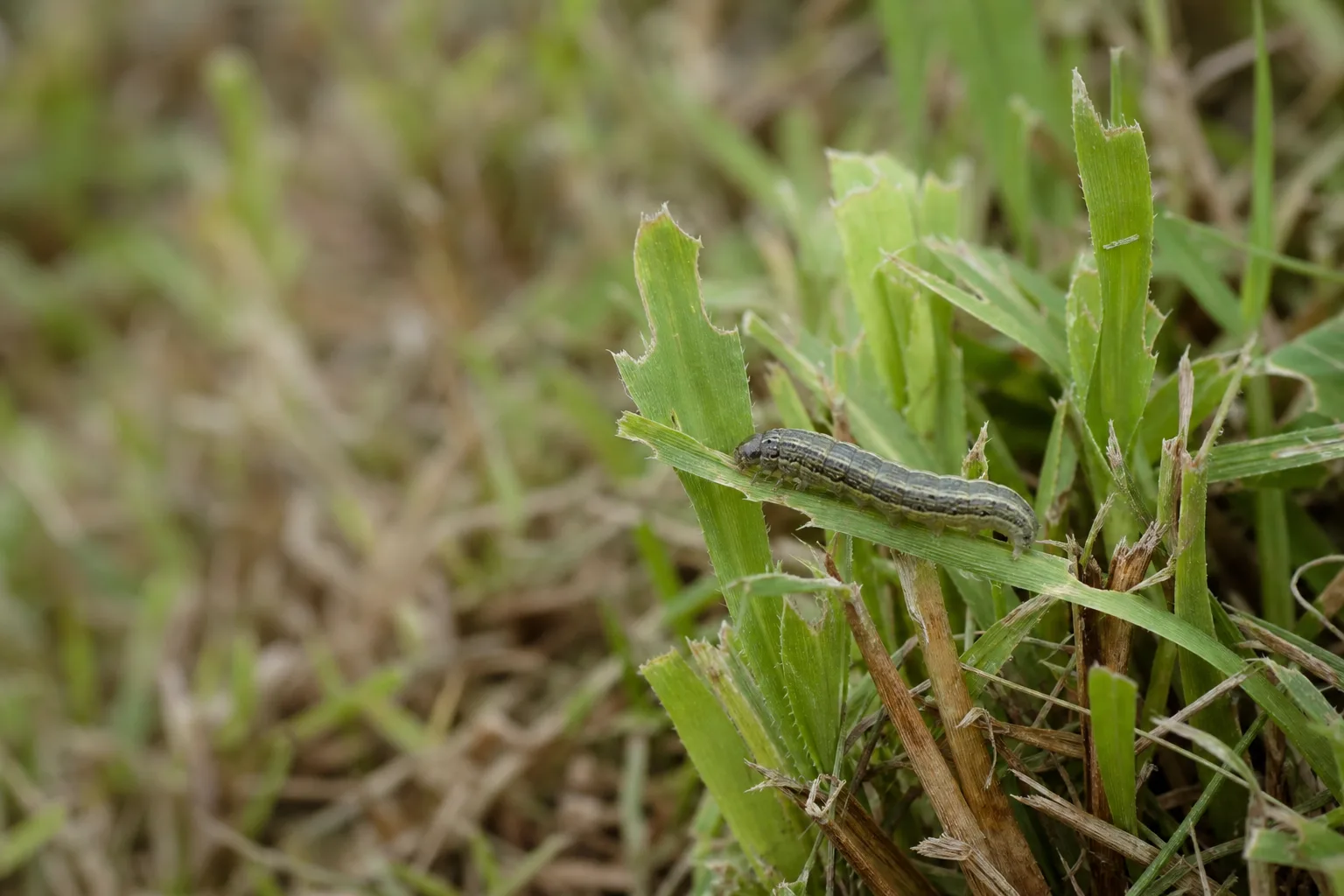
What do armyworms look like in a lawn?
Armyworms are smooth-bodied caterpillars usually 1 to 2 inches long, with green, brown, or gray bodies and faint stripes running lengthwise. They hide under thatch, fallen leaves, weeds, and dense foliage during daylight, then feed on grass after sunset. That is why a lawn can look fine at breakfast and damaged by dinner two days later.
The damage looks ragged, not neatly clipped. Grass blades are chewed into uneven strips, then turn brown as larger groups move across the turf.
Walk the lawn at 8 p.m. with a flashlight. Part the grass with your fingers and check the thatch line, especially along the edge of a brown patch. The Bonnie Plants guide also points to fallen leaves and dense canopies as daytime hiding places.
Do not wait for a perfect specimen. A few caterpillars, fresh chewing, and a widening brown patch are enough to start checking seriously. The lawn does not send a formal invitation.
How quickly can armyworms destroy a lawn?
Armyworms can make a lawn look largely gone in two days because they feed in groups and the damage often spreads overnight. The first sign may be a few ragged blades, but a heavy outbreak can leave broad brown or dead patches as the caterpillars move through the grass. Treat fresh damage as urgent, not as ordinary fall browning.
Everyone says to wait and see if the grass recovers. In practice, waiting costs you the most valuable hours because the worms are feeding while you are trying to identify a drought problem.
Stand at the edge of the damaged area and compare the green turf with the newest brown strip. If the boundary has moved since yesterday, inspect that evening and plan treatment immediately after confirmation.
Grass can survive some leaf loss, but bare-looking patches may need repair after the insects are gone. First stop the feeding. Then judge the turf.
Who should use this armyworm treatment plan?
This plan suits a homeowner who has fresh ragged lawn damage, nighttime caterpillar activity, and enough turf to inspect and treat with a labeled product. It also suits vegetable gardeners who find the same larvae feeding on beans, cabbage, corn, onions, or peppers. Ignore this plan if you have not confirmed chewing insects, because treating a drought-stressed or diseased lawn wastes money and can harm useful insects.
If your lawn is small, hand-picking visible caterpillars at night can reduce the population without spraying, but it takes repeated walks and misses larvae hidden in the thatch. That is labor, not magic.
For a large lawn with damage moving across several areas, a broadcast application is more practical. A spreader covers evenly, but it also puts product across places where you may not need it, so follow the label and keep people and pets away as directed.
If you are in Central Texas, do not confuse every fall brown patch with armyworms. Black clay can stay wet in one place and dry out two feet away, while heat stress can brown turf without a single caterpillar present.
What should you do before treating armyworms?
Before treating armyworms, mow the lawn to a moderate height, remove leaves and weeds that shelter larvae, and inspect the turf at night. Lightly water the lawn a few hours before treatment to bring caterpillars closer to the surface, then apply the chosen product early in the morning or late in the evening when larvae are active.
Do not scalp the lawn. Mowing moderately removes some hiding cover without adding the stress that comes from cutting grass too short, but the trade-off is that mowing will not kill an outbreak by itself.
Rake up fallen leaves and remove loose debris from garden beds and lawn edges. Cleanup reduces shelter, though it also removes organic cover that can benefit soil, so use it as a targeted pest step rather than leaving every bed bare.
The Alabama Cooperative Extension guidance supports light irrigation several hours before treatment because it can increase larval activity near the turf surface. Do not flood the lawn. Soggy soil is a different problem wearing a cheap hat.
Should you water the lawn before spraying armyworms?
Yes, water the lawn lightly a few hours before spraying if the soil is dry, because moisture can bring armyworm larvae toward the turf surface where treatment can reach them. Do not saturate the ground or create runoff. The goal is to change where the caterpillars are hiding, not to soak the lawn until it becomes a pond.
I would water in the afternoon and inspect again after dark. If the grass is already wet from rain, skip extra irrigation and look under the thatch instead.
A hose sprinkler is simple, but it can distribute water unevenly and leave one patch dry. Irrigation on a timer is more consistent, although buying or adjusting equipment is unnecessary for one small outbreak.
Keep watering normally after treatment, but do not keep the lawn constantly wet. The research recommendation is well-watered but not soggy turf, followed by weekly inspections for at least two weeks.
Which armyworm treatment works fastest?
A labeled broad-spectrum insecticide such as Sevin, which contains carbaryl, or a pyrethroid such as bifenthrin or permethrin is the fastest practical choice for a confirmed, active lawn outbreak. Apply with a broadcast spreader or other labeled equipment at the label rate, treating in early morning or late evening. Fast knockdown is the reason I choose this route for a lawn already losing ground.
Sevin lawn granules can cover an entire lawn with a regular spreader, according to the GardenTech armyworm guide. The trade-off is broad insect impact, so do not treat casually, and follow every label direction for application, reentry, watering, and storage.
Pyrethroids can act quickly, but they are also broad-spectrum products rather than selective caterpillar tools. Their downside is less room for sloppy application near flowering plants, ponds, or areas where beneficial insects are active.
I would not mix products, increase the rate, or guess because the patch looks angry. The label is the legal and practical instruction. If the first treatment does not stop new chewing, repeat only at the labeled 7 to 10 day interval and only if the label permits it.
| Treatment option | Best use | Honest downside |
|---|---|---|
| Sevin, carbaryl lawn product | Large lawn needing quick, broad coverage | Can affect non-target insects and requires strict label compliance |
| Bifenthrin or permethrin pyrethroid | Fast control of an active lawn outbreak | Broad-spectrum impact and poor fit near sensitive garden areas |
| Bt kurstaki | Smaller outbreak where larvae are feeding on treated foliage | Slower results and reduced value once feeding has stopped |
| Neem-based oil | Direct foliage treatment in a garden-friendly approach | Takes days, needs thorough coverage, and may require repeat applications |
| Hand-picking | Small lawn or garden with visible caterpillars | Labor-intensive and easy to miss hidden larvae |
Is Bt or neem better for a garden-friendly treatment?
Bt kurstaki or a neem-based oil is the garden-friendly choice when you can tolerate slower control and can coat the feeding foliage thoroughly. The larvae must ingest treated plant material, and death may take a few days, so these options are a poor match for a lawn disappearing overnight. Hand-picking visible caterpillars can supplement either treatment.
Bt is more targeted toward feeding caterpillars, but its trade-off is patience. You may still see movement after application, and it will not repair grass already chewed brown.
Neem oil reaches the foliage directly, but coverage matters and repeat applications may be needed according to the product label. Oil can also be fussy in hot weather, so never improvise rates or spray outside the label instructions.
For a small vegetable bed, I would inspect at dusk, remove what I can, and use a labeled Bt product if fresh feeding continues. For a large lawn that may be gone in two days, I would use the labeled fast-control option instead.
When should you reapply armyworm treatment?
Reinspect the lawn every week for at least two weeks after treatment, and reapply only if new feeding signs or live larvae appear and the product label allows it. Many armyworm control directions use a 7 to 10 day interval, but the label controls the exact timing. A second application is not automatic just because the calendar says so.
Check the same locations each time: brown patch edges, thatch, leaf piles, dense grass, and garden debris. Compare photographs if you can. A patch that stopped spreading is better news than a green patch that looks merely tired.
The Alabama Extension guidance recommends timing applications early or late in the day, when larvae are more active. That timing matters more than spraying at noon because you happened to remember.
Do not stack Sevin, a pyrethroid, Bt, and neem together. Each product has a different label, trade-off, and reapplication rule.
How do you keep armyworms from returning this fall?
To reduce a repeat armyworm outbreak, inspect the lawn weekly through fall, remove fallen leaves and weeds that provide shelter, and watch for fresh ragged chewing before brown patches expand. Clean debris from turf edges and dense plantings, but do not assume sanitation guarantees prevention. Armyworm moths can arrive again, so early detection is the practical defense.
I grew up with my father’s tomatoes in a twelve-foot strip of New Jersey clay, where fall meant watching for the first hard frost. In Austin, fall can still mean checking grass after another hot spell, and the question is not whether winter is coming but whether the turf is alive in September. Different ground. Same need to look closely.
Keep the lawn watered without keeping it soggy, because stressed turf gives you fewer clues and recovers less gracefully from feeding. Clean up shelter, but leave intentional mulch where it serves the bed rather than raking the whole property into a parking lot.
You can compare grass and garden plants before planting or replacing damaged areas in our plant database. If you want the lawn, beds, paths, and irrigation considered together, you can get a concept for your yard before buying another bag of product.
How do you know armyworms are actually gone?
You know an armyworm outbreak is slowing when nighttime inspections find no live larvae, the ragged feeding edge stops advancing, and no new brown strips appear during two weekly checks. Brown grass will not turn green immediately after treatment, so judge success by stopped damage and absent caterpillars, not by instant color recovery.
Walk the same route at dusk and look beneath the thatch. A few dead larvae may remain, and that is not a reason to spray again if feeding has stopped.
If new damage appears after seven to ten days, inspect before reapplying. You may have missed a sheltered section, had a new hatch, or treated with a product that was too slow for the size of the outbreak.
Once the insects are gone, keep the lawn evenly watered and give the grass time to recover. Replacing every brown patch immediately is usually the expensive part of the problem, not the solution.
Are armyworms active at night?
Yes, armyworms are usually easier to find at night because they hide under debris, thatch, and dense foliage during the day and feed after dark. Walk the lawn in the early evening with a flashlight, look for 1 to 2 inch smooth caterpillars, and check whether fresh ragged chewing is spreading along the grass.
Can armyworms destroy a lawn in two days?
Yes, a heavy armyworm outbreak can leave large brown or dead-looking lawn patches within two days because the larvae feed in groups and damage can spread overnight. Confirm the caterpillars at dusk rather than assuming drought, then treat promptly with a labeled product appropriate for the lawn and follow-up inspections.
Should I water before treating armyworms?
Lightly water the lawn a few hours before treatment if the soil is dry, because irrigation may bring armyworm larvae closer to the turf surface. Do not saturate the soil or cause runoff. The purpose is to increase larval activity near the surface, not to replace the treatment or keep the lawn soggy.
What is the fastest way to kill armyworms in grass?
A labeled broad-spectrum product such as Sevin, bifenthrin, or permethrin is generally the fastest option for a confirmed lawn outbreak when applied at the label rate. Use a broadcast spreader where the label directs, treat early or late in the day, and follow all instructions for watering, reentry, and repeat applications.
Does Bt kill armyworms?
Yes, Bt kurstaki can kill armyworms when feeding larvae ingest treated foliage, but it usually takes a few days and requires thorough coverage. Bt is better for a smaller outbreak or garden setting where slower, more targeted control is acceptable. It is not my first choice for a lawn disappearing overnight.
How long should I watch for armyworms after treatment?
Watch for armyworms weekly for at least two weeks after treatment, checking the lawn edges, thatch, debris, and newest brown patches. Reapply only when live larvae or fresh feeding appears and the product label permits it, commonly at a 7 to 10 day interval. Stopped damage matters more than immediate green color.
Want a plan for your own yard?
Tell us the space and we will put a planting plan together for it. Start at get my concept, or browse what actually grows where you are over on plants.
Frequently asked questions
Are armyworms active at night?
Yes, armyworms are usually easier to find at night because they hide under debris, thatch, and dense foliage during the day and feed after dark. Walk the lawn in the early evening with a flashlight, look for 1 to 2 inch smooth caterpillars, and check whether fresh ragged chewing is spreading along the grass.
Can armyworms destroy a lawn in two days?
Yes, a heavy armyworm outbreak can leave large brown or dead-looking lawn patches within two days because the larvae feed in groups and damage can spread overnight. Confirm the caterpillars at dusk rather than assuming drought, then treat promptly with a labeled product appropriate for the lawn and follow-up inspections.
Should I water before treating armyworms?
Lightly water the lawn a few hours before treatment if the soil is dry, because irrigation may bring armyworm larvae closer to the turf surface. Do not saturate the soil or cause runoff. The purpose is to increase larval activity near the surface, not to replace the treatment or keep the lawn soggy.
What is the fastest way to kill armyworms in grass?
A labeled broad-spectrum product such as Sevin, bifenthrin, or permethrin is generally the fastest option for a confirmed lawn outbreak when applied at the label rate. Use a broadcast spreader where the label directs, treat early or late in the day, and follow all instructions for watering, reentry, and repeat applications.
Does Bt kill armyworms?
Yes, Bt kurstaki can kill armyworms when feeding larvae ingest treated foliage, but it usually takes a few days and requires thorough coverage. Bt is better for a smaller outbreak or garden setting where slower, more targeted control is acceptable. It is not my first choice for a lawn disappearing overnight.
How long should I watch for armyworms after treatment?
Watch for armyworms weekly for at least two weeks after treatment, checking the lawn edges, thatch, debris, and newest brown patches. Reapply only when live larvae or fresh feeding appears and the product label permits it, commonly at a 7 to 10 day interval. Stopped damage matters more than immediate green color.
Free, no obligation
Ready to design your dream landscape? Start here.
Tell us where you are and we will start a free profile for you, with plants that actually survive your climate and a real sense of what the build would cost.