
Hugelkultur Explained: What It Is and What It Actually Does
Hugelkultur is a raised garden mound built over buried wood. Here is what that woody core really does, how to build one this fall, which materials to avoid, and why I would use it carefully in an Austin yard.
September 23, 2026
By Valeria Navarro
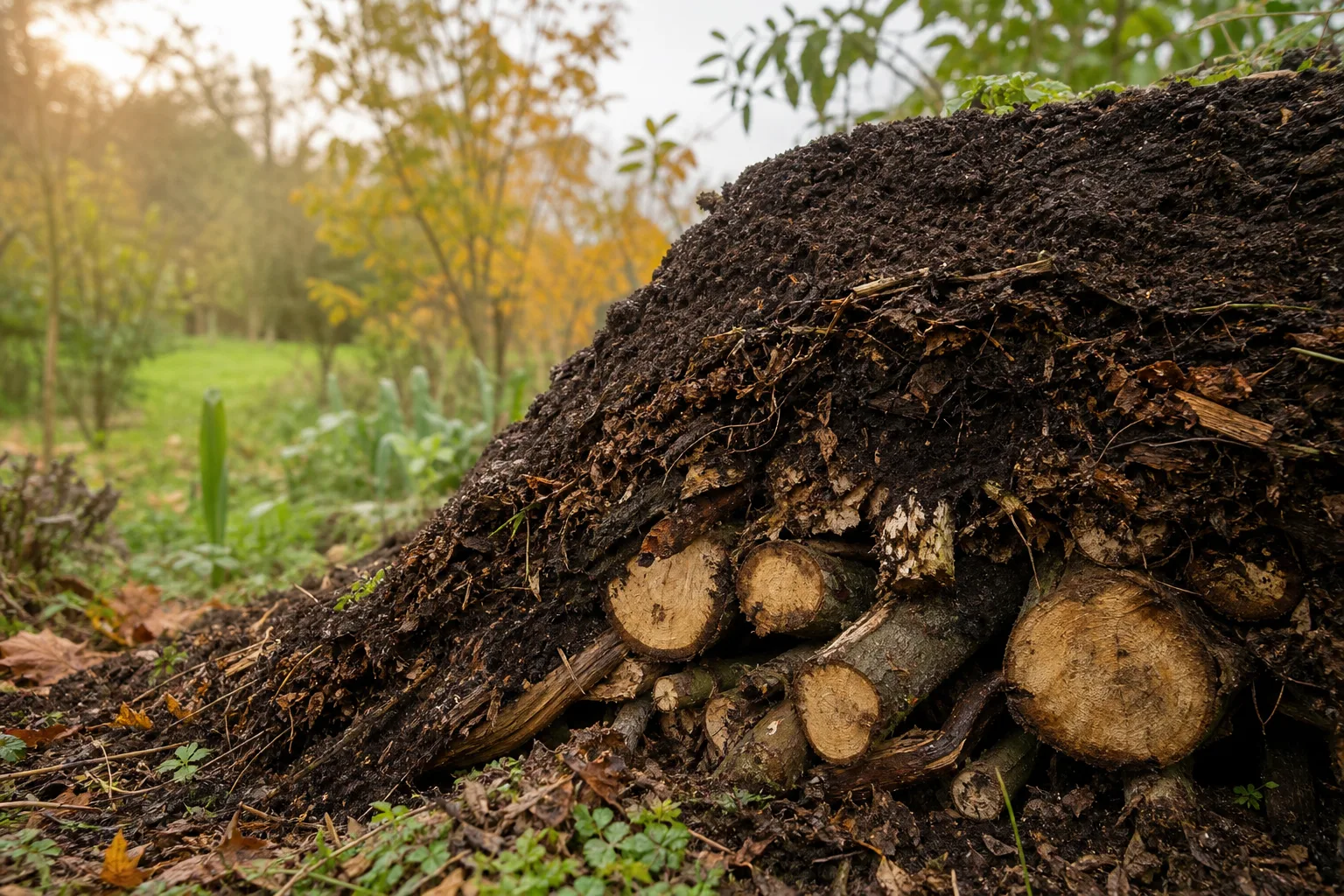
Hugelkultur is a raised mound built over buried wood, and its real job is to become a slow, underground water sponge as that wood decomposes. I would build one this fall only where you have room for a 2.5 to 3 foot mound and want a long term soil project, not a quick raised bed.
What is hugelkultur, exactly?
Hugelkultur is a raised garden bed made by stacking logs, branches, leaves, compostable garden waste, and soil into a mound. The German name means “hill culture” or “mound culture.” Its buried woody core slowly breaks down, holding water and feeding living soil for years, according to Wild Hearth Life.
Think of it as a log pile wearing a garden hat. The hat is soil. The pile is the engine.
As the wood decays, microbes, fungi, and beneficial insects move through the layers. The process can generate warmth and release nutrients, but the bed is not magic compost. It still needs sensible materials, a proper soil cap, and water while it settles.
Everyone says raised beds are simply boxes filled with soil. In practice, hugelkultur is a living mound with a carbon rich center, which is why it can change how water moves through the bed over several growing seasons.
What does buried wood actually do in a hugelkultur bed?
Buried wood acts like a slow release sponge. Logs and branches absorb water, hold it inside the mound, and gradually release moisture toward plant roots as the woody core decomposes over roughly 5 to 20 years. The same breakdown feeds soil organisms and releases nutrients, though the benefits build over time rather than arriving on planting day.
That time span matters. A fresh mound is not a finished ecosystem. It is a construction project with vegetables on top.
The wood also leaves air spaces between larger pieces. Smaller branches, twigs, leaves, and compostable debris fill those gaps. Then the soil cap gives roots somewhere to grow while the buried layers settle beneath them.
Research from Oklahoma State University describes the organic material as a sponge that absorbs surrounding surface water and wicks it toward roots. That is the useful part. The claim is not that you can ignore rainfall, water restrictions, or a dry Austin summer forever.
Is hugelkultur a good fall project in Austin?
Fall is the right season to start a hugelkultur bed in Austin if you can build it before the soil turns too cold and you can water it thoroughly after construction. The cooler season gives the mound time to settle before spring planting, but the bed still needs several weeks of moisture and may require more soil after it sinks.
I would choose a spot with sunlight, access to water, and enough width for sloped sides. A 3 foot mound is not a polite little border. It takes space, and its sides spread as the woody core settles.
Austin adds complications. Blackland Prairie clay can hold water tightly, then crack open in August, while limestone or caliche may sit close beneath a thin soil layer. If the base is hard caliche, break through compacted areas where practical so water does not simply run around the mound.
I learned this contrast in my own yard. In Miami, sandy fill drained before I finished watering; here, clay can hold water and then set like a brick, so a sponge bed needs a real plan for both drainage and drought.
Who is hugelkultur for, and who should skip it?
Hugelkultur suits a homeowner with woody garden debris, several weeks before planting, room for a 2.5 to 3 foot mound, and interest in improving soil for multiple years. Skip it if you need a level bed immediately, have no way to bring in soil, or cannot water the new mound thoroughly while it settles.
This is a good fit for a broad backyard growing area, especially where you want to reuse branches and logs instead of hauling every bit of organic material away. It is also useful where you want a mound that can capture and hold some surface water.
It is a poor fit beside a narrow walkway, under a low window, or in a small rental garden where the structure may outlast your lease. It is also a poor fit for a gardener who wants identical moisture from one end of a bed to the other.
The top is drier. The lower slopes are wetter. That variation is a feature, but only if you plant for it instead of acting surprised in June.
How do you build a hugelkultur mound this fall?
Start with large hardwood logs, add smaller branches, twigs, shredded leaves, and compostable garden waste, then cover the pile with 6 to 8 inches of compost or well rotted organic matter and 12 to 18 inches of good topsoil. Shape the finished mound 2.5 to 3 feet high, slope the sides, water it well, and let it settle for several weeks.
Lay the biggest logs on the bottom. Keep the pile inside the footprint you want because the finished mound will soften and spread as the core breaks down.
Next, add branches and twigs. Fill obvious gaps with leaves and smaller woody pieces. Do not leave a cavernous air pocket under the soil cap. A hollow mound can settle unevenly and leave roots hanging in space.
The top layers are not decoration. The 6 to 8 inch organic layer helps bridge the rough woody surface, while the 12 to 18 inches of topsoil gives crops enough rooting material for the first seasons.
Water each layer as you build if the material is dry. After the final soil cap is in place, soak the entire mound and wait a few weeks before planting. The bed needs that settling period, especially if you built it high.
Which wood and garden waste belong inside hugelkultur?
Use large, preferably hardwood logs as the base, then smaller branches, twigs, shredded leaves, and compostable garden waste. Avoid black walnut and black locust, which the available hugelkultur guidance specifically identifies as poor choices for the woody core. The trade off is simple: suitable wood takes longer to gather, while unsuitable wood can compromise the project.
Do not treat every pile of yard waste as equivalent. Clean woody material gives you the long lived structure hugelkultur needs. Leaves and smaller debris fill gaps, but they do not replace the base logs.
Compost or well rotted organic matter belongs above the woody layers, not as a thin sprinkle lost among the branches. You need a substantial 6 to 8 inch layer before adding the soil cap.
Good topsoil costs money if you do not have enough on site. That is one of the bed's honest expenses, along with hauling logs, moving soil, and finding a place for the mound to settle without blocking a path or drainage route.
Where should you plant crops on a hugelkultur mound?
Plant water loving vegetables near the lower parts of a hugelkultur mound and place crops that prefer drier conditions higher up. The lower slopes generally receive more moisture from the sponge, while the top drains faster. This moisture gradient is one of hugelkultur’s practical advantages, but it also means the bed cannot be planted as one uniform block.
Use the lower edge for crops that tolerate more available moisture. Put drier preferring crops near the crest. Keep an eye on the surface for the first month because new soil can dry before the buried wood is fully charged with water.
Planting too early is a common failure. If you fill the bed today and sow heavily tomorrow, settling can pull roots downward or expose them as the mound changes shape.
You can browse suitable choices in our plant database, then match each crop to the wet lower slope or drier top rather than choosing plants by appearance alone. The bed should guide your placement.
How much water does hugelkultur save, and when?
A hugelkultur mound can require less watering after it is established because decomposing wood stores moisture and slowly releases it toward roots. The savings do not begin at full strength on construction day. Water the new mound thoroughly, keep it moist while it settles for several weeks, and expect the largest improvement after the woody core has begun breaking down.
Do not build one in fall and immediately cancel your watering plan. Fresh wood and dry soil still need water to begin the decomposition process, and the upper 12 to 18 inches can dry quickly in sun and wind.
The bed becomes more useful over the first few years. Guidance summarized by Grow Perma describes the woody core breaking down over 5 to 20 years, with lower yields in year one and stronger production by year three.
Here is how I compare the choices before I start hauling logs:
| Garden bed option | What it does well | Honest downside |
|---|---|---|
| Hugelkultur mound | Reuses woody debris, stores moisture, and builds soil over several years | Takes space, settles, and needs careful watering at first |
| Conventional raised bed | Gives you a level, predictable planting surface quickly | Requires a larger volume of purchased or prepared soil |
| In ground amended bed | Uses the existing garden footprint and avoids building a tall mound | Can be difficult where clay, caliche, or poor drainage limits root growth |
I would choose hugelkultur for a long term growing area, not because it is automatically cheaper. If you need a neat, level bed for spring, a conventional raised bed may be the calmer choice.
What are the drawbacks of hugelkultur?
Hugelkultur takes labor, space, soil, and patience. The mound settles as wood decomposes, the first year can produce less than later years, and the top may dry faster than the lower slopes. It is drought resilient after establishment, not maintenance free from the first watering.
The shape can also work against you. A steep mound is harder to plant, water, and weed without washing soil downhill. Keep the sides sloped rather than building a tall-sided pile that sheds water.
Fresh wood can create temporary competition in a complicated soil system as organisms break it down, so the thick soil and organic caps matter. The research supports nutrient release and improved living soil over time, but it does not promise instant fertility for every crop.
You also need to watch settlement after heavy rain. If the mound drops several inches, add soil rather than pretending the roots will enjoy the new air gap. A hugelkultur bed rewards attention early, then asks for less of it later.
How should you use the finished mound through winter?
After building the mound in fall, soak it thoroughly, inspect the slopes after the first substantial rain, and wait several weeks before planting heavily. Replace soil where the pile settles, keep the surface from eroding, and use the winter period to plan wetter lower zones and drier upper zones.
This is the moment to make corrections. If water runs off one side, reshape that slope. If the top looks thin, add soil before roots need it.
Do not pack the bed with a full season of crops before you know how it behaves. A few test plantings let you see where moisture collects and where the cap dries first.
If you want help thinking through the mound’s footprint, slope, and planting zones, you can get a concept for your yard before you move a single log. Diego and I disagree about gravel often enough, but we agree that a bed should work on paper before it works your back.
What are the most common hugelkultur questions?
The short answers below cover the practical decisions that matter most before you build a hugelkultur mound this fall. They focus on construction, timing, materials, water, and placement, because those are the points that decide whether your buried wood becomes a useful sponge or an expensive pile under thin soil.
What is hugelkultur?
Hugelkultur is a raised garden mound built from buried logs, branches, leaves, compostable garden waste, and soil. The woody core decomposes over 5 to 20 years, storing and slowly releasing water while feeding soil organisms. It is a long term soil building method, not a quick substitute for preparing a planting bed.
Can I build hugelkultur in the fall?
Yes, fall is a good time to build hugelkultur if you can water the new mound thoroughly and let it settle for several weeks before heavy planting. Build the 2.5 to 3 foot mound, inspect it after rain, and add soil where it sinks. Fall construction gives you time to correct the shape before spring planting.
How tall should a hugelkultur bed be?
A hugelkultur bed should be about 2.5 to 3 feet high, with sloping sides rather than steep walls. That height allows room for the woody sponge, organic layer, and soil cap, but it also takes significant garden space. Expect the mound to settle as the wood decomposes, so keep extra soil available for repairs.
What wood should I avoid in hugelkultur?
Avoid black walnut and black locust in the buried woody core. Use large, preferably hardwood logs, then smaller branches and twigs to fill the structure. The trade off is that suitable wood may take longer to gather, but using the wrong material can undermine a bed intended to function for 5 to 20 years.
Does hugelkultur eliminate watering?
No, hugelkultur does not eliminate watering. A new mound must be watered thoroughly and kept moist while it settles for several weeks, and the soil cap can dry quickly in sun and wind. After the wood begins decomposing, the bed can need less water because the core stores moisture and releases it slowly.
Where should I plant on a hugelkultur mound?
Plant water loving vegetables near the lower slopes and drier preferring crops toward the top. Moisture is greatest near the lower parts of the mound and drainage is faster at the crest. Watch the bed during its first month, because the actual moisture pattern depends on the soil cap, slope, weather, and how thoroughly you watered it.
Want a plan for your own yard?
Tell us the space and we will put a planting plan together for it. Start at get my concept, or browse what actually grows where you are over on plants.
Frequently asked questions
What is hugelkultur?
Hugelkultur is a raised garden mound built from buried logs, branches, leaves, compostable garden waste, and soil. The woody core decomposes over 5 to 20 years, storing and slowly releasing water while feeding soil organisms. It is a long term soil building method, not a quick substitute for preparing a planting bed.
Can I build hugelkultur in the fall?
Yes, fall is a good time to build hugelkultur if you can water the new mound thoroughly and let it settle for several weeks before heavy planting. Build the 2.5 to 3 foot mound, inspect it after rain, and add soil where it sinks. Fall construction gives you time to correct the shape before spring planting.
How tall should a hugelkultur bed be?
A hugelkultur bed should be about 2.5 to 3 feet high, with sloping sides rather than steep walls. That height allows room for the woody sponge, organic layer, and soil cap, but it also takes significant garden space. Expect the mound to settle as the wood decomposes, so keep extra soil available for repairs.
What wood should I avoid in hugelkultur?
Avoid black walnut and black locust in the buried woody core. Use large, preferably hardwood logs, then smaller branches and twigs to fill the structure. The trade off is that suitable wood may take longer to gather, but using the wrong material can undermine a bed intended to function for 5 to 20 years.
Does hugelkultur eliminate watering?
No, hugelkultur does not eliminate watering. A new mound must be watered thoroughly and kept moist while it settles for several weeks, and the soil cap can dry quickly in sun and wind. After the wood begins decomposing, the bed can need less water because the core stores moisture and releases it slowly.
Where should I plant on a hugelkultur mound?
Plant water loving vegetables near the lower slopes and drier preferring crops toward the top. Moisture is greatest near the lower parts of the mound and drainage is faster at the crest. Watch the bed during its first month, because the actual moisture pattern depends on the soil cap, slope, weather, and how thoroughly you watered it.
Free, no obligation
Ready to design your dream landscape? Start here.
Tell us where you are and we will start a free profile for you, with plants that actually survive your climate and a real sense of what the build would cost.