
How to Read a Plant to Know If It Needs Water
A plant that wilts at noon is not always thirsty. Learn how to check the soil, read the leaves, and water deeply this fall without drowning roots or wasting water.
October 3, 2026
By Valeria Navarro
Is a wilting plant always asking for water?
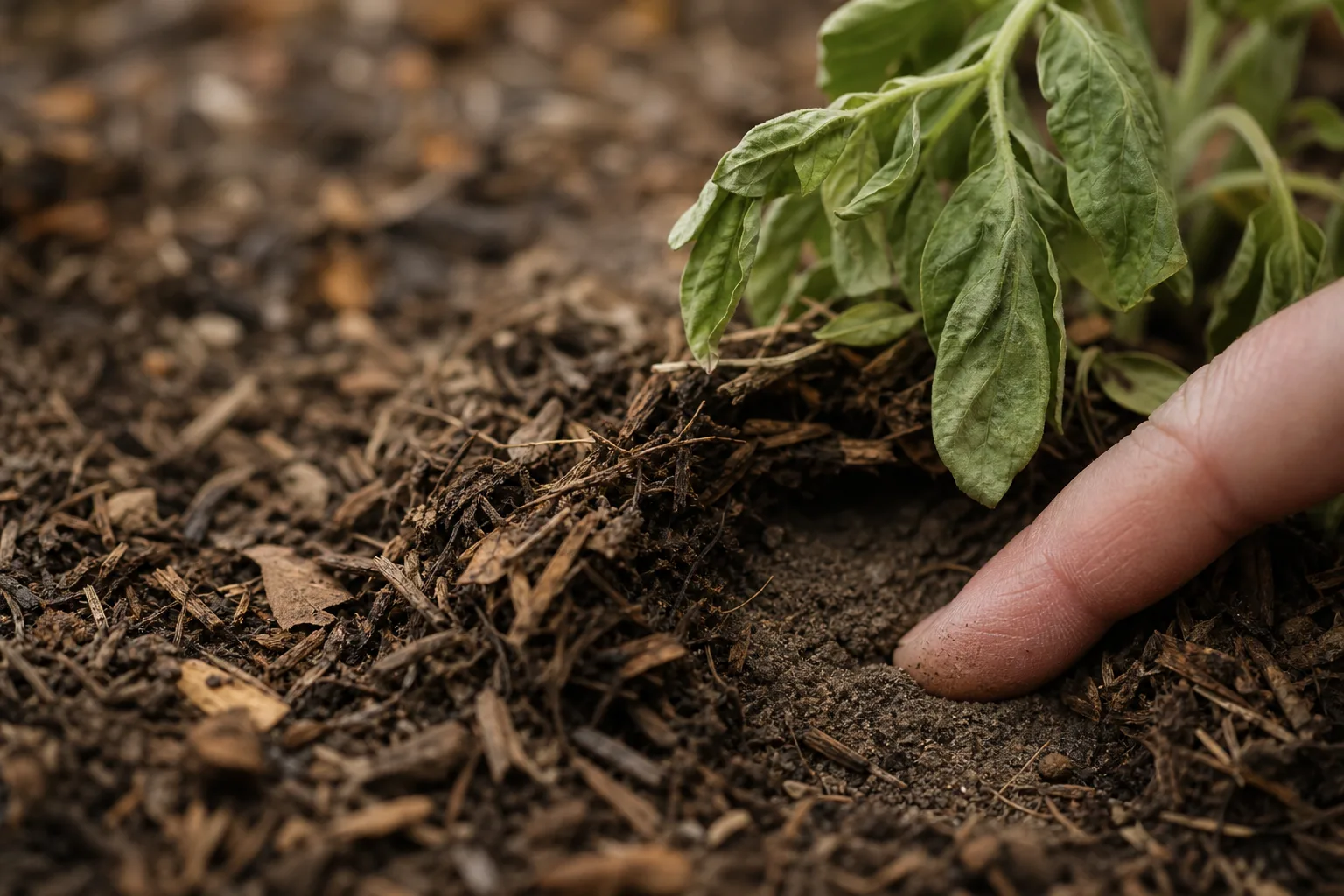
A wilting plant is not always asking for water, especially if the leaves droop only around noon or on one sun-facing branch. Check the top inch of soil under the mulch first. If it feels cool, damp, or wet, do not water yet. Heat and bright sun can cause temporary wilt without dry roots. Powers Plants explains the same soil-first check.
Fall makes this easier in Austin, but not automatic. The afternoons can still be hot after a cool morning, and a plant may sag at 2 p.m. then recover by sunset.
Everyone says, “It’s wilting, grab the hose.” In practice, that shortcut can drown roots in clay that holds water long after the surface looks innocent. I have killed basil that way. It looked thirsty, I watered again, and the roots were sitting in a wet pocket under the mulch. Ay, no.
Your first job is to separate a temporary heat response from whole-plant stress. Look at the soil, the pattern of the wilt, and whether the foliage recovers when the air cools.
How do you check the soil before watering?
Pull mulch aside near the plant canopy and press your finger into the top inch of soil. Cool, damp, or wet soil means you should wait, even if the leaves droop. Dry soil means the plant is ready for a thorough drink, not a quick sprinkle. Check several spots if the bed has uneven sun or drainage.
Use a clean finger, a narrow trowel, or the end of a wooden plant label. Check 3 to 6 inches from the stem, not directly against it, because water collects differently at the crown.
A mulch layer can hide dry soil and can also hide soggy soil. That is why looking at the surface alone is a waste of time. Pull back a small patch, check the soil, then replace the mulch so the roots are not left exposed.
For a brand-new planting, inspect daily for the first week if temperatures are above 85 degrees Fahrenheit. The disturbed roots may not take up water evenly while they recover, and wilting can happen even when the surrounding bed looks fine, as GuardnGrow notes about disturbed roots.
What does noon wilt tell you about a plant?
Noon wilt tells you that the plant is losing water from its leaves faster than it can replace it at that moment, but it does not prove the soil is dry. Wilt limited to one branch or the hottest hours often points to sun stress. Whole-plant droop that continues into evening is more concerning.
Watch the recovery window. If the leaves lift again by late afternoon or early evening and the soil is damp, leave the hose alone. The plant may be responding to intense light, reflected heat from stone, or a hot wall.
If the entire plant stays droopy after sunset, inspect the soil again. Dry top inch plus persistent wilt is a strong reason to water. Damp soil plus persistent wilt points somewhere else, such as damaged roots, poor drainage, or a plant placed in more sun than it can manage.
A potted hydrangea deserves extra suspicion because wilting leaves can signal underwatering or too much sun, according to this hydrangea guidance from Home Depot. Hydrangeas are beautiful, but they are thirsty divas in a small container, and the trade-off is more checking, more water, and less forgiveness than a tough native shrub.
How deeply should you water a dry plant?
Water a dry plant thoroughly until moisture reaches 8 to 12 inches deep. Apply water slowly enough that it soaks into the root zone instead of running across the surface. For many soils, about 1 inch of water, or 6 gallons over 10 square feet, wets soil to roughly 12 inches, according to the University of Georgia azalea guide.
Do not confuse a wet surface with a watered root zone. Austin clay can accept a little water, seal over, and send the rest downhill. Caliche and limestone can interrupt the pattern below it. A five-minute sprinkle may make the mulch smell fresh while leaving deeper roots dry.
Use a hose on a low flow, a soaker hose, or a watering wand held close to the soil. A soaker hose saves splash and can wet a bed evenly, but it costs money and still needs testing because clogged sections create dry pockets.
After watering, test one spot with a trowel or long screwdriver. You want the soil to feel moist down near 8 to 12 inches, not soupy. If water pools for more than a few minutes, pause, let it soak in, and apply the rest later rather than flooding the root zone.
How often should you check soil moisture in fall?
Check soil moisture weekly in fall, then check daily during a heatwave or any stretch above 90 degrees Fahrenheit. Water only when the top inch is dry, not simply because the air feels hot. Newly planted plants need closer attention because disturbed roots can lag behind the moisture needs of the foliage.
A calendar is a reminder, not a watering order. Saturday watering may be perfect one week and completely wrong the next after rain, a cold front, or a run of bright wind.
For shallow-rooted azaleas, weekly checks are especially useful because they show moisture stress early. Leaves can turn gray-green, curl inward, scorch at the edges, or wilt before you realize the bed has dried. The trade-off is that azaleas reward attention but punish long stretches of neglect. They are not a plant I install beside a hose-free fence and forget.
Fall also brings a sneaky mistake: reducing checks too sharply after the first cool night. Soil can dry quickly during an October warm spell, while lower sun and shorter days may make the plant look calm until the root zone is already short on moisture.
Who should use this soil-first watering method?
This soil-first method suits homeowners with new plantings, containers, shallow-rooted shrubs, clay soil, uneven sun, or water restrictions who want to avoid both drought stress and root rot. Ignore a fixed watering schedule if you have not checked the soil. The schedule cannot see rain, shade, runoff, compacted soil, or roots that are still recovering.
Use it now if you are standing beside a droopy plant in an Austin bed. Pull the mulch back. Feel the top inch. That small action beats guessing from the leaf position.
It is especially useful for gardeners moving between very different soils. My abuela’s Miami patio had sandy fill that drained before I finished watering. Here, alkaline clay can hold water and then set like a brick by August. Same plant language, different accent.
If you garden mostly in containers, check more often because pots heat and dry faster than open ground. The downside is time. A container garden may need a finger check every day during hot weather, while an established in-ground plant may need only a weekly check in fall.
Which plant signs suggest real water stress?
Real water stress usually affects more than one leaf or one branch and does not disappear when the afternoon heat passes. Look for whole-plant droop, unhealthy-looking foliage, curled leaves, gray-green color, scorched margins, or continued wilt when the soil is dry. These signs deserve a root-zone check and deep watering if the soil confirms dryness.
Leaf symptoms can overlap. Yellow leaves do not automatically mean thirst, because waterlogged soil and wet-dry swings can also cause small yellow leaves and weak growth, especially in shallow-rooted plants, as the University of Georgia azalea research describes.
Check for a pattern. One branch may be hotter, more exposed, or damaged. The entire plant may be dry. Leaves near a leaking downspout may be yellow and soft because the roots have too much water, not too little.
Do you want to know whether to water right now? If the soil is dry in the top inch and the foliage looks unhealthy across the plant, yes, water deeply. If the soil is damp and only the sunny side droops at noon, no, wait and watch the evening recovery.
Should you water a plant just because the weather is hot?
You should not water a plant just because the weather is hot. Heat increases water loss, but the soil may still hold enough moisture for the roots. During a heatwave, inspect the soil daily and water only when the top inch is dry, then soak to 8 to 12 inches instead of giving a shallow sprinkle.
This matters during Austin’s long hot stretches and during sudden fall heat. The air temperature is one clue. Soil moisture is the decision.
Here is the practical comparison:
| Signal you notice | What to check next | Best response | Honest downside |
|---|---|---|---|
| Wilt only at noon | Soil moisture and evening recovery | Wait if soil is damp and foliage recovers | You may worry for a few hours |
| Whole plant stays wilted | Top inch of soil and leaf condition | Water deeply if soil is dry | Deep watering takes time |
| Dry top inch, healthy-looking leaves | Root-zone depth and recent rain | Water thoroughly, then recheck | The surface may dry again quickly |
| Yellow leaves with wet soil | Drainage and wet-dry swings | Do not add water; improve drainage or timing | Diagnosis may take several days |
A short sprinkle is the most common wrong answer. It feels productive. It is not enough to wet the root zone and can train roots to stay near the surface, where heat dries them faster.
For help choosing plants that match your soil and water habits, use the plant database. If your bed needs a better layout so irrigation reaches the roots instead of the walkway, you can get a concept for your yard.
What are the simplest fall watering rules to follow?
In fall, check the soil before every uncertain watering, check shallow-rooted plants weekly, and check daily during heatwaves. Water when the top inch is dry, soak to 8 to 12 inches, and stop treating noon wilt as automatic proof of thirst. The plant, the soil, and the recovery pattern need to agree before you turn on the hose.
Keep these rules beside your garden gloves:
- Pull mulch back before deciding.
- Feel the top inch of soil.
- Watch whether wilt is limited to noon or one branch.
- Water dry soil slowly and deeply.
- Recheck after watering instead of repeating the same guess tomorrow.
Mulch helps slow evaporation, but it does not replace checking. A 2 to 3 inch layer can also make the surface feel cooler than the soil underneath, so put your finger into the soil, not just into the mulch. The trade-off is simple: mulch reduces drying, but it adds one small step to every honest moisture check.
What does noon wilt tell you about a plant?
Noon wilt tells you that the plant is under temporary midday strain, not automatically that it needs water. If only one branch wilts or the plant recovers by evening, check for sun stress before watering. If the whole plant remains wilted and the top inch of soil is dry, water deeply to 8 to 12 inches.
How do you check the soil before watering?
Pull back a small area of mulch near the plant canopy and feel the top inch of soil. Cool, damp, or wet soil means wait. Dry soil means water thoroughly until the root zone is moist 8 to 12 inches deep. Check more than one spot if the bed has uneven shade, runoff, or compacted soil.
How often should you check soil moisture in fall?
Check soil moisture weekly in fall, and check daily during a heatwave or temperatures above 90 degrees Fahrenheit. Water only when the top inch is dry. Newly planted plants and shallow-rooted azaleas need closer observation because their roots can show moisture stress sooner than deeper-rooted established plants.
How deeply should you water a dry plant?
Water a dry plant deeply enough to wet soil 8 to 12 inches down. Apply water slowly to reduce runoff, especially in Austin clay. About 1 inch of water, or 6 gallons across 10 square feet, is enough to saturate many soils to approximately 12 inches, but always test the soil because drainage varies.
Should you water a plant just because the weather is hot?
You should not water a plant just because the weather is hot. Check the soil first. Heat can cause temporary wilt while the root zone remains damp. During a heatwave, inspect soil daily and water only when the top inch is dry, then apply enough water to reach 8 to 12 inches deep.
Who should use this soil-first watering method?
This soil-first watering method suits gardeners with new plantings, containers, shallow-rooted shrubs, clay soil, uneven sun, or water restrictions. It is also useful for anyone who keeps overwatering wilted plants. A fixed schedule is less reliable because it cannot account for rain, shade, runoff, or soil that stays wet after watering.
Want a plan for your own yard?
Tell us the space and we will put a planting plan together for it. Start at get my concept, or browse what actually grows where you are over on plants.
Frequently asked questions
What does noon wilt tell you about a plant?
Noon wilt tells you that the plant is under temporary midday strain, not automatically that it needs water. If only one branch wilts or the plant recovers by evening, check for sun stress before watering. If the whole plant remains wilted and the top inch of soil is dry, water deeply to 8 to 12 inches.
How do you check the soil before watering?
Pull back a small area of mulch near the plant canopy and feel the top inch of soil. Cool, damp, or wet soil means wait. Dry soil means water thoroughly until the root zone is moist 8 to 12 inches deep. Check more than one spot if the bed has uneven shade, runoff, or compacted soil.
How often should you check soil moisture in fall?
Check soil moisture weekly in fall, and check daily during a heatwave or temperatures above 90 degrees Fahrenheit. Water only when the top inch is dry. Newly planted plants and shallow-rooted azaleas need closer observation because their roots can show moisture stress sooner than deeper-rooted established plants.
How deeply should you water a dry plant?
Water a dry plant deeply enough to wet soil 8 to 12 inches down. Apply water slowly to reduce runoff, especially in Austin clay. About 1 inch of water, or 6 gallons across 10 square feet, is enough to saturate many soils to approximately 12 inches, but always test the soil because drainage varies.
Should you water a plant just because the weather is hot?
You should not water a plant just because the weather is hot. Check the soil first. Heat can cause temporary wilt while the root zone remains damp. During a heatwave, inspect soil daily and water only when the top inch is dry, then apply enough water to reach 8 to 12 inches deep.
Who should use this soil-first watering method?
This soil-first watering method suits gardeners with new plantings, containers, shallow-rooted shrubs, clay soil, uneven sun, or water restrictions. It is also useful for anyone who keeps overwatering wilted plants. A fixed schedule is less reliable because it cannot account for rain, shade, runoff, or soil that stays wet after watering.
Free, no obligation
Ready to design your dream landscape? Start here.
Tell us where you are and we will start a free profile for you, with plants that actually survive your climate and a real sense of what the build would cost.