
How to Prune Everbearing Raspberries: One Crop or Two?
Mowing everbearing raspberries to the ground each late winter trades the small summer crop for a bigger, easier fall harvest. If you want both crops, you’ll need to do more selective pruning, leaving first-year canes for an early summer crop and cutting back the spent floricanes after they fruit.
September 18, 2026
By Diego Navarro
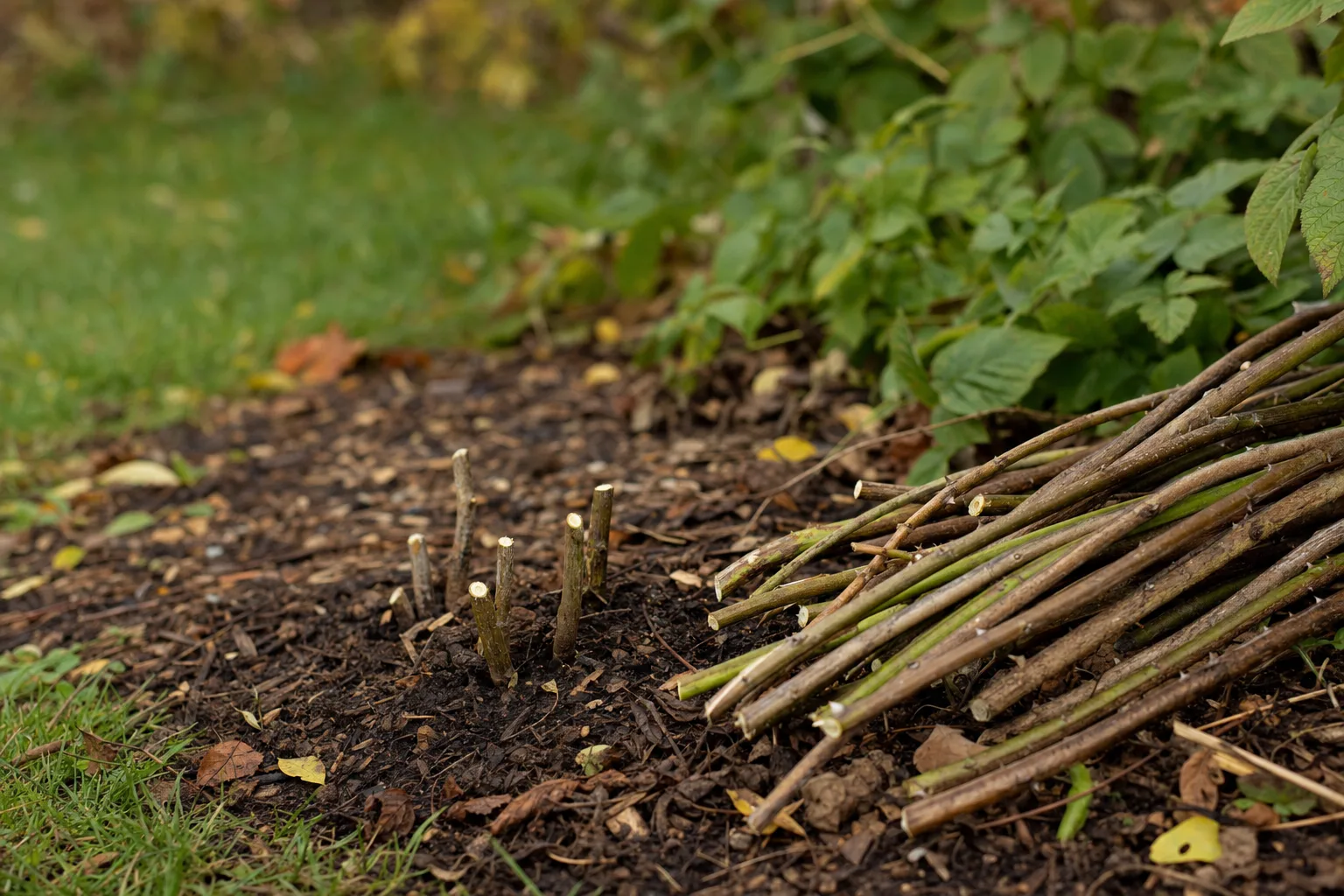
What’s the difference between pruning for one crop or two crops?
Pruning everbearing raspberries to the ground in late winter gives you a single, larger fall crop, while leaving some canes standing lets you harvest a smaller early-summer crop as well. The tradeoff is work versus yield timing: all-can-down is fastest but skips the June berries.
If you mow everything down, every cane is a primocane, and every berry comes late. If you want both crops, you have to tell the old from the new, cut only the spent floricanes, and leave the primocanes to fruit twice. That’s more hands-on, and the patch gets crowded by July. In Central Texas, the single-crop method also makes it easier to keep the patch clean and reduces disease pressure during our long, hot summers.
When is the best time to prune everbearing raspberries?
The best time to prune everbearing raspberries is late winter to early spring, after the worst freezes but before new growth starts, usually February to early March in Central Texas. Pruning too early risks freeze damage on the new stubs, while waiting too long can damage new shoots.
The ground should still be cold, and you want to get in before the buds swell. If you can dig in your soil without it sticking to your boots, you’re probably safe. In Austin, I aim for the last week of February, but the window stays open until you see green tips. If you’re north of Waco, you might push it to mid-March. Don’t wait until the canes are leafed out.
How do I prune for a single, larger fall crop?
To prune for a single, larger fall crop, cut all canes to 1 to 2 inches above the ground in late winter or early spring. This removes both old and new canes, so only new growth will fruit in late summer and fall.Nebraska Extension
This method is blunt but effective. You can use sharp hand pruners, loppers, hedge clippers, or even a rotary mower if your patch is big enough. I’ve seen folks in Austin run a string trimmer over the bed. The point is, you aren’t fussing over which cane is which. Afterward, rake out the debris, mulch heavily, and set up your trellis or netting. The new primocanes will shoot up fast in March and April, and you’ll get a heavy crop from August to early October.
How do I prune for both summer and fall crops?
To get both crops, cut only the two-year-old canes (floricanes) that fruited last summer to the ground, leaving the current year’s canes (primocanes) standing. These primocanes will fruit lightly in early summer and again in the fall.EatHealthy365
First, wear thick gloves, raspberry canes fight back. Start by removing any obviously dead, diseased, or broken canes. The trick is telling last year’s floricanes from the fresh primocanes: floricanes are often grayer and may have old fruiting branches. Primocanes are greener and more flexible. Cut the old ones to the ground, then tip the primocanes back to 3 to 4 feet to keep them manageable. You’ll need to repeat this every spring. The patch will get dense by midsummer, so keep it weeded and trellised.
What tools do I actually need, and what’s overkill?
For small patches, hand pruners or loppers are all you need. For big beds, sharp hedge clippers, a string trimmer, or even a rotary mower can save your back. Protective gloves and long sleeves are non-negotiable.
A bypass pruner is best for canes under half an inch thick. Loppers work for older, woodier canes. I’ve pruned a 10-by-4-foot bed in under 15 minutes with a pair of sharp shears. If you’re mowing, set the mower blade high and go slow, or you’ll gouge the crown. Don’t use a chainsaw. If you have to ask, you’re already doing too much.
What goes wrong if I prune too early, too late, or the wrong way?
Pruning too early can leave your canes vulnerable to late freezes, while pruning too late can damage new growth and reduce your crop. If you cut the wrong canes, you might get no summer crop or risk disease in the crowded patch.
If you mow everything in December, a hard freeze can kill the crowns. Wait until late winter, when the ground is still cold but the worst is past. If you wait until April, you’ll break off new shoots. If you’re trying for two crops but cut all the canes, you’ll only get a fall harvest. On the flip side, leaving too many old canes crowds the patch, boosts disease, and makes picking a thorny mess.
Who should prune for one crop, and who should go for two?
Pruning for a single fall crop suits gardeners who want easy care and a big, late harvest, especially in hot climates where summer berries struggle. Two-crop pruning is for those who want berries in both June and September, and don’t mind the extra work.
If you’re in Central Texas, the single-crop system dodges most disease problems and makes it easier to keep the patch clean. If you love fresh raspberries for the Fourth of July and can keep up with weeding and trellising, go for two crops. If you’re short on time or have trouble telling the canes apart, mow it all down and enjoy the fall abundance.
What’s the honest tradeoff between one-crop and two-crop pruning?
Pruning for one crop is faster and simpler, but you lose the modest summer harvest. Two-crop pruning takes more effort and attention, but spreads your berries over a longer season.
The single-crop system means every cane is the same age, so disease and pest management is easier, and harvest is concentrated. The two-crop system gives you two chances to pick, but you’ll spend more time sorting canes and dealing with a crowded patch. In Central Texas, the summer crop is often small anyway, so the loss isn’t as big as it sounds.
How do I care for my raspberry patch after pruning?
After pruning, rake out the debris, mulch the bed with 2 to 3 inches of straw or shredded leaves, and set up support for new canes. Fertilize lightly in early spring, and again in late spring if growth is weak.
Keep the bed well-weeded, raspberries hate competition. Water deeply once a week if it doesn’t rain, especially during our brutal August. If your soil is black clay, consider raised rows or beds to prevent root rot. Check the canes for pests in June and August. If you want to check which varieties suit your zone, browse our plant database.
Can I use a mower or string trimmer to prune?
Yes, you can mow or string-trim your raspberry patch for the single-crop system, as long as you leave a 1 to 2-inch stump. This speeds up the process, especially for larger beds, but take care not to scalp the crown or damage the roots.
For a backyard patch, a string trimmer with a heavy-duty line works well. For a row 20 feet or longer, a rotary mower saves time. Avoid mowing if the ground is soggy, or you’ll compact the soil and damage your roots. If you’re trying for two crops, stick to hand tools so you don’t accidentally cut the primocanes you want to keep.
How do the two pruning methods compare?
Here’s a plain comparison of the main options:
| Method | Tools Needed | Berry Timing | Work Required | Downside |
|---|---|---|---|---|
| Single fall crop | Pruners, mower, trimmer | August, October | Low | No summer berries |
| Two crops | Pruners, loppers | June & Sept | Medium, high | More work, patch gets crowded |
If you want the easiest raspberry bed, mow it all down in late winter and enjoy picking in September. If you want to stretch your harvest, be ready to sort canes and sweat a little more in spring.
Frequently Asked Questions
When is the best time to prune everbearing raspberries?
The best time to prune everbearing raspberries is late winter to early spring, after the worst freezes but before new growth appears. This is usually February to early March in Central Texas, but you should wait until the ground is still cold and before the buds swell.
Can I prune everbearing raspberries with a lawnmower?
Yes, you can prune everbearing raspberries with a lawnmower for the single-crop method. Cut all canes down to 1 to 2 inches above the ground in late winter or early spring, but be careful not to damage the plant crowns or roots.
What happens if I prune all canes instead of just the old ones?
If you prune all canes to the ground, you will only get a single, larger fall crop and sacrifice the smaller summer crop. This method simplifies maintenance but means you won’t have early-summer berries.
How do I tell which canes to cut for two crops?
Floricanes, which fruited last summer, are usually grayer and more brittle, while primocanes are greener and more flexible. Cut the old floricanes to the ground and leave the primocanes standing for two-crop harvesting.
Should I mulch after pruning raspberries?
Yes, mulching with 2 to 3 inches of straw or shredded leaves after pruning will help retain moisture, suppress weeds, and protect the new canes. It’s especially helpful in Central Texas to keep roots cool as temperatures climb.
Where can I find raspberry varieties that do well in my region?
You can find raspberry varieties suited to your climate and soil in our plant database. This resource helps you match your growing conditions to the right everbearing raspberry for reliable harvests.
If you want help planning a raspberry bed or seeing how it would fit your space, you can get a concept for your yard and see what works before you dig.
More questions people ask about this
Where can I find raspberry varieties that do well in my region?
You can find raspberry varieties suited to your climate and soil in our plant database. This resource helps you match your growing conditions to the right everbearing raspberry for reliable harvests.
Want a plan for your own yard?
Tell us the space and we will put a planting plan together for it. Start at get my concept, or browse what actually grows where you are over on plants.
Frequently asked questions
When is the best time to prune everbearing raspberries?
The best time to prune everbearing raspberries is late winter to early spring, after the worst freezes but before new growth appears. This is usually February to early March in Central Texas, but you should wait until the ground is still cold and before the buds swell.
Can I prune everbearing raspberries with a lawnmower?
Yes, you can prune everbearing raspberries with a lawnmower for the single-crop method. Cut all canes down to 1 to 2 inches above the ground in late winter or early spring, but be careful not to damage the plant crowns or roots.
What happens if I prune all canes instead of just the old ones?
If you prune all canes to the ground, you will only get a single, larger fall crop and sacrifice the smaller summer crop. This method simplifies maintenance but means you won’t have early-summer berries.
How do I tell which canes to cut for two crops?
Floricanes, which fruited last summer, are usually grayer and more brittle, while primocanes are greener and more flexible. Cut the old floricanes to the ground and leave the primocanes standing for two-crop harvesting.
Should I mulch after pruning raspberries?
Yes, mulching with 2 to 3 inches of straw or shredded leaves after pruning will help retain moisture, suppress weeds, and protect the new canes. It’s especially helpful in Central Texas to keep roots cool as temperatures climb.
Where can I find raspberry varieties that do well in my region?
You can find raspberry varieties suited to your climate and soil in our plant database. This resource helps you match your growing conditions to the right everbearing raspberry for reliable harvests.
Free, no obligation
Ready to design your dream landscape? Start here.
Tell us where you are and we will start a free profile for you, with plants that actually survive your climate and a real sense of what the build would cost.