
How to Prune Blueberries After Harvest, and What to Take Out First
Standing beside your blueberry bush this fall with pruners in hand? Start with the oldest, weakest canes, then remove crossing wood, and only then shorten stray tips. Here is the careful order I would use, what the available research actually supports, and how to avoid cutting next year’s crop by accident.
October 4, 2026
By Valeria Navarro
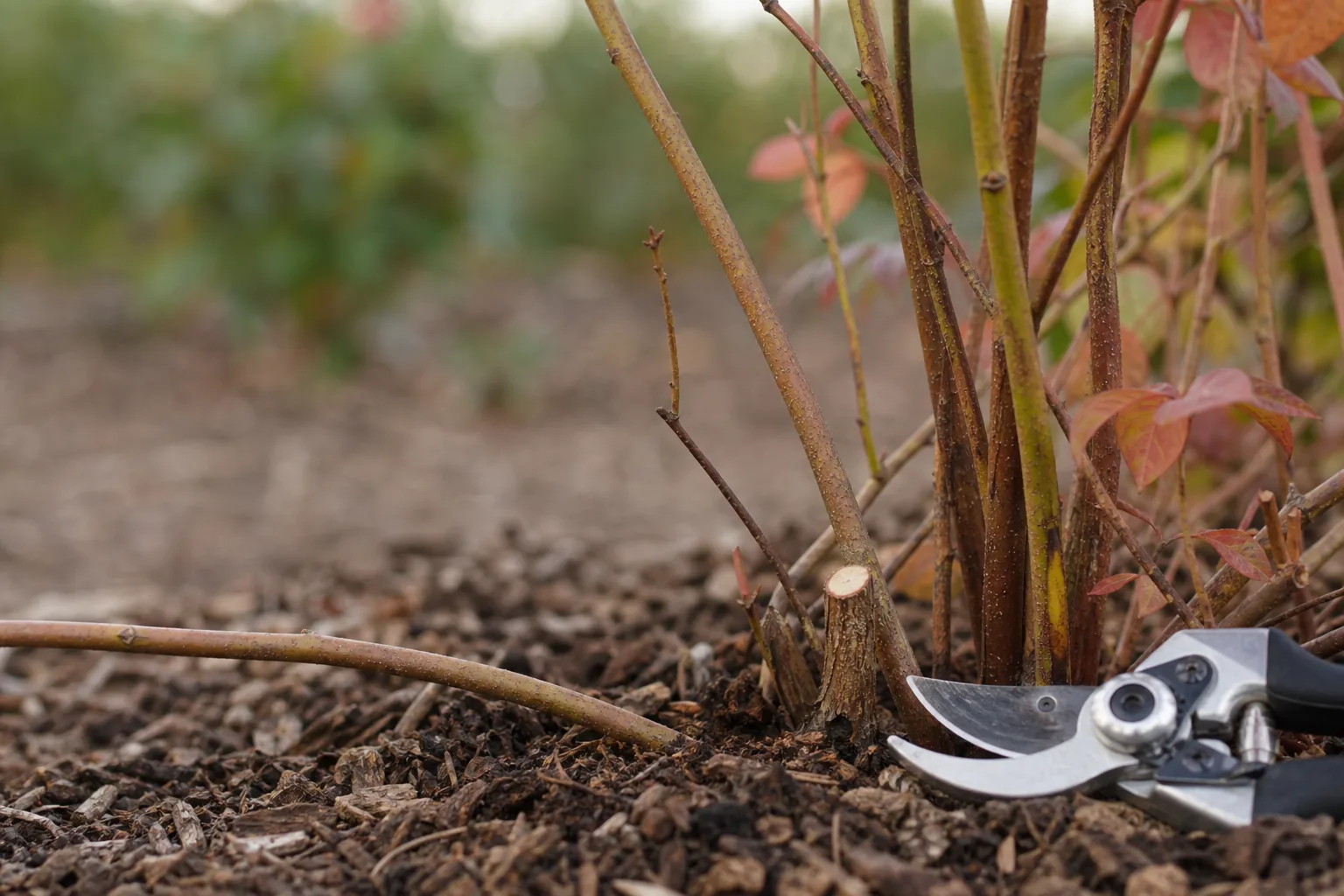
Should you prune blueberries right after harvest or in fall?
Prune blueberries after the fruiting season, once the bush has finished producing and you can identify damaged, crowded, or spent wood. For an Austin garden, fall cleanup is a sensible window, but do not cut blindly in late summer because the plant still needs its leaves and you may remove wood that is not finished for the season.
The research supplied for this question says fruit-bearing second-year floricanes should be allowed to die back before removal at the end of the growing season, and that seasonal renovation includes removing spent plants, reducing overcrowding, and checking for disease, pests, and weeds. That source discusses brambles rather than blueberries, so I am not pretending it proves every blueberry pruning detail. The Daily Garden describes that end-of-season renovation process here.
In practice, I would wait until the harvest is over and the plant is moving into dormancy. In Central Texas, that usually means October through December, depending on the weather and the variety. If the bush is still pushing soft green growth, wait.
Everyone says fall pruning is always tidy and simple. In practice, a blueberry bush can still be carrying useful leaves or flexible young wood, and a February 2021 style freeze can punish a plant that you stripped too aggressively before winter.
What should you take out of a blueberry bush first?
Take out the oldest, weakest, dead, diseased, or clearly spent canes first. Then remove branches that cross, rub, or crowd the center. Shorten only the remaining tips that are damaged or growing far outside the shape of the bush, because tip cutting should be the final cleanup pass, not the main pruning method.
This is the order I would use in your garden: oldest canes first, crossing wood second, tips third. It is a practical sorting sequence, not a sequence stated by the supplied sources. The research specifically says those sources do not specify a further order such as oldest canes, crossing wood, then tips.
Stand back before you cut. Look for the stems that are obviously old, weak, broken, or unproductive. A live cane with healthy buds is not automatically disposable just because it looks brown in winter.
Remove one cane at a time from the base, then pause. Your eye will adjust. That pause saves you from the classic blueberry mistake, which is making one enthusiastic haircut and discovering there is no bush left to fruit next season.
How do you identify the oldest blueberry canes?
Identify the oldest blueberry canes by looking for thick, rough, heavily branched wood with declining vigor, dead sections, broken ends, or a position that forces newer growth into a crowded clump. Remove the weakest old cane at its base rather than chopping its top, but keep healthy younger wood unless it is damaged or badly placed.
Do not rely on color alone. In the supplied research, first-year canes are called primocanes and become brown and dormant in winter, while second-year canes are called floricanes and carry flowers and fruit in spring. That language comes from a bramble source, not a blueberry guide, so use it as terminology, not as permission to remove every brown stem.
A cane that is thick but still vigorous may be worth keeping. A cane that is old, shaded, bare in the middle, and surrounded by stronger stems is a better first candidate. The trade-off is simple: leaving it costs light and space, while removing it costs some possible fruiting wood if you misread the plant.
I once learned this lesson on my abuela’s Miami patio, where crowded pots made every plant look like it needed a dramatic haircut. Austin taught me restraint. Clay, limestone, long heat, and a winter freeze are not the same audience as sandy fill that drains before you finish watering.
Should you remove crossing and rubbing blueberry branches?
Yes, remove crossing or rubbing blueberry branches after the oldest weak wood is gone, especially where two stems scrape together or fill the center with no useful space. Keep the stronger, better-positioned branch and cut the poorer one at its point of origin instead of shortening both into a tangled pair.
Crossing wood is a structural problem. It can make the bush harder to inspect, harder to harvest, and more crowded as growth continues. The supplied research supports reducing overcrowding during seasonal renovation, although it does not give a blueberry-specific rule for choosing between two crossing branches.
Choose the branch with better spacing and stronger growth. Remove the branch that is weaker, damaged, inward-facing, or rubbing. If both are healthy, take only one, because removing both can open too much space and reduce the plant’s productive framework.
Do not make several cuts halfway along crossing branches just to make them look neat. That leaves stubs and keeps the crowded base. A clean removal at the branch collar is less fussy and usually easier to inspect next fall.
Should you cut blueberry tips after harvest?
Cut blueberry tips last, and only where a tip is dead, broken, diseased, badly damaged, or growing far outside the plant’s useful shape. Tip pruning is a finishing step. It should not replace removing old or crowded wood, because shortening every branch leaves the underlying congestion in place.
This is where many gardeners get twitchy. The bush looks uneven, so the shears come out and every branch gets the same little snip. Resist it. Uniform trimming is quick, but it can remove healthy terminal growth and leave a dense collection of shortened shoots.
Make the cut just above a healthy outward-facing bud when you are shortening a damaged tip. The trade-off is that shaping improves access and appearance, but every shortened shoot is still a cut that can reduce future growth if you use it simply to make the bush look tidy.
A general gardening source says plants that finish flowering in spring and summer are often cut back straight away to encourage regrowth and fresh blooms, but that advice does not answer blueberry pruning or prove that immediate tip cutting is best here. Katie’s Garden makes that broader flowering-plant point here.
How much of a blueberry bush should you prune in one fall?
Prune lightly enough that the blueberry bush still has a balanced framework after the fall cleanup. Remove clearly spent, dead, damaged, and overcrowded wood first, then stop and reassess rather than following a fixed percentage, because the supplied research gives no blueberry-specific percentage or cane-count rule.
Here is the comparison I would use before you pick up the pruners:
| Pruning approach | What you do | Honest downside |
|---|---|---|
| Oldest wood first | Remove the weakest old or spent canes at the base, then reassess | You can remove useful fruiting wood if you mistake age for poor performance |
| Tips only | Shorten stray, damaged, or overlong ends | The crowded, old framework remains underneath |
| Hard shear or uniform shortening | Cut many branches to a similar height | Fast, but it can remove healthy wood and leave stubs and congestion |
One or two meaningful base cuts can do more than twenty tiny snips. That is my position. The hard shear is the loser here because it saves minutes now and may cost you structure, fruiting wood, and a clearer view of the plant.
If the bush is genuinely neglected, renovate in stages instead of removing everything in one fall. Take the worst wood this season, observe the regrowth through spring and summer, then reassess next fall. That is slower, but it is kinder to the plant and less heartbreaking for you.
Who is this blueberry pruning method for, and who should ignore it?
This method suits a homeowner with an established blueberry bush who has finished harvesting and wants a cautious fall cleanup without sacrificing every possible fruiting branch. It is not for someone managing a commercial row, restoring a totally dead plant, or trying to diagnose disease from a photograph, because those situations need a more specific assessment.
Use it if your bush has a few old canes, some crossing branches, and tips that are damaged or wandering. It also suits a first-time gardener who wants a clear order instead of a vague instruction to “thin it out.”
Ignore this method as a complete renovation plan if most of the plant is dead, if the base is badly diseased, or if you cannot tell living wood from dead wood. Do not cut simply because a stem is brown in winter. The supplied research specifically warns that dormant primocanes can be brown, which is one reason source context matters.
If you have several bushes, mark one with a ribbon and prune conservatively there first. Keep notes in November, then compare growth and flowering next season. Your garden will teach you more than a confident guess dressed up as a rule.
What tools and weather should you use for fall blueberry pruning?
Use clean, sharp bypass pruners for small branches and a narrow pruning saw only for wood too thick for the pruners. Work on a dry day after the harvest is finished, and disinfect the blade between visibly diseased cuts; the trade-off is a few extra minutes of cleaning in exchange for less chance of carrying problems through the bush.
Bypass pruners make a cleaner cut than dull shears, but they need maintenance and can crush wood when forced past their capacity. A pruning saw handles larger wood, but it is easier to remove too much with it, so use it only when the branch truly requires a saw.
Do not prune during a wet spell if you can avoid it. Wet foliage and muddy soil make inspection harder, especially in Austin’s heavy clay, which holds water and then sets like a brick. If the soil is saturated, wait for a workable day rather than compacting the root zone while you fuss with the canopy.
Before you begin, check the base for weeds, pests, and signs of disease. The research calls for that inspection during seasonal renovation. If you need help identifying a plant or comparing blueberry types, use the plant database, then sketch the bush before you cut; if the whole layout is awkward, you can get a concept for your yard before adding more plants.
What should you do after pruning blueberries in fall?
After pruning blueberries in fall, remove the cut wood from the planting area, check for weeds and disease, and leave the remaining framework intact for winter. Do not pile questionable diseased material beside the bush, and do not add extra cuts simply because the plant looks uneven after the first cleanup.
Gather every removed branch. That makes it easier to notice whether you cut healthy wood by mistake, and it keeps the bed clear for inspection. The supplied research specifically includes checking disease, pests, and weeds as part of end-of-season renovation.
Then look again from several steps away. You want a plant with visible openings, no obvious rubbing branches, and no dead tips that need immediate attention. You do not need a perfectly symmetrical bush. Nature did not ask your blueberry to be a topiary.
Keep watching through winter. In Austin, a cold event can change the plan, especially after the February 2021 freeze showed us that “it has always been fine here” is not a reliable plant-care strategy. Wait until spring growth makes damage clear before making another serious round of cuts.
What are the most common questions about pruning blueberries after harvest?
The safest fall approach is to remove obvious spent or dead wood first, then reduce crowding, and finally tidy damaged tips. Because the available research does not provide a blueberry-specific pruning sequence, treat this as a cautious homeowner method rather than a universal rule, and stop before the bush loses its healthy framework.
Do blueberries need pruning every fall?
Do blueberries need pruning every fall? They benefit from regular inspection and seasonal cleanup, but not every bush needs the same number of cuts every year. Remove clearly spent, dead, damaged, or overcrowded wood after harvest, then stop when the structure is open and balanced. The supplied research supports end-of-season renovation, but it does not give a fixed blueberry pruning schedule.
Should I cut blueberry canes to the ground after fruiting?
Should I cut blueberry canes to the ground after fruiting? No, not as a blanket rule. Remove a cane at the base only when it is clearly old, spent, dead, damaged, diseased, or creating serious crowding. The available research discusses removing spent canes at season’s end, but it does not support cutting every blueberry cane down after harvest.
What should I remove first from an overgrown blueberry bush?
What should I remove first from an overgrown blueberry bush? Start with the weakest old or spent canes, then remove one of any rubbing or crossing pair, and finish with damaged tips. Do not begin by shearing the top. That leaves the old, crowded framework in place and can remove healthy wood before you understand the bush.
Is it safe to prune blueberries in October?
Is it safe to prune blueberries in October? October can be a reasonable fall cleanup window after harvest if the bush has stopped actively pushing soft growth and the weather is dry. Make only clearly justified cuts, because a mild Austin autumn can continue longer than expected and early winter damage may not yet be visible.
Should I remove brown blueberry canes in winter?
Should I remove brown blueberry canes in winter? Not automatically. The supplied research says first-year primocanes can turn brown and dormant, so brown color alone does not prove a cane is spent. Check whether the wood is alive, healthy, and well placed before cutting it, and remove it only when its condition or position gives you a clear reason.
Can I prune blueberry tips to make the bush shorter?
Can I prune blueberry tips to make the bush shorter? Yes, but only as a final, limited cleanup for damaged, dead, or badly misplaced growth. Shortening every tip is a poor substitute for removing old and crossing wood. It may make the bush look tidy for a month while leaving the center crowded and the framework harder to manage.
Want a plan for your own yard?
Tell us the space and we will put a planting plan together for it. Start at get my concept, or browse what actually grows where you are over on plants.
Frequently asked questions
Do blueberries need pruning every fall?
Do blueberries need pruning every fall? They benefit from regular inspection and seasonal cleanup, but not every bush needs the same number of cuts every year. Remove clearly spent, dead, damaged, or overcrowded wood after harvest, then stop when the structure is open and balanced. The supplied research supports end-of-season renovation, but it does not give a fixed blueberry pruning schedule.
Should I cut blueberry canes to the ground after fruiting?
Should I cut blueberry canes to the ground after fruiting? No, not as a blanket rule. Remove a cane at the base only when it is clearly old, spent, dead, damaged, diseased, or creating serious crowding. The available research discusses removing spent canes at season’s end, but it does not support cutting every blueberry cane down after harvest.
What should I remove first from an overgrown blueberry bush?
What should I remove first from an overgrown blueberry bush? Start with the weakest old or spent canes, then remove one of any rubbing or crossing pair, and finish with damaged tips. Do not begin by shearing the top. That leaves the old, crowded framework in place and can remove healthy wood before you understand the bush.
Is it safe to prune blueberries in October?
Is it safe to prune blueberries in October? October can be a reasonable fall cleanup window after harvest if the bush has stopped actively pushing soft growth and the weather is dry. Make only clearly justified cuts, because a mild Austin autumn can continue longer than expected and early winter damage may not yet be visible.
Should I remove brown blueberry canes in winter?
Should I remove brown blueberry canes in winter? Not automatically. The supplied research says first-year primocanes can turn brown and dormant, so brown color alone does not prove a cane is spent. Check whether the wood is alive, healthy, and well placed before cutting it, and remove it only when its condition or position gives you a clear reason.
Can I prune blueberry tips to make the bush shorter?
Can I prune blueberry tips to make the bush shorter? Yes, but only as a final, limited cleanup for damaged, dead, or badly misplaced growth. Shortening every tip is a poor substitute for removing old and crossing wood. It may make the bush look tidy for a month while leaving the center crowded and the framework harder to manage.
Free, no obligation
Ready to design your dream landscape? Start here.
Tell us where you are and we will start a free profile for you, with plants that actually survive your climate and a real sense of what the build would cost.