
How Do You Know When Your Avocados Are Ready to Pick?
Avocados are ready to pick when they have reached physiological maturity, not when they feel soft on the tree. In fall, sample one or two of the largest fruits, let them soften indoors at room temperature, and judge the texture and flavor before harvesting the rest.
September 28, 2026
By Valeria Navarro
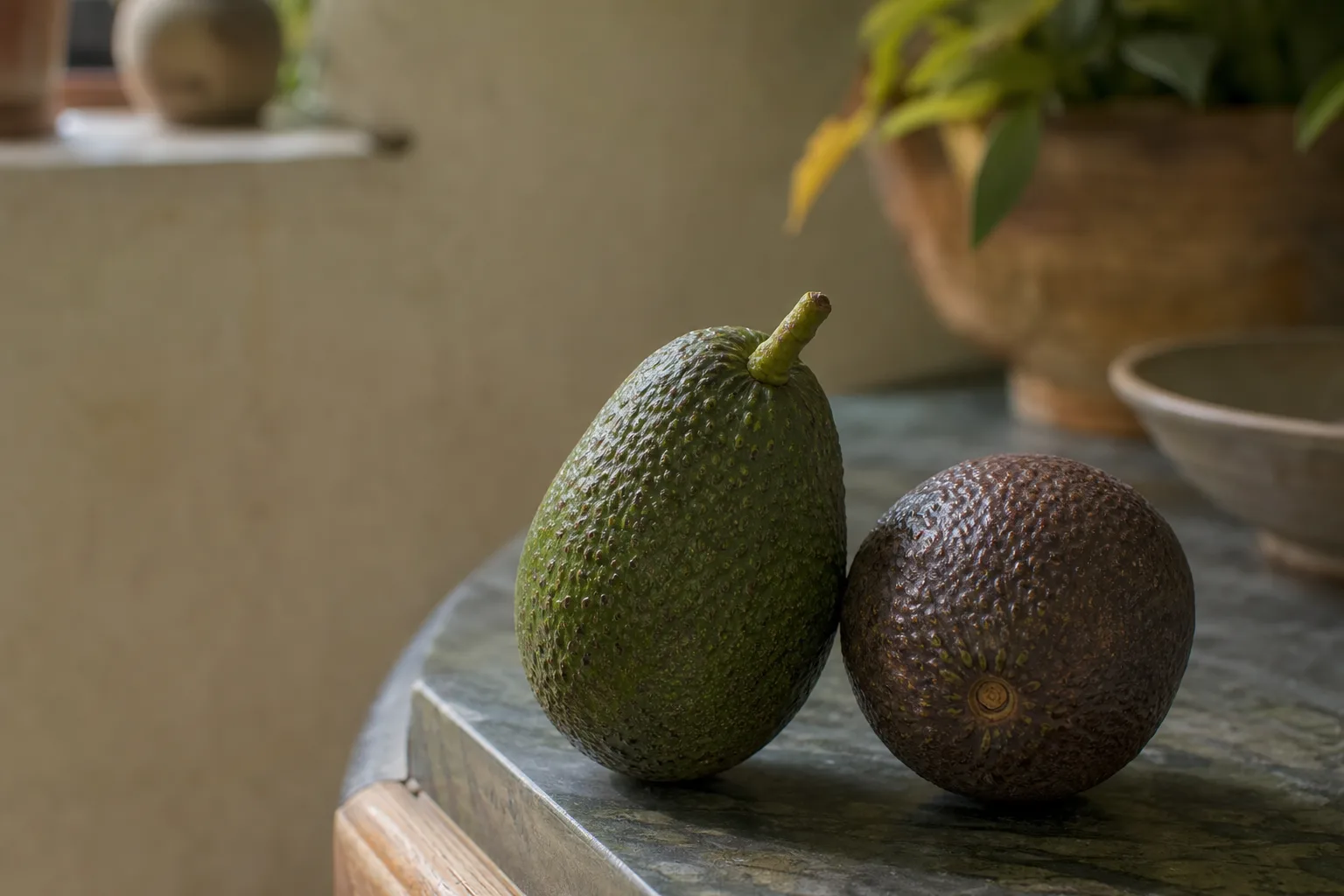
Avocados are ready to pick when they have reached physiological maturity, not when they feel soft on the tree. Pick one or two of the largest fruits, let them soften at room temperature, and use the texture and flavor of that sample to decide whether the rest of the crop is ready.
Are avocados ready to pick when they feel soft on the tree?
No. A soft avocado on the tree is not the target harvest stage, because avocados mature while attached but ripen and become edible after they are picked. The tree test is about maturity, especially dry matter, skin changes, expected size, and clean removal. Squeezing can offer a clue, but it is not your final verdict. University of California’s avocado collection explains the difference between maturity and ripeness.
That distinction saves fruit. A soft avocado may be overripe, damaged, or simply softening unevenly. A firm avocado may be perfectly mature and just waiting for a few days indoors.
Everyone says, “Wait until it gives.” In practice, that rule is too blunt. The fruit can have a slight give and still need a sample test, while a firm fruit can be ready to pick and soften beautifully afterward.
The cost of getting this wrong is not only a disappointing piece of toast. Pick immature fruit and you may get a rubbery avocado that never develops good texture. Leave mature fruit hanging too long and you risk shriveling, weather damage, or losing fruit to wildlife before you learn what the tree was telling you.
What is the best home test for avocado harvest readiness?
The best home test is sample-picking: harvest one or two of the largest, most representative avocados, then leave them indoors at room temperature. If they soften evenly and taste good, the crop is ready to pick. If they stay rubbery or shrivel, leave the remaining fruit on the tree longer, following the guidance from Yardwork’s backyard avocado harvest notes.
Pick samples from different parts of the tree if you can. Do not choose only the sunniest fruit or only the one hanging at eye level. A shady fruit and a fruit from another side of the canopy give you a better read on whether the crop is generally mature.
Choose the largest fruits first because size should be close to the expected seasonal average before you make your test. Size alone cannot prove readiness, but a crop full of undersized fruit is not ready just because one avocado looks handsome.
Bring the samples into the house. Leave them at ordinary room temperature. Do not press them every few hours, because that bruises the flesh and makes your test messy.
The softening process can take several days to a week, depending on how mature the fruit was at harvest, according to Cooperative Extension Ventura County. Write down the pick date. That little note tells you more than a dramatic squeeze at the tree ever will.
What does dry matter have to do with picking avocados?
Dry matter is the portion of the fruit left after its water is removed, and it is a practical measure of physiological maturity. As an avocado matures, its dry matter and oil content rise; once it reaches the needed maturity stage, it can soften properly after harvest instead of remaining rubbery. Home growers usually estimate this with sample fruit rather than laboratory testing.
This is the argument I want you to remember: the tree test is dry matter, not squeeze. Commercial growers can test dry matter or oil content directly, but most homeowners cannot do that accurately at the kitchen counter.
So we use evidence we can see and repeat. Expected size. A slightly duller skin. A mature-looking surface. Clean clipping or twisting. Then the sample fruit gets the final vote indoors.
The dry matter guidance from the University of California says external appearance gives only subtle clues. That is why I do not promise you a magic color chart for every avocado variety. Variety matters. A skin change that means “nearly ready” on one tree may mean something different on another.
If you want to track your particular tree, sample at the same time of day and record how many days each fruit takes to soften. Next year, that record becomes your own harvest calendar. Much better than copying a date from a different climate and hoping your tree got the memo.
What should a mature avocado look and feel like on the tree?
A mature avocado often has reached its expected seasonal size, developed a darker or thicker skin, and lost some of its glossy look. Depending on the variety, the surface may show more russeting, and the fruit may clip or twist off cleanly. These signs are useful together, but none proves readiness alone.
Look closely at the skin. Mature fruit commonly shifts from shiny to somewhat dull. That change can be subtle, especially after a dusty or rainy stretch, so compare several fruits rather than judging one under a harsh afternoon glare.
Color is variety-specific. Hass may darken as it matures, but you should not apply Hass color rules to every avocado. Some types remain green when mature. A green fruit is not automatically immature, and a dark fruit is not automatically ready to eat.
Feel the fruit in your palm with gentle pressure. A slight give suggests maturity, while a firm, unyielding fruit may need more time, but squeezing is a supporting clue rather than the harvest decision. The sample test tells you whether the inside is actually developing the texture and flavor you want.
Check the stem end too. Fruit that clips or twists off cleanly is a better candidate than fruit that fights you, although clean removal can also depend on how you harvest. Do not yank. A torn stem and a dropped avocado are both invitations to damage.
Does avocado variety change the fall harvest date?
Yes. Avocado varieties mature at different times of year, and weather can shift an expected harvest window by roughly one to three weeks. In the extension example, Bacon matures around December, Hass around April, and Reed around July, so a fall calendar cannot tell you that every variety on your tree is ready now.
That matters in Austin. Our alkaline clay, limestone, hard summer heat, and sudden cold do not copy the coastal California schedule behind many online harvest charts. A February freeze can reset your expectations, and a tree that is stressed by heat may not behave like the tree in the video you watched last night.
If you do not know the variety, start with the fruit. Compare its size and skin to older records, then run a sample test. You can also use our plant database to review variety information before you make a harvest plan, but do not let a database date overrule what your sample fruit does indoors.
Fall is a good moment to inspect, not a reason to strip the tree. Mark one or two fruit with a soft tie if you need to remember which samples came from which side. Never wrap tightly around the stem or branch. That adds pressure without adding useful information.
The honest trade-off is patience. Waiting can protect quality, but waiting also exposes fruit to weather and wildlife. Sampling gives you a decision based on your tree, not a rigid date borrowed from another region.
Who is avocado sample-picking for, and who should ignore it?
Sample-picking suits homeowners with an unknown harvest date, a mixed-size crop, or a variety that stays green when mature. It also suits anyone who wants to protect flavor before harvesting everything. Ignore a one-fruit guess if the crop is visibly damaged, the tree suffered a major freeze, or you need commercial dry-matter confirmation rather than a home estimate.
This method is especially useful for a first harvest. You are learning the tree’s rhythm. One fruit may soften in four days, another in seven, and that timing gives you a practical expectation for the rest of the crop.
Do not use one tiny fruit as your sample. Do not use only the prettiest sunlit fruit. Do not judge readiness by cutting one open immediately after picking, because an avocado can be mature enough to soften while still being too firm to eat.
If you are growing a known variety in a small backyard, a sample can be enough. If you have a large crop and need uniform timing, formal dry-matter or oil-content testing is more reliable, but it costs time and access to equipment.
And if your tree is still recovering from the February 2021 freeze, lower your expectations for a perfect, synchronized crop. A damaged tree may carry fruit at different stages. That is a reason to sample more carefully, not a reason to squeeze harder.
Should you use your hand, clippers, or a pole picker?
Use your hand only for fruit you can reach without tugging, and use clean clippers or a pole picker for higher fruit. Leave a short stem stub attached and avoid dropping the avocado. Hand-picking is simple but can tear stems, clippers are controlled but require reach, and pole pickers protect your balance while making it easier to bruise fruit if the catcher is rough.
Here is how I compare the real choices:
| Harvest option | Best use | Honest downside |
|---|---|---|
| Gentle hand pick | Low fruit that releases cleanly | Pulling can tear the stem or drop the fruit |
| Hand clippers | Reachable fruit that needs a clean cut | You need stable access and a careful grip |
| Pole picker | High fruit without climbing | Fruit can fall, bruise, or be hard to catch |
Pick in dry weather if possible. Wet fruit and wet tools make handling less pleasant, and dropped fruit can bruise even when the skin looks fine. Set a shallow basket nearby rather than tossing fruit into a deep bucket.
I prefer clippers for reachable fruit. They give me a clean cut and let me leave that short stem stub, which is gentler than twisting until the branch complains. A pole picker earns its keep on tall trees, but only if the catching bag or basket prevents a hard drop.
Do not climb an unstable ladder for a fruit that can wait one more day. The avocado is not worth a broken wrist, and no harvest chart deserves that kind of drama.
If you want to sketch a safer harvest layout before you buy equipment, you can get a concept for your yard and plan where access, baskets, and tree clearance need to work together.
How long should a picked avocado take to soften indoors?
A mature avocado usually softens over several days to a week at room temperature, depending on how mature it was when picked. Check it once daily with gentle pressure. Even softening and good flavor mean the crop is ready; rubbery texture, shriveling, or poor flavor means the remaining fruit needs more time on the tree.
Keep your sample on a counter where you will remember it. I have killed enough basil by forgetting what I planted, and I am not letting an avocado sample disappear behind the fruit bowl too. A small paper note with the harvest date is enough.
Press near the broad middle of the fruit, not just the stem end. You are looking for a little give, not a collapsing spot. If one area is soft while the rest stays hard, the fruit may be bruised or unevenly ripening.
Cut it open only when it feels ready. Then look for an even, creamy texture and taste it. If it is rubbery, stringy, or shriveled, do not harvest the rest yet. The sample has answered the question.
Once the sample passes, harvest in batches if your tree has fruit at noticeably different sizes. A tree does not read your calendar. It reads its own season, and sometimes the fruit is several weeks apart.
What are the most common avocado harvest mistakes?
The most common mistakes are waiting for an edible-soft fruit on the tree, trusting color without knowing the variety, harvesting one undersized sample, and picking the whole crop without an indoor softening test. Each mistake confuses appearance with physiological maturity and can leave you with rubbery, shriveled, bruised, or uneven fruit.
Can I tell avocado readiness by color alone?
No. Color can support a harvest decision, but it cannot prove readiness across varieties. Hass may darken, while other avocados can remain green when mature. Look for expected size, reduced gloss, skin changes, clean removal, and most of all, a sample that softens evenly and tastes good indoors.
Should I wait until an avocado gives when I squeeze it?
No. A slight give can suggest maturity, but squeezing is not the final test because avocados are supposed to soften after harvest. Pick one or two representative fruits, leave them at room temperature, and judge whether they soften evenly. A firm fruit may still be mature enough to harvest.
What if my picked avocado stays rubbery?
If a picked avocado stays rubbery, the fruit may have been harvested before physiological maturity. Wait longer before picking the rest, then test another representative fruit. One rubbery sample is a warning that the crop needs more time, especially if the fruit was undersized or came from a stressed part of the tree.
What if my avocado shrivels instead of ripening?
If an avocado shrivels instead of softening, the sample did not give you a good harvest result. The fruit may have been immature or already compromised. Leave the remaining crop on the tree and test again later with a larger, representative fruit rather than assuming every avocado is ready.
How many avocados should I sample before harvesting?
Start with one or two of the largest, representative avocados. Choose fruit from different parts of the tree if possible, then let both soften at room temperature. If they soften evenly and taste good, harvest the crop. If they disagree, wait and test again instead of averaging the results.
Can I harvest all my avocados at once?
You can harvest all the avocados at once after representative samples soften properly, but a mixed crop may be better harvested in stages. Fruit size, shade, variety, and flowering time can differ across the tree. If samples soften unevenly, harvest only the fruit that appears mature and continue testing the rest.
Want a plan for your own yard?
Tell us the space and we will put a planting plan together for it. Start at get my concept, or browse what actually grows where you are over on plants.
Frequently asked questions
Can I tell avocado readiness by color alone?
No. Color can support a harvest decision, but it cannot prove readiness across varieties. Hass may darken, while other avocados can remain green when mature. Look for expected size, reduced gloss, skin changes, clean removal, and most of all, a sample that softens evenly and tastes good indoors.
Should I wait until an avocado gives when I squeeze it?
No. A slight give can suggest maturity, but squeezing is not the final test because avocados are supposed to soften after harvest. Pick one or two representative fruits, leave them at room temperature, and judge whether they soften evenly. A firm fruit may still be mature enough to harvest.
What if my picked avocado stays rubbery?
If a picked avocado stays rubbery, the fruit may have been harvested before physiological maturity. Wait longer before picking the rest, then test another representative fruit. One rubbery sample is a warning that the crop needs more time, especially if the fruit was undersized or came from a stressed part of the tree.
What if my avocado shrivels instead of ripening?
If an avocado shrivels instead of softening, the sample did not give you a good harvest result. The fruit may have been immature or already compromised. Leave the remaining crop on the tree and test again later with a larger, representative fruit rather than assuming every avocado is ready.
How many avocados should I sample before harvesting?
Start with one or two of the largest, representative avocados. Choose fruit from different parts of the tree if possible, then let both soften at room temperature. If they soften evenly and taste good, harvest the crop. If they disagree, wait and test again instead of averaging the results.
Can I harvest all my avocados at once?
You can harvest all the avocados at once after representative samples soften properly, but a mixed crop may be better harvested in stages. Fruit size, shade, variety, and flowering time can differ across the tree. If samples soften unevenly, harvest only the fruit that appears mature and continue testing the rest.
Free, no obligation
Ready to design your dream landscape? Start here.
Tell us where you are and we will start a free profile for you, with plants that actually survive your climate and a real sense of what the build would cost.