
How to Identify and Treat Downy Mildew
Downy mildew shows up as angular, water soaked lesions boxed in by leaf veins, then spreads quickly across cool, wet foliage. Here is how to confirm it, what to remove today, and how to protect the rest of your fall garden.
September 24, 2026
By Valeria Navarro
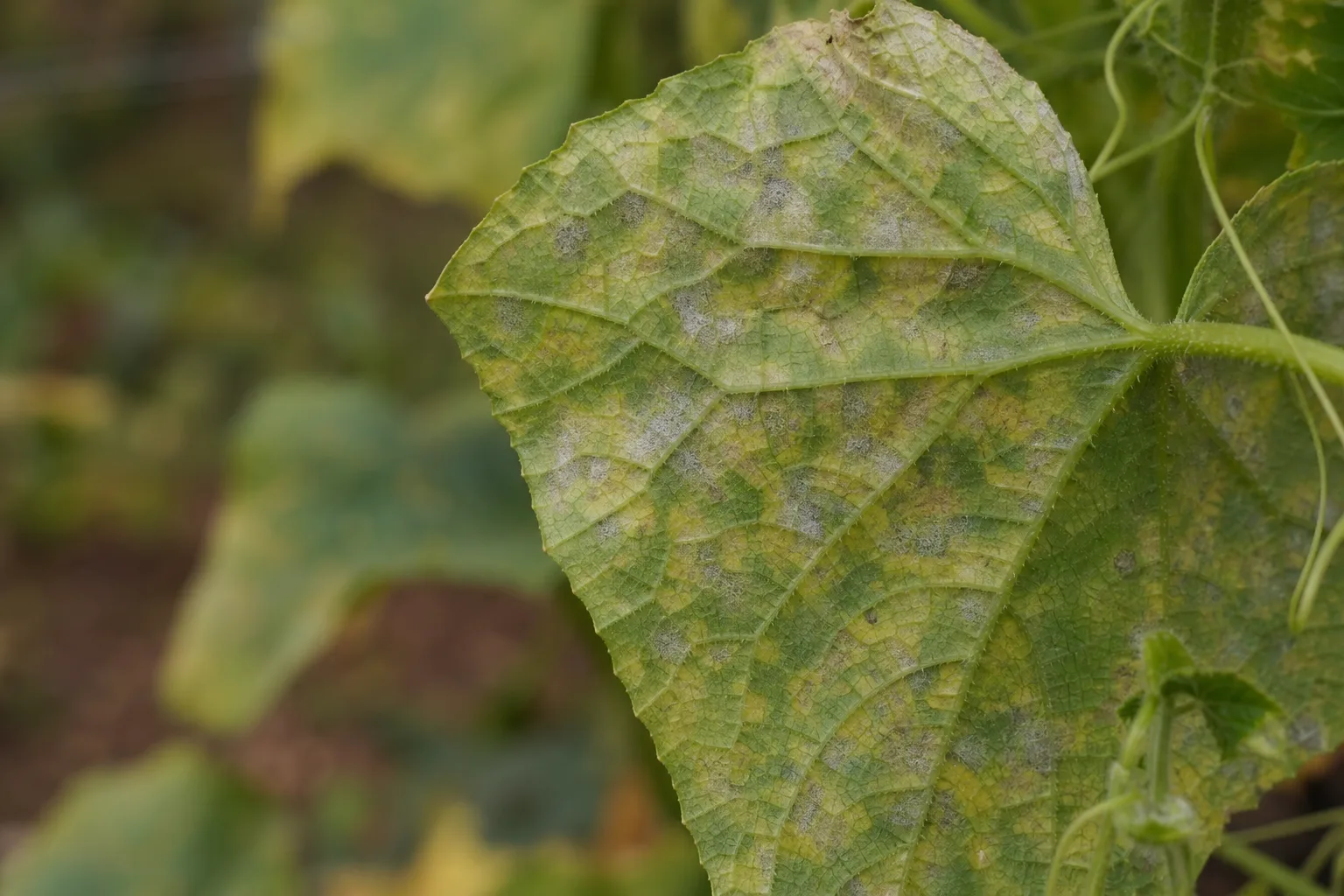
Downy mildew is most likely when leaf spots are angular, water soaked, and boxed in by veins, then fuzzy gray purple or white growth appears underneath within a day or two. In cool, wet fall weather, it can move from plant to plant fast, so remove infected tissue today and change the garden conditions that keep leaves wet.
I take a firm position here: do not wait for a perfect diagnosis photo before acting. The cost of one cautious removal is a lost leaf or plant, while the cost of waiting can be an entire row of cucumbers or melons with no healthy foliage left.
What does downy mildew look like on a leaf?
Downy mildew begins as yellow green, water soaked patches on the upper leaf surface, and the patches are usually angular because leaf veins limit their spread. Within one or two days, inspect the underside for fuzzy gray purple to white growth, especially during cool, damp weather between 10 C and 18 C.
Start with the leaf, not the flower or fruit. The first spots may look small, but the sharp vein boundaries matter. Round lesions point you toward a different problem, while angular lesions that follow the vein map deserve immediate attention.
Use a flashlight or turn the leaf over before breakfast. Fuzzy growth can disappear after the surface dries, so a dry afternoon inspection may miss what the plant showed you at dawn.
Angular spots are not automatically downy mildew. Bacterial leaf spot can also make angular lesions on cucurbits, and a Michigan State vegetable crop report notes that bacterial lesions may be temporarily bordered by veins. The fuzzy underside and the fast response to cool, humid weather are the clues I weigh together.
How fast does downy mildew spread in fall?
Downy mildew can spread quickly when humidity stays high and temperatures remain between 10 C and 18 C, which is why a cool, wet fall stretch is more dangerous than one isolated damp morning. Check susceptible foliage daily for several days after rain, heavy dew, or extended cloud cover.
Everyone says fall disease is slow because the season is ending. In practice, the opposite can happen on tender cucurbit leaves because cool nights keep foliage damp and the disease has repeated chances to move before the day dries it.
Do not use the calendar as your disease forecast. Use the next week of temperature, dew, and rain. A weather service can help you compare the forecast with the disease window, while the supplied weather reading shows why one clear, dry reading is only a snapshot and not proof that the garden is safe.
Inspect every day for three to five days after the first suspicious leaf. If new lesions appear on separate plants, treat the bed as an active outbreak rather than a single damaged leaf.
What should I remove from a plant with downy mildew?
Remove infected leaves as soon as you see angular lesions with suspected mildew underneath, and remove the whole plant if infection is widespread or the plant has little healthy foliage left. Bag the material or destroy it according to local rules, and do not leave diseased leaves on the soil surface or in compost.
Work on the driest part of the day. Wet leaves tear easily, and handling wet foliage can spread moisture and plant debris across your hands, tools, and neighboring plants.
Cut visibly infected leaves cleanly at the stem. Disinfecting tools between plants reduces the chance of carrying contaminated debris, but it does not replace removing the disease source.
I have killed plants by trying to rescue every last leaf. That is not noble gardening. If half the foliage is spotted, remove the plant and protect the healthy plants nearby, especially in a small fall bed where air movement is already poor.
How should I water a garden with downy mildew?
Water only at soil level, early in the day, so leaves have the longest possible period to dry before night. Avoid sprinklers and overhead hoses because wet foliage supports the cool, damp conditions that let downy mildew spread across neighboring leaves.
A drip line is useful because it puts water near the roots, but it has a trade off: installation takes time, and clogged emitters can leave one plant dry while another stays wet. A careful hand watering wand works too if you keep the stream under the foliage.
Mulch the soil surface with a layer that keeps mud from splashing onto leaves. Mulch helps foliage stay cleaner, but it does not cure existing mildew, and a heavy, wet layer pressed against stems can hold moisture where you do not want it.
Water early, not at dusk. That rule matters more in fall, when a leaf wet at sunset may stay damp through the night and meet the temperature range that favors rapid spread.
How do spacing and trellising help control downy mildew?
Give plants enough room for air to move through the foliage, and stake or trellis vining crops so leaves are not piled on wet soil. Better airflow shortens the time leaves stay damp, but spacing and trellising cannot cure infected tissue once the disease is established.
Remove crowded leaves that touch the ground or overlap heavily. Do not strip a healthy plant bare, because the remaining leaves still need to support roots and fruit, but do remove leaves that are already infected or blocking all movement through the center.
Trellising saves ground space and improves airflow, but it has a trade off: vines can dry out faster and need regular tying, while fruit may become heavier than a weak support can handle. Tie vines every 12 to 18 inches with soft material rather than forcing a mature stem against a rigid stake.
In Austin, I pay extra attention to beds beside fences and walls. A warm wall can feel dry to you while the shaded side of a crowded plant stays wet for hours, and that hidden pocket is where disease gets comfortable.
Should I spray downy mildew, and what should I use?
If downy mildew is already established, use a labeled fungicide program at 5 to 7 day intervals, following the product label exactly, until weather warms and foliage dries. Systemic oomycete targeted products such as metalaxyl or mefenoxam, and copper based products, are options named in the research, but each has label, crop, timing, and resistance trade offs.
A spray is not a magic eraser. It may protect remaining healthy foliage, but it will not turn a badly damaged leaf green again, and spraying outside the label can injure plants or leave you without a legal use for that crop.
Systemic products can move within plant tissue, but repeated use of one active ingredient can select for less sensitive disease populations. Copper based products have their own downside: repeated or excessive applications can injure foliage, especially when the label rate and crop directions are ignored.
Read the label for the exact crop, disease, rate, protective equipment, harvest interval, and reapplication interval. Do not mix products unless the label allows it. If the label does not name your plant and disease, do not improvise.
| Control option | Best use | Honest downside |
|---|---|---|
| Remove leaves or whole plants | A small outbreak or a plant with widespread infection | You lose foliage, and removal alone may fail during prolonged cool wet weather |
| Water at soil level, mulch, and improve airflow | Prevention and slowing spread | It requires daily attention, space, and setup before symptoms appear |
| Metalaxyl or mefenoxam labeled product | Established disease when the label permits use on the crop | Resistance risk, label restrictions, and no repair for already damaged leaves |
| Copper based product | A labeled spray option for some crops | It can injure foliage if misused and does not replace sanitation |
Who is downy mildew control for, and who should ignore it?
This approach suits gardeners with cucumbers, melons, or other susceptible plants standing in cool, damp fall weather, especially where leaves stay wet overnight. Ignore a downy mildew spray program if you have no confirmed symptoms, the label does not cover your crop, or the plant is already finished and removal is safer than repeated treatment.
A small backyard bed usually benefits from sanitation first. Remove the infected leaf, improve spacing, and watch the rest of the row for three to five days before reaching for a product.
A large planting with disease moving across several plants may justify a labeled 5 to 7 day program. That program costs money and time, and it still fails if overhead watering continues or infected leaves remain scattered through the bed.
If you are not sure which plant you are looking at, use the plant database before choosing a spray. Correct crop identification matters because a product approved for one crop may not be approved for another.
How can I prevent downy mildew in the next planting?
Choose downy mildew resistant varieties when available, give plants adequate spacing, trellis vining crops, water at soil level in the morning, and keep infected leaves out of the bed. Resistance lowers risk, but it is not a force field, so combine it with airflow and dry foliage rather than relying on a seed packet alone.
Rotate susceptible crops to a different bed when practical. Rotation does not fix every disease problem, but it helps you avoid repeating the same crowded, wet setup in the same patch.
Plan the spacing before seedlings go into the soil. A bed that looks beautifully full in October can become a damp wall of leaves in November, and no fungicide makes poor airflow free.
For future layouts, you can get a concept for your yard that places vines, paths, and watering access where you can actually inspect the undersides of leaves. The prettiest plan is not useful if you cannot reach the plant before the disease runs.
Can I eat fruit from a plant that has downy mildew?
Downy mildew mainly damages leaves, but you should follow the product label before harvesting any fruit from a treated plant. If you remove infected plants without spraying, the disease does not automatically make the fruit unsafe, yet badly stressed plants may produce poorly and the fruit still needs normal inspection and washing.
The label controls the harvest interval after any fungicide application. Do not guess based on how dry the leaves look, and do not use a product on an edible crop unless that crop and use appear on the label.
Fruit with cracking, rot, or other visible damage should not be treated as a perfect harvest simply because the disease began on leaves. I would rather lose one questionable cucumber than serve something I cannot confidently identify and handle correctly.
How do I know if angular leaf spots are downy mildew?
Angular leaf spots are more likely to be downy mildew when they begin yellow green and water soaked, stop at leaf veins, and develop fuzzy gray purple to white growth on the underside within one or two days. Angular spots alone are not enough, because bacterial leaf spot can also have vein bordered lesions.
Should I remove a single leaf with suspected downy mildew?
Yes, remove a single leaf with suspected downy mildew promptly, especially if the underside has fuzzy growth and the weather is cool and damp. Work when the foliage is dry, bag or destroy the leaf, and check nearby plants daily for three to five days because removal does not guarantee that spores have not already moved.
How often should I spray for established downy mildew?
Spray an established downy mildew infection at the labeled 5 to 7 day interval, using only a product approved for the crop and disease. Continue according to the label until weather warms and foliage dries, but understand that sprays protect remaining tissue rather than repairing leaves that are already spotted.
Is overhead watering making downy mildew worse?
Overhead watering can make downy mildew worse by keeping leaves wet, especially overnight in cool fall weather. Water at soil level early in the day instead, using a drip line or careful hand watering, but remember that either method needs attention so one plant does not stay dry while another remains saturated.
Are copper sprays enough to cure downy mildew?
Copper sprays are not enough to cure downy mildew by themselves, and they cannot restore damaged leaves. A copper based product may be an option only when its label names your crop and disease, and repeated or excessive use can injure foliage, so sanitation, dry leaves, airflow, and label directions still do the heavy lifting.
Should I plant downy mildew resistant varieties next year?
Yes, choose downy mildew resistant varieties when they are available for your crop, then combine that resistance with spacing, trellising, soil level watering, and removal of infected leaves. Resistance reduces risk but does not guarantee a clean crop during prolonged cool wet weather, so inspect the undersides of leaves anyway.
The leaf tells you what to do. Angular lesions boxed in by veins, fuzzy growth underneath, and a cool wet forecast mean you should move today, not next weekend, because mildew does not wait politely for your garden checklist.
Want a plan for your own yard?
Tell us the space and we will put a planting plan together for it. Start at get my concept, or browse what actually grows where you are over on plants.
Frequently asked questions
How do I know if angular leaf spots are downy mildew?
Angular leaf spots are more likely to be downy mildew when they begin yellow green and water soaked, stop at leaf veins, and develop fuzzy gray purple to white growth on the underside within one or two days. Angular spots alone are not enough, because bacterial leaf spot can also have vein bordered lesions.
Should I remove a single leaf with suspected downy mildew?
Yes, remove a single leaf with suspected downy mildew promptly, especially if the underside has fuzzy growth and the weather is cool and damp. Work when the foliage is dry, bag or destroy the leaf, and check nearby plants daily for three to five days because removal does not guarantee that spores have not already moved.
How often should I spray for established downy mildew?
Spray an established downy mildew infection at the labeled 5 to 7 day interval, using only a product approved for the crop and disease. Continue according to the label until weather warms and foliage dries, but understand that sprays protect remaining tissue rather than repairing leaves that are already spotted.
Is overhead watering making downy mildew worse?
Overhead watering can make downy mildew worse by keeping leaves wet, especially overnight in cool fall weather. Water at soil level early in the day instead, using a drip line or careful hand watering, but remember that either method needs attention so one plant does not stay dry while another remains saturated.
Are copper sprays enough to cure downy mildew?
Copper sprays are not enough to cure downy mildew by themselves, and they cannot restore damaged leaves. A copper based product may be an option only when its label names your crop and disease, and repeated or excessive use can injure foliage, so sanitation, dry leaves, airflow, and label directions still do the heavy lifting.
Should I plant downy mildew resistant varieties next year?
Yes, choose downy mildew resistant varieties when they are available for your crop, then combine that resistance with spacing, trellising, soil level watering, and removal of infected leaves. Resistance reduces risk but does not guarantee a clean crop during prolonged cool wet weather, so inspect the undersides of leaves anyway.
Free, no obligation
Ready to design your dream landscape? Start here.
Tell us where you are and we will start a free profile for you, with plants that actually survive your climate and a real sense of what the build would cost.