
How to Cure and Store the Six Crops Most People Lose to Rot
Curing is not a fancy extra. It is the drying, healing step that helps potatoes, squash, onions, sweet potatoes, and garlic survive storage instead of turning soft and rotten.
October 4, 2026
By Valeria Navarro
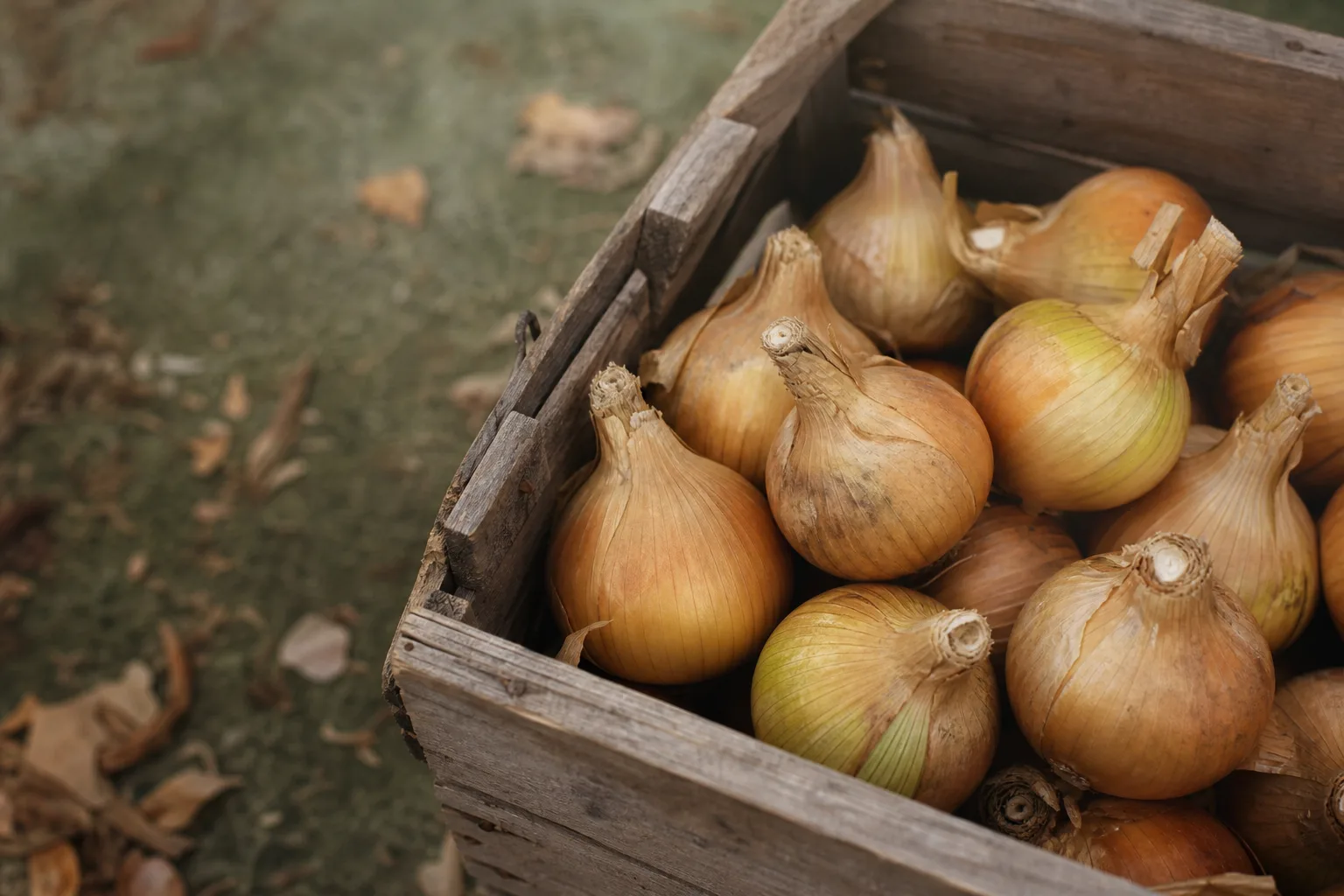
Most rot starts before storage, usually because a crop went from garden soil straight into a pile, bin, or pantry. Curing is the pause between harvest and storage, and it gives skins, rinds, cuts, and necks time to dry and toughen.
Is curing really a separate step from harvest?
Yes. Curing is a separate postharvest step that dries the outside of a crop, hardens its protective skin, or heals small harvest wounds before storage. Harvesting only removes the crop from the garden. If you skip curing, you carry fresh moisture and tiny injuries straight into a dark place where rot can spread.
That is the argument I want you to remember. Harvest is the pickup. Curing is the healing period. Storage comes third.
Everyone says, “Just bring it inside.” In practice, that is how a sound onion shares its wet neck with six good onions and ruins the whole basket. I have killed enough basil to respect a schedule, and curing deserves one too.
In Austin, fall weather can be warm one afternoon and damp the next. Use a covered porch, garage, spare room, or pantry area with air movement. Do not put freshly harvested crops in a sealed plastic bag, and do not wash them before curing unless soil removal is absolutely necessary, because added surface moisture costs you storage life.
What should I do today if I am standing in the garden now?
Harvest only mature, undamaged crops, then separate anything bruised, cut, stemless, or soft for immediate use. Give each crop its own curing temperature and timing, because potatoes, winter squash, onions, sweet potatoes, garlic, and acorn squash do not share one magic storage recipe.
Use a clean basket or shallow box so produce is not crushed under its own weight. A garden fork is useful for loosening potatoes and sweet potatoes, but it can puncture roots, so work from the side and lift gently. The trade-off is simple: slower digging now, fewer rotten wounds later.
Set up the curing area before you harvest. You want shade or darkness for potatoes, warmth and dry air for squash, ventilation for onions and garlic, and high humidity for sweet potatoes. That sounds fussy because it is. Crops are living tissue, not decorations for a farmhouse shelf.
For a quick visual guide, the plant database can help you check whether a squash or onion variety has particular harvest traits. Variety still matters, but a perfect keeper cannot rescue produce that was bruised or stored wet.
How do I cure and store potatoes?
Let potato vines die down before digging, then cure the unwashed potatoes for about two weeks at 50 to 60 degrees Fahrenheit in darkness. After curing, move them to a cool, humid place near 40 degrees Fahrenheit, while keeping damaged potatoes aside to eat first, because cuts and bruises shorten storage life.
Do not scrub potatoes clean at harvest. Brush off loose soil only, then spread them in a single layer where light cannot reach them. Light can turn potatoes green, and a bright windowsill is not a curing room, no matter how tidy it looks.
The curing window is about two weeks. Check the skins before storage. A properly cured skin feels firmer and less easily rubbed away. A potato with a deep fork wound, split, or soft patch belongs in the kitchen soon, not in the long term bin.
The trade-off with cooler storage is space and humidity control. A warm pantry is convenient but shortens storage life, while a cold, humid area protects quality but can be difficult to create in an Austin house. Never seal potatoes airtight, because trapped moisture invites rot.
The temperature and timing come from A Way To Garden, which also recommends curing after the vines die and avoiding light. If you only have room for one batch, eat the damaged potatoes first and store the firm, intact ones last.
How do I cure and store winter squash and pumpkins?
Leave winter squash and pumpkins on the vine until the skin is hard and the stem is woody, then cut with a short stem attached and cure them for one to two weeks at about 75 to 85 degrees Fahrenheit in a warm, dry, airy place. Store cured fruit dry at 55 to 60 degrees, away from apples and pears.
Use a sharp knife or pruners and leave a few inches of stem when possible. The stem is a handle and a seal, not a decorative detail. If it snaps off, set that squash aside for earlier use because stemless fruit will not store as well.
During curing, keep each squash from touching the others. Turn it gently once if the underside stays damp, but do not keep handling it like produce at the grocery store. A bruise can become the place where rot enters.
The warm curing period hardens the rind and helps heal cut surfaces. New Mexico State University lists 80 to 85 degrees for 10 days, while other home storage guidance gives about one to two weeks at 75 to 85 degrees, so I use 10 days as the minimum and extend the period when the rind still feels tender. (NMSU, A Way To Garden)
The downside is that squash takes real floor space during curing. Do not stack it in a deep pile, and do not store it beside apples or pears. Those fruits release ethylene gas, which can shorten squash storage life, according to Rooted Resilience.
Should acorn squash be cured before storage?
No. Acorn squash is the exception to the usual winter squash rule, so store it directly at 45 to 50 degrees Fahrenheit instead of giving it a warm curing period. Its trade-off is shorter, more particular storage: it needs the right cool temperature and should be used before tougher winter squash.
This is where one broad rule causes trouble. “All winter squash needs curing” sounds tidy, but acorn squash should not be cured according to the research provided. Do not park it at 80 degrees for 10 days just because another pumpkin needs that treatment.
Harvest acorn squash carefully, keeping the fruit intact and avoiding cuts or bruises. A damaged fruit is still a use-first fruit. Store it dry, with air around it, at 45 to 50 degrees rather than in a humid, sealed container.
The trade-off is convenience. A 45 to 50 degree storage spot may be harder to find than a warm garage, especially in Central Texas. If your available space is warmer, plan to cook the acorn squash earlier instead of pretending the temperature does not matter.
How do onions, sweet potatoes, and garlic differ?
Onions and garlic need warm, dry, moving air until their outer layers and necks are dry, while sweet potatoes need five to 10 days near 80 degrees with 80 to 90 percent humidity before storage. After curing, onions and garlic go cool and dry, while sweet potatoes need about 55 to 60 degrees and 85 percent humidity.
For onions, wait until the tops turn yellow and fall over, then pull or dig them and cure them in a shady, well-ventilated area. When the neck is dry, trim the tops to about one inch above the bulb and store them cool, dry, and airy. The trade-off is that onions dislike damp storage, so a sealed plastic bin is a rot trap.
Garlic follows the same dry-air rhythm. Pull the bulbs, leave them to cure in a warm, dry, well-ventilated place, then move them indoors to a cool, dry location. Garlic is low drama once cured, but it still needs air, and its papery skin does not forgive a damp basement.
Sweet potatoes are different little divas. Harvest mature roots before frost, handle them gently, and cure them for five to 10 days near 80 degrees with 80 to 90 percent humidity so small nicks can heal and the skin can firm. Their trade-off is that you need humidity, not the dry pantry conditions that suit onions and garlic. (NC State Extension)
Do you have a warm, humid curing spot for sweet potatoes? If not, do not improvise with a wet towel in a closed box. That can create stagnant moisture and rot. A controlled, airy space is safer than a homemade sauna.
Which storage approach suits each crop best?
The best storage approach is crop-specific: cool and humid for cured potatoes, dry and moderate for cured squash, cool and dry for onions and garlic, humid and about 55 to 60 degrees for sweet potatoes, and 45 to 50 degrees without curing for acorn squash. The wrong temperature costs more than a little shelf space.
| Crop | Curing step | Storage target | Honest downside |
|---|---|---|---|
| Potatoes | Two weeks at 50 to 60 degrees, dark | About 40 degrees, cool and humid | Needs darkness and a cooler storage area |
| Winter squash and pumpkins | 10 days to two weeks at 75 to 85 degrees | 55 to 60 degrees, dry | Takes space and must stay away from apples and pears |
| Acorn squash | Skip curing | 45 to 50 degrees | More particular temperature and shorter keeping quality |
| Onions | Dry tops and neck in shade with air | Cool, dry, well ventilated | Rot starts quickly if the neck stays damp |
| Sweet potatoes | Five to 10 days near 80 degrees, high humidity | 55 to 60 degrees, about 85 percent humidity | Needs warm humidity, not a normal dry pantry |
| Garlic | Warm, dry, airy curing period | Cool, dry, indoors | Damp air softens the papery skins and encourages rot |
A basement may suit sweet potatoes if it stays near 55 degrees and humid enough. It may be a terrible place for onions if air sits still and the necks remain damp. A garage may cure squash beautifully in October, then become too hot later in the season.
Measure instead of guessing for one week. A cheap thermometer helps you find the real temperature in the corner where the crops will live. Humidity is harder to measure, but visible condensation, soft skins, and wet cardboard are warnings, not charming rustic details.
I use the simplest division: warm curing first, then crop-specific storage. Diego and I disagree about gravel often enough, but on produce I will always choose airflow over a pretty stack. Beauty is not a storage condition, mi gente.
Who is this curing method for, and who should ignore it?
This curing method suits home gardeners harvesting several weeks of potatoes, squash, onions, sweet potatoes, or garlic and willing to provide a separate warm, dry, airy space before storage. Ignore long-term curing if you have only damaged produce, no temperature control, or a crop you will cook within a few days.
Use it if you grew more than you can eat this week. It is especially useful for a fall harvest in Austin, where a warm garage can help cure squash and garlic before winter storage, but later temperature swings can still spoil a careless setup.
Skip the long process for a bruised sweet potato, cut pumpkin, stemless squash, or soft onion. Cook those first. Curing is not a repair shop for decay, and no amount of optimism will turn a wet wound into a sound keeper.
It also suits people who can check crops weekly. Storage is not set-and-forget. Remove one soft item before it touches three good ones, and keep records of which varieties lasted. Your future garden will benefit from that little notebook.
What causes rot after curing, and how do I stop it?
Rot after curing usually comes from bruises, cuts, wet surfaces, poor airflow, or the wrong temperature for the crop. Prevent it by harvesting gently, curing in the correct conditions, storing only sound produce, leaving air between pieces, and checking the storage area once a week.
Do not wash storage crops before curing. Do not pile them deeply. Do not put warm, damp produce into a sealed tote and hope the lid creates protection. It creates a tiny weather system, and that weather is usually bad.
Remove anything that smells sour, leaks, collapses, or shows expanding soft spots. Keep the rest from touching it. With potatoes, darkness matters. With squash, dry air and distance from apples and pears matter. With sweet potatoes, adequate humidity matters, but standing water does not.
A little loss is normal. The goal is not a perfect harvest six months later. The goal is to stop preventable rot from taking the whole crop because you skipped ten days of curing.
What are the most common curing questions from fall gardeners?
The most common questions are about timing, temperature, and exceptions. The short answers are simple: cure after harvest, match the temperature to the crop, protect produce from bruises and moisture, and do not cure acorn squash just because another winter squash needs it.
How long should potatoes cure before storage?
Potatoes should cure for about two weeks at 50 to 60 degrees Fahrenheit in darkness before moving to storage near 40 degrees. Dig them after the vines die down, brush away loose soil, and separate any cut or bruised potatoes for early use because damaged tubers will not keep as long. (A Way To Garden)
Can I cure winter squash in an Austin garage?
Yes, an Austin garage can cure winter squash if it stays warm, dry, and airy, roughly 75 to 85 degrees Fahrenheit for one to two weeks. Keep fruit off damp concrete, leave space between pieces, and move squash before the garage becomes too hot or humid. The trade-off is floor space and careful temperature watching.
Do acorn squash need a curing period?
No, acorn squash should not be cured before storage. Store it directly at 45 to 50 degrees Fahrenheit, keep it dry and unbruised, and plan to use it sooner than tougher winter squash. Treating every squash the same is the mistake here, because acorn squash is the stated exception.
What is the best way to cure sweet potatoes?
Cure sweet potatoes for five to 10 days near 80 degrees Fahrenheit with 80 to 90 percent relative humidity, then store them around 55 to 60 degrees with about 85 percent humidity. Handle them gently because scratches and bruises rot easily, and do not replace high humidity with standing water or a sealed wet container. (NC State Extension)
How do I know when onions are cured?
Onions are cured when the neck above the bulb is dry and the outer layers feel papery rather than wet. Harvest after the tops yellow and fall over, cure the bulbs in a shady, well-ventilated area, then trim the tops to about one inch and store them cool, dry, and well ventilated. (NMSU)
Can garlic cure indoors?
Yes, garlic can cure indoors in a warm, dry, well-ventilated location, then move to a cool, dry indoor spot for storage. Give bulbs space for air movement and keep them away from damp areas. The trade-off is that garlic needs several weeks of patience before it becomes a reliable pantry crop, but that patience is cheaper than losing the bulbs to rot.
If you want a layout for a curing shelf, pantry corner, or small fall storage area, get a concept for your yard and make the practical pieces part of the garden plan from the start. A harvest is a blessing, and I want you to actually eat it.
Want a plan for your own yard?
Tell us the space and we will put a planting plan together for it. Start at get my concept, or browse what actually grows where you are over on plants.
Frequently asked questions
How long should potatoes cure before storage?
Potatoes should cure for about two weeks at 50 to 60 degrees Fahrenheit in darkness before moving to storage near 40 degrees. Dig them after the vines die down, brush away loose soil, and separate any cut or bruised potatoes for early use because damaged tubers will not keep as long. ([A Way To Garden](https://awaytogarden.com/how-to-store-garden-vegetables-for-winter))
Can I cure winter squash in an Austin garage?
Yes, an Austin garage can cure winter squash if it stays warm, dry, and airy, roughly 75 to 85 degrees Fahrenheit for one to two weeks. Keep fruit off damp concrete, leave space between pieces, and move squash before the garage becomes too hot or humid. The trade-off is floor space and careful temperature watching.
Do acorn squash need a curing period?
No, acorn squash should not be cured before storage. Store it directly at 45 to 50 degrees Fahrenheit, keep it dry and unbruised, and plan to use it sooner than tougher winter squash. Treating every squash the same is the mistake here, because acorn squash is the stated exception.
What is the best way to cure sweet potatoes?
Cure sweet potatoes for five to 10 days near 80 degrees Fahrenheit with 80 to 90 percent relative humidity, then store them around 55 to 60 degrees with about 85 percent humidity. Handle them gently because scratches and bruises rot easily, and do not replace high humidity with standing water or a sealed wet container. ([NC State Extension](https://content.ces.ncsu.edu/extension-gardener-handbook/16-vegetable-gardening))
How do I know when onions are cured?
Onions are cured when the neck above the bulb is dry and the outer layers feel papery rather than wet. Harvest after the tops yellow and fall over, cure the bulbs in a shady, well-ventilated area, then trim the tops to about one inch and store them cool, dry, and well ventilated. ([NMSU](https://pubs.nmsu.edu/_circulars/CR457))
Can garlic cure indoors?
Yes, garlic can cure indoors in a warm, dry, well-ventilated location, then move to a cool, dry indoor spot for storage. Give bulbs space for air movement and keep them away from damp areas. The trade-off is that garlic needs several weeks of patience before it becomes a reliable pantry crop, but that patience is cheaper than losing the bulbs to rot.
Free, no obligation
Ready to design your dream landscape? Start here.
Tell us where you are and we will start a free profile for you, with plants that actually survive your climate and a real sense of what the build would cost.