
How Deep Should You Plant a Shrub?
Planting a shrub too deep can suffocate roots, rot the stem, and quietly kill a new landscape. Here is the exact depth to use this fall, how to find the crown, and how to fix a shrub that is already buried.
September 22, 2026
By Valeria Navarro
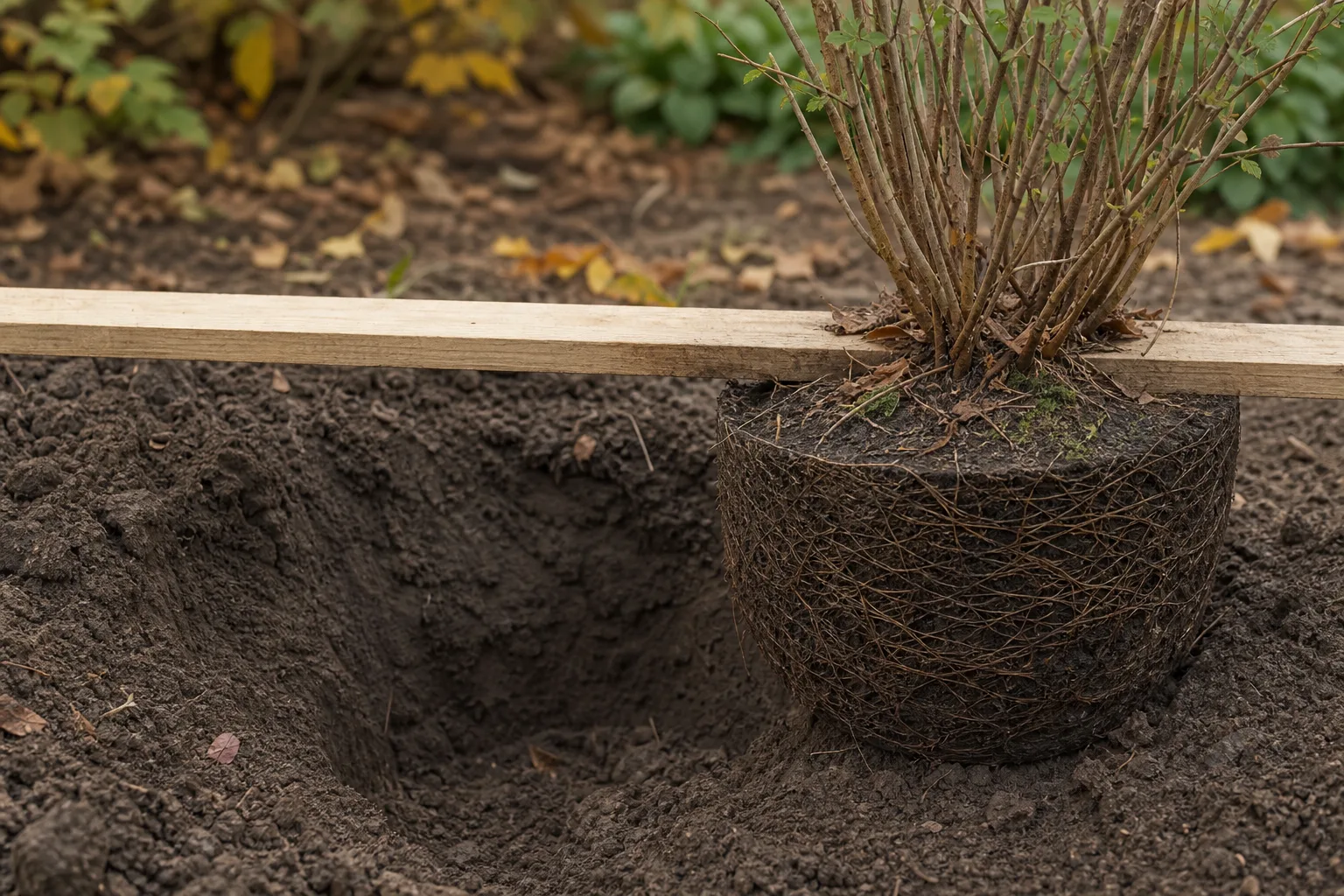
Plant the shrub so the top of the root ball sits at the surrounding soil level or only about 1 to 2 inches below it. Keep the crown, where the stems meet the roots, at or just above the soil surface because planting too deep can suffocate roots, cause stem rot, and quietly kill the shrub.
How deep should a shrub be planted?
A shrub should be planted with the top of its root ball at the surrounding ground level or slightly below it, about 1 to 2 inches down at most. The crown, where the stems meet the roots, should remain at or just above the soil surface, matching the depth the shrub had in its container.
Here is the move. Set the unopened root ball in the hole, then lay a straight board or shovel handle across the surrounding soil. The top of the root ball should sit level with that reference or just below it. Not six inches down. Not buried under a little hill of hopeful mulch.
The container depth is your best clue. If the shrub was growing with its crown exposed in the pot, recreate that relationship in the ground. Do not assume a deeper hole gives the roots more room. A deep hole can simply put the crown and upper roots in a wet, airless pocket.
In Austin, this matters fast. Blackland Prairie clay can hold water after a storm, then bake hard as a brick by August, while limestone and caliche can make digging feel like a small argument with the earth. Give the root ball the correct depth first. Soil improvement comes second.
Why is planting a shrub too deep so dangerous?
Planting a shrub too deep can suffocate roots and cause stem rot because buried roots and the crown may stay wet with too little air. The problem is quiet at first: the shrub may leaf out, then decline weeks or months later, making the original planting mistake easy to miss.
Roots need air as well as water. When soil is piled over the crown, the plant loses the dry transition between stem tissue and root tissue. Wet soil against the lower stems can damage that transition, especially after heavy rain or irrigation.
The symptoms are not always dramatic. You may see weak new growth, yellowing leaves, wilting even though the ground is damp, or a shrub that never settles into strong growth. By the time the base looks dark or soft, the damage may be serious.
Everyone says a new shrub needs a good soak. In practice, a deeply buried shrub can be watered perfectly and still fail because the planting depth is wrong. Water cannot fix a crown covered by soil.
How do you find the crown on a shrub?
Find the crown by locating the point where the main stems meet the roots, usually near the top of the root ball. Remove loose soil or nursery mix from the upper inch or two if needed, then keep that stem-to-root junction at or just above the finished soil surface.
Some shrubs arrive with extra potting mix piled around the trunk. Gently brush it away with your fingers. Do not power-wash the root ball or tear through large roots. You are looking for the natural flare and the place where the stems stop being stem tissue.
If several stems emerge from one low point, that meeting place is the crown. It should not disappear under backfill. The plant may look slightly high at first, and that is better than burying it and hoping the soil settles enough to rescue the mistake.
Before you fill the hole, step back. The shrub should look planted, not swallowed. I have killed plants by trusting the hole instead of the root ball, and I still check twice because soil has a sneaky way of making a bad decision look tidy.
Should the top of the root ball be above or below ground level?
The top of the root ball should sit at surrounding ground level or slightly below it, about 1 to 2 inches down, while the crown stays at or just above the soil surface. The correct position mirrors the shrub’s original container depth rather than automatically placing the root ball deep.
This is where gardeners get mixed messages. Some planting advice says “plant high,” and the research guidance here allows the root ball to sit slightly below grade, but it still keeps the crown exposed. Those are not permission slips to bury the stem.
Use the surrounding soil as your measuring point, not the mulch. Mulch changes depth after planting, and a thick layer can hide a mistake. Set the shrub first, check the crown, then backfill with the soil you removed.
If the hole is too deep, add soil beneath the root ball and firm it before placing the shrub. Do not leave the root ball perched on loose material that will collapse after the first rain. A stable planting height saves a rescue job later.
| Planting position | When it works | Honest downside |
|---|---|---|
| Top of root ball level with surrounding soil | A straightforward site with consistent drainage | It leaves less margin if settling is likely, so check the finished grade carefully |
| Top of root ball 1 to 2 inches below surrounding soil, crown exposed | The recommended slight recess when the crown remains at or just above the surface | Soil or mulch can accidentally cover the crown if you are careless |
| Root ball several inches below grade | Almost never for a standard shrub planting | It can suffocate roots, hold moisture against the crown, and lead to stem rot |
How wide and deep should the planting hole be?
Make the planting hole only as deep as needed to place the root ball at its original container depth, with the top at grade or no more than about 1 to 2 inches below it. Make the hole wider than the root ball so the surrounding soil is easier for new roots to enter.
The exact width depends on the shrub and root ball, so do not chase a magic diameter. Your nonnegotiable measurement is depth. Dig shallow first. You can always remove a little more soil, but an overdeep hole must be rebuilt and settled before the shrub is safe.
In heavy Austin clay, the bottom of a perfectly smooth deep hole can act like a bowl. Water collects there, especially during a wet fall. I prefer a hole that sets the root ball at the correct level, with roughened sides and firm soil beneath it, rather than a dramatic excavation that creates a bathtub.
Do not place gravel under the root ball as a drainage fix. That costs money and does not correct a shrub planted too deep. Correct grade, careful backfill, and restrained watering are the useful moves here.
Should you loosen or remove soil from the top of the root ball?
You should gently remove loose soil from the top of the root ball when it hides the crown or raises the apparent planting depth. Brush away a small amount by hand until you can see where the stems meet the roots, but avoid tearing roots or aggressively breaking apart a stable root ball.
Nursery containers are often handled, moved, and watered from above. That can leave a soft layer around the stems. It is not automatically part of the original root zone. If that material buries the crown, the shrub starts the landscape already too deep.
Do not turn this into root-ball surgery. The trade-off is simple: removing a little loose mix improves accuracy, while aggressively washing or dismantling the root ball can damage roots and create a stressed plant before planting even begins.
After setting the shrub, backfill around the root ball and water it in enough to settle air pockets. Watering settles soil. It does not excuse a hole that was dug too deep.
Who is this planting-depth rule for, and who should ignore it?
This rule is for homeowners planting container-grown shrubs in ordinary garden soil, especially people working in fall and trying to establish a new landscape before summer heat. Ignore the idea of one universal depth only when the plant arrives with different instructions or the site requires professional grading, because the crown still must not be buried.
It suits the new five-gallon shrub beside a front walk, the hedge plant going into clay, and the single specimen you bought because the nursery tag promised “easy.” Easy plants still object to being buried. Deer browsing, hail, drought, and February cold are already enough trouble in Central Texas.
If your yard is built over solid limestone, a shallow planting position may be unavoidable. Do not dig a deep pocket and fill it with water-holding soil just to imitate a perfect hole. A plant database can help you check the shrub’s mature size and site needs before you choose its exact location.
A steep slope, retaining wall, drainage failure, or newly built yard is different. In those situations, the planting height depends on finished grades and water movement. That is a good moment to get a measured concept for the whole space through get a concept for your yard, rather than discovering after three summers that every shrub sits in a trench.
What should you do after planting a shrub in fall?
After planting a shrub in fall, check the crown, water the root ball so the surrounding soil settles, and keep the finished soil from covering the stems. Fall is a useful planting season because the shrub has time to establish before Austin’s summer heat, but correct depth still matters more than the calendar.
Water slowly at planting. The goal is contact between the root ball and surrounding soil, not a permanent pond. Feel the soil before watering again, because clay can stay damp below the surface long after the top looks dry.
Keep mulch away from the crown and stems. A thin, even layer can protect soil from rapid drying, but mulch becomes a problem if it forms a wet collar around the trunk. The honest trade-off is less evaporation versus a greater chance of hiding a buried crown, so leave the stem junction visible.
Recheck the shrub after one week and again after a strong rain. Look for settling, exposed roots, leaning, or soil sliding over the crown. Fix a small grade problem now. Waiting until spring turns a five-minute correction into a full replanting.
Can you fix a shrub that was planted too deep?
You can often fix a recently planted shrub by lifting it and resetting the root ball at the correct depth, with the crown at or just above the soil surface. Do it while the shrub is still establishing, and recheck the height after the soil settles instead of adding more soil around the stem.
Dig around the root ball wide enough to avoid slicing through it. Support the root ball from underneath if possible. A shrub that has been in the ground for years may have roots extending far beyond the original ball, so correction becomes more disruptive and its success is less certain.
If only mulch or loose soil is too high, remove that material first. If the actual root ball is buried several inches below grade, expose the sides carefully, lift the shrub, add firm soil beneath it, and reset it. Do not yank the stems upward.
Afterward, water the planting area enough to settle it, then watch the crown. The plant may look slightly high for a few days. That is a much better sight than a tidy mound slowly suffocating the shrub.
What are the most common shrub planting-depth mistakes?
The most common mistakes are digging the hole deeper than the root ball, burying the crown under backfill, piling mulch against the stems, and assuming soil will settle into a safe position. Each mistake can leave the shrub too wet at the base or starve upper roots of air.
Here is my fall checklist:
- Place the shrub beside the hole and compare the container depth with the crown.
- Set the root ball in the hole before adding amendments or backfill.
- Use a board, shovel handle, or your eye across the surrounding soil to check height.
- Keep the crown at or just above the surface.
- Backfill with the removed soil and firm it gently.
- Water to settle air pockets, then inspect the grade again.
- Leave mulch away from the crown and stems.
The flashy mistake is choosing the wrong shrub. The expensive mistake is planting the right shrub six inches too deep and replacing it after a year. In my yard, I would rather spend ten extra minutes checking the crown than spend another Saturday hauling out a dead plant while Diego tells me the gravel was never the problem.
How can you tell whether a newly planted shrub is too deep?
A newly planted shrub may be too deep if soil covers the crown, the stems enter the ground without a visible transition, or the top of the root ball sits several inches below the surrounding grade. Wet soil, weak growth, yellowing leaves, and wilting despite damp ground can follow, but check the planting height first.
Do not diagnose from leaves alone. Fall weather, transplant stress, drought, and too much water can all change foliage. Measure the base. Gently remove loose soil until you can identify the stem-to-root junction, then compare it with the surrounding ground.
If the crown is buried, correct the depth rather than simply reducing water. Less water may leave a badly positioned root ball dry on top and wet underneath. The problem is placement, not just your hose.
The research packet provided for this article contains no horticultural publication. One listed link is an ABC television schedule, and another is a book catalog, not planting guidance (ABC schedule, book catalog). The planting recommendation here follows the supplied research summary: match the original container depth, keep the crown exposed, and never bury the shrub deeply.
What is the exact rule to remember before you fill the hole?
The exact rule is simple: match the shrub’s original container depth, place the top of the root ball at grade or about 1 to 2 inches below it, and keep the crown at or just above the soil surface. Planting too deep is the quiet killer, so measure twice before the backfill hides your decision.
You do not need a perfect landscape to get this right. You need a visible crown, a stable root ball, and enough patience to correct the hole before watering. The shrub does the rest slowly, one root at a time.
How deep should a shrub be planted?
A shrub should be planted with the top of its root ball at the surrounding ground level or slightly below it, about 1 to 2 inches down at most. The crown, where the stems meet the roots, should remain at or just above the soil surface, matching the depth the shrub had in its container.
Why is planting a shrub too deep dangerous?
Planting a shrub too deep can suffocate roots and cause stem rot because buried roots and the crown may stay wet with too little air. The shrub may look fine at first, then develop weak growth, yellowing leaves, or wilting despite damp soil weeks or months later.
Should mulch touch a shrub’s stems?
Mulch should not touch a shrub’s stems or cover the crown. Keep the stem junction visible after planting, because mulch can hold moisture against the lower stems and hide a shrub that was planted too deeply. A thin, even layer may reduce evaporation, but a wet collar around the trunk is a poor trade.
Can a deeply planted shrub be saved?
A deeply planted shrub can often be saved if it is lifted and reset while it is still establishing. Remove loose soil first, then carefully lift the root ball, add firm soil beneath it, and place the crown at or just above the surface. Older shrubs may be harder to correct because roots have spread beyond the original ball.
Is fall a good time to plant a shrub in Austin?
Fall is a good time to plant a shrub in Austin because the plant can establish before the intense summer heat, but fall does not make incorrect depth safe. Set the root ball at grade or only 1 to 2 inches below it, water to settle the soil, and inspect the crown again after heavy rain.
How do you know where the crown is on a shrub?
You know where the crown is by finding the point where the main stems meet the roots, usually near the top of the root ball. Brush away loose nursery mix if it hides that junction, then keep the crown at or just above the soil surface. Do not bury it under backfill or mulch.
Want a plan for your own yard?
Tell us the space and we will put a planting plan together for it. Start at get my concept, or browse what actually grows where you are over on plants.
Frequently asked questions
How deep should a shrub be planted?
A shrub should be planted with the top of its root ball at the surrounding ground level or slightly below it, about 1 to 2 inches down at most. The crown, where the stems meet the roots, should remain at or just above the soil surface, matching the depth the shrub had in its container.
Why is planting a shrub too deep dangerous?
Planting a shrub too deep can suffocate roots and cause stem rot because buried roots and the crown may stay wet with too little air. The shrub may look fine at first, then develop weak growth, yellowing leaves, or wilting despite damp soil weeks or months later.
Should mulch touch a shrub’s stems?
Mulch should not touch a shrub’s stems or cover the crown. Keep the stem junction visible after planting, because mulch can hold moisture against the lower stems and hide a shrub that was planted too deeply. A thin, even layer may reduce evaporation, but a wet collar around the trunk is a poor trade.
Can a deeply planted shrub be saved?
A deeply planted shrub can often be saved if it is lifted and reset while it is still establishing. Remove loose soil first, then carefully lift the root ball, add firm soil beneath it, and place the crown at or just above the surface. Older shrubs may be harder to correct because roots have spread beyond the original ball.
Is fall a good time to plant a shrub in Austin?
Fall is a good time to plant a shrub in Austin because the plant can establish before the intense summer heat, but fall does not make incorrect depth safe. Set the root ball at grade or only 1 to 2 inches below it, water to settle the soil, and inspect the crown again after heavy rain.
How do you know where the crown is on a shrub?
You know where the crown is by finding the point where the main stems meet the roots, usually near the top of the root ball. Brush away loose nursery mix if it hides that junction, then keep the crown at or just above the soil surface. Do not bury it under backfill or mulch.
Free, no obligation
Ready to design your dream landscape? Start here.
Tell us where you are and we will start a free profile for you, with plants that actually survive your climate and a real sense of what the build would cost.