
Horticultural Oil vs. Dormant Oil: Is It the Same Product?
Horticultural oil and dormant oil are the same kind of petroleum-based oil, but the timing and label rate decide whether an application is appropriate. In fall, wait until about 95 percent of deciduous leaves have dropped before the first dormant-season spray.
October 4, 2026
By Valeria Navarro
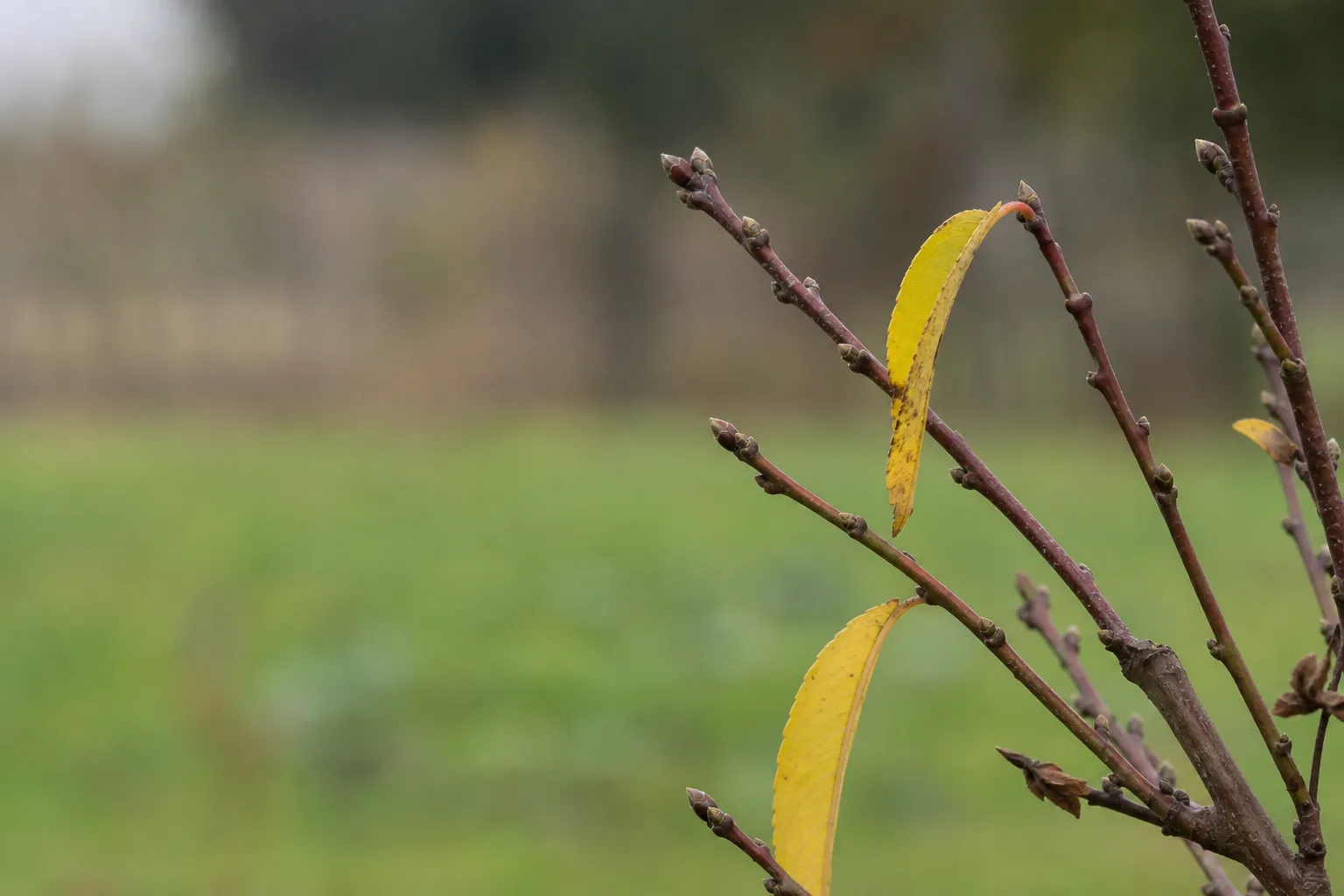
Is horticultural oil the same as dormant oil?
Yes. Horticultural oil and dormant oil refer to the same type of petroleum-based oil, and the practical difference for a home gardener is the season and growth stage. “Dormant oil” describes an application made while a deciduous plant is leafless, while “horticultural oil” also covers later applications when buds have begun to expand.
The bottle may say horticultural oil, dormant oil, superior oil, or a similar phrase. Do not let the wording boss you around. Read the label for the crop, pest, rate, weather limits, and timing because the research on this comparison does not establish one universal rate for every product.
That is the whole argument. Same kind of oil. Different window. In my Austin yard, I would rather wait seven extra days than spray a tree at the wrong growth stage and then spend spring wondering whether the curled leaves are pest damage or my own impatience.
The University of Georgia recommends the first oil application for San Jose scale early in the dormant season, beginning just after 95 percent of the leaves have fallen or in early winter. That timing is the useful dividing line.
Can you spray horticultural oil in fall?
Yes, but fall spraying should wait until a deciduous plant is genuinely entering dormancy, with about 95 percent of its leaves fallen. A light sprinkle in October is not automatically the right moment, especially if the tree is still holding green leaves. The product label and weather conditions still control the decision.
For a Central Texas garden, I would watch the plant rather than trust the calendar alone. Austin can give you a warm November, then a sharp freeze, and the February 2021 freeze taught every gardener here that “winter is probably mild” is not a plan.
If most leaves are still attached, wait. If the plant is evergreen, do not treat it as a leafless dormant tree just because the month says November. The research supplied here identifies the early dormant-season window for the first oil application, but it does not give a blanket fall schedule for every evergreen, pest, or product.
This is where people get twitchy. Everyone says fall is spray season. In practice, the plant’s growth stage matters more than the first cool morning, because oil timing is about what tissue is present and how dormant the plant actually is.
When should the first dormant oil spray happen?
The first dormant oil spray should happen after roughly 95 percent of a deciduous plant’s leaves have fallen or in early winter, provided the label allows that use and weather conditions are suitable. That is the early dormant-season window identified for managing San Jose scale, not a permission slip to spray every tree in November.
Count the leaves honestly. Ninety-five percent means nearly all of them, not half the canopy and a hopeful shrug. If a peach tree still has a thick green crown, it is not at the same dormant stage as a bare peach tree beside it.
The University of Georgia source is specific about the first application window, but it is not a universal prescription for every pest. It discusses San Jose scale on peaches, so use that timing as a model for dormant-season logic, then check your own product label and pest directions.
For a plant that has dropped its leaves in late November or December, I would mark the date and watch the weather for a calm, suitable window. Do not spray simply because you have a free Saturday. The garden does not give bonus points for finishing the chore early.
Does the oil rate change between dormant and spring applications?
The rate may differ by product, crop, pest, or growth stage, so never assume a dormant rate is safe for a spring application. The research provided here identifies season and bud stage as the key distinction, but it does not give a specific universal rate. Follow the bottle’s crop-specific directions exactly.
This is the part gardeners want reduced to a neat number. I cannot responsibly give you one. A product label might distinguish dormant, delayed-dormant, and growing-season use, while another product may give different directions, and the supplied sources do not establish a single rate that covers them all.
Treat “dormant oil” as a timing description, not as a stronger product you can pour more generously. Treat “horticultural oil” as a broader label term, not as proof that any rate is safe on any leaf. More oil is not more care. It is simply more exposure to a mistake.
Before mixing, identify three things: the plant, the pest, and the growth stage. Then check the label for the rate, temperature limits, rain guidance, and any plants it excludes. If one of those details is missing, stop and identify it before you spray.
What is the difference between dormant oil and spring horticultural oil?
Dormant oil is applied while a deciduous plant is leafless, usually after about 95 percent of leaves have dropped or in early winter. Spring horticultural oil is applied later, after buds begin to expand, when temperatures and weather conditions allow. The oil type is essentially the same; the plant’s growth stage is different.
The spring window is not a vague “sometime after winter” idea. The UMass Landscape Message describes dormant-season horticultural oil applications in spring as buds expand and conditions allow, using boxwood as an example because overwintered psyllid nymphs emerge as buds develop.
That matters for boxwood. If you see upward-cupped or yellow leaves, the damage may relate to the current or previous season, and the timing of bud expansion is part of the pest story. The UMass guidance explains that relationship.
In Austin, spring can arrive in pieces. A warm March afternoon may push buds, then April hail or a cold night can interrupt the garden. Watch the plant and the forecast together. The calendar gets a vote, but it does not get the only vote.
Which oil timing should you use for a fall garden?
For a fall garden, use the dormant-season plan only on a suitable deciduous plant after about 95 percent of its leaves have fallen, and use the product label to confirm the pest, rate, and weather requirements. If the plant is still leafy, wait. If it is evergreen, follow its specific label directions rather than borrowing a dormant-tree schedule.
Here is the simple comparison I use at home:
| Option | Best timing | What it means | Honest downside |
|---|---|---|---|
| Dormant oil application | After about 95% leaf fall or in early winter | A leafless deciduous plant is in the early dormant window | You must wait for the plant to finish dropping leaves, and it does not automatically fit every pest or evergreen |
| Spring horticultural oil application | As buds begin to expand, when weather allows | A later application during early bud growth | The safe window can be brief, and the spring rate may not be the dormant rate |
Do not spray both seasons by habit. A second application is not automatically better, and the sources provided here do not tell us to make routine repeat applications for every garden.
If your tree has already dropped nearly all its leaves, your next job is not mixing. It is identification. Look for the pest named on the label, confirm the plant is listed, and check the weather conditions required for that product.
If you are still unsure which plants in your yard are suitable candidates, use the plant database to check the plant first. I would rather have one correctly timed application than three enthusiastic guesses, especially in clay soil where a stressed plant may already be dealing with poor drainage and a long hot season behind it.
Who is this oil timing advice for, and who should ignore it?
This advice suits homeowners treating a known or suspected pest on a deciduous tree, shrub, or other labeled plant while planning a fall or early-winter application. Ignore the generic schedule if your plant is evergreen, still actively leafy, unidentified, or not listed on the product label, because the supplied research does not support one timing rule for every plant and pest.
It is for the person standing beside a bare peach tree in December, label in hand, asking whether “dormant oil” and “horticultural oil” are secretly different bottles. They are not, in the practical sense used here. Timing and label directions do the heavy lifting.
It is also for the gardener planning ahead for spring bud break. Boxwood, for example, can have pest activity tied to nymphs emerging as buds expand, so a spring window may matter more than a fall chore. The UMass source does not say to treat every boxwood automatically, and neither do I.
Ignore this advice as a stand-alone schedule if you have not identified the pest. Oil is not a universal eraser. It costs money, time, and plant risk when used as a nervous response to any yellow leaf.
I learned that lesson on my abuela’s Miami patio, where sandy fill drained before I finished watering. Austin clay does the opposite, holding water and then setting like a brick, so I look at the whole plant now: roots, weather, growth stage, and pest, not just the bottle in my hand.
How should you plan an oil application this fall?
Plan a fall oil application by confirming the plant and pest, waiting until about 95 percent of deciduous leaves have fallen, checking the label’s rate and weather rules, and spraying only during a suitable window. Do not use a dormant-season schedule on a leafy or evergreen plant unless the label specifically allows that use.
Start with a note in your garden calendar. Write the plant, the suspected pest, the date most leaves fell, and the product name. That small record keeps December confidence from turning into March confusion.
Next, inspect the plant closely. Scale, eggs, leaf cupping, and yellowing do not all mean the same thing, and the research supplied here focuses on particular pest examples rather than a universal diagnosis guide. If you cannot name the pest or match it to the label, pause.
Then read every direction, including the fine print. Find the listed rate, the allowed growth stage, the weather restrictions, and any warnings for plants under stress. Never increase the rate because the infestation looks dramatic. The label is not a suggestion box.
If you want help thinking through placement, spacing, and the larger garden plan before you spend money on treatments, you can get a concept for your yard. A good layout will not replace pest identification, but it can help you see which plants are stressed, crowded, or planted where drainage keeps failing.
What questions should you ask before using horticultural oil?
Before using horticultural oil, ask whether the plant and pest are identified, whether the plant is at the correct growth stage, whether the product label permits the application, and whether the weather is suitable. In fall, the key question for a deciduous plant is whether about 95 percent of its leaves have fallen.
Is dormant oil a different chemical from horticultural oil?
Is dormant oil a different chemical from horticultural oil? No. Both names refer to the same type of petroleum-based oil in this gardening context, while “dormant” describes the leafless-season timing. The practical difference is not a special dormant ingredient. It is whether the plant is dormant, beginning bud expansion, or actively growing, plus what the label permits.
Can I spray dormant oil while leaves are still on the tree?
Can I spray dormant oil while leaves are still on the tree? Not by assuming the dormant schedule applies. For the first dormant-season application discussed here, wait until about 95 percent of the leaves have fallen or until early winter, then confirm the product label and weather conditions before spraying.
Should I use the dormant rate again in spring?
Should I use the dormant rate again in spring? No, do not assume the dormant rate is correct after buds begin expanding. The research supplied here does not provide a universal rate, so read the label for the spring growth stage, crop, pest, and weather requirements before making a horticultural-oil application.
When can I make a spring horticultural-oil application?
When can I make a spring horticultural-oil application? Make it as buds begin to expand, when temperatures and weather conditions allow and the label permits the use. UMass gives this kind of spring timing for dormant-season horticultural oil in relation to boxwood bud growth, but that example is not a blanket instruction for every plant.
Should I spray every tree with horticultural oil in fall?
Should I spray every tree with horticultural oil in fall? No. Spray only when the plant and pest fit the label, the deciduous plant has reached the proper dormant stage, and weather conditions are suitable. A routine whole-yard application wastes product and can turn a useful timing tool into an unnecessary gamble.
What should I do if I cannot identify the pest?
What should I do if I cannot identify the pest? Do not guess at the oil timing or rate. Photograph the damage, inspect the stems and leaf undersides, identify the plant, and compare the suspected pest with a reliable extension resource or the product label before mixing anything.
The plain answer is still the best one: in fall, wait for dormancy; in spring, watch for bud expansion; at every stage, use the label rate for that crop and pest. Same oil family. Different timing. That is the part worth remembering while you are standing in the garden with cold hands and a bottle you have not opened yet.
Want a plan for your own yard?
Tell us the space and we will put a planting plan together for it. Start at get my concept, or browse what actually grows where you are over on plants.
Frequently asked questions
Is dormant oil a different chemical from horticultural oil?
No. Both names refer to the same type of petroleum-based oil in this gardening context, while “dormant” describes the leafless-season timing. The practical difference is not a special dormant ingredient. It is whether the plant is dormant, beginning bud expansion, or actively growing, plus what the label permits.
Can I spray dormant oil while leaves are still on the tree?
Not by assuming the dormant schedule applies. For the first dormant-season application discussed here, wait until about 95 percent of the leaves have fallen or until early winter, then confirm the product label and weather conditions before spraying.
Should I use the dormant rate again in spring?
No, do not assume the dormant rate is correct after buds begin expanding. The research supplied here does not provide a universal rate, so read the label for the spring growth stage, crop, pest, and weather requirements before making a horticultural-oil application.
When can I make a spring horticultural-oil application?
Make it as buds begin to expand, when temperatures and weather conditions allow and the label permits the use. UMass gives this kind of spring timing for dormant-season horticultural oil in relation to boxwood bud growth, but that example is not a blanket instruction for every plant.
Should I spray every tree with horticultural oil in fall?
No. Spray only when the plant and pest fit the label, the deciduous plant has reached the proper dormant stage, and weather conditions are suitable. A routine whole-yard application wastes product and can turn a useful timing tool into an unnecessary gamble.
What should I do if I cannot identify the pest?
Do not guess at the oil timing or rate. Photograph the damage, inspect the stems and leaf undersides, identify the plant, and compare the suspected pest with a reliable extension resource or the product label before mixing anything.
Free, no obligation
Ready to design your dream landscape? Start here.
Tell us where you are and we will start a free profile for you, with plants that actually survive your climate and a real sense of what the build would cost.