
What Are Horn Manure 500 and Horn Silica 501?
Horn manure 500 and horn silica 501 are the two field sprays used in biodynamic gardening. Here is what each preparation is supposed to do, how gardeners apply them in fall, and where I think they belong in a real garden plan.
September 19, 2026
By Diego Navarro
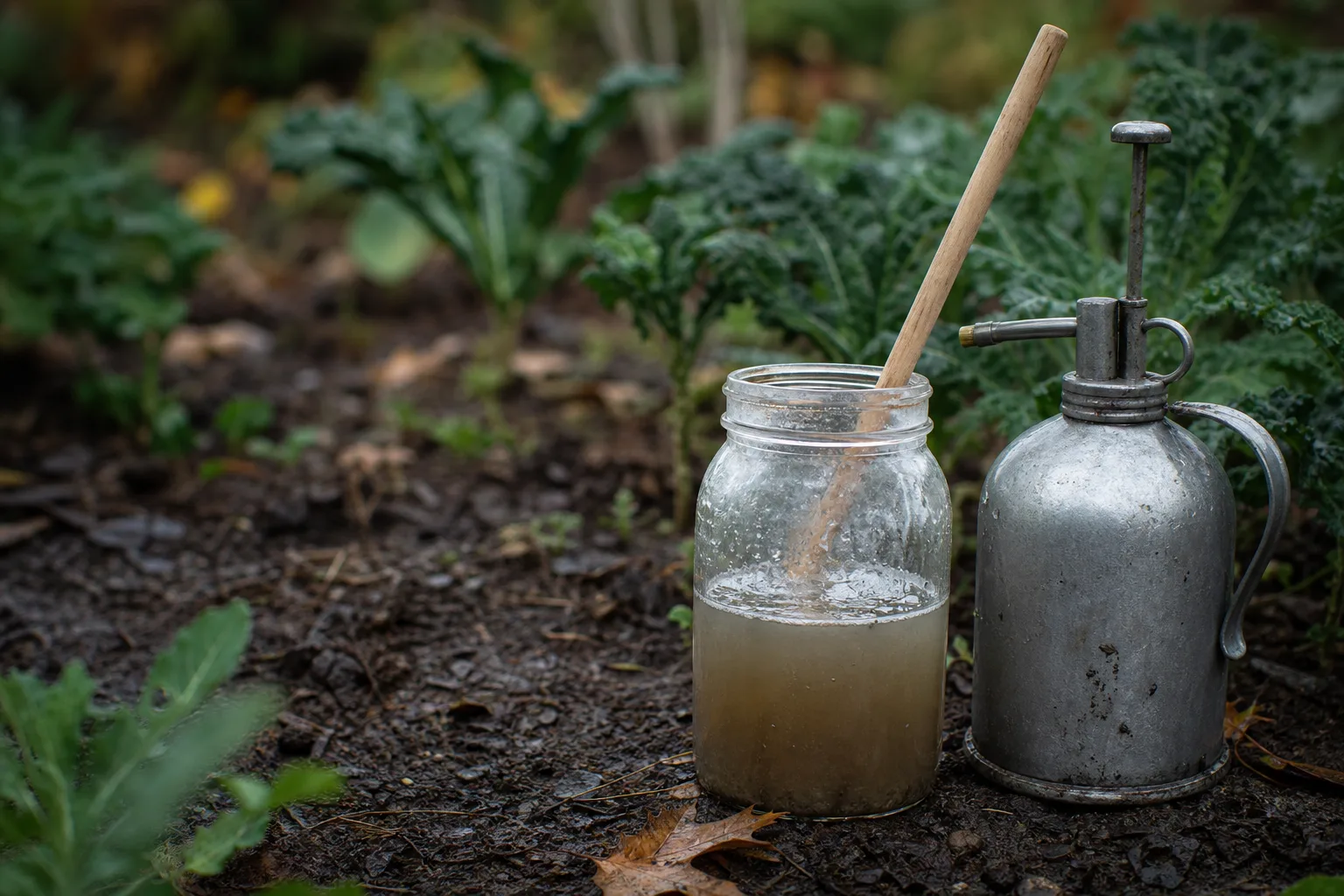
Horn manure 500 is the biodynamic soil spray, and horn silica 501 is the biodynamic leaf spray. If you are standing in the garden this fall, use 500 only on prepared soil with moisture ahead of it, and treat 501 as an optional experiment rather than a substitute for compost, mulch, irrigation, or decent timing. The ritual is specific. The claims are not settled.
What are horn manure 500 and horn silica 501?
Horn manure 500 is fermented manure prepared in a horn and diluted for a soil drench, while horn silica 501 is finely ground silica prepared in a horn and diluted for a foliar spray. In biodynamic practice, 500 is associated with roots and soil life, and 501 with light, leaf growth, and plant form. Neither is a complete fertilizer.
Preparation 500 begins with well-rotted cow manure placed into a cow horn and buried for several months, commonly over winter. Preparation 501 begins with finely ground quartz or another silica material placed into a horn and buried, often through summer.
The numbers are not application rates. They are names for preparations. That distinction matters because a jar labeled “500” is not automatically the same thing as a homemade manure tea, and 501 is not a standard soluble silica fertilizer.
I would not buy either preparation expecting a tired bed to become fertile overnight. A thin layer of finished compost, a soil test, and a working irrigation line will do more for most home gardens. The mystical label does not repeal physics.
What is preparation 500 supposed to do?
Preparation 500 is supposed to stimulate soil life, improve crumb structure, encourage deeper rooting, and help the soil hold moisture without staying airless. Gardeners usually apply it as a coarse spray directly to the ground after dilution and hand stirring. Those are the intended uses, not guaranteed outcomes.
The usual working dilution is a small amount of 500 in clean water, often about 25 grams in 13 liters, or roughly 6.5 grams in a gallon. Biodynamic growers stir the mixture for one hour, creating alternating turbulence and a vortex, then apply it immediately.
For a home bed, I would use a clean five gallon bucket, rainwater or dechlorinated water, and a wooden stick. Stir clockwise until a deep whirlpool forms, reverse direction, and keep alternating for the full hour. That is a long time to stand beside a bucket, so do it on a cool afternoon when you are not pretending to be in a hurry.
Apply 500 to bare or lightly covered soil with a coarse rose or brush, not a fine mist aimed at leaves. One gallon can cover roughly 1,000 square feet if scattered broadly, though small gardens usually use less. The tradeoff is labor and uneven coverage, especially on compacted ground where the spray cannot fix poor drainage.
Preparation 500 is not fertilizer in the ordinary sense. It contains too little usable nutrient at the final dilution to feed a hungry crop, and it cannot replace organic matter. If the soil is black clay that stays slick for days, 500 will not turn it into loam by Saturday.
What is preparation 501 supposed to do?
Preparation 501 is supposed to sharpen plant growth, improve light use, strengthen stems, and help foliage dry after dew or rain. It is diluted heavily, stirred for one hour, and sprayed as a fine mist over leaves, usually early in the morning. Its tradeoff is that misting wet foliage in the wrong weather can increase disease pressure.
A common biodynamic dilution is about 1 gram of 501 in 13 liters of water, or approximately 0.25 gram per gallon. The powder is so fine that measuring a quarter gram accurately is difficult without a scale that reads to a tenth of a gram.
Spray 501 as a light film, not a runoff. The goal is coverage on the upper leaf surfaces, and sometimes the whole plant, without leaving visible puddles. Use a clean hand sprayer because residue from ordinary pesticides, soaps, or concentrated fertilizer can change the result and injure leaves.
In fall, I would avoid 501 on plants already slowing down for cold weather. A bright, dry morning around 50 to 75 degrees Fahrenheit is more sensible than a hot afternoon, a foggy morning, or a night expected to drop below 40 degrees. Silica does not make a frost tender plant hardy.
The plain downside is timing. If you spray before a rainy front, the material is washed away. If you spray in full sun with stressed leaves, you can add stress. If the garden is already healthy, any improvement may be too small to separate from ordinary weather.
How do you apply preparation 500 in a fall garden?
Apply preparation 500 in fall after removing spent material, correcting obvious drainage problems, and moistening very dry soil. Stir the diluted preparation for one hour, scatter it over the ground at dusk or on a cool evening, and leave the surface undisturbed afterward. It belongs on soil, not on every nearby leaf.
Fall is the useful window because soil can remain biologically active after air temperatures cool, especially in Central Texas. I prefer late October through November here, after the worst heat has broken and before a hard freeze is likely. In a colder region, use the month when soil is still workable and not frozen.
Do not spray 500 onto soil that is already saturated. Waterlogged ground has too little air, and adding another input does not create drainage. If water stands for 24 hours after rain, solve the grade, compaction, or downspout problem first.
Use the spray before a light rain only if the rain will not arrive hard enough to wash it downhill. Otherwise, water the bed lightly the day before and apply when the surface is damp. A thick mulch layer can block contact, so move it aside or spray before mulching.
Everyone says fall is the perfect season for every soil amendment. In practice, the best day is the day the soil has moisture, the bed is accessible, and you can observe what happens for several weeks. A calendar cannot rescue a flooded planting bed.
How do you apply preparation 501 in a fall garden?
Apply preparation 501 only to actively growing foliage on a cool, dry morning, using a very fine spray and no stronger than the stated dilution. In fall, stop when plants are naturally senescing, frost is near, or nights remain wet. Preparation 501 is a foliar experiment, not a rescue treatment for nutrient deficiency or disease.
Before spraying, check the weather for at least eight hours of drying time. Keep the sprayer moving, and spray until leaves look lightly damp rather than dripping. Avoid a breezy day because most of the solution will land on the soil, the fence, or you.
Do not combine 501 in the same tank with soap, oil, fertilizer, copper, or another treatment. Those materials have their own strengths and failure modes, and mixing them makes it impossible to know what caused leaf spotting. Rinse the sprayer with clean water afterward.
If a plant shows pale leaves, weak growth, or damaged edges, identify the cause first. Poor roots, dry soil, excess water, insects, and temperature swings can all look like a nutrition problem. A silica spray is not a universal answer, and spraying harder is not diagnosis.
My rule is simple: one small test area, one untreated comparison area, and three to four weeks of observation. If you cannot see a consistent difference in color, growth, or durability, stop spending Saturday morning on it.
Do horn manure 500 and horn silica 501 work better than ordinary garden care?
No reliable garden plan should depend on 500 or 501 outperforming ordinary care. Their supporters report better soil texture, rooting, plant form, or resilience, but home gardeners should expect uncertain and often subtle results. Compost, appropriate mulch, correct watering, drainage, and a plant suited to the site remain the stronger foundation.
Here is the comparison I use on a real property:
| Practice | What it is useful for | Honest downside |
|---|---|---|
| Preparation 500 | A biodynamic soil application and observation practice | Takes an hour to stir, needs careful timing, and is not a dependable nutrient source |
| Preparation 501 | A biodynamic foliar application during active growth | Easy to misapply, easy to wash off, and unlikely to fix a basic soil or water problem |
| Finished compost | Adds organic matter and modest nutrients to many garden soils | Poor compost can contain weeds, salts, or immature material |
| Mulch | Slows evaporation and buffers soil temperature | A thick or wet layer can hide pests, stay soggy, or smother small plants |
| Drip irrigation | Delivers water to the root zone with less leaf wetting | Clogged emitters and bad spacing can leave dry pockets unnoticed |
In Austin, a drip line running two emitters per larger plant may matter more than either spray by August. A 1 gallon per hour emitter run for 30 minutes supplies half a gallon, but the right schedule depends on soil, root depth, and weather.
You can use the plant database to choose plants suited to your light, soil, and winter exposure before testing a preparation. That order saves money because a bad site match stays bad under a very spiritual bucket of water.
Who are horn manure 500 and horn silica 501 for, and who should ignore them?
These preparations suit gardeners who enjoy careful observation, accept uncertain results, have a small test bed, and want to practice biodynamic methods as a tradition or experiment. They should be ignored by anyone needing a fast nutrient correction, reliable disease control, commercial production consistency, or a replacement for irrigation and soil repair.
Use 500 if you have prepared soil, time for a one-hour stirring process, and a willingness to compare treated and untreated areas. Use 501 only if plants are actively growing and you can spray in a dry, mild weather window.
Skip both if your bed is compacted, your hose cannot reach it, deer are eating the new growth, or the soil is dry below two inches. Those are site problems. Solve those first.
A first-time homeowner in Del Valle may get more value from checking a timer, repairing a leaking hose, and spreading two inches of suitable mulch. A gardener in Round Rock with established beds and a curious mind may reasonably test 500 on one 10 foot section.
If you want the layout and irrigation basics settled before adding an experiment, you can get a concept for your yard. I would rather build the boring parts correctly and leave room for the interesting parts.
What should you do with preparation 500 and 501 this fall?
This fall, use preparation 500 on a small, moist, prepared soil area if you want to test the biodynamic method, and postpone 501 unless you still have vigorous foliage and a dry, mild morning. Record the date, dilution, weather, and untreated comparison. Do not expect either spray to correct poor soil, bad drainage, hunger, pests, or frost.
Start by taking a photograph of the bed and writing down what you see. Measure the soil moisture at two inches, note whether water drains within 24 hours, and mark a treated strip with a label that will survive rain.
For 500, mix about 6.5 grams per gallon and use a coarse application. For 501, mix about 0.25 gram per gallon and use a fine mist. Do not casually swap those amounts. The preparations are not interchangeable.
After three to four weeks, compare soil surface, plant color, new growth, and water behavior. Do not judge only by one unusually warm week, because fall weather can make a weak bed look lively and a sound bed look tired.
In my father’s twelve foot strip of New Jersey clay, I learned early that adding something was easier than fixing the ground. Years later, I still remember that when a shovel hits Central Texas limestone eight inches down. The soil gets the first vote.
Can preparation 500 and 501 replace compost, fertilizer, or irrigation?
Preparation 500 and preparation 501 cannot replace compost, appropriate fertilizer, or irrigation when those resources are needed. Preparation 500 is applied to soil and 501 to foliage, but neither supplies a dependable complete nutrient program or a measured amount of water. Treat them as optional practices layered onto sound garden care.
Compost improves structure and adds organic matter, though unfinished or salty compost can harm plants. Fertilizer supplies specific nutrients, though excess fertilizer can burn roots and pollute runoff. Irrigation provides water, though a poorly timed system encourages shallow roots and wastes water.
That is why I would not spend $30 on a preparation before checking whether an emitter is clogged or whether the bed has less than two inches of mulch. The cheap fix is often the real fix, which is inconveniently less romantic.
A biodynamic garden can still use ordinary observations: soil texture, drainage, leaf color, weather, pest pressure, and growth over time. Good stewardship does not require pretending that uncertainty is proof.
Is preparation 500 safe to use in a home garden?
Preparation 500 is generally handled as a diluted garden soil application, but use clean materials, gloves, and well-composted manure prepared through a trusted process. Do not splash the mixture into eyes or open wounds, and keep it away from drinking water. Preparation 501 also requires careful handling because fine mineral dust can irritate the lungs before dilution.
The finished dilution is weak, but that does not make every source acceptable. Do not use manure of unknown origin, material mixed with chemicals, or a powder that has no clear label. Store dry ingredients sealed and out of reach of children and animals.
Wash the bucket, stick, sprayer, and hands after use. Keep application equipment separate from kitchen tools. A five gallon bucket has many jobs, but dinner is not one of them after a manure preparation.
If you sell produce, follow the sanitation and application rules that govern your operation. Home experimentation and commercial food production have different responsibilities.
How can you tell whether 500 or 501 helped?
You can only judge 500 or 501 fairly by using a treated area, an untreated comparison, the same watering, and several weeks of notes. Measure observable changes such as soil moisture, infiltration time, new growth, leaf color, and plant survival. Do not call a spray successful because the weather improved afterward.
Divide a bed into two similar sections at least 5 feet long. Apply 500 to one section and leave the other alone, or spray 501 on half of a group of similar plants. Keep everything else the same.
Photograph from the same angle once a week for four weeks. Record rainfall or irrigation, the hottest day, and any pruning or pest damage. Four observations are not a scientific trial, but they are much better than memory.
If the treated area performs worse, check application strength, weather, sprayer cleanliness, and watering before blaming the garden. If it performs better once, repeat the test next season. A result worth keeping should survive ordinary doubt.
What is preparation 500?
Preparation 500 is a fermented cow manure preparation diluted in water and applied to soil as a biodynamic field spray. Practitioners associate it with root growth, soil structure, and biological activity. It is not a complete fertilizer, and its results are uncertain, so use it only as a small, measured experiment alongside compost, suitable mulch, drainage, and irrigation.
What is preparation 501?
Preparation 501 is a finely ground silica preparation diluted in water and sprayed on actively growing foliage. Practitioners associate it with light use, plant form, and stronger growth. Apply it as a fine mist on a cool, dry morning, but do not expect it to cure disease, correct nutrient shortages, or protect a plant from frost.
Should you apply preparation 500 or 501 in fall?
Apply preparation 500 in fall when the soil is moist but not saturated and still workable. Apply preparation 501 only while foliage is actively growing and the weather gives it several hours to dry. In Central Texas, late October through November may suit 500, while 501 often becomes less useful as nights cool and plants slow down.
Can preparation 500 replace compost?
Preparation 500 cannot replace compost because it does not provide a dependable quantity of organic matter or complete nutrients. Use finished compost to improve many garden soils, while treating 500 as an optional biodynamic soil spray. If your bed lacks organic matter, repair that deficiency first and judge the preparation separately.
Can preparation 501 replace fertilizer?
Preparation 501 cannot replace fertilizer because its final dilution does not provide a measured, complete nutrient supply. If a soil test or clear plant symptoms point to a deficiency, address that need with an appropriate fertilizer and correct watering. Use 501 only as a separate foliar experiment, never as the entire feeding plan.
How should you test horn manure 500 and horn silica 501?
Test horn manure 500 and horn silica 501 with a treated section and an untreated comparison receiving the same water, mulch, and care. Record the date, weather, dilution, and plant response for at least three to four weeks. Repeat the test before claiming a consistent benefit, because one favorable week proves very little.
Want a plan for your own yard?
Tell us the space and we will put a planting plan together for it. Start at get my concept, or browse what actually grows where you are over on plants.
Frequently asked questions
What is preparation 500?
Preparation 500 is a fermented cow manure preparation diluted in water and applied to soil as a biodynamic field spray. Practitioners associate it with root growth, soil structure, and biological activity. It is not a complete fertilizer, and its results are uncertain, so use it only as a small, measured experiment alongside compost, suitable mulch, drainage, and irrigation.
What is preparation 501?
Preparation 501 is a finely ground silica preparation diluted in water and sprayed on actively growing foliage. Practitioners associate it with light use, plant form, and stronger growth. Apply it as a fine mist on a cool, dry morning, but do not expect it to cure disease, correct nutrient shortages, or protect a plant from frost.
Should you apply preparation 500 or 501 in fall?
Apply preparation 500 in fall when the soil is moist but not saturated and still workable. Apply preparation 501 only while foliage is actively growing and the weather gives it several hours to dry. In Central Texas, late October through November may suit 500, while 501 often becomes less useful as nights cool and plants slow down.
Can preparation 500 replace compost?
Preparation 500 cannot replace compost because it does not provide a dependable quantity of organic matter or complete nutrients. Use finished compost to improve many garden soils, while treating 500 as an optional biodynamic soil spray. If your bed lacks organic matter, repair that deficiency first and judge the preparation separately.
Can preparation 501 replace fertilizer?
Preparation 501 cannot replace fertilizer because its final dilution does not provide a measured, complete nutrient supply. If a soil test or clear plant symptoms point to a deficiency, address that need with an appropriate fertilizer and correct watering. Use 501 only as a separate foliar experiment, never as the entire feeding plan.
How should you test horn manure 500 and horn silica 501?
Test horn manure 500 and horn silica 501 with a treated section and an untreated comparison receiving the same water, mulch, and care. Record the date, weather, dilution, and plant response for at least three to four weeks. Repeat the test before claiming a consistent benefit, because one favorable week proves very little.
Free, no obligation
Ready to design your dream landscape? Start here.
Tell us where you are and we will start a free profile for you, with plants that actually survive your climate and a real sense of what the build would cost.