
Growing Tomatoes in 5 Gallon Buckets: The Setup That Actually Works
A 5-gallon bucket can grow one productive tomato plant, but only if you treat drainage, sunlight, watering, support, and feeding as one system. Here is the exact fall setup I would use in Austin, including bucket preparation, plant choice, spacing, irrigation, pruning, and the mistakes that cost you tomatoes.
September 26, 2026
By Valeria Navarro
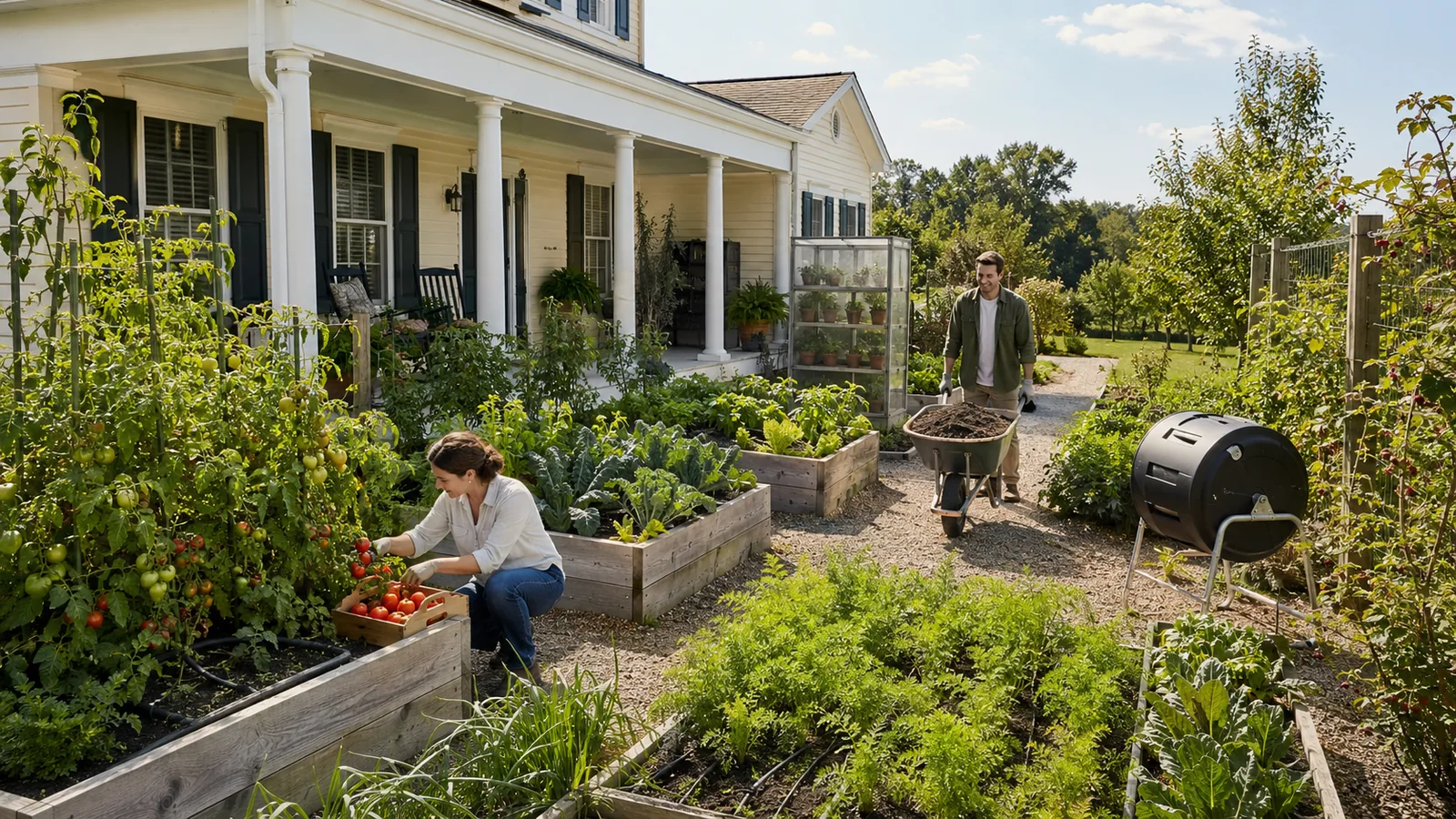
A 5-gallon bucket can grow one productive tomato plant, but only if you give it six to eight hours of sun, excellent drainage, quality potting mix, firm support, and steady water. For planting tomatoes in 5-gallon buckets this fall, I would choose one determinate or compact indeterminate seedling, not two crowded plants fighting over the same roots.
Can you grow tomatoes in 5-gallon buckets?
Yes, you can grow tomatoes in 5-gallon buckets, and the container is large enough for one tomato plant if it has drainage, a deep root zone, and regular care. Five gallons, about 19 liters, is the practical minimum, so smaller containers dry out faster and leave roots cramped. Gardening Know How identifies five gallons as the practical minimum.
This is a space-saving method, not a set-it-and-forget-it method. A bucket gives you control over soil and placement, but it also gives the plant less water and nutrient reserve than an in-ground bed.
In Austin, that difference matters. Our clay may hold water like a stubborn casserole dish, while a bucket in afternoon sun can dry around the edges by dinner. I learned that lesson the hard way after moving from Miami's sandy fill, where water disappeared before I finished watering, to Central Texas soil that cracks open by August.
Keep one tomato per bucket. Research on container spacing also supports about 12 inches of room per tomato plant, which means one plant is the sensible limit in this container size. See the container spacing guidance here.
How do you prepare a 5-gallon bucket for tomatoes?
Prepare a 5-gallon bucket by drilling four to six 1/2-inch holes through the bottom, then add several smaller holes around the lower sides for extra aeration. Cover the base with a free-draining potting mix rather than garden soil, and set the finished bucket where water can escape without pooling. Gardening Know How recommends four to six 1/2-inch bottom holes.
Use a clean, food-grade plastic bucket if possible. Wash it first and skip any bucket that previously held paint, solvents, pesticides, or unknown chemicals. The bucket itself is cheap and portable, but thin plastic can become brittle in strong sun after repeated seasons.
Drill slowly so the plastic does not split. Put the bucket on bricks, pot feet, or a simple slatted platform. That small lift keeps drainage holes from sealing against concrete, and it makes a big difference after a heavy Austin storm.
Food Hero suggests making at least a dozen holes in the bottom, using a 3/8-inch drill bit or a hammer and nail. Read its bucket drainage instructions here. I prefer several 1/2-inch holes plus side holes because larger openings drain well, though they can let mix escape until roots hold it together.
Do not add a thick gravel layer. It takes away root space and does not fix a bucket with too few holes. Good drainage costs you some water-holding capacity, so you must check the mix more often.
What soil mix should you use for a tomato in a bucket?
Use a high-quality potting mix amended with compost and a handful of perlite or vermiculite, filling the bucket without packing it tightly. The mix should hold moisture while allowing air around roots. Garden soil is the wrong choice because it can compact inside a container, drain poorly, and become heavy enough to make the bucket awkward to move.
Fill to about 2 inches below the rim. That gap catches water instead of sending potting mix down the driveway. Potting mix is convenient and consistent, but it costs more than digging soil from the yard and needs regular feeding because nutrients wash out through drainage holes.
Add compost in a modest amount, roughly one part compost to three parts potting mix. Compost improves the mix, but too much can hold excess water or create a rich, soft growing medium that produces leafy growth without the fruit you want.
Perlite is light and improves air space, but it floats and can work upward when you water. Vermiculite holds more moisture, but it is not my first choice for a bucket sitting in full Texas sun unless you are checking water daily. Pick one, not a pantry full of amendments.
If you want help matching plants to your space, browse the plant database. I use it before buying because a compact tomato and a sprawling indeterminate tomato are not the same container project.
Which tomato plant is best for a 5-gallon bucket?
Choose one determinate tomato or one compact indeterminate tomato with a root ball around 12 inches across, because both can fit the container while a vigorous sprawling plant will quickly outgrow its water and support. Determinate plants are easier for beginners, while compact indeterminate plants can produce longer but demand more pruning, tying, and feeding.
A determinate tomato sets much of its crop over a shorter period and usually stays more manageable. The trade-off is timing: once its main crop finishes, production often slows sharply. That is useful for a fall harvest, but less useful if you want tomatoes for many months.
A compact indeterminate tomato keeps growing and flowering. The trade-off is labor. It needs a taller support, more frequent tying, and closer attention to suckers and water. In a bucket, that extra canopy also raises the risk of sudden wilting on hot afternoons.
Plant the seedling with the crown just above the soil line. Do not bury the whole stem in a small bucket and assume more buried stem always means more strength. Water slowly after planting until the mix is evenly damp, then let excess water drain completely.
Are you choosing a plant for a balcony, patio, or small sunny strip? Use the get a concept for your yard tool if you need to place the bucket with other containers, because six hours of real sun matters more than a pretty corner that receives only bright shade.
How much sun and water do bucket tomatoes need?
Place the bucket where the tomato receives six to eight hours of direct sun and check moisture every day, especially during warm weather. Water at the soil surface until some drains from the bottom, keeping the mix evenly moist but never soggy. A tomato in a bucket can wilt quickly because its root reserve is small.
Everyone says to water on a schedule. In practice, the weather gets the vote. In Austin, a 92°F afternoon, a dry wind, and a black bucket can demand water sooner than a cloudy 78°F day, so press a finger 2 inches into the mix before watering.
A drip line or soaker hose delivering about 1 to 2 gallons per day in warm climates can work well, but the exact amount depends on sun, wind, plant size, and drainage. The container guidance recommends roughly 1 to 2 gallons per day in warm conditions. The trade-off is cost and setup, plus the need to check that the line has not clogged.
Hand watering is cheap and lets you inspect the plant, but it is easy to miss a day. Watering foliage can leave leaves wet and increase disease pressure, so aim at the base. Water early in the morning when possible.
Add 1 to 2 inches of straw or shredded leaves on top. Mulch reduces evaporation and temperature swings, but it can hide a soggy surface, so still check beneath it before watering.
How do you plant tomatoes in 5-gallon buckets?
Plant tomatoes in 5-gallon buckets by preparing the drainage first, adding the mix, setting one 12-inch-root-ball seedling with its crown just above the soil line, watering deeply, and installing support immediately. Doing the work in that order prevents you from damaging roots later and gives the plant a stable start during fall’s changing temperatures.
Set the bucket in its final location before filling it. A wet 5-gallon bucket becomes heavy, and moving it afterward can strain the plant, your back, or both. Diego and I disagree about gravel constantly, but we agree on this: move the empty container, not the finished one.
Dig a hole in the mix just large enough for the root ball. If roots are tightly circling, loosen only the outer edge. Backfill gently and leave a shallow watering space at the rim.
Install a sturdy garden stake or tomato cage firmly into the bucket. A stake is simple and inexpensive, but it may lean as the plant grows. A cage supports more branches, but it takes more room and can be hard to remove once the canopy fills in.
For fall planting in Central Texas, set the bucket out after the worst summer heat has eased, but watch overnight forecasts. A sudden freeze can damage tomatoes, and February 2021 taught every Austin gardener not to trust a mild week as a promise.
How do you support, prune, and feed a bucket tomato?
Support the tomato at planting with a sturdy stake or cage, tie growing stems loosely, prune suckers on indeterminate plants, and apply balanced liquid fertilizer every two weeks after fruit sets. Support prevents branches from collapsing, pruning directs growth, and feeding replaces nutrients that leave through the bucket’s drainage. Each task costs time, but skipping it costs fruit or broken stems.
Push one stake firmly into the bucket and use soft garden ties. Tight string cuts into stems as they thicken. A stake is the practical choice for one compact plant, while a cage is better for a bushier determinate variety.
Suckers are small shoots that form between a main stem and a leaf branch. On an indeterminate plant, removing some suckers can improve airflow and focus growth, but aggressive pruning exposes fruit to sun and reduces leaves that make energy. I remove crowded growth, not every green shoot in sight.
Use balanced liquid fertilizer every two weeks once fruit sets. Liquid fertilizer works quickly, but it is easy to overapply, so follow the product label rather than doubling the dose because the plant looks hungry. Excess fertilizer can produce lush leaves and fewer tomatoes.
Mulch helps stabilize moisture, but it does not replace feeding. Watch for pale leaves, weak stems, or stalled growth, then check water and roots before assuming fertilizer is the answer.
What are the best and worst parts of growing tomatoes in a 5-gallon bucket?
The best part of a 5-gallon bucket is control: you choose the mix, move the plant, and avoid poor yard soil and many weeds. The worst part is limited root volume, which makes drought, heat, weak support, and missed feeding show up quickly. I recommend buckets for one or two plants, not as a substitute for a full tomato bed.
| Bucket choice | Best use | Honest downside |
|---|---|---|
| Determinate tomato | Shorter, concentrated harvest with simpler support | Production usually slows after the main crop |
| Compact indeterminate tomato | Longer harvest from a small sunny space | Needs more tying, pruning, water, and feeding |
| Hand watering | Lowest setup cost and daily plant inspection | Easy to miss watering during hot weather |
| Drip line or soaker hose | More consistent moisture for several containers | Costs money and can clog or overwater if poorly adjusted |
| Tomato cage | Broad support for a bushy plant | Takes space and becomes awkward to remove when full |
| Single garden stake | Simple support for one compact plant | Can lean or fail under a heavy canopy |
Buckets are also portable. You can shift one away from a hail-prone edge or into better sun, but portability is not free. A full bucket is heavy, and moving it can snap stems or loosen roots.
Do not buy a tiny decorative pot for a tomato because it looks nicer. The pot may cost less, but the plant will demand more water and give you less fruit. Five gallons is already the minimum, not a luxury size.
Who should grow tomatoes in 5-gallon buckets, and who should skip them?
Grow tomatoes in 5-gallon buckets if you have a sunny patio, balcony, rental yard, poor soil, limited garden space, or a need to control the growing medium. Skip this method if you cannot check water daily in warm weather, have no six-hour sun location, or want several large indeterminate plants with minimal maintenance.
This method suits a first-time homeowner who wants one plant near the kitchen. It suits a renter who cannot dig. It suits a Round Rock grandmother with a sunny concrete patio and a Del Valle gardener whose native soil is too hard to amend quickly.
It is a poor fit for a neglected vacation garden. The container dries faster than a bed, and a wilted tomato can go from recoverable to damaged during one hot afternoon. Ask yourself whether you can inspect it for two minutes each morning.
It also loses to a larger raised bed if you have space and want many plants. A bigger soil volume buffers heat and watering mistakes better. Buckets win on control and portability, not on root room.
What pests and problems should you watch for in a bucket tomato?
Check bucket tomatoes twice a week for aphids, spider mites, wilting, cracked fruit, and leaves with unusual spotting. Aphids and spider mites may be treated with insecticidal soap according to its label, while many problems begin with uneven water, poor airflow, or weak support. Inspecting early is cheaper than trying to rescue a collapsing plant.
Look beneath leaves, especially near new growth. Spider mites favor hot, dry conditions, while aphids cluster on soft new stems. Insecticidal soap can help, but it needs thorough coverage and repeat applications as directed. It may also injure stressed foliage, so test a small area first.
Cracked fruit often follows uneven moisture. Do not swing from bone-dry mix to a flood and call it care. Steady moisture is less dramatic and much better for the plant.
If leaves wilt, check the mix before adding fertilizer. Soggy roots can wilt too, which is why more water is not always the answer. Confirm that drainage holes are open and that the bucket is not sitting in a saucer of standing water.
Keep the foliage open enough for air to move. Dense growth can look lush, but in a humid spell it dries slowly. Your tomato does not need a haircut every weekend, just enough thoughtful pruning to prevent a tangled little jungle.
How long does it take to harvest tomatoes from a bucket?
Expect a fall bucket tomato to need roughly 8 to 12 weeks from transplanting to a meaningful harvest, depending on variety, temperature, sunlight, and whether it already carries flowers. A young plant may establish first, then flower and set fruit, so steady care matters more than counting days on the calendar.
A larger seedling gives you a head start, but it also costs more and may suffer transplant shock. A small seedling costs less, but it needs more weeks before the first harvest. Choose the plant with healthy green leaves and a sturdy stem, not the tallest floppy one.
Place the bucket where you can see it every day. You will catch a dry mix, a loose tie, or a curled leaf sooner beside the back door than behind the shed. Convenience is a real growing input.
Harvest ripe fruit promptly and keep watering consistently while new fruit develops. A productive plant still needs leaves, roots, and moisture after the first tomato turns color.
FAQs
Can you grow tomatoes in 5-gallon buckets?
Yes, you can grow tomatoes in 5-gallon buckets when each bucket holds one plant and provides drainage, six to eight hours of sun, quality potting mix, steady moisture, and firm support. Five gallons is the practical minimum, so smaller containers usually create faster drying and tighter roots. Gardening Know How supports this minimum container size.
How many tomato plants can go in a 5-gallon bucket?
One tomato plant can go in a 5-gallon bucket. A second plant creates competition for root space, water, nutrients, and support, even if both seedlings look small at planting time. Container spacing guidance gives tomatoes about 12 inches of room, making one plant per bucket the practical choice for healthy growth.
How many holes should I drill in a 5-gallon bucket for tomatoes?
Drill four to six 1/2-inch holes in the bucket bottom and add several holes near the lower sides for aeration. Some guidance recommends at least a dozen smaller bottom holes, so the exact count can vary with hole size. The key is that water must drain freely rather than collect around the roots. Food Hero recommends at least a dozen bottom holes.
How often should I water a tomato plant in a 5-gallon bucket?
Check a tomato plant in a 5-gallon bucket every day and water when the top couple of inches begin to dry, giving enough water to drain from the bottom. Warm climates may require about 1 to 2 gallons per day, but sun, wind, plant size, and mix change the need. Avoid keeping the mix soggy.
What soil is best for tomatoes in a 5-gallon bucket?
The best soil for tomatoes in a 5-gallon bucket is a high-quality potting mix amended with compost and a small amount of perlite or vermiculite. Potting mix drains and aerates better than garden soil in a container, while compost adds organic matter. Too much compost or amendment can hold excess moisture and reduce root air space.
Should I prune a tomato plant growing in a bucket?
Prune selected suckers from an indeterminate tomato growing in a bucket to improve airflow and keep growth manageable, but avoid stripping away too many leaves. Determinate tomatoes generally need less pruning. The more aggressively you prune, the less leaf area remains to support fruit, and exposed tomatoes can suffer from intense sun.
Is a tomato cage or stake better for a 5-gallon bucket?
A sturdy garden stake is usually better for one compact tomato in a 5-gallon bucket because it is simple, inexpensive, and easy to tie to the main stem. A cage supports a bushier plant but takes more space and becomes awkward once branches fill it. Whichever you choose, install it before the roots spread.
Can I grow tomatoes in a 5-gallon bucket in the fall?
You can grow tomatoes in a 5-gallon bucket in the fall if the plant has enough time for fruit development and you protect it from an approaching freeze. In Central Texas, start after the worst summer heat eases, then watch overnight temperatures closely. A healthy transplant, full sun, and consistent water give you the best chance at a harvest.
Want a plan for your own yard?
Tell us the space and we will put a planting plan together for it. Start at get my concept, or browse what actually grows where you are over on plants.
Frequently asked questions
Can you grow tomatoes in 5-gallon buckets?
Yes, you can grow tomatoes in 5-gallon buckets when each bucket holds one plant and provides drainage, six to eight hours of sun, quality potting mix, steady moisture, and firm support. Five gallons is the practical minimum, so smaller containers usually create faster drying and tighter roots. [Gardening Know How supports this minimum container size](https://www.gardeningknowhow.com/edible/tomato/grow-tomatoes-in-a-5-gallon-bucket).
How many tomato plants can go in a 5-gallon bucket?
One tomato plant can go in a 5-gallon bucket. A second plant creates competition for root space, water, nutrients, and support, even if both seedlings look small at planting time. Container spacing guidance gives tomatoes about 12 inches of room, making one plant per bucket the practical choice for healthy growth.
How many holes should I drill in a 5-gallon bucket for tomatoes?
Drill four to six 1/2-inch holes in the bucket bottom and add several holes near the lower sides for aeration. Some guidance recommends at least a dozen smaller bottom holes, so the exact count can vary with hole size. The key is that water must drain freely rather than collect around the roots. [Food Hero recommends at least a dozen bottom holes](https://foodhero.org/healthy-food/growing-tomatoes-buckets-0).
How often should I water a tomato plant in a 5-gallon bucket?
Check a tomato plant in a 5-gallon bucket every day and water when the top couple of inches begin to dry, giving enough water to drain from the bottom. Warm climates may require about 1 to 2 gallons per day, but sun, wind, plant size, and mix change the need. Avoid keeping the mix soggy.
What soil is best for tomatoes in a 5-gallon bucket?
The best soil for tomatoes in a 5-gallon bucket is a high-quality potting mix amended with compost and a small amount of perlite or vermiculite. Potting mix drains and aerates better than garden soil in a container, while compost adds organic matter. Too much compost or amendment can hold excess moisture and reduce root air space.
Should I prune a tomato plant growing in a bucket?
Prune selected suckers from an indeterminate tomato growing in a bucket to improve airflow and keep growth manageable, but avoid stripping away too many leaves. Determinate tomatoes generally need less pruning. The more aggressively you prune, the less leaf area remains to support fruit, and exposed tomatoes can suffer from intense sun.
Free, no obligation
Ready to design your dream landscape? Start here.
Tell us where you are and we will start a free profile for you, with plants that actually survive your climate and a real sense of what the build would cost.