
How to Grow Corn in a Raised Bed and Actually Get Ears
Growing corn in a raised bed is productive when the bed is deep, narrow, fertile, and planted in a block. Here is the spacing, soil mix, feeding schedule, watering plan, pollination trick, and harvest test I would use in an Austin garden.
September 23, 2026
By Valeria Navarro
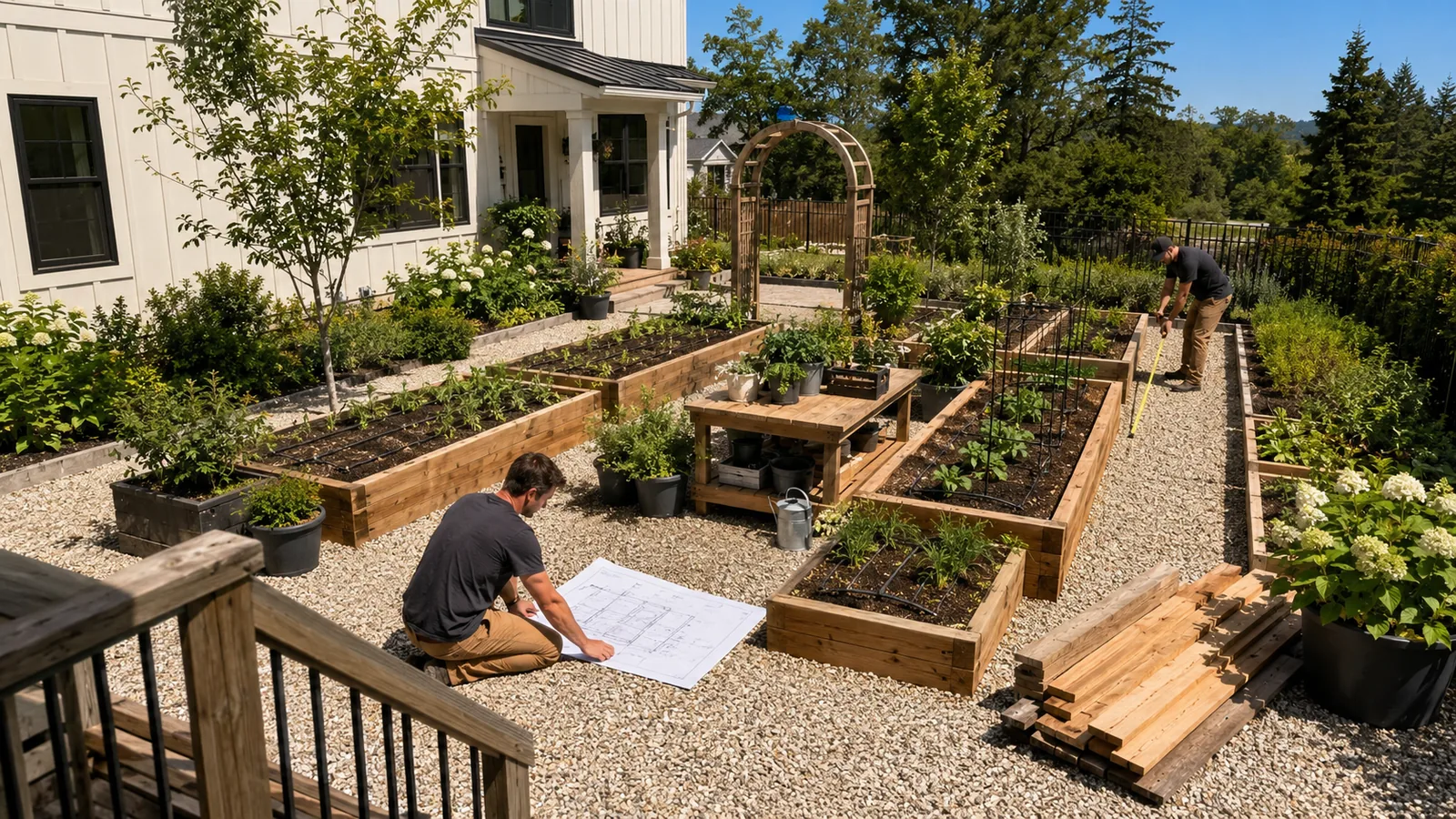
Yes, growing corn in a raised bed works when you give it a deep, fertile bed and plant a block rather than one lonely row. I would prepare the bed in fall, then plant when your growing season allows, using 8 to 12 inches between seeds, 2 to 3 feet between rows, steady moisture, and regular nitrogen feeding.
Is growing corn in a raised bed worth the space?
Growing corn in a raised bed is worth the space if you want fresh ears and can give the crop a deep bed, consistent water, and enough plants for pollination. Corn is a heavy feeder and a space hog, so I would choose it over a smaller crop only when fresh harvest matters more than maximum variety.
A 4-by-8-foot bed gives you room for two rows if you follow the 2 to 3-foot row spacing, or a tighter block only if you can preserve good access and airflow. The exact arrangement matters more than squeezing in every possible seed.
The raised bed earns its keep by letting you control the soil. A bed also reduces bending for planting, weeding, and watering, one of the practical benefits described by joe gardener’s raised-bed guidance. The downside is volume. A deep bed takes more soil and compost up front, and corn will still demand water after the novelty wears off.
I learned this the hard way in Austin. Miami’s sandy fill drained before I finished watering, but Central Texas clay holds water, then sets like a brick. Corn wants neither extreme. It wants deep, fertile soil that stays evenly moist.
How deep and wide should a raised bed be for corn?
Make the corn bed at least 2 feet deep when you can reach it from only one side, and up to 4 feet deep when you can work from both sides. Keep it about 4 feet wide or narrower so you can reach the middle without stepping on the soil, and make the length as long as your space allows.
A one-sided bed should be no more than about 4 feet wide, because reaching across a tall crop becomes awkward fast. A two-sided bed can still stay near that width, which saves soil and keeps maintenance realistic.
For an Austin yard, I would build the bed on level ground with a strong frame and leave walking space around it. A very tall bed is easier on your back, but it costs more to fill and dries faster along exposed edges. That is the trade-off, plain and simple.
Fill the bed with a high-quality garden-soil blend and roughly 50 percent compost, as recommended in the raised-bed corn guidance from AlboPepper. Garden soil supports structure, while compost adds organic matter and helps hold moisture. Compost is not magic, though. Too much can settle, shrink, or leave you buying more every season.
If you are designing the whole space, get a concept for your yard before ordering lumber and soil. Corn needs a sunny, reachable block, not a narrow strip squeezed behind the shed.
How should you plant corn in raised beds?
For planting corn in raised beds, sow each seed 1 to 2 inches deep, space seeds 8 to 12 inches apart, and leave 2 to 3 feet between rows. Arrange at least two short rows or several rows in a block instead of one long line, because a block improves wind pollination and gives you a better chance of full ears.
I prefer sowing directly into the finished bed. Corn dislikes being treated like a tiny houseplant project, and transplanting adds work without solving the main problem, which is pollination.
Mark your rows before planting. A 4-by-8-foot bed can hold a practical block with two rows, but check the final spacing against your bed width. Do not cram seeds into a single row just to claim more stalks. The ears may be disappointing, and you will have paid for seed, water, and fertilizer to grow disappointment in a green costume.
Use the plant database to check the corn variety you choose and compare its mature timing before you buy seed. Early varieties may harvest sooner, while later varieties occupy the bed longer. The trade-off is easy to see: earlier harvest gives flexibility, but a later crop may keep the bed committed for more weeks.
How much compost and nitrogen does corn need?
Corn needs fertile soil and plenty of nitrogen throughout the growing season, not one sprinkle at planting. Mix roughly 50 percent compost into the raised-bed soil before sowing, then side-dress with a nitrogen fertilizer as the plants grow, following the product label because excess nitrogen can waste money and push you toward weak, overly leafy growth.
Side-dressing means placing the fertilizer beside the plants rather than directly against the stalks. Water after applying it so the nutrient moves into the root zone. The exact amount depends on the fertilizer and your soil, so do not invent a rate from a random scoop.
Everyone says compost feeds everything. In practice, corn often still needs nitrogen because it is a heavy feeder. AlboPepper’s corn guide makes that point clearly and notes that fertilizer rates are ideally based on soil testing, even though home-garden guidance can be difficult to translate for dense plantings.
Nitrogen fertilizer is useful, but it is not free plant insurance. Too much can cost you money, run off, or produce a lot of leaves without the harvest you wanted. I would rather side-dress in measured applications than dump a large amount into the bed once and hope for the best.
How often should you water corn in a raised bed?
Keep the soil consistently moist, especially as ears begin to form, because a raised bed can lose moisture faster than in-ground soil. Water deeply enough to moisten the root zone, check the bed regularly during hot weather, and mulch around the stalks to conserve moisture and suppress weeds.
In Austin, I would inspect the bed every morning during a hot stretch instead of trusting a timer blindly. A timer saves attention, not judgment. Lift the mulch and feel the soil, because the surface can look dry while the bed beneath still holds water.
Mulch is worth using, but it has a downside. It can hide the soil surface, harbor weeds if it contains seed, or stay too wet if you pile it against the stalks. Spread it around the plants, not over the growing point, and keep the layer modest enough that you can still inspect the soil.
Do not let the bed swing from soaked to dusty. Corn’s need for steady moisture is especially serious as ears form, and a neglected raised bed can dry at the edges first. This is one crop where a nearby hose and an easy path are not luxuries.
How do you pollinate corn in a raised bed?
Pollinate corn by planting it in a block of short rows so wind can move pollen among the plants. If airflow is limited, gently shake the tassels when they emerge or brush pollen from the tassels onto the silks, because hand pollination takes time but can improve the odds of filled ears in a small bed.
Corn is not a crop I would plant as three scattered stalks beside the tomatoes. A block gives pollen more nearby targets. The trade-off is space, since the arrangement uses bed area that could hold another crop, but empty kernels are a poor bargain for saving a few inches.
When tassels appear, check the bed regularly. A gentle shake is simple and costs nothing, but it depends on you remembering to do it. Brushing pollen by hand gives you more control, but it is fussy and must happen during the short window when tassels and silks are available.
Ask yourself a real question: do you have enough plants for a block, or are you trying to force corn into a decorative corner? If the answer is the corner, grow fewer corn plants only if you accept uneven ears, or use that space for a crop that does not depend so heavily on group pollination.
Should you mound soil and mulch around corn stalks?
Yes, mound 2 to 3 inches of soil around the base of growing corn and mulch around the plants. The mound helps support stalks against wind, while mulch conserves moisture and suppresses weeds. Both practices add labor, and mounding can disturb shallow roots if you rake aggressively, so work gently.
Mound after the plants are established, not by burying the growing point. Add soil gradually around the base until you reach roughly 2 to 3 inches. This is support, not a hill-building contest.
The raised bed already gives you loose, workable soil, which makes mounding easy. The downside is that every extra layer needs checking after rain or irrigation. Soil can settle, mulch can shift, and weeds can still appear at the edges.
Wind matters in an open yard. Corn stalks may stand better with a little soil support, but mounding will not rescue a badly watered, weakly rooted crop. Good depth, moisture, and feeding come first.
Who should grow corn in a raised bed, and who should skip it?
A raised-bed corn project suits you if you have a sunny bed at least 2 feet deep, room for a block of plants, reliable access to water, and the patience to feed and inspect the crop for several weeks. Skip it if you only have a narrow container, cannot keep soil moist, or want the highest harvest from every square foot.
This crop suits a household that wants fresh sweet corn and can eat or preserve several ears close together. It also suits a gardener who can check tassels, silks, soil moisture, and fertilizer timing instead of planting and disappearing.
It is a poor fit for a tiny balcony container, a bed tucked beneath a tree, or a garden where water access is already difficult. Corn in a too-small space becomes expensive scenery. I would rather see you grow a smaller crop well than grow six sad stalks because the seed packet looked cheerful.
Families should also think about harvest timing. Sweet corn is harvested about 60 to 100 days after planting, depending on variety, according to the harvest guidance summarized by Vegega. That window is a long commitment for a bed that could otherwise rotate through several crops.
Should you stagger corn plantings for a longer harvest?
Stagger plantings every two weeks, or choose early, mid-season, and late-season varieties, if you want a longer harvest from your raised bed. One planting gives a concentrated crop, while staggered sowing spreads the work and harvest, but it also keeps the bed occupied longer and extends your watering and feeding schedule.
For a small bed, I would usually choose one reliable planting rather than chase a month-long corn parade. The exception is a larger bed where you can reserve separate blocks. Planting every two weeks works best when each block has enough plants for pollination.
Here is the honest comparison:
| Approach | Best use | Honest downside |
|---|---|---|
| One planting | A small bed and a concentrated harvest | Many ears mature close together |
| Plant every two weeks | A longer harvest window | More weeks of watering, feeding, and bed space |
| Early, mid-season, and late varieties | A planned succession in a larger bed | Varieties may mature unevenly and complicate care |
The research supports both staggered plantings and a mix of early, mid-season, and late-season varieties for continuous harvest. I would write the sowing dates on a garden label. Otherwise, two weeks turns into “sometime soon,” and corn does not care about your calendar excuses.
How do you know when raised-bed corn is ready to harvest?
Harvest sweet corn 60 to 100 days after planting, depending on the variety, when the silks are brown and the kernels are plump and milky when punctured. Check the ears rather than harvesting by height or guesswork, because corn can look ready before the kernels have developed fully.
Peel back just enough husk to inspect the ear. Brown silks are a useful sign, but the kernel check is the better test. A plump kernel that releases milky juice tells you the ear has reached the eating stage described in the University of Georgia home-garden corn guide.
Do not wait forever after the ear reaches the right stage. Your harvest window is narrow compared with the weeks of preparation, feeding, and watering. That is the sweet little drama of corn: slow build, sudden payoff.
Once the harvest is finished, remove spent stalks and decide whether the bed needs compost before the next crop. The corn itself is done, but the raised bed should not be left depleted after supporting a heavy feeder.
What are the most common questions about growing corn in a raised bed?
The most useful answers are about bed depth, plant spacing, pollination, feeding, watering, and harvest timing. If you get those six pieces right, the project is straightforward. If you miss one, especially block planting or moisture, a handsome bed can still produce disappointing ears.
Can you grow corn in a raised bed?
Yes, you can grow corn in a raised bed if it is deep, fertile, consistently moist, and large enough for a block of plants. Use a bed about 4 feet wide or narrower, plant seeds 8 to 12 inches apart, and provide nitrogen during the season. Corn takes significant space, water, and feeding, so it is not ideal for a tiny bed.
How deep should a raised bed be for corn?
A raised bed for corn should be at least 2 feet deep when you can reach it from one side, and up to 4 feet deep when you can access both sides. Greater depth gives roots more soil volume, but it also costs more to fill. Keep the bed narrow enough that you can reach the middle without stepping on the growing area.
How far apart should corn be planted in a raised bed?
Plant corn seeds 8 to 12 inches apart, with rows 2 to 3 feet apart. Arrange the rows in a block rather than one long single row so wind can move pollen among plants. Tighter spacing may save bed area, but it can make watering, feeding, inspection, and pollination more difficult.
How do you pollinate corn in a small raised bed?
Pollinate corn in a small raised bed by planting several short rows in a block and gently shaking the tassels when they emerge. If airflow is limited, brush pollen from the tassels onto the silks. Hand pollination takes extra time, but it can help a small planting that does not receive enough natural wind movement.
How often should you water corn in a raised bed?
Water corn often enough to keep the soil consistently moist, with extra attention as ears begin to form. Raised beds can dry faster than in-ground soil, especially near exposed edges. Mulch helps conserve moisture and suppress weeds, but you still need to check beneath it so the bed does not swing from dry to saturated.
How long does corn take to mature after planting?
Sweet corn takes about 60 to 100 days after planting to mature, depending on the variety. Harvest when the silks are brown and the kernels are plump and milky when punctured. Check the ears rather than relying only on the calendar, because early, mid-season, and late-season varieties mature on different schedules.
Want a plan for your own yard?
Tell us the space and we will put a planting plan together for it. Start at get my concept, or browse what actually grows where you are over on plants.
Frequently asked questions
Can you grow corn in a raised bed?
Yes, you can grow corn in a raised bed if it is deep, fertile, consistently moist, and large enough for a block of plants. Use a bed about 4 feet wide or narrower, plant seeds 8 to 12 inches apart, and provide nitrogen during the season. Corn takes significant space, water, and feeding, so it is not ideal for a tiny bed.
How deep should a raised bed be for corn?
A raised bed for corn should be at least 2 feet deep when you can reach it from one side, and up to 4 feet deep when you can access both sides. Greater depth gives roots more soil volume, but it also costs more to fill. Keep the bed narrow enough that you can reach the middle without stepping on the growing area.
How far apart should corn be planted in a raised bed?
Plant corn seeds 8 to 12 inches apart, with rows 2 to 3 feet apart. Arrange the rows in a block rather than one long single row so wind can move pollen among plants. Tighter spacing may save bed area, but it can make watering, feeding, inspection, and pollination more difficult.
How do you pollinate corn in a small raised bed?
Pollinate corn in a small raised bed by planting several short rows in a block and gently shaking the tassels when they emerge. If airflow is limited, brush pollen from the tassels onto the silks. Hand pollination takes extra time, but it can help a small planting that does not receive enough natural wind movement.
How often should you water corn in a raised bed?
Water corn often enough to keep the soil consistently moist, with extra attention as ears begin to form. Raised beds can dry faster than in-ground soil, especially near exposed edges. Mulch helps conserve moisture and suppress weeds, but you still need to check beneath it so the bed does not swing from dry to saturated.
How long does corn take to mature after planting?
Sweet corn takes about 60 to 100 days after planting to mature, depending on the variety. Harvest when the silks are brown and the kernels are plump and milky when punctured. Check the ears rather than relying only on the calendar, because early, mid-season, and late-season varieties mature on different schedules.
Free, no obligation
Ready to design your dream landscape? Start here.
Tell us where you are and we will start a free profile for you, with plants that actually survive your climate and a real sense of what the build would cost.