
Food Forest Succession: What It Looks Like in Years One, Five, and Fifteen
A food forest does not look like a forest on planting day. Here is what to expect in years one, five, and fifteen, why the nurse phase matters, and what to do this fall in an Austin garden.
October 1, 2026
By Valeria Navarro
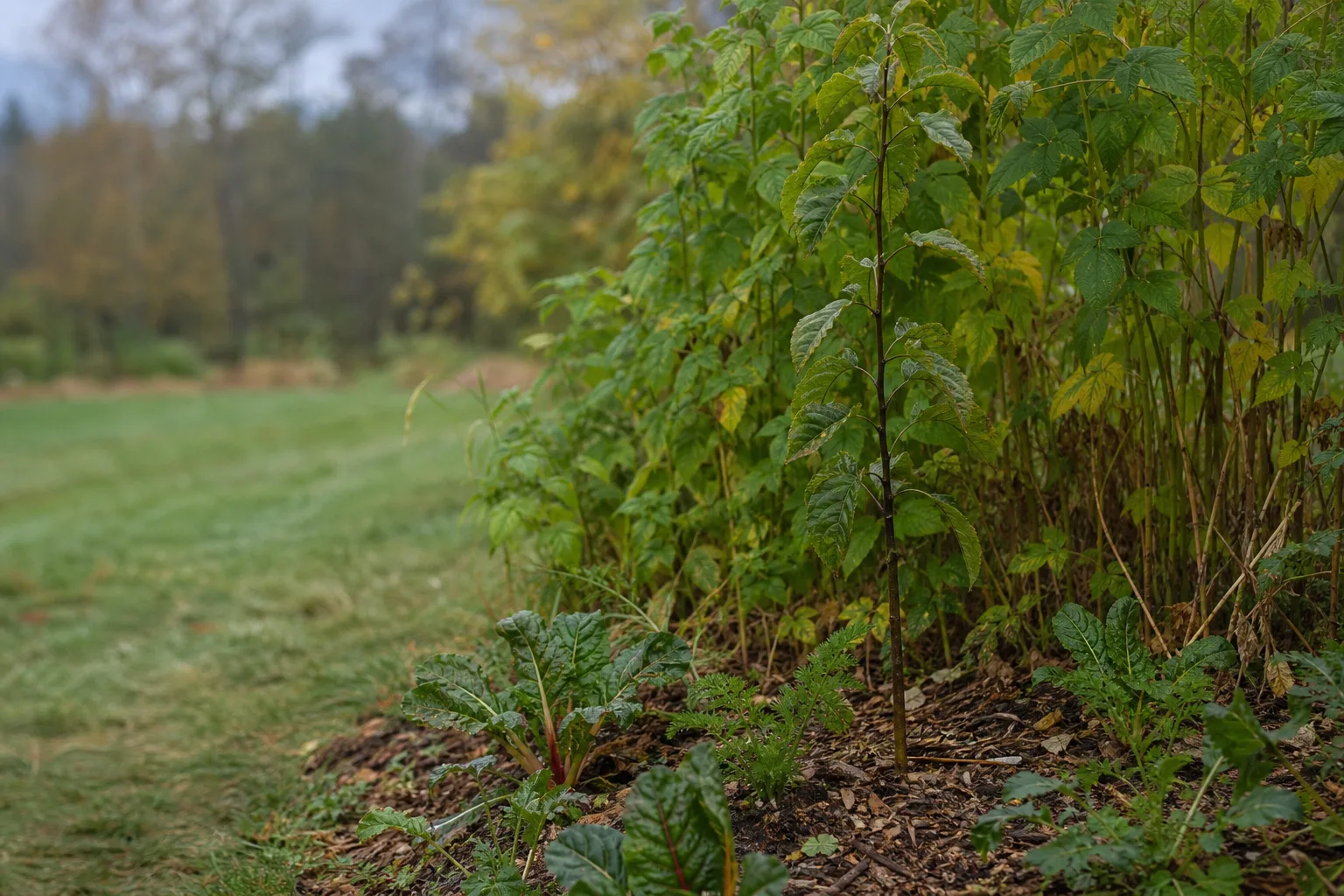
A food forest should look unfinished in year one, increasingly layered in year five, and more shaded, selective, and self-protecting in year fifteen. Most failures come from impatience with the nurse phase, because gardeners remove the fast-growing cover before the young trees have roots and shade of their own. That is the argument. Keep the temporary helpers long enough to do their job.
What does a food forest look like in year one?
In year one, a food forest looks like a young orchard surrounded by open soil, annual crops, ground cover, and a few deliberately temporary nurse plants. The trees are small, shade is scarce, harvests are modest, and the main work is protecting roots from heat, weeds, drying wind, deer, and Austin’s hard clay.
Do not judge the design by a photograph taken in July. A first-year planting may have bare-looking gaps because each plant needs room for its mature size, and that spacing is much easier to accept on paper than in the garden.
This is the year for structure. Mark the future canopy trees, mid-height shrubs, herbaceous crops, ground covers, and paths before you fill every empty inch. The plant database can help you check mature dimensions and water needs before a cute nursery pot becomes a permanent traffic problem.
For a new bed, I prefer sheet mulch over tearing up every scrap of sod. Three layers of cardboard without tape or staples, followed by soil or compost, can suppress grass while you establish annuals and perennials, a practice also recommended by the David Suzuki Foundation in its beginner gardening guidance. The trade-off is settling: cardboard and added soil change the finished grade, so keep it away from trunks and drainage paths.
Why is the nurse phase the part gardeners remove too soon?
The nurse phase is the early period when temporary or fast-growing plants shade soil, slow wind, and moderate the harsh space around young food-producing plants. Removing those helpers too soon exposes small trees to hotter leaves, faster moisture loss, and greater competition from grass, so the garden stalls just when patience would have paid off.
Everyone says, “Give the trees full sun.” In practice, a tiny tree in full, reflected summer heat is not living in the same conditions as a mature tree above it. Austin can hold near 100 degrees for weeks, and pale limestone or dry clay sends that heat right back at the leaves.
A nurse plant is not automatically a good plant. It still drinks water, casts shade, drops roots, and occupies space. Choose one with a different root pattern and similar water needs to its neighbors, the same basic pairing advice offered by the David Suzuki Foundation here.
The trade-off is pruning. You will cut, thin, or remove nurse plants instead of letting them become a second permanent canopy. That work feels like failure only if you expected the first planting to last unchanged for fifteen years. It is actually the succession plan doing its job.
What should you plant in a first-year food forest?
Plant a small number of long-lived food trees, then fill the waiting space with shorter-lived crops and nurse plants that match your water pattern. In year one, prioritize survival and soil protection over a full harvest list, because young trees need dependable establishment before the garden can carry several vertical layers.
I would rather see four well-spaced trees than twelve crowded ones. Leave room for mature crowns, a wheelbarrow, and the afternoon shade those crowns will cast. Planning mature size is genuinely difficult, and the growers interviewed by Floret Flowers describe how often gardeners misjudge placement and spacing as plants develop in this conversation.
Use annual vegetables for quick food, but give them a clear exit date. They offer harvests while the trees are young, yet they need repeated sowing, watering, and disturbance. Cool-season greens can follow warm-season vegetables as one crop finishes, a simple succession pattern described by The Farm In My Yard. The trade-off is labor, not magic.
Keep roots from becoming one crowded argument underground. A shallow-rooted crop beside a deeper-rooted young tree may share space better than two thirsty shallow-rooted plants, but neither pairing eliminates competition in dry August. Group plants by watering zone, and remember that a cheap hose timer cannot correct a badly matched planting.
What does a food forest usually change by year five?
By year five, a successful food forest has visible vertical layers: trees beginning to cast meaningful shade, shrubs filling some middle space, herbs and vegetables occupying brighter gaps, and ground cover reducing exposed soil. It still needs watering, pruning, harvest access, and seasonal replacement, but the garden starts producing a climate of its own.
This is when your original map becomes useful. Some trees will be thriving, some will be sulking, and one will probably have died after a freeze, hail event, animal damage, or a watering mistake. That is not proof the idea failed. Succession changes after disturbance, and the Mississippi State University Extension explains that disturbance can reset a plant community toward an earlier stage in its forest succession guidance.
Start thinning nurse plants when the permanent trees have enough size to hold their own through one hot season. Do not remove everything in one Saturday. Cut one-third, watch the next six to eight weeks, then decide whether another section needs more light or more cover.
The biggest year-five trap is filling every new gap with another plant. Gaps are information. They may show poor drainage, too much shade, a root conflict, or a path where nobody wants to squeeze past a thorny shrub. A food forest is productive, but it is not a permission slip to make the yard impossible to maintain.
What can a food forest look like after fifteen years?
After fifteen years, a food forest can have a dominant upper canopy, filtered light, mature root competition, and smaller harvest zones chosen for the conditions underneath. It should not be uniformly dense. Canopy gaps are part of succession, because fallen or removed plants create openings where new growth can establish.
A fifteen-year garden is less about planting everything and more about editing. Remove weak trees, lift low branches over paths, renew crowded shrubs, and accept that a sunny crop may no longer belong beneath a successful canopy. The research example of a young pine growing through a sunny gap after older trees fall captures that repeating pattern through Mississippi State University Extension.
Shade is a gift, but it charges rent. A shaded bed may need fewer emergency waterings, yet it can no longer grow the same crops that loved the first open years. The trade-off for a cooler root zone is a shorter list of productive plants and more attention to where light moves in winter.
In Austin, I would also design for the February 2021 freeze as a permanent memory. Protecting every tender plant forever is expensive and exhausting, so I would keep the core of the food forest made of plants and structures that can recover, then reserve the diva crops for small, easy-to-cover pockets.
Who is a food forest best for, and who should skip it?
A food forest suits a homeowner who can observe, prune, replace, and wait through uneven harvests for at least five years. It does not suit a rental garden, a narrow access strip, a yard that must stay uniformly sunny, or anyone who needs every plant to remain in its original place and size.
Choose this approach if you enjoy seasonal decisions. You will decide what to thin in February, what to water during July restrictions, and what to move after three years of unexpected shade. If you want a fixed picture with identical spacing forever, use a simpler orchard or formal bed instead.
I learned this the hard way on my abuela’s Miami patio, where pots crowded onto hot concrete and the August storm arrived almost every afternoon. Miami’s sandy fill drained before I finished watering; Austin clay holds water, then sets like a brick. The same cheerful planting habit could not come with me unchanged, and neither can a food forest ignore its site.
You should also skip a large food forest if you cannot reach the back row with a hose, pruners, and a basket. Food is not harvested by optimism. A smaller design you can actually walk through beats a grand plan that becomes a thorny jungle beside the fence.
Which food forest approach works best in a small Austin yard?
For a small Austin yard, I would choose a compact, layered planting with fewer permanent trees and a planned nurse phase, not a dense imitation of a mature forest. The compact approach leaves access, light, and water control intact; the dense approach may produce more shade eventually but makes pruning, harvest, and freeze protection harder.
| Approach | Best use | Honest downside |
|---|---|---|
| Compact layered food forest | Small yards with paths and a few permanent canopy plants | Lower total harvest and less dramatic canopy |
| Dense orchard-style food forest | Larger yards with room for thinning and access | Crowding, harder irrigation, and heavier pruning |
| Annual-led starter garden with future trees | Beginners testing soil, light, and water patterns | More seasonal work and less early perennial structure |
My vote is the compact version. It gives you room to learn your soil before you spend years correcting a crowded layout. The dense version only wins if you already have the land, access, and willingness to remove plants later.
Use a free concept for your yard if you cannot picture the future shade lines. A sketch should show paths, mature canopy spread, hose reach, and the space reserved for temporary plants, not just colorful circles for everything you want today.
What should you do for a food forest this fall?
This fall, map sun and drainage, protect existing soil, plant permanent trees during suitable cool weather, and label every nurse plant with its expected job and removal window. Do not rush to fill every gap before winter; use the season to establish structure, watch water movement, and make February protection practical.
Stand in the garden at 9 a.m., noon, and 4 p.m. for one clear day. Mark full-sun areas, frost pockets, windy corners, and places where water sits after rain. “Full sun” generally means more than six hours, while low spots can collect colder air, as the David Suzuki Foundation explains in its site-planning advice.
Then check the soil with a shovel, not a hopeful poke. In Central Texas, caliche and limestone can sit under a thin skin of soil, while Blackland Prairie clay may crack by August and stay sticky after rain. Build the bed without burying trunks, and leave enough room to add mulch without touching the bark. Mulch reduces exposed soil but must be refreshed and can hide rodents or wet stems if piled carelessly.
Write down three dates: the planting date, the first intended thinning date, and the first month you expect meaningful shade. For most young nurse plants, I would inspect in May, reassess after the July heat, and make the first serious thinning decision in September. The calendar is a guardrail. Your plants still get a vote.
What are the most common food forest succession questions?
Is year one supposed to look messy?
Yes, year one is supposed to look unfinished because the permanent plants are small and the nurse phase is carrying much of the soil and microclimate work. Leave deliberate gaps for mature growth, use annual crops for early harvests, and keep paths open. A tidy first-year picture often means overcrowding later.
Should I remove nurse plants once the trees start growing?
Remove nurse plants gradually once the permanent trees can tolerate the site through a hot season, rather than clearing them all at once. Cut or thin one-third first, observe six to eight weeks, then adjust. Their trade-off is labor, but removing them too early can expose young trees to Austin heat and drying wind.
How much food should I expect from a food forest in five years?
Expect more than year one but not a guaranteed pantry in year five, because harvest depends on tree establishment, crop choice, weather, water, pests, and available light. Plan for useful seasonal harvests, not total self-sufficiency. A food forest is a living succession system, so one failed plant or freeze can change the schedule.
Can a food forest work in alkaline clay?
Yes, a food forest can work in alkaline clay if you design for drainage, root space, water access, and the site’s high summer stress. Avoid crowding thirsty plants, observe where water stands, and do not bury trunks under added soil. Clay holds moisture, but that does not mean young roots receive it evenly.
What should I plant first in a food forest?
Plant the permanent structure first, then add nurse plants and short-lived crops that match its water needs and root patterns. Start with fewer trees than your excitement requests. The correct first planting leaves room for mature crowns, paths, maintenance, and the gradual shade that will change what can grow beneath it.
Is fifteen years too long to wait for a food forest?
Fifteen years is not too long if you want a durable layered garden, but it is too long for a plan that has no early harvests or seasonal interest. Use annual vegetables and shorter-lived plants while the canopy develops, then replace them as shade increases. The trade-off is repeated editing, not empty waiting.
I hope your first season feels less like a test and more like a conversation with the land. Give the young trees their nurses, give yourself time to observe, and let the garden become generous at its own pace.
Want a plan for your own yard?
Tell us the space and we will put a planting plan together for it. Start at get my concept, or browse what actually grows where you are over on plants.
Frequently asked questions
Is year one supposed to look messy?
Yes, year one is supposed to look unfinished because the permanent plants are small and the nurse phase is carrying much of the soil and microclimate work. Leave deliberate gaps for mature growth, use annual crops for early harvests, and keep paths open. A tidy first-year picture often means overcrowding later.
Should I remove nurse plants once the trees start growing?
Remove nurse plants gradually once the permanent trees can tolerate the site through a hot season, rather than clearing them all at once. Cut or thin one-third first, observe six to eight weeks, then adjust. Their trade-off is labor, but removing them too early can expose young trees to Austin heat and drying wind.
How much food should I expect from a food forest in five years?
Expect more than year one but not a guaranteed pantry in year five, because harvest depends on tree establishment, crop choice, weather, water, pests, and available light. Plan for useful seasonal harvests, not total self-sufficiency. A food forest is a living succession system, so one failed plant or freeze can change the schedule.
Can a food forest work in alkaline clay?
Yes, a food forest can work in alkaline clay if you design for drainage, root space, water access, and the site’s high summer stress. Avoid crowding thirsty plants, observe where water stands, and do not bury trunks under added soil. Clay holds moisture, but that does not mean young roots receive it evenly.
What should I plant first in a food forest?
Plant the permanent structure first, then add nurse plants and short-lived crops that match its water needs and root patterns. Start with fewer trees than your excitement requests. The correct first planting leaves room for mature crowns, paths, maintenance, and the gradual shade that will change what can grow beneath it.
Is fifteen years too long to wait for a food forest?
Fifteen years is not too long if you want a durable layered garden, but it is too long for a plan that has no early harvests or seasonal interest. Use annual vegetables and shorter-lived plants while the canopy develops, then replace them as shade increases. The trade-off is repeated editing, not empty waiting.
Free, no obligation
Ready to design your dream landscape? Start here.
Tell us where you are and we will start a free profile for you, with plants that actually survive your climate and a real sense of what the build would cost.