
Which Flowers Should Every Vegetable Garden Include, and Why?
Calendula and sweet alyssum earn space in a vegetable garden because they support pest control, biodiversity, and pollination. Their flowers are useful before they are pretty.
September 30, 2026
By Diego Navarro
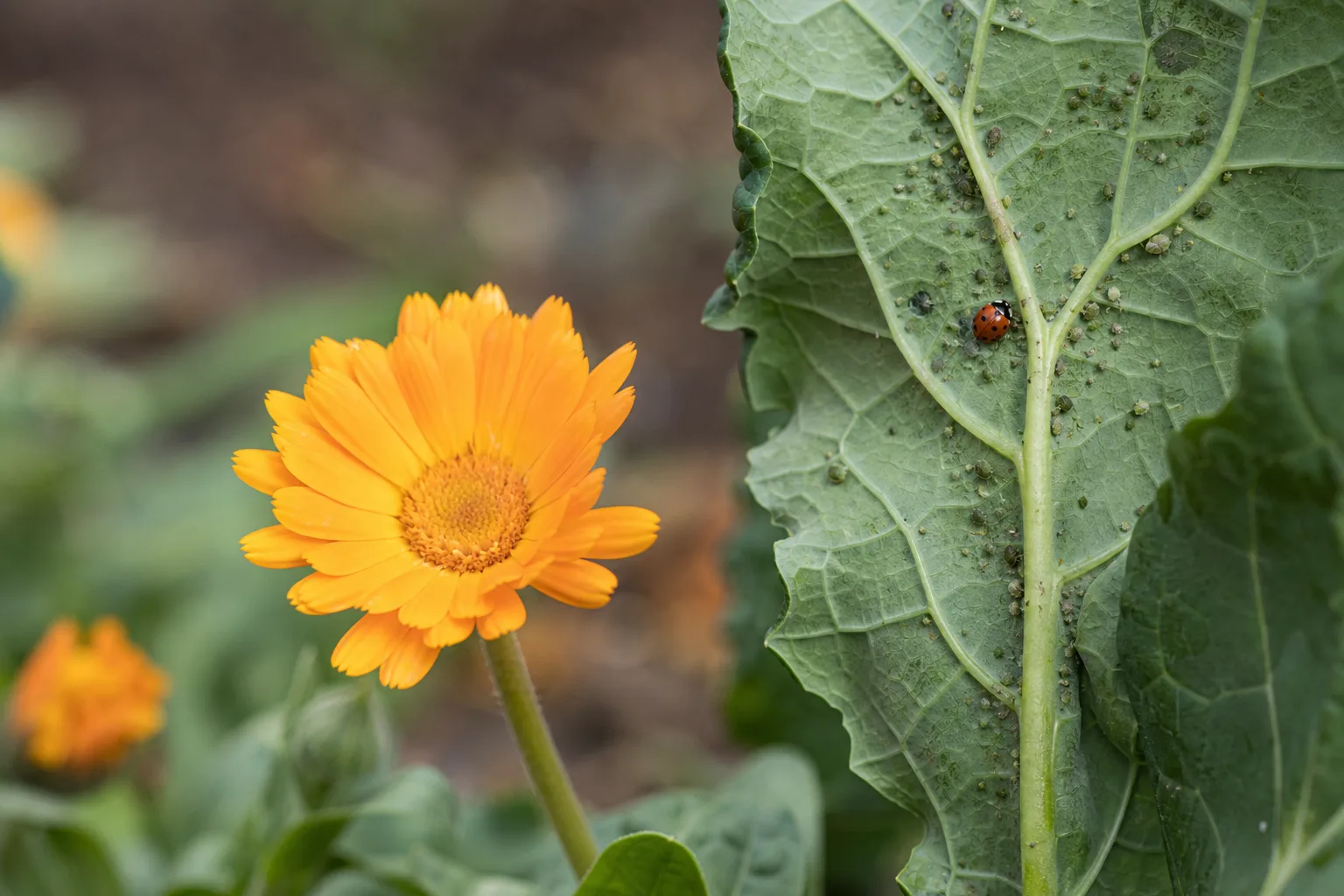
The two flowers I would put in every vegetable garden are calendula and sweet alyssum, because they bring beneficial insects close to the crops and help the garden manage pests. Their color is a pleasant extra, but aesthetics is the least important reason to plant them.
Which flowers should every vegetable garden include?
Calendula and sweet alyssum are the strongest choices for a vegetable garden because they support pest control and biodiversity without needing a separate ornamental bed. Calendula draws ladybugs that eat aphids near cool-season crops, while sweet alyssum attracts braconid wasps that patrol the garden. The flowers earn their square footage.
The case for choosing flowers by insect service, rather than by color, is supported by GrowVeg’s guide to flowers for vegetable gardens, which recommends flowers that attract beneficial insects and bees for pest reduction and pollination.
Calendula is the sturdier, more forgiving choice of the two. Its downside is that it can occupy room you might otherwise give to a vegetable, and its spent flowers need cutting back if you dislike a loose, untidy patch.
Sweet alyssum makes a low mat along a row edge and is useful where tall flowers would shade your crops. Its trade-off is that it is less forgiving of a dry garden, so a bed that receives no water during an Austin September will turn it into beige confetti.
Why are flowers more useful for pest control than for beauty?
Flowers belong in a vegetable garden mainly because they attract beneficial insects, increase biodiversity, and place pest-control activity beside the crops. The sources emphasize repelling or trapping harmful insects, attracting helpful insects, and building a more resilient system, not decoration. Pretty is not the job description here.
This explanation from Living Seed Company describes flowers as part of a more diverse and balanced garden ecosystem. That matters because a vegetable bed with only one crop and bare soil offers fewer places and food sources for helpful insects.
The practical target is not “no insects.” That is not a garden, that is a parking lot with better intentions. The target is enough beneficial insect activity that pest pressure is less concentrated on your vegetables.
A flower border can help, but planting flowers among the crops puts the insects closer to the leaves that need attention. Tenth Acre Farm specifically recommends growing annual flowers among crops so beneficial insects arrive where they are needed.
Should you plant calendula or sweet alyssum in fall?
In a fall vegetable garden, plant calendula first if you have room for only one flower, then add sweet alyssum along the front edge or between widely spaced rows. Both fit the practical goal of supporting beneficial insects, but calendula is the better choice for a neglected bed and alyssum needs steadier moisture.
For the garden standing in front of you now, clear a 12-inch strip at the end of a row and sow calendula there, or place it between vegetable sections with about 12 inches of open space. Use sweet alyssum in a 6-inch edge strip where it will not be buried by mulch.
Those measurements are my working layout, not a commandment carved into limestone. In Central Texas, the soil may stop your trowel eight inches down, so a narrow planting pocket is more sensible than excavating half the yard for a flower that has no interest in your heroic effort.
The Old Farmer’s Almanac recommends using local frost dates and seed germination conditions rather than treating a calendar as absolute law. You can check your ZIP code and current planting guidance through its vegetable gardening guide, then adjust for the actual weather at your house.
How should calendula and sweet alyssum be placed among vegetables?
Place calendula at row ends or in small pockets between vegetable sections, and place sweet alyssum along the front edge where it will not shade the crop. The goal is to distribute flower resources through the bed, not create one distant island of flowers that beneficial insects must cross the whole garden to leave.
A simple fall arrangement is one calendula every 12 to 18 inches at a row end, with sweet alyssum spaced 6 to 8 inches apart along the front edge. If you are sowing seed, thin crowded seedlings instead of letting every seedling fight for one square inch of wet soil.
The trade-off of planting among vegetables is access. You will have to reach around flowers while harvesting and may step on a few stems if the bed is narrow. A distant border is tidier, but it separates the insect habitat from the crop, which is why I prefer integrated planting.
Everyone says to put flowers around the perimeter. In practice, flowers in the middle of the garden are more useful when the bed is wide enough to walk through, because the beneficial insects are already near the crop rows. The perimeter still has a place when your vegetable bed is too tight for safe access.
| Flower placement | Best use | Honest downside |
|---|---|---|
| Calendula at row ends or between sections | Gives a taller flower useful for distributing beneficial insect habitat through the bed | Takes vegetable space and can become untidy after flowering |
| Sweet alyssum along the bed edge | Provides a low flower strip that does not compete heavily for height or light | Needs more reliable moisture and can fade in severe heat |
| Flowers around the perimeter | Keeps the crop rows easier to reach and harvest | Places beneficial insects farther from the vegetables |
What does living mulch mean in a vegetable garden?
Living mulch means growing a low plant among or beside vegetables so the soil is not the only thing occupying the space. In this case, calendula and sweet alyssum function as living mulch by adding flowers and insect habitat, although they still compete for water, room, and attention.
The phrase sounds more complicated than it is. You are using a living plant to fill a gap that might otherwise be bare soil, while also adding biodiversity and a food source for useful insects.
The downside is competition, especially in August when the ground is hot and every plant is negotiating for water. I would not cram flowers into a narrow bed already struggling to support vegetables, and I would not rely on them to replace mulch, irrigation, or decent soil preparation.
In Austin, I would run drip irrigation on a timer through the hottest part of summer and give the flower strips their own emitters rather than assuming nearby vegetables will share politely. They will not. Plants have no interest in fairness.
Can flowers prevent aphids and other vegetable-garden pests?
Flowers cannot guarantee a pest-free vegetable garden, but they can attract beneficial insects that help reduce pest pressure. Calendula draws ladybugs that eat aphids near crops such as kale and broccoli, while sweet alyssum attracts braconid wasps that patrol the garden. Think support system, not insect force field.
That distinction matters before you spend money on a complicated companion-planting plan. Oak Hill Homestead describes flowers as useful for pest control because some repel harmful insects while others act as trap crops that draw pests away.
I would inspect the undersides of leaves every week anyway, especially after warm weather. If aphids are already covering a crop, adding calendula today will not erase the problem by tomorrow morning. The flower has to grow, bloom, and become part of the garden’s insect activity.
Do not spray every insect you see simply because it is unfamiliar. The practical goal is to identify whether the garden has a pest problem serious enough to damage the crop, then preserve the helpful insects that are doing the work you invited them to do.
Who are calendula and sweet alyssum for, and who should skip them?
Calendula and sweet alyssum suit gardeners who want a low-maintenance vegetable bed with flowers integrated into the crops, especially anyone growing cool-season vegetables and willing to share a little space. Skip them in a very narrow bed, a garden with severe water restrictions, or a layout where every inch must produce food.
This approach fits a homeowner who can spare a 6-inch edge or a 12-inch row end and check irrigation once a week. It also suits a gardener who wants more biodiversity without building a separate pollinator garden.
I would skip sweet alyssum if your bed dries out every afternoon and you cannot add water. I would skip calendula if its spread will block your harvesting path or force you to step into wet soil to reach the vegetables.
You do not need both. If your garden is small, start with one calendula pocket and watch what arrives before expanding. That is cheaper than buying six packets of seed because a magazine photograph made the garden look emotionally incomplete.
How much work do these flowers add in a real garden?
Calendula and sweet alyssum add modest work if they are placed where you can reach them, but they are not maintenance-free. Plan on thinning seedlings, watering the flower strip with the vegetable bed, and cutting back finished growth when it blocks access; their benefit is a simpler ecosystem, not zero chores.
Give calendula about 12 to 18 inches between plants and alyssum about 6 to 8 inches along an edge. Those distances keep the flowers from becoming one damp knot that is difficult to inspect or harvest around.
Check the bed weekly for three things: dry soil, flowers leaning into the walking path, and pest activity on the vegetables. In a fall garden, that check takes less than ten minutes when the planting is orderly.
When I was learning plants from my father’s tomatoes in a twelve-foot strip of New Jersey clay, the lesson was not that every plant needed its own perfect place. It was that you had to notice what the ground was doing. Central Texas makes that lesson louder, usually with a rock bar.
If the bed is sitting on black clay, avoid creating a shallow pocket that holds water after rain. If you are working in caliche, do not promise yourself a two-hour hole for a six-inch flower strip. Build the planting around the soil you actually have.
What should you do with flowers in a crowded vegetable garden?
In a crowded vegetable garden, keep one or two calendula plants at row ends and use sweet alyssum only along an accessible edge, rather than forcing flowers into every gap. The useful compromise is enough flower habitat to support beneficial insects without sacrificing airflow, harvest access, or the vegetables that feed your household.
You can map the bed with a piece of string before planting. Mark a 12-inch calendula pocket, then reserve a 6-inch alyssum edge, and leave the remaining space for vegetables and a clear walking route.
If you are unsure which flower belongs in the space, the plant database can help you compare plants before you buy seed. I would rather see one well-placed flower strip than a crowded bed that looks generous in October and becomes impossible to water in May.
For a new layout, you can also get a concept for your yard before digging. The tool cannot tell your caliche where to go, sadly, but it can help you see whether the flower pockets leave enough room to work.
The rule I use is plain: flowers should serve the vegetables first. If they make the bed harder to harvest, move them to the edge and try again.
What do gardeners ask about flowers in vegetable gardens?
Gardeners usually want to know which flowers help most, whether flowers really control pests, how much space to give them, and whether fall is too late to begin. The direct answers are simple: choose calendula and sweet alyssum, expect support rather than magic, reserve 6 to 18 inches, and plant according to local weather and soil conditions.
Which flowers should every vegetable garden include?
Calendula and sweet alyssum are the best flowers to include in a vegetable garden because they support beneficial insects near the crops. Calendula draws ladybugs that eat aphids, while sweet alyssum attracts braconid wasps. Plant them among or beside the rows, giving up a little vegetable space in exchange for a more diverse and useful garden ecosystem.
Are flowers in a vegetable garden mainly for decoration?
Flowers in a vegetable garden are mainly for pest control, biodiversity, and pollination support, not decoration. Calendula and sweet alyssum add useful insect habitat close to the crops, while their color is secondary. If you have room for only one small flower pocket, choose the location that helps the vegetables rather than the spot that photographs best.
Can calendula stop aphids from damaging vegetables?
Calendula cannot guarantee that aphids will stop damaging vegetables, but it can draw ladybugs that eat aphids near crops such as kale and broccoli. Planting calendula is a support measure, not a cure. Inspect leaves weekly, avoid destroying helpful insects unnecessarily, and give the flowers time to establish before expecting noticeable insect activity.
How far apart should calendula and sweet alyssum be planted?
Plant calendula about 12 to 18 inches apart and sweet alyssum about 6 to 8 inches apart along a bed edge. These distances leave room for inspection and harvesting while keeping the flowers close to the vegetable rows. Adjust the layout if your soil stays wet, your bed is narrow, or your irrigation cannot reach the flowers.
Should flowers be planted inside vegetable rows or around the border?
Flowers should be planted inside or immediately beside vegetable rows when the bed has enough room for access, because beneficial insects are closer to the crops. A border is easier to maintain but places the flower habitat farther away. Use a perimeter when the bed is narrow, then place small calendula pockets at row ends if possible.
Is fall too late to plant flowers in a vegetable garden?
Fall is not automatically too late to plant flowers in a vegetable garden, but you should follow local frost dates and current soil conditions rather than a fixed calendar. Start with a small calendula pocket or alyssum edge, keep it watered, and judge success by the weather and the bed’s drainage. Soil decides more than optimism.
Want a plan for your own yard?
Tell us the space and we will put a planting plan together for it. Start at get my concept, or browse what actually grows where you are over on plants.
Frequently asked questions
Which flowers should every vegetable garden include?
Calendula and sweet alyssum are the best flowers to include in a vegetable garden because they support beneficial insects near the crops. Calendula draws ladybugs that eat aphids, while sweet alyssum attracts braconid wasps. Plant them among or beside the rows, giving up a little vegetable space in exchange for a more diverse and useful garden ecosystem.
Are flowers in a vegetable garden mainly for decoration?
Flowers in a vegetable garden are mainly for pest control, biodiversity, and pollination support, not decoration. Calendula and sweet alyssum add useful insect habitat close to the crops, while their color is secondary. If you have room for only one small flower pocket, choose the location that helps the vegetables rather than the spot that photographs best.
Can calendula stop aphids from damaging vegetables?
Calendula cannot guarantee that aphids will stop damaging vegetables, but it can draw ladybugs that eat aphids near crops such as kale and broccoli. Planting calendula is a support measure, not a cure. Inspect leaves weekly, avoid destroying helpful insects unnecessarily, and give the flowers time to establish before expecting noticeable insect activity.
How far apart should calendula and sweet alyssum be planted?
Plant calendula about 12 to 18 inches apart and sweet alyssum about 6 to 8 inches apart along a bed edge. These distances leave room for inspection and harvesting while keeping the flowers close to the vegetable rows. Adjust the layout if your soil stays wet, your bed is narrow, or your irrigation cannot reach the flowers.
Should flowers be planted inside vegetable rows or around the border?
Flowers should be planted inside or immediately beside vegetable rows when the bed has enough room for access, because beneficial insects are closer to the crops. A border is easier to maintain but places the flower habitat farther away. Use a perimeter when the bed is narrow, then place small calendula pockets at row ends if possible.
Is fall too late to plant flowers in a vegetable garden?
Fall is not automatically too late to plant flowers in a vegetable garden, but you should follow local frost dates and current soil conditions rather than a fixed calendar. Start with a small calendula pocket or alyssum edge, keep it watered, and judge success by the weather and the bed’s drainage. Soil decides more than optimism.
Free, no obligation
Ready to design your dream landscape? Start here.
Tell us where you are and we will start a free profile for you, with plants that actually survive your climate and a real sense of what the build would cost.