
How to Fix Compacted Soil Without a Rototiller
A garden fork, compost, Daikon and several patient seasons can repair compacted soil without tearing the bed apart with a rototiller. Here is the fall plan, including how deep to loosen, what to plant now, and what not to do on wet Central Texas soil.
September 25, 2026
By Diego Navarro
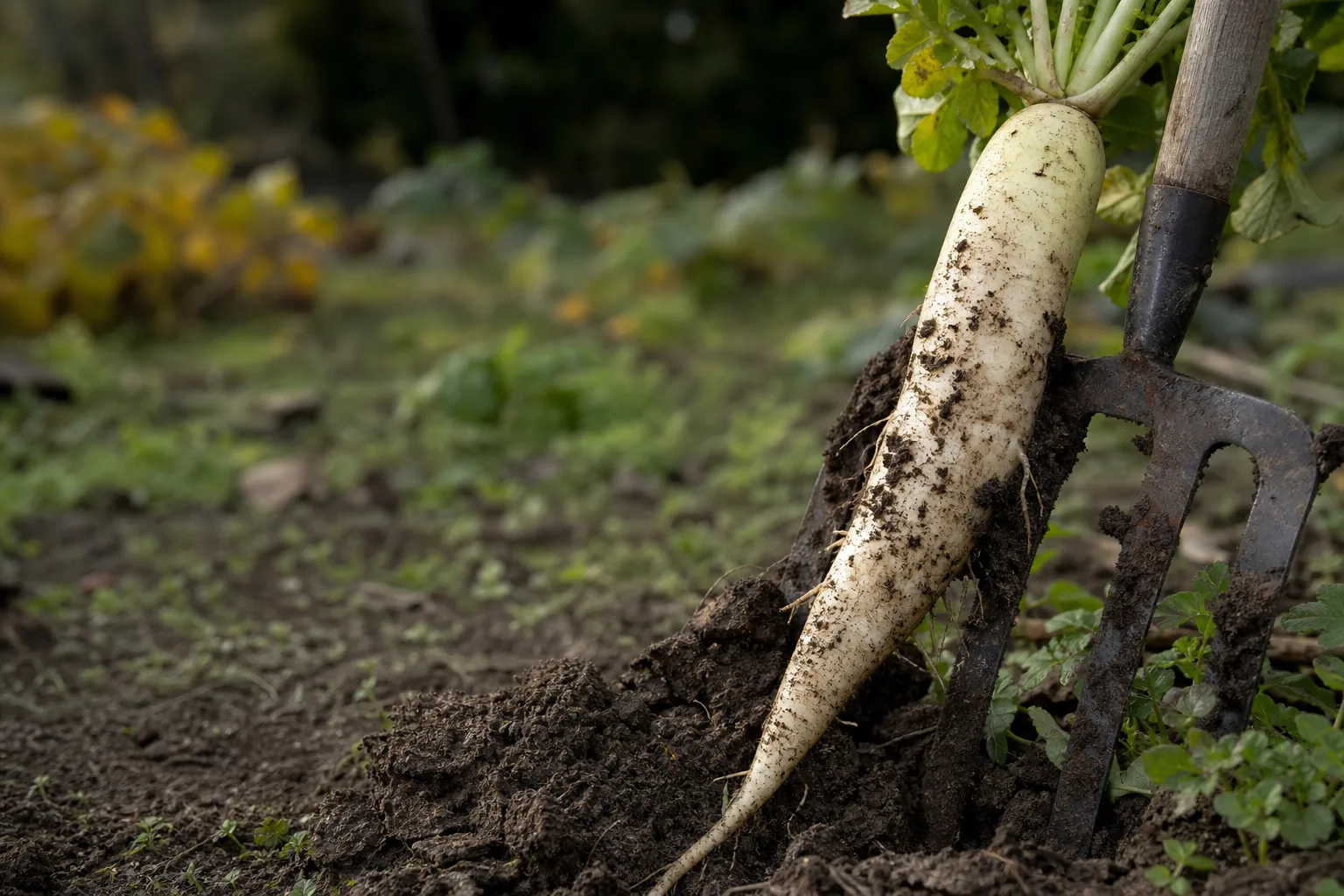
Daikon, gentle forking, compost and time will fix compacted garden soil better than one dramatic rototiller pass. Start this fall by opening the top 6 to 8 inches, adding 1 to 2 inches of finished compost, and sowing Daikon so its 3 to 6 foot taproot can make channels that later crops use.
Can you fix compacted garden soil without a rototiller?
Yes, you can repair compacted garden soil without a rototiller by opening the surface with a fork, adding organic matter, and growing roots through the dense layer. This approach takes several growing cycles, but it preserves soil structure instead of breaking it apart for one season and leaving it exposed to renewed compaction.
A rototiller is good at making a hard bed look cheerful by lunchtime. It can also leave a loose top layer over a compacted floor, and repeated tilling can make soil more vulnerable to erosion and future compaction, according to this explanation of deep tilling.
I would use a garden fork for a small bed and a broadfork for a larger one. Both have a drawback: they require your back, and neither will magically penetrate dry limestone or a construction-grade subsoil.
In Austin, I have hit rock eight inches down and spent two hours with a rock bar on one hole. That is not a soil problem you solve with optimism. It is a different layer of work.
What should you do to compacted soil this fall?
This fall, wait until the soil is moist enough to crumble, then loosen the top 6 to 8 inches without flipping it, spread 1 to 2 inches of finished compost, and sow Daikon before cold weather slows germination. Keep feet and equipment off the bed, add mulch after seedlings establish, and let roots work through winter.
Push a garden fork straight down, rock it back slightly, and lift just enough to open cracks. Work every 6 to 8 inches across the bed. A broadfork covers more ground, but its long handles cost more and still will not replace good timing.
Do not work black clay when it is shiny, sticky, or clings to your boots. You will make bricks. Everyone says to dig after rain, but practice says to dig when a handful holds together briefly and then breaks apart under your thumb.
Spread finished compost after forking, not before. Compost helps bind soil particles and create pore space, while sand can make clay soil more compacted, a point also covered in this guide to compacted garden soil.
How do you plant Daikon to break up a hard layer?
Plant Daikon, also called tillage radish, in late summer or early fall, placing seeds about 1 inch deep and 3 to 6 inches apart in prepared soil. Its taproot may reach 3 to 6 feet, depending on the soil, then decompose after winter and leave channels for future roots and water.
For a bed you are standing in now, clear weeds, fork the surface, and rake it reasonably smooth. Do not chase perfection. Sow a row every 12 inches, cover seed lightly, and water the top inch until seedlings appear.
Daikon is not a magic drill bit. It struggles against solid rock, stays smaller in a dry bed, and its large roots can crowd a tight bed if you sow too thickly. That is the honest tradeoff for using a living tool instead of fuel and steel.
Let the root remain in the soil. If the foliage bolts in winter, cut it at the crown and leave the root to rot in place. Pulling it out removes the very channel you grew it to make, which is a fine way to turn a good idea into a small harvest of disappointment.
Which cover crops should follow Daikon?
After Daikon, use a deep rooted cover crop such as hairy vetch, winter oats, or clover to protect the soil and add more root channels. Hairy vetch can add nitrogen but is harder to terminate, winter oats are simple but do not add nitrogen, and clover is durable but can linger into your next planting.
Hairy vetch is useful where you can mow or chop it before seed forms. Its tradeoff is timing, because a late termination can leave you fighting a living mat when spring vegetables need the bed.
Winter oats give dependable winter cover and fibrous roots. They are easier to cut down than vetch, but they add less nitrogen and can still compete with seedlings if you leave too much green material on the surface.
Clover stays low and protects bare soil, but its persistence is the price of that toughness. In a small vegetable bed, I would choose oats if you need a clean spring transition and vetch only if you can manage the termination date.
You can compare plant choices and growing conditions in our plant database before buying seed. The name on the packet is not a site plan.
How much compost and mulch should compacted soil receive?
Apply 1 to 2 inches of finished compost over the loosened bed each season, then cover the surface with about 2 to 3 inches of mulch after seedlings establish. Compost improves structure gradually, while mulch reduces surface impact from rain and keeps you from walking directly on the soil.
Finished compost should smell earthy, not sour, and should contain no obvious hot manure or recognizable piles of kitchen scraps. Manure that has not finished curing can damage roots, so its tradeoff is simple: it may be inexpensive, but rushing it can cost a planting season.
Use shredded leaves or clean, mature plant mulch as a surface cover. Mulch protects the soil, but a layer placed directly against tender stems can hold moisture and invite rot, so leave about 2 inches of bare space around each stem.
Do not mix sand into clay as a shortcut. The research provided specifically warns that sand can compact clay further, while organic amendments improve binding and pore space. Soil improvement is less glamorous than a truckload of mystery dirt. It works better.
Who should use this method, and who should ignore it?
This method suits homeowners with garden beds that drain slowly, show footprints, or stop roots in the top few inches, especially those willing to improve soil over two to four seasons. Ignore it for a construction fill layer, buried rubble, or solid limestone, where excavation, drainage work, or a new bed is the honest answer.
Use it for a vegetable plot, perennial border, or small lawn edge that has been walked on or driven over. It is especially practical where you can keep a clear path and stop traffic from returning to the repaired bed.
Do not expect Daikon to repair a patio base, a driveway shoulder, or soil packed by repeated equipment traffic in one winter. Core aeration can help seriously compacted turf, but it has the same tradeoff as every tool here: it creates openings without rebuilding organic matter by itself, as this compacted yard guide explains.
If you are in Central Texas and your shovel stops at limestone, build a raised bed or bring in an appropriate growing medium rather than pretending the rock will become loam. If you are in black clay, keep the bed narrow enough that you can work from the path.
Should you use a fork, broadfork, core aerator, or rototiller?
For a garden bed, I would choose a garden fork or broadfork, then use compost and deep rooted cover crops instead of a rototiller. A core aerator belongs mainly on turf, while a rototiller gives fast surface looseness but can disturb structure and leave the compacted layer below untouched.
| Option | Best use | Honest downside |
|---|---|---|
| Garden fork | Small beds and targeted loosening | Slow work and physical effort |
| Broadfork | Larger beds with compacted topsoil | Costs more and cannot defeat rock |
| Core aerator | Compacted lawn with traffic | Does not add organic matter by itself |
| Rototiller | Fast renovation of a suitable open bed | Can disrupt structure and miss deeper compaction |
A fork lets you feel the difference between dense soil and buried rock. That information is worth more than the noise of an engine. The drawback is that you may finish one bed instead of six, which is often the correct number of beds to finish.
A broadfork is faster across a garden, but it is not a substitute for moisture testing. If the soil is wet, any large tool can smear the sides of the openings. If it is powder dry, you will lift dust and curse at geology.
How many seasons does compacted soil need to recover?
Expect visible improvement after one season and meaningful structure change after two to four seasons of compost, living roots, mulch, and reduced traffic. A single Daikon crop may open channels for the next planting, but repeated organic matter and root growth are what make the improvement last.
Test the bed after rain by pushing a trowel into the top 8 inches. Look for crumbly soil, fewer standing puddles, and roots that continue below the old hard layer. Those are better signs than a dark surface, because dark dirt can still be packed tight underneath.
Keep a simple record each fall: compost depth, cover crop, sowing date, and whether water stood for more than 24 hours. In three years you will know more about that bed than any bag label can tell you.
Do not walk on the bed while it is wet, and do not mow across it during saturated weather. New pore space is not a permanent gift if you press it flat again every Saturday.
What mistakes keep compacted soil from improving?
The biggest mistakes are working wet soil, turning the bed deeply, adding sand to clay, planting too few roots, and allowing foot traffic to return. Compacted soil improves when air, water, organic matter, and living roots have time to work together, not when the surface is merely made fluffy for a weekend.
A shallow, aggressive tilling pass is still tilling. It may hide the problem under a soft top 4 inches while the roots meet a hard shelf below. Open the soil gently instead, then let Daikon, oats, vetch, or clover continue the work.
Gypsum is not a universal cure. A light application may improve structure where soil is high in sodium, but without that condition it is an unnecessary purchase and not a substitute for compost or traffic control.
Water deeply enough to moisten the root zone, but do not keep a newly seeded bed flooded. Daikon needs moisture for establishment, and its tradeoff is that a dry fall gives you short roots and a less useful result.
Can compacted soil be repaired with Daikon alone?
No, Daikon alone will not reliably repair compacted soil. It can create deep channels, but the bed also needs gentle mechanical loosening, finished compost, protection from foot traffic, and follow-up cover crops so new pore space is filled and maintained over several seasons.
Daikon is the part people can see on the seed packet, so it gets too much credit. The real system is the root, the decomposing organic matter, the mulch, and the decision not to drive a wheelbarrow through the wet bed again.
If you need a simple fall sequence, fork the top 6 to 8 inches, add 1 to 2 inches of compost, sow Daikon 1 inch deep and 3 to 6 inches apart, then mulch once seedlings are established. Leave the root in place after cutting the foliage.
The free yard concept tool can help you think through paths and bed widths before you rebuild soil. A path is not decoration. It is how you stop stepping on the work.
What are the most common questions about fixing compacted soil without a rototiller?
The most common questions concern timing, root depth, compost, gypsum, machinery, and recovery time. The short answers below give you the practical limits: use fall moisture wisely, avoid wet clay, let roots remain in the ground, and measure progress across seasons rather than expecting one weekend to remake the bed.
Can I plant Daikon in compacted soil without loosening it first?
Can I plant Daikon in compacted soil without loosening it first? Yes, but lightly opening the top 6 to 8 inches first usually gives the seed better contact with moisture and improves early growth. Daikon may push through some dense soil, but it cannot reliably penetrate rock, dry clay, or a construction fill layer.
How deep should I loosen compacted garden soil?
How deep should I loosen compacted garden soil? Loosen about 6 to 8 inches for a garden bed without flipping the soil over. That depth opens the planting zone while leaving deeper layers intact for roots to work through, and Daikon may extend much farther if moisture, soil depth, and conditions allow.
Is compost better than sand for compacted clay soil?
Is compost better than sand for compacted clay soil? Yes, finished compost is the better choice for improving compacted clay because organic matter helps create pore space, while sand can make clay compact more tightly. Apply 1 to 2 inches each season and mix it into the loosened zone rather than burying it deeply.
Should I use gypsum on compacted soil?
Should I use gypsum on compacted soil? Use gypsum only when soil is high in sodium or a soil test supports that choice. It is not a general cure for ordinary compaction, so spend first on finished compost, mulch, and traffic control unless you have evidence that sodium is part of the problem.
How long does Daikon take to improve compacted soil?
How long does Daikon take to improve compacted soil? Daikon can create useful root channels during one fall and winter, but lasting improvement usually takes two to four seasons of roots, compost, mulch, and reduced traffic. Cut bolting foliage at the crown and leave the root to decompose instead of pulling it out.
Can I walk on a garden bed after loosening compacted soil?
Can I walk on a garden bed after loosening compacted soil? Avoid walking on the bed after loosening it, especially while the soil is wet. Put paths between beds, use boards only when necessary, and keep equipment off the growing area because repeated pressure can close the pore spaces you just created.
The ground does not need a heroic rescue. It needs fewer insults, more roots, and enough time to remember how to be soil.
Want a plan for your own yard?
Tell us the space and we will put a planting plan together for it. Start at get my concept, or browse what actually grows where you are over on plants.
Frequently asked questions
Can I plant Daikon in compacted soil without loosening it first?
Can I plant Daikon in compacted soil without loosening it first? Yes, but lightly opening the top 6 to 8 inches first usually gives the seed better contact with moisture and improves early growth. Daikon may push through some dense soil, but it cannot reliably penetrate rock, dry clay, or a construction fill layer.
How deep should I loosen compacted garden soil?
How deep should I loosen compacted garden soil? Loosen about 6 to 8 inches for a garden bed without flipping the soil over. That depth opens the planting zone while leaving deeper layers intact for roots to work through, and Daikon may extend much farther if moisture, soil depth, and conditions allow.
Is compost better than sand for compacted clay soil?
Is compost better than sand for compacted clay soil? Yes, finished compost is the better choice for improving compacted clay because organic matter helps create pore space, while sand can make clay compact more tightly. Apply 1 to 2 inches each season and mix it into the loosened zone rather than burying it deeply.
Should I use gypsum on compacted soil?
Should I use gypsum on compacted soil? Use gypsum only when soil is high in sodium or a soil test supports that choice. It is not a general cure for ordinary compaction, so spend first on finished compost, mulch, and traffic control unless you have evidence that sodium is part of the problem.
How long does Daikon take to improve compacted soil?
How long does Daikon take to improve compacted soil? Daikon can create useful root channels during one fall and winter, but lasting improvement usually takes two to four seasons of roots, compost, mulch, and reduced traffic. Cut bolting foliage at the crown and leave the root to decompose instead of pulling it out.
Can I walk on a garden bed after loosening compacted soil?
Can I walk on a garden bed after loosening compacted soil? Avoid walking on the bed after loosening it, especially while the soil is wet. Put paths between beds, use boards only when necessary, and keep equipment off the growing area because repeated pressure can close the pore spaces you just created.
Free, no obligation
Ready to design your dream landscape? Start here.
Tell us where you are and we will start a free profile for you, with plants that actually survive your climate and a real sense of what the build would cost.