
Drip Versus Soaker Hose Versus Sprinkler: An Honest Comparison
Drip irrigation wins for most garden beds because it saves the most water, lasts the longest, and puts water exactly where roots need it. Soaker hoses cost less upfront but clog sooner, while sprinklers make sense mainly for lawns and broad areas where coverage matters more than precision.
September 25, 2026
By Valeria Navarro
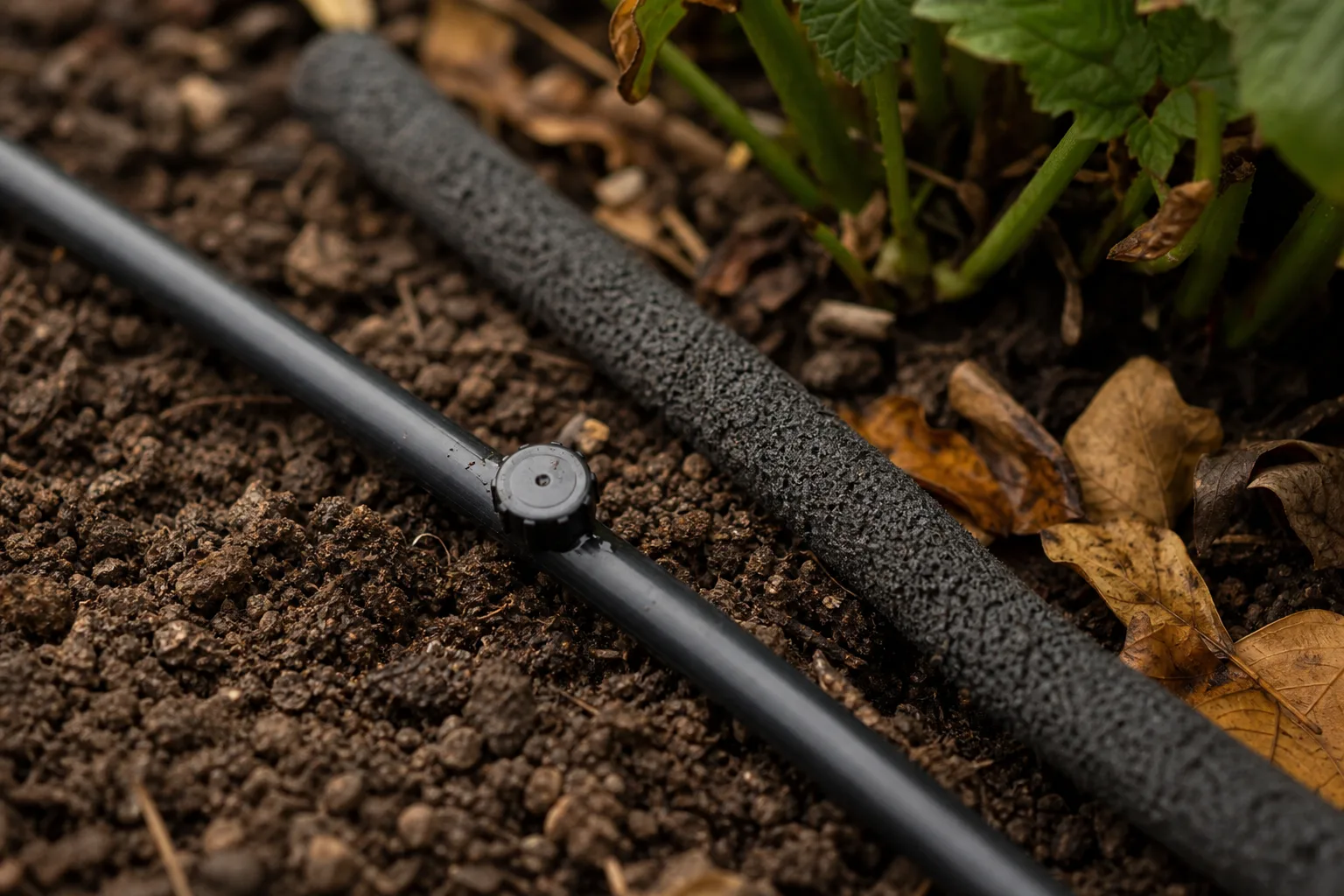
Drip irrigation is my choice for most garden beds because it uses the least water, lasts the longest, and puts moisture at the root zone instead of spraying the fence, path, and your shoes. Soaker hoses are cheaper and easier to start with, but they clog sooner and water less evenly; sprinklers belong mostly on lawns and wide open planting areas.
Which irrigation method saves the most water?
Drip irrigation usually saves the most water, with about 90 to 95 percent water use efficiency because emitters release water directly at the root zone. Soaker hoses follow at roughly 80 to 85 percent. Sprinklers typically reach only 60 to 75 percent because wind, runoff, evaporation, and wet pavement steal part of every watering cycle.
That gap matters in an Austin summer, but you are standing in the garden in fall, which is the perfect time to fix the system before heat returns. Drip also keeps foliage dry, a useful disease prevention advantage noted by Gardeners.com.
Everyone says a soaker hose is automatically efficient because it does not throw water into the air. In practice, it still wets the soil surface along its full length, and that surface moisture can evaporate before deeper roots receive enough water. It also wets low foliage, which can increase fungal risk.
Sprinklers are not bad. They are simply broad tools. A rotary head can cover a lawn far more evenly than a short line of drip tubing, but you pay for that coverage with drift and runoff, especially on sloped ground or during a windy morning.
Is drip irrigation worth the higher cost?
Drip irrigation is worth the higher starting cost for permanent beds, raised beds, shrubs, and vegetables that stay in place for several seasons. A basic 100 foot DIY kit costs about $30 to $50, while a professional kit may cost $100 to $200, and protected, flushed tubing can last five to ten years.
A soaker hose costs about $15 to $25 for 100 feet, so it wins the first checkout comparison. Its expected life is closer to three to five years, and mineral buildup, salt, sun, and rough handling can shorten that further.
A small sprinkler kit may cost $20 to $40. That sounds like the bargain, until you remember that sprinklers are usually the wrong tool for a narrow bed, and commercial rotary systems can pass $200 once heads, valves, and installation enter the picture.
Here is the honest math. If you need one temporary line for a fall bed, buy the soaker hose. If you are building the bed you expect to keep, install drip once and maintain it. Cheap irrigation becomes expensive when you replace it every few seasons and still lose water around the edges.
Which system clogs most often?
Soaker hoses clog most readily because their porous walls release water through many small openings, and salts or debris can block those openings. Drip emitters also clog, especially without filtration, but occasional flushing makes the problem manageable. Sprinkler heads clog less often, although dirty water can still block nozzles and damage small filters.
Our Central Texas water can leave mineral deposits, and caliche does nobody a favor. I flush new drip lines before installing emitters, then flush the ends again during the season. That small habit costs minutes. A clogged emitter can cost you a dead plant before you notice the dry patch.
Soaker hoses need attention too. Lay the hose out, remove the end cap if the model allows it, and flush until the water runs clear. Do not bury a soaker hose under mulch and forget it for a year. You will create a mystery garden where one end drinks and the other end sulks.
Use a filter with drip and soaker systems when your water contains visible grit or heavy mineral load. The filter adds a little cost and another part to inspect, but replacing a filter is cheaper than replacing a whole bed of stressed plants.
How long does drip, soaker, or sprinkler irrigation last?
Drip irrigation can last five to ten years when tubing is protected from ultraviolet light, rodents, sharp tools, and unnecessary foot traffic. Soaker hoses commonly last three to five years. Sprinkler heads generally last two to four years before seals wear, although the full system can last longer if replaceable parts are available.
Sun is the quiet killer. I do not leave loose black tubing stretched across hot paving if I can run it under mulch or beside the bed edge. Mulch protects the line, but check it first because a shovel still wins against plastic.
Soaker hoses also suffer from kinks. A kinked section may stop releasing water, while the hose appears perfectly normal from above. Coil it loosely for storage, avoid dragging it across limestone, and do not assume a five year old hose is watering just because it is connected.
Sprinkler heads fail differently. Their seals wear, their arcs drift, and a head can water the sidewalk for weeks while the lawn near the fence turns pale. They are durable enough for broad coverage, but they demand visual checks after winter and after mowing.
Is drip, soaker hose, or sprinkler best for a vegetable garden?
Drip irrigation is best for most vegetable gardens because it delivers water directly to the root zone, keeps leaves dry, and lets you place emitters beside each planting row. A soaker hose is a good lower-cost alternative for a simple bed. A sprinkler is the least efficient choice because it wets the entire bed surface and foliage.
I have killed basil by watering the wrong way, which is humbling because basil is not exactly a mysterious woodland orchid. In a fall bed, I would run drip beside the row and adjust the spacing as the plants grow rather than blast the whole rectangle with a sprinkler.
The trade-off is setup time. Drip requires connectors, end closures, and a little planning around plant spacing. Soaker hose requires less design, but its output can vary along the length, especially if the hose is kinked or partially clogged.
For a vegetable layout you change every month, use movable drip lines or a soaker hose rather than burying permanent tubing. For a fixed raised bed, permanent drip earns its keep because the line stays where the roots are.
Who is drip irrigation, soaker hose, or sprinkler watering for?
Drip irrigation suits homeowners with permanent beds, raised beds, shrubs, water restrictions, or a willingness to flush and inspect the system. Soaker hoses suit renters, temporary fall plantings, and small beds with a tight budget. Sprinklers suit lawns and large open areas. Ignore drip if you will not maintain filters and lines.
If bending and hauling a heavy hose is the barrier, either drip or a soaker hose can make watering easier, a benefit also described by Snug Harbor Home Care. Put the timer and shutoff where you can reach them without crawling through the bed.
If your planting changes weekly, do not overbuild. A professional drip installation is wasted money in a bed that will be dug up next month. If your yard is mostly lawn, do not pretend a few short drip lines will replace a properly spaced sprinkler layout.
Ask yourself one plain question: are you watering individual root zones or a broad surface? Individual root zones point to drip. A broad surface points to a sprinkler. A temporary row that needs inexpensive help points to a soaker hose.
What are the real costs and downsides of each option?
Drip offers the best efficiency and lifespan, but its downside is maintenance: filters, flushing, connectors, and emitters all need attention. Soaker hoses have the lowest purchase price, but they clog, kink, wet foliage, and often water unevenly. Sprinklers cover the most ground, but they lose more water and need head repairs sooner.
| Method | Best use | Typical cost | Expected life | Honest downside |
|---|---|---|---|---|
| Drip irrigation | Fixed beds, vegetables, shrubs | $30 to $50 DIY per 100 feet, $100 to $200 professional | 5 to 10 years | Emitters clog without filtration and flushing |
| Soaker hose | Temporary or simple beds | $15 to $25 per 100 feet | 3 to 5 years | Porous openings clog, and coverage can be uneven |
| Sprinkler | Lawns and broad open areas | $20 to $40 starter kit, over $200 commercial rotary system | 2 to 4 years for heads | Wind, runoff, and evaporation reduce efficiency |
Those prices are starting points, not promises. A tiny bed may need only one connector and one line, while a full yard needs valves, timers, filters, pressure control, and labor.
My position stays the same. Spend more on drip where plants are permanent. Spend less on a soaker hose where the bed is temporary. Spend on sprinklers only where their wide pattern solves a real coverage problem.
How should you install and maintain irrigation this fall?
Install or repair irrigation in fall while the soil is workable and the plants are not demanding peak summer water. Lay out the system first, flush tubing before closing the ends, check every emitter or hose section, and cover exposed lines from strong sun. A two week inspection catches most failures before spring heat.
For drip, place emitters at the active root zone rather than at the crown of every plant. Keep connectors tight, use filtration when needed, and flush the line until clear. Do not bury the system before you have watched it run.
For a soaker hose, lay it flat, avoid tight bends, and turn it on long enough to check whether the full length is releasing water. If your model allows flushing, do that before storage and again when you reinstall it.
For sprinklers, run each zone and stand outside the spray pattern. Look for blocked heads, broken seals, overspray on paving, and dry corners. Adjust the arc before you add another head. More hardware does not repair a bad layout.
The plant database can help you group plants with similar watering needs before you position lines, and you can get a concept for your yard if the bed layout is still a pile of ideas on paper.
Which irrigation system should you buy for your garden?
Buy drip irrigation for a permanent garden bed, a soaker hose for the cheapest workable temporary setup, and sprinklers for lawns or broad open planting areas. That is the clean answer. Drip wins overall because its 90 to 95 percent efficiency and five to ten year potential outweigh the extra setup and cleaning.
Everyone says the cheapest hose is the smartest first move. In practice, the least expensive purchase is not always the least expensive system, because a clogged soaker hose can waste a season before you spot the dry plants.
In my own Austin yard, I would install drip along fixed beds this fall, protect it under mulch, and keep one soaker hose for a new bed that is still changing. I would reserve sprinklers for lawn coverage, not use them as a lazy substitute for placing water near roots.
That is the trade-off in one sentence: precision costs more effort upfront, but imprecision keeps charging you in water, repairs, and plants that never quite recover.
What is the cheapest efficient irrigation method for a small garden?
A soaker hose is usually the cheapest efficient option for a small garden, costing about $15 to $25 for a 100 foot roll and reaching roughly 80 to 85 percent water use efficiency. Drip costs more, about $30 to $50 for a basic 100 foot DIY kit, but it lasts longer and applies water more precisely.
Choose the soaker hose if the bed is temporary or you need a quick fall installation. Flush it, lay it flat, and inspect the whole length. Its lower price does not excuse ignoring clogged sections.
Choose drip if the bed will stay in place for several seasons. The extra $15 to $35 at the basic kit level buys better control and a potential five to ten year life when the tubing is protected and flushed.
A sprinkler may cost $20 to $40 at starter level, but it is not the efficient bargain for a small bed. Much of its spray can land on paths, fences, or bare soil instead of the root zone.
Does drip irrigation clog more than a sprinkler?
Drip irrigation can clog more easily than a sprinkler because its emitters have small passages, but filtration and occasional flushing greatly reduce the problem. Sprinkler heads clog less often, yet they still need clean water and filter checks. Drip is worth the maintenance for beds because it saves more water and waters more precisely.
Mineral buildup is the usual nuisance, especially where water leaves a crust on fittings. Inspect the first and last emitters during a run. If the first is flowing and the last is dry, flush the line before blaming the timer.
Sprinklers hide a different failure. A blocked nozzle may leave a dry crescent that looks like a soil problem. Run every zone long enough to see the pattern, then clean or replace the head rather than increasing the run time.
The answer is not that drip never clogs. It does. The answer is that clogging is predictable maintenance, while sprinkler waste is built into the wider spray pattern.
Are soaker hoses better than sprinklers for shrubs and beds?
Soaker hoses are generally better than sprinklers for shrubs and garden beds because they use about 80 to 85 percent of applied water efficiently and avoid broad spray over paths. They still wet the soil surface and may wet low foliage, so drip is the more precise and longer-lasting choice for permanent plantings.
Use a soaker hose when you want a simple line along a bed without designing individual emitter locations. Keep it close to the root zones, not pressed against the stem or trunk, and check that the far end releases water.
A sprinkler makes more sense for a large area that needs even surface coverage, especially lawn. It becomes wasteful when the same spray pattern hits stone, siding, or a narrow bed surrounded by paving.
For shrubs, the soaker hose trade-off is uneven delivery. The first section may release water differently from the last after several seasons of mineral buildup, so inspect it instead of trusting its age and appearance.
How often should you flush drip lines and soaker hoses?
Flush drip lines and soaker hoses when you install them, after visible debris enters the system, and during the growing season whenever flow becomes uneven. A practical fall routine is to flush before storage or winter protection, then check the system again in late February or early March before regular watering begins.
Open the end of a drip line and run water until it looks clear. For a soaker hose, follow the manufacturer’s opening method, because some models are not designed for aggressive flushing. Never force a fitting that was not made to open.
If you use a filter, inspect it at the same time. A dirty filter can reduce flow throughout the system and make you think every emitter has failed.
Do not wait for a plant to wilt. By then, the irrigation problem has already become a plant problem, and no timer setting can make up for roots that have been dry for weeks.
What irrigation should you install before winter?
Before winter, install drip for permanent beds, keep a soaker hose for temporary areas, and inspect sprinklers serving lawns or large open spaces. Protect exposed tubing from sun and tools, flush lines, and check connections before the February cold that Central Texas gardeners still remember from 2021.
Fall is not a dead season for irrigation. It is the calm season, the one where you can see the layout clearly and repair a leak without racing a hundred degree week.
Do not bury a questionable line. Run it first, mark the dry spots, and repair the failure while the soil is still workable. Covering a problem with mulch only makes spring troubleshooting slower.
If you are unsure, choose the method that matches the planting, not the method that happens to be on sale. Your future self will thank you, and she will have fewer dead plants to explain at dinner.
What is the cheapest efficient irrigation method for a small garden?
A soaker hose is usually the cheapest efficient option for a small garden, costing about $15 to $25 for a 100 foot roll and reaching roughly 80 to 85 percent water use efficiency. Drip costs more, about $30 to $50 for a basic 100 foot DIY kit, but it lasts longer and applies water more precisely.
Does drip irrigation clog more than a sprinkler?
Drip irrigation can clog more easily than a sprinkler because its emitters have small passages, but filtration and occasional flushing greatly reduce the problem. Sprinkler heads clog less often, yet they still need clean water and filter checks. Drip is worth the maintenance for beds because it saves more water and waters more precisely.
Are soaker hoses better than sprinklers for shrubs and beds?
Soaker hoses are generally better than sprinklers for shrubs and garden beds because they use about 80 to 85 percent of applied water efficiently and avoid broad spray over paths. They still wet the soil surface and may wet low foliage, so drip is the more precise and longer-lasting choice for permanent plantings.
How often should you flush drip lines and soaker hoses?
Flush drip lines and soaker hoses when you install them, after visible debris enters the system, and during the growing season whenever flow becomes uneven. A practical fall routine is to flush before storage or winter protection, then check the system again in late February or early March before regular watering begins.
What irrigation should you install before winter?
Before winter, install drip for permanent beds, keep a soaker hose for temporary areas, and inspect sprinklers serving lawns or large open spaces. Protect exposed tubing from sun and tools, flush lines, and check connections before the February cold that Central Texas gardeners still remember from 2021.
Which irrigation system should you buy for your garden?
Buy drip irrigation for a permanent garden bed, a soaker hose for the cheapest workable temporary setup, and sprinklers for lawns or broad open planting areas. That is the clean answer. Drip wins overall because its 90 to 95 percent efficiency and five to ten year potential outweigh the extra setup and cleaning.
Want a plan for your own yard?
Tell us the space and we will put a planting plan together for it. Start at get my concept, or browse what actually grows where you are over on plants.
Frequently asked questions
What is the cheapest efficient irrigation method for a small garden?
A soaker hose is usually the cheapest efficient option for a small garden, costing about $15 to $25 for a 100 foot roll and reaching roughly 80 to 85 percent water use efficiency. Drip costs more, about $30 to $50 for a basic 100 foot DIY kit, but it lasts longer and applies water more precisely.
Does drip irrigation clog more than a sprinkler?
Drip irrigation can clog more easily than a sprinkler because its emitters have small passages, but filtration and occasional flushing greatly reduce the problem. Sprinkler heads clog less often, yet they still need clean water and filter checks. Drip is worth the maintenance for beds because it saves more water and waters more precisely.
Are soaker hoses better than sprinklers for shrubs and beds?
Soaker hoses are generally better than sprinklers for shrubs and garden beds because they use about 80 to 85 percent of applied water efficiently and avoid broad spray over paths. They still wet the soil surface and may wet low foliage, so drip is the more precise and longer-lasting choice for permanent plantings.
How often should you flush drip lines and soaker hoses?
Flush drip lines and soaker hoses when you install them, after visible debris enters the system, and during the growing season whenever flow becomes uneven. A practical fall routine is to flush before storage or winter protection, then check the system again in late February or early March before regular watering begins.
What irrigation should you install before winter?
Before winter, install drip for permanent beds, keep a soaker hose for temporary areas, and inspect sprinklers serving lawns or large open spaces. Protect exposed tubing from sun and tools, flush lines, and check connections before the February cold that Central Texas gardeners still remember from 2021.
Which irrigation system should you buy for your garden?
Buy drip irrigation for a permanent garden bed, a soaker hose for the cheapest workable temporary setup, and sprinklers for lawns or broad open planting areas. That is the clean answer. Drip wins overall because its 90 to 95 percent efficiency and five to ten year potential outweigh the extra setup and cleaning.
Free, no obligation
Ready to design your dream landscape? Start here.
Tell us where you are and we will start a free profile for you, with plants that actually survive your climate and a real sense of what the build would cost.