
Dividing Perennials: When and How by Plant Type
Standing in the garden this fall? Divide spring and summer bloomers now, but leave fall-blooming perennials alone until early spring. Here is the timing, tool choice, planting depth, and aftercare that keeps each division alive.
September 21, 2026
By Valeria Navarro
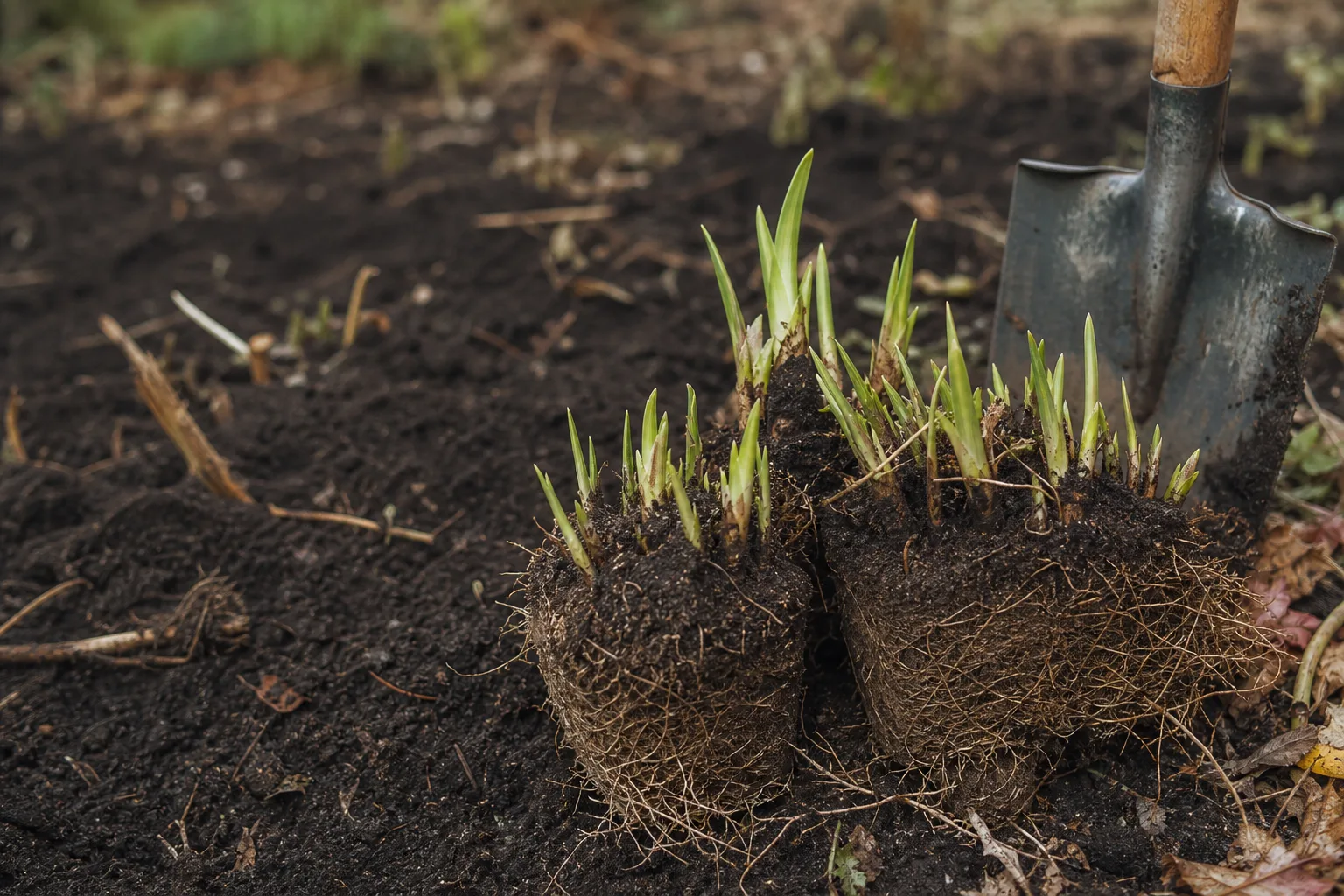
Divide spring and summer blooming perennials in early to mid fall, ideally 4 to 6 weeks before your first hard freeze. Divide fall blooming perennials in early spring, as soon as new growth appears and before they spend energy on flowers. That timing gives roots a chance to settle instead of asking a freshly cut plant to bloom and rebuild at once.
When should you divide spring and summer blooming perennials?
Divide spring and summer blooming perennials in early to mid fall, about 4 to 6 weeks before your first hard freeze. The plant has finished its main flower show, temperatures are easing, and the roots can grow before winter. This is the right job for a fall garden, not a rainy-day whim in August.
Check the calendar, then check the forecast. In Austin, I count backward from the first hard freeze rather than trusting a fixed date, because our fall can stretch warm and then turn sharp overnight.
The rule sounds simple because it is. Spring bloomers in fall. Summer bloomers in fall. Clemson Extension explains the same general timing, and it is the rule I use in my own yard.
Do not divide during a hot, dry spell if you can wait a week. Freshly separated roots lose moisture quickly, and a plant under heat stress has less margin for error. I have killed plants by being impatient. The shovel was not the problem. My timing was.
When should you divide fall blooming perennials?
Divide fall blooming perennials in early spring, as soon as new growth appears and before the plant invests heavily in flowers. Spring division matches the plant's natural push toward underground growth. Dividing a fall bloomer in autumn can interrupt the energy it needs to flower, leaving you with smaller plants and a disappointing display.
Look for new shoots just breaking the soil. That is your window. You want enough growth to find the crown, but not a tall leafy plant already preparing its flower stems.
Everyone says fall is the season for dividing, but that is only half true. In practice, fall is for spring and summer bloomers, while fall bloomers belong on your spring list. Garden Lovers Club makes that distinction clearly, and the distinction saves you from cutting into a plant at the wrong point in its cycle.
If you are standing in the garden now and the plant is still flowering, leave it alone. Mark it with a label or a small stone, then divide it once new growth starts next spring. A label costs less than replacing a mature clump.
How do you know a perennial needs dividing?
A perennial needs dividing when its clump is crowded, flowers are getting smaller or fewer, the center of the crown turns bare, or stems flop and need staking. Those signs mean the plant has outgrown its space or lost vigor in the middle. Division can restore room, but it is not a rescue for roots damaged by wet soil.
A crowded edge is not enough by itself. Some plants naturally make dense crowns. Look at the whole plant. Sparse foliage, reduced flowering, a bald center, and repeated flopping are stronger evidence that division is due. The University of Minnesota lists these same warning signs.
A bare center deserves attention because new growth is often strongest around the outside of the crown. You can lift the plant, remove the tired middle, and replant healthy outer sections if each piece has both roots and shoots.
Staking is useful, but it is not free. It takes time, can look fussy, and often hides a crowded clump instead of fixing it. If you are staking the same perennial every season, inspect the crown before buying taller supports.
How do you divide a perennial without killing it?
Lift the entire root ball, shake away only the loose soil, and separate the crown into sections that each contain healthy roots and shoots. Use your hands for small, soft clumps, a sharp spade for moderate crowns, and a clean knife or saw for large, tough crowns. Replant divisions immediately at their original depth.
Water the soil the day before if it is dry. Moist soil holds together around the roots, but wet clay turns into a heavy brick that tears crowns and makes a miserable mess.
Start by pushing a sharp spade around the outside of the clump, keeping enough distance to avoid slicing the crown. A spade is fast and forceful, but it can cut through useful roots if you rush. Lift from several sides instead of levering once like you are opening a paint can.
A garden fork is gentler in loose soil and lets you feel around roots, but it struggles in Austin clay and caliche. A clean garden knife gives you control on a smaller tough crown, while a saw handles a large woody crown. The downside is simple: every cut creates wounds, so dull or dirty tools make the job harder and less precise.
Trim dead or damaged roots. Keep the healthy ones. For spring divisions, cut foliage to about one-third of its height. For fall divisions, leave foliage a little longer so the plant can keep making energy while its roots settle, but remove badly damaged leaves that will collapse onto the crown.
How should you divide small clumps, tough crowns, and hostas?
Small clumps can usually be pulled apart by hand after lifting, while tough crowns need a clean knife, sharp spade, or saw. Hostas are best divided in spring before their leaves become large. Every section must carry living roots and shoots, because a piece of crown without roots is not a division, it is a doomed souvenir.
Hand splitting is the least aggressive option for a small, flexible clump. Its trade-off is that you may tug too hard and tear roots instead of separating natural joints. Work slowly. If the crown resists, stop pulling and change tools.
A sharp spade works for a medium clump, but it produces fewer, larger sections. That is often better than making six tiny pieces that struggle through winter. Larger divisions establish faster, though they give you fewer new plants to share.
Tough crowns may need a clean knife or saw. A saw can cut dense material that a spade only bruises, but it is awkward in a tight bed and leaves a larger cut surface. Clean the tool before and after use. This is not glamorous garden work. It is careful garden work.
Hostas are the exception to your immediate fall impulse. The University of Minnesota specifically recommends dividing hostas in spring before they get too large. Their broad leaves make fall handling clumsy, and the spring window gives you a clearer view of the emerging crown. The trade-off is waiting several months while that crowded clump continues to look crowded.
Who should divide perennials this fall, and who should wait?
Divide this fall if you have a spring or summer bloomer that is crowded, flowering poorly, developing a bare center, or flopping after several seasons. Wait if the plant is a fall bloomer, currently flowering, drought stressed, newly planted, or growing in soil that stays wet. New gardeners with one small healthy clump should wait, too.
This method suits a homeowner who wants more plants without buying more containers and who can water new divisions consistently for several weeks. It also suits a crowded border where the outer sections are healthy but the center has declined.
Skip division if the plant is already struggling from poor drainage, severe heat, or neglect. Division adds stress. Fix the site first, especially in Central Texas where alkaline clay can hold water and then set hard as a brick.
You should also wait if you cannot check the new plants during their first weeks. A division is not a set-it-and-forget-it project. It needs the right depth, a thorough first watering, and follow-up moisture while roots settle.
Which tool should you use for dividing a perennial?
Use your hands for small soft clumps, a sharp spade or garden fork for ordinary crowns, and a clean knife or saw for large tough crowns. Choose the least forceful tool that will separate the plant cleanly. Hand splitting is gentle but limited, while a saw handles dense crowns but makes larger cuts and requires more care.
| Perennial situation | Best option | Honest downside |
|---|---|---|
| Small, flexible clump | Hand splitting | Pulling too hard can tear roots |
| Medium crown in workable soil | Sharp spade | A rushed cut can slice healthy roots |
| Loose soil around a delicate crown | Garden fork | It struggles in dense clay |
| Large, tough crown | Clean knife or saw | Larger cuts need careful handling |
Wash soil from tools when you finish and dry them before storing. A clean edge gives you a cleaner separation. Do not turn this into a shopping project. Most gardeners already own one tool that can do the job if they stop trying to make one heroic cut.
In my yard, Diego and I disagree about gravel, but I am firm about the shovel. Slow pressure beats brute force. If the crown will not separate, the plant is telling you to use a better angle or a different tool.
How do you replant and care for perennial divisions?
Replant every division at the same depth where it was growing, with roots spread naturally and shoots above the soil. Water thoroughly after planting, then apply a light mulch to retain moisture while roots settle. Fall divisions should retain a little more foliage than spring divisions, but damaged leaves should still be removed.
Do not bury the crown to make the plant look anchored. Planting too deeply can smother the growing point, while planting too high exposes roots to drying. Match the old soil line as closely as you can.
Water until the soil is moist through the root zone, not just shiny on top. Then check it regularly during the first several weeks. Your frequency depends on weather and soil, but the goal is steady moisture, not a daily swamp.
Use a light layer of mulch, not a volcano piled against the crown. Mulch helps hold moisture, but too much keeps the crown damp and can make rot more likely. In clay, leave a little breathing room around the plant base.
Fall divisions should have roughly 4 to 6 weeks to establish before a hard freeze. Garden Design recommends this same window for early fall division. If the forecast turns cold sooner than expected, focus on thorough watering before the freeze and avoid disturbing the plants again.
How often should you divide perennials?
Divide established perennials about every 3 to 5 years when crowding or reduced flowering shows that the clump needs renewal. Do not divide by the calendar alone. A healthy plant with strong flowers and no bare center may not need disturbance, while a crowded plant can need attention sooner.
Three years is a reasonable inspection point for a fast-growing clump. Five years is a useful outer guide for many established perennials. These are not commandments carved into a garden gate. Soil, water, plant type, and available space all change the pace.
Take photographs when the plant is flowering. You will remember the flowers more clearly than the crown, and next season those pictures can help you compare bloom size and density.
If you want to choose plants that suit your light, soil, and water situation before dividing, use our plant database. If the border itself is crowded and you need help deciding where the new sections should go, you can get a concept for your yard before you start moving everything around with a shovel and a dream.
What questions do gardeners ask about dividing perennials?
The safest answers depend on bloom time, current weather, and the condition of the crown. Use these quick answers while you are standing beside the plant, then match the work to the season instead of forcing every perennial into the same fall routine.
Can I divide fall blooming perennials in fall?
Can I divide fall blooming perennials in fall?
No, wait until early spring when new growth appears and before flower production begins. Fall division can interrupt the plant's flowering cycle because the crown is preparing for its seasonal display. Mark the plant now, leave it intact through winter, and divide it before the stems become tall. That timing protects both root recovery and bloom potential.
How long before a hard freeze should I divide spring bloomers?
How long before a hard freeze should I divide spring bloomers?
Divide spring bloomers about 4 to 6 weeks before your first hard freeze. That window gives each section time to make new roots before winter. If your forecast is already showing a hard freeze soon, postpone the work rather than creating small, thirsty divisions with no time to settle. Watering well cannot replace lost establishment time.
What does each perennial division need to survive?
What does each perennial division need to survive?
Each division needs a healthy portion of roots and shoots, the same planting depth it had before, thorough watering, and light mulch while roots settle. A crown section without roots is unlikely to establish. Remove dead or damaged roots, and do not bury the crown deeper just because the new piece feels loose in the soil.
Should I cut back foliage after dividing a perennial in fall?
Should I cut back foliage after dividing a perennial in fall?
Leave fall divisions with a little more foliage than spring divisions, but remove leaves that are damaged or collapsing. Spring divisions can be cut back to about one-third of their height. Keeping some healthy fall foliage allows the plant to continue making energy while roots settle, while excessive foliage increases moisture demand.
How often should established perennials be divided?
How often should established perennials be divided?
Established perennials are commonly divided every 3 to 5 years, but visible performance matters more than the calendar. Divide sooner if the clump is crowded, flowers are smaller or fewer, the center is bare, or stems repeatedly flop. Leave a vigorous plant alone if it is flowering well and has no signs of crowding.
Can I divide a perennial growing in wet clay?
Can I divide a perennial growing in wet clay?
Wait until the soil is workable rather than wet and sticky, then correct the drainage problem before dividing if possible. Wet clay clings to roots, tears crowns, and can leave new divisions sitting in airless soil. Moist soil is helpful; saturated clay is not. Lift carefully and replant only when the soil can crumble instead of smearing.
Want a plan for your own yard?
Tell us the space and we will put a planting plan together for it. Start at get my concept, or browse what actually grows where you are over on plants.
Frequently asked questions
Can I divide fall blooming perennials in fall?
No, wait until early spring when new growth appears and before flower production begins. Fall division can interrupt the plant's flowering cycle because the crown is preparing for its seasonal display. Mark the plant now, leave it intact through winter, and divide it before the stems become tall. That timing protects both root recovery and bloom potential.
How long before a hard freeze should I divide spring bloomers?
Divide spring bloomers about 4 to 6 weeks before your first hard freeze. That window gives each section time to make new roots before winter. If your forecast is already showing a hard freeze soon, postpone the work rather than creating small, thirsty divisions with no time to settle. Watering well cannot replace lost establishment time.
What does each perennial division need to survive?
Each division needs a healthy portion of roots and shoots, the same planting depth it had before, thorough watering, and light mulch while roots settle. A crown section without roots is unlikely to establish. Remove dead or damaged roots, and do not bury the crown deeper just because the new piece feels loose in the soil.
Should I cut back foliage after dividing a perennial in fall?
Leave fall divisions with a little more foliage than spring divisions, but remove leaves that are damaged or collapsing. Spring divisions can be cut back to about one-third of their height. Keeping some healthy fall foliage allows the plant to continue making energy while roots settle, while excessive foliage increases moisture demand.
How often should established perennials be divided?
Established perennials are commonly divided every 3 to 5 years, but visible performance matters more than the calendar. Divide sooner if the clump is crowded, flowers are smaller or fewer, the center is bare, or stems repeatedly flop. Leave a vigorous plant alone if it is flowering well and has no signs of crowding.
Can I divide a perennial growing in wet clay?
Wait until the soil is workable rather than wet and sticky, then correct the drainage problem before dividing if possible. Wet clay clings to roots, tears crowns, and can leave new divisions sitting in airless soil. Moist soil is helpful; saturated clay is not. Lift carefully and replant only when the soil can crumble instead of smearing.
Free, no obligation
Ready to design your dream landscape? Start here.
Tell us where you are and we will start a free profile for you, with plants that actually survive your climate and a real sense of what the build would cost.