
Should You Dehydrate or Freeze Dry Garden Surplus?
Dehydrating is the practical choice for most fall garden surplus, while freeze drying wins for fresh flavor, color, nutrients and crisp texture. Here is what each method preserves, what heat destroys, how to prepare your harvest, and how to store it safely in a pantry or cabinet.
September 20, 2026
By Valeria Navarro
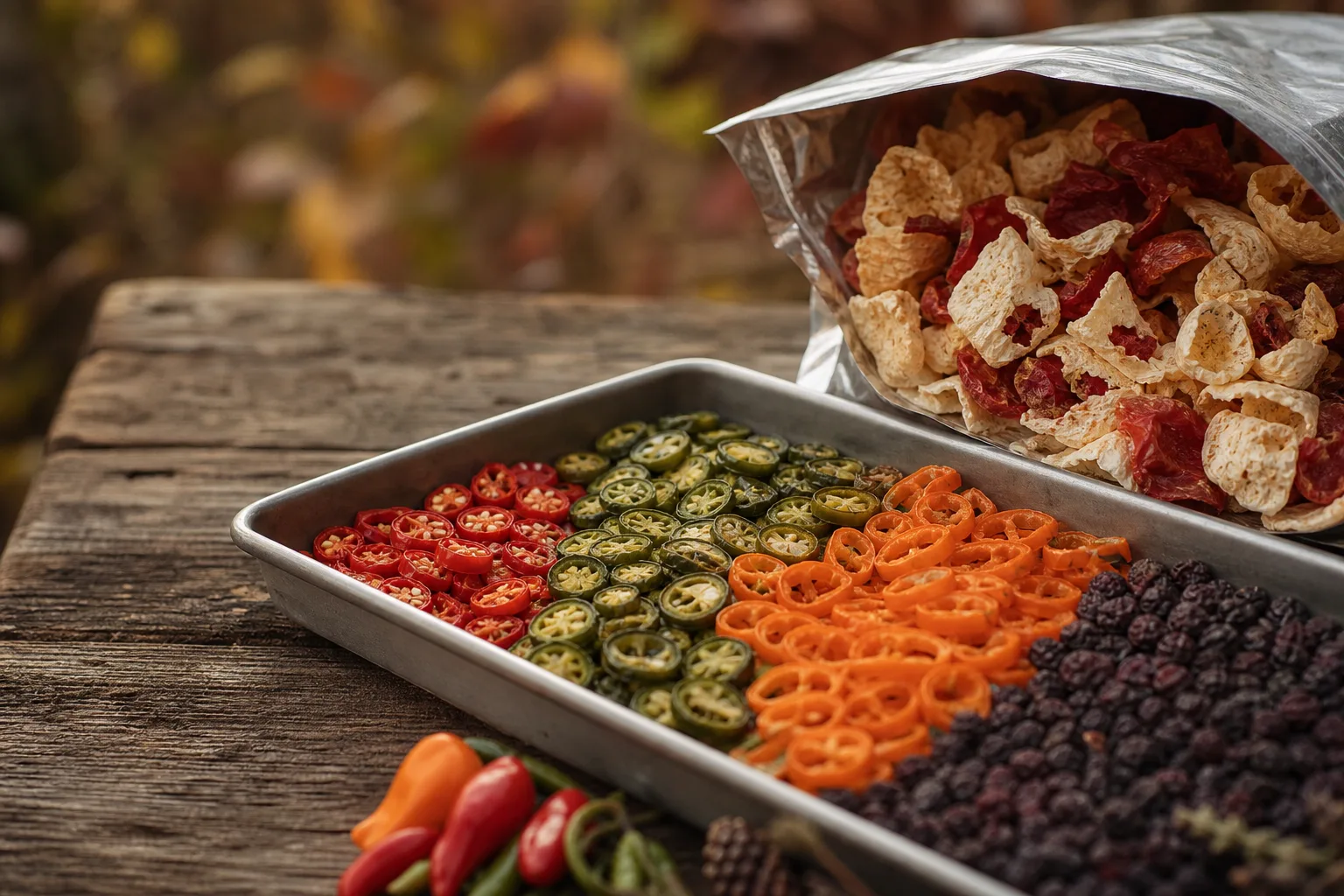
Dehydrate if you want a practical fall pantry, and freeze dry if your priority is preserving fresh flavor, bright color, delicate nutrients and a near fresh texture. My clear pick for most home gardeners is dehydrating because the equipment costs less and the food works beautifully in soups, stews, sauces and snacks, while freeze drying is the luxury choice for maximum quality.
Is dehydrating or freeze drying better for garden surplus?
Dehydrating is better for most garden surplus because warm air removes moisture with less equipment, lower packaging cost and useful results after 6 to 12 hours. Freeze drying preserves more of the original flavor, color, aroma, nutrients and texture, but a countertop cycle often takes 24 to 48 hours and requires Mylar bags with oxygen absorbers.
Dehydrating uses warm air, usually 45 to 70°C, to evaporate water. That heat keeps most sugars, minerals, fiber and much of the fat soluble vitamins, but it can reduce vitamin C, some B vitamins and enzymes.
Freeze drying freezes the harvest first, then removes water through sublimation under vacuum. The cell structure stays more intact, so the finished food is light and crisp instead of leathery.
This is the trade off. Dehydrating asks you to accept some heat loss and a chewier texture. Freeze drying asks you to accept a costly machine, longer cycles and packaging that is less forgiving once opened.
What nutrients does dehydrating preserve and destroy?
Dehydrating preserves most sugars, minerals, fiber and the majority of fat soluble vitamins, but warm air can degrade vitamin C, some B vitamins and enzymes. Keeping the temperature low helps protect quality, yet dehydrated produce will not retain every delicate nutrient as well as freeze dried produce.
This matters with a fall basket of peppers, tomatoes, herbs and late beans. Minerals and fiber remain useful parts of the dried food, while heat sensitive nutrients take a harder hit as temperature and drying time rise.
Do not treat low heat as magic. A tray that stays warm for 12 hours still exposes food to heat for 12 hours. The gentler approach protects flavor and color better than blasting the oven, but it cannot remove the basic cost of warm air.
Everyone says dried food is simply fresh food with the water removed. In practice, heat changes the experience. A dried tomato tastes concentrated and chewy, while a dried herb can lose some of its brighter notes if the tray runs too hot.
What does freeze drying preserve that dehydrating loses?
Freeze drying preserves more of the fresh taste, bright color, aroma and delicate nutrients because the process uses freezing and vacuum rather than warm air. It also keeps cell structure more intact, producing a crisp food that can reconstitute close to its original texture.
That makes freeze dried strawberries, peaches, peppers and cooked meal ingredients feel more like the harvest you picked. Vitamin C and most B vitamins are retained far better than with conventional warm air drying according to the provided research summary.
The result is not perfect fresh food. Water must still return before the texture resembles the original, and a crisp piece straight from the bag is its own snack, not a fresh berry.
Freeze drying also has a practical weakness. A 24 to 48 hour cycle ties up the machine, and moisture can ruin the finished product after opening if you leave the package loose on the counter. Crisp food needs disciplined packing.
Which garden foods should you dehydrate this fall?
Dehydrate herbs, sliced peppers, tomatoes, apples, beans and other produce you plan to eat as snacks or add to soups and stews. The method suits harvests where a chewy texture is acceptable, and it is the sensible first choice if you need to process several trays without buying a freeze dryer.
Slice vegetables uniformly to about ½ inch and berries to about ¼ inch. Uniform pieces dry more evenly, while thick and thin pieces on the same tray leave you with brittle edges and damp centers.
Herbs are especially friendly to dehydrating because you can crumble them into jars for cooking. The downside is aroma loss if you run them too hot or leave the tray exposed after drying, so use low heat and airtight storage.
Tomatoes become concentrated and leathery. That is excellent in a winter stew, but not a substitute for a fresh tomato slice. Beans and vegetables can be rehydrated for soups, although the texture will be softer than the original.
Which garden foods deserve freeze drying?
Freeze dry produce when you care most about bright color, crisp texture, fresh aroma, delicate nutrients or quick rehydration. Berries, fruit slices, peppers, herbs and prepared meals all benefit, but the method costs more and takes longer than dehydrating.
Pre freeze the harvest on a tray before loading the countertop freeze dryer. Keep pieces in a single layer so cold reaches the food evenly and so the machine is not asked to separate one thick frozen mass.
A ¼ inch slice works well for berries and similarly sized fruit pieces. Larger pieces can take longer to dry completely. The machine cycle commonly runs 24 to 48 hours, so start with a batch you can monitor rather than every last thing in the garden.
The honest downside is money and space. You need the machine, packaging, oxygen absorbers and a heat sealer, then a freezer proof cabinet or similarly protected storage area for up to 2 to 3 years.
How should you prepare garden produce before either method?
Wash the harvest, remove damaged portions, slice it uniformly, blot the surface dry and arrange pieces in a single layer. Use about ½ inch slices for vegetables and ¼ inch slices for berries, because consistent thickness gives both methods a more even result.
Do not pile wet produce onto a tray. Surface water stretches the process and encourages uneven drying. I learned that one the annoying way with a crowded tray of peppers, because the pieces on the middle stayed soft while the edges went papery.
For dehydrating, use a low heat oven, solar dryer or food grade dehydrator. Turn trays every few hours, especially in a humid fall kitchen, and finish when the food is pliable but no longer sticky.
For freeze drying, pre freeze the prepared pieces on a tray, then load the machine. Keep the arrangement orderly. You are paying for that cycle, so do not turn the tray into a frozen produce pile.
If you are unsure about a plant or edible harvest, check our plant database before processing it. Preservation does not turn an uncertain plant into a safe one.
How do you know dehydrated food is finished?
Dehydrated food is finished when it feels pliable and no longer sticky, usually after 6 to 12 hours, although humidity, slice thickness and the produce itself change the timing. The pieces should not have a damp center, because hidden moisture can shorten storage life.
Check several pieces from the center of the tray, not only the crisp edge pieces. Let a sample cool before judging it. Warm food can feel softer than it will once cool, and a sticky center is a warning rather than a minor imperfection.
Turn the trays every few hours. An oven, solar dryer and food dehydrator each move air differently, so the six to twelve hour range is a working guide, not a promise carved into stone.
My fall rule is simple. If a piece bends without feeling wet, it is probably ready for storage. If it bends and feels sticky, keep drying, because a pretty jar of damp food is not a pantry win.
How should you package and store dehydrated and freeze dried food?
Store dehydrated food in airtight jars with a desiccant packet in a cool, dark pantry. Pack freeze dried food in Mylar bags with oxygen absorbers, seal the bags with a heat sealer and keep them in a freezer proof cabinet for up to 2 to 3 years.
Dehydrated food is more forgiving, but not careless proof. Let it cool fully before sealing so trapped warmth does not create condensation inside the jar. A dark pantry helps protect color and quality.
Freeze dried food is lighter and crisper, which also makes it more vulnerable to moisture after opening. Remove what you need, reseal the rest quickly and do not leave a large bag open while you wander off to answer the phone.
Packaging is part of the method, not an afterthought. A brilliant freeze dried batch can lose its crisp texture in a humid room, while a well dried batch in a properly sealed jar can serve you for months.
The supplied research also mentions freezing cooked food as a practical storage habit, but that is different from freeze drying and does not create the same crisp, shelf stable result. I am separating those ideas because the provided magazine source discusses freezing cooked food, not freeze drying: Almeria Living Magazine.
Who is dehydrating or freeze drying for, and who should skip it?
Dehydrating suits a gardener with a large fall harvest, limited equipment money, pantry space and plans for soups, stews, sauces or chewy snacks. Freeze drying suits someone who values near fresh flavor and texture, expects to preserve food for up to 2 to 3 years and accepts the cost of a machine and packaging.
Choose dehydrating if you are processing herbs, tomatoes and peppers this weekend. It is also the better starting point if you have never preserved food before and want to learn tray spacing, moisture checks and storage without committing to a countertop freeze dryer.
Choose freeze drying if crisp fruit, bright color and delicate nutrient retention are the point. It is a poor fit if you cannot afford the equipment, cannot store sealed Mylar bags or do not want to manage 24 to 48 hour cycles.
Skip both methods for produce you already know you will not eat. A preserved jar is still waste if it sits untouched for two years. Start with one harvest, one method and enough food for the way your household actually cooks.
If you want help deciding how much storage space the harvest will need, use the free get a concept for your yard tool to think through the garden and pantry connection before next spring's planting.
What should you choose if you are standing in the garden today?
Choose dehydrating today unless you already own a freeze dryer and have a clear reason to preserve fresh texture. Slice the harvest evenly, dry it in a single layer, check for pliability without stickiness and seal it in airtight jars, while reserving freeze drying for high value batches where color, aroma, nutrients and rehydrated texture matter most.
Pick the produce first. Herbs and thin peppers can go toward dehydrating. Berries and beautiful fruit can go toward freeze drying if you have the machine ready and enough time for a full cycle.
Here is the comparison I use before I start a harvest batch:
| Method | Best preserved qualities | Typical preparation and timing | Honest downside |
|---|---|---|---|
| Dehydrating | Sugars, minerals, fiber, most fat soluble vitamins, concentrated flavor | 45 to 70°C, single layer, turn trays, usually 6 to 12 hours | Heat can reduce vitamin C, some B vitamins and enzymes, and the texture is leathery or chewy |
| Freeze drying | Fresh taste, bright color, aroma, vitamin C, most B vitamins and crisp texture | Pre freeze, vacuum cycle, usually 24 to 48 hours | Equipment, oxygen absorbers, Mylar bags and a heat sealer cost more |
My vote is still dehydrating for the ordinary fall overflow. Save freeze drying for the harvest you want to taste like August when February arrives, because that is where the expensive method earns its keep.
Is freeze drying healthier than dehydrating garden produce?
Freeze drying generally preserves more heat sensitive nutrients, including vitamin C and most B vitamins, because it removes water through freezing and vacuum rather than warm air. Dehydrating still preserves most sugars, minerals, fiber and many fat soluble vitamins, but its heat can reduce vitamin C, some B vitamins and enzymes.
How long does dehydrated garden produce take to dry?
Dehydrated garden produce typically takes 6 to 12 hours, depending on humidity, slice thickness, produce type and equipment. Slice vegetables about ½ inch thick, arrange them in one layer, turn trays every few hours and finish when the pieces are pliable but no longer sticky.
How long does a home freeze drying cycle take?
A home freeze drying cycle commonly takes 24 to 48 hours. Pre freeze the produce on a tray, keep pieces in a single layer and load the countertop machine carefully, because a thick frozen pile takes longer and can dry unevenly.
What is the best way to store dehydrated garden food?
The best way to store dehydrated garden food is in airtight jars with a desiccant packet in a cool, dark pantry. Let the dried pieces cool fully before sealing, because trapped warmth can create condensation and leave hidden moisture inside the container.
What packaging does freeze dried food need?
Freeze dried food needs Mylar bags, oxygen absorbers and a heat sealer. Seal the finished food promptly, then keep it in a freezer proof cabinet. Moisture can quickly steal the crisp texture after opening, so reseal the bag rather than leaving it loose.
Can dehydrated vegetables be rehydrated for winter meals?
Dehydrated vegetables can be rehydrated for winter soups and stews, although their texture will be softer and chewier than fresh vegetables. That texture is the honest trade off for a lower equipment burden and a useful pantry ingredient that does not require a 24 to 48 hour freeze drying cycle.
The supplied research brief is the basis for the drying details here. The other provided links do not offer dependable preservation instructions, including this unrelated product page: Meal Replacement Drinks. I would not use it to make a garden preservation decision.
Fall is the season for choosing what deserves your time. Dehydrate the useful everyday harvest. Freeze dry the precious bites you want to keep bright and crisp. And please do not wait until the basil is already brown, because I have killed enough basil for both of us.
Want a plan for your own yard?
Tell us the space and we will put a planting plan together for it. Start at get my concept, or browse what actually grows where you are over on plants.
Frequently asked questions
Is freeze drying healthier than dehydrating garden produce?
Freeze drying generally preserves more heat sensitive nutrients, including vitamin C and most B vitamins, because it removes water through freezing and vacuum rather than warm air. Dehydrating still preserves most sugars, minerals, fiber and many fat soluble vitamins, but its heat can reduce vitamin C, some B vitamins and enzymes.
How long does dehydrated garden produce take to dry?
Dehydrated garden produce typically takes 6 to 12 hours, depending on humidity, slice thickness, produce type and equipment. Slice vegetables about ½ inch thick, arrange them in one layer, turn trays every few hours and finish when the pieces are pliable but no longer sticky.
How long does a home freeze drying cycle take?
A home freeze drying cycle commonly takes 24 to 48 hours. Pre freeze the produce on a tray, keep pieces in a single layer and load the countertop machine carefully, because a thick frozen pile takes longer and can dry unevenly.
What is the best way to store dehydrated garden food?
The best way to store dehydrated garden food is in airtight jars with a desiccant packet in a cool, dark pantry. Let the dried pieces cool fully before sealing, because trapped warmth can create condensation and leave hidden moisture inside the container.
What packaging does freeze dried food need?
Freeze dried food needs Mylar bags, oxygen absorbers and a heat sealer. Seal the finished food promptly, then keep it in a freezer proof cabinet. Moisture can quickly steal the crisp texture after opening, so reseal the bag rather than leaving it loose.
Can dehydrated vegetables be rehydrated for winter meals?
Dehydrated vegetables can be rehydrated for winter soups and stews, although their texture will be softer and chewier than fresh vegetables. That texture is the honest trade off for a lower equipment burden and a useful pantry ingredient that does not require a 24 to 48 hour freeze drying cycle.
Free, no obligation
Ready to design your dream landscape? Start here.
Tell us where you are and we will start a free profile for you, with plants that actually survive your climate and a real sense of what the build would cost.