
Curb Appeal Landscapes You Can Build This Fall
Build a better first impression with a defined walkway, crisp planting beds, layered plants, mulch, and low-voltage lighting. This fall plan focuses on upgrades that work in real yards, including Central Texas yards where clay, limestone, drought, and deer will test every shortcut.
September 22, 2026
By Diego Navarro
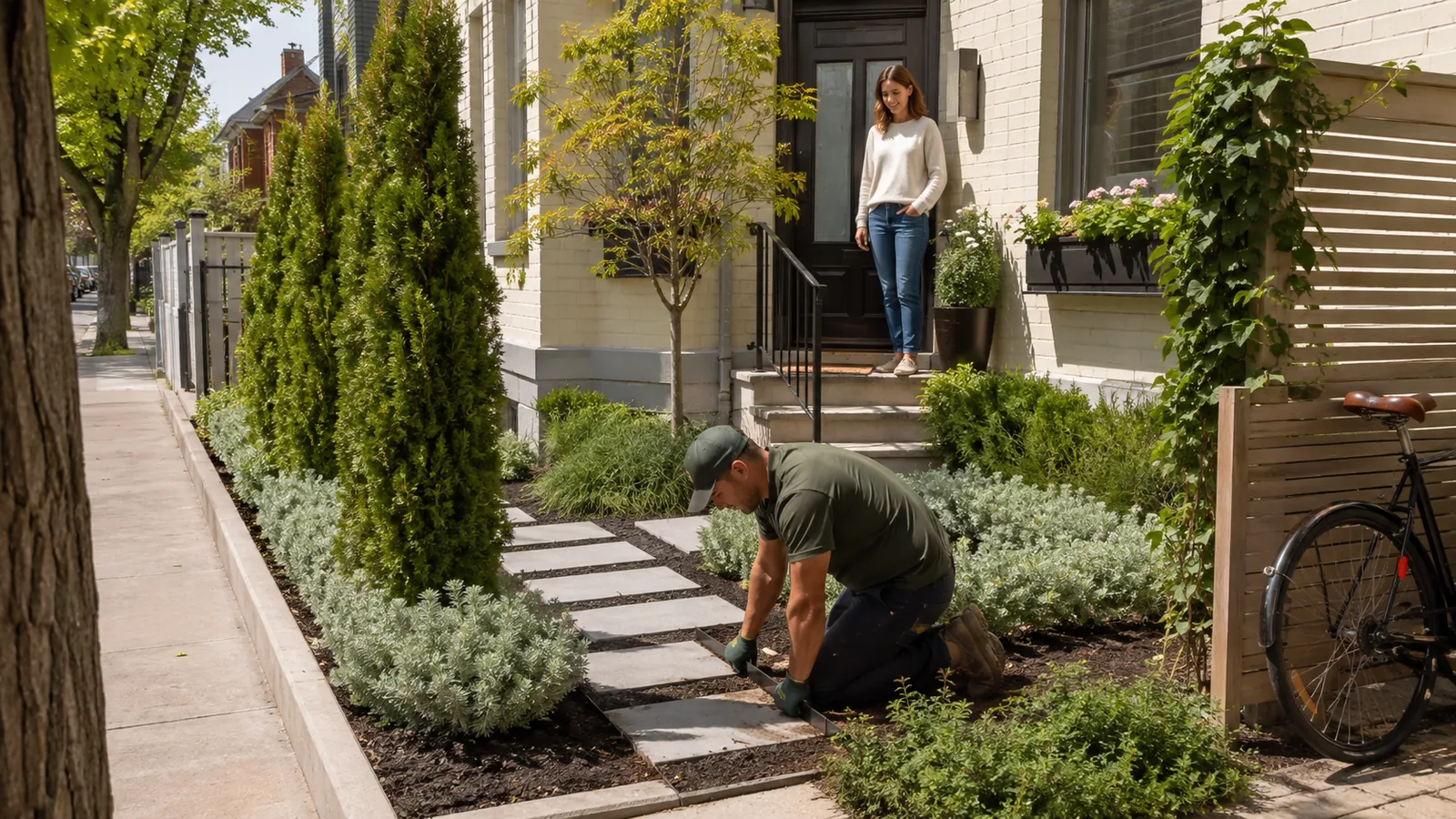
The best curb appeal landscapes begin with a clear path to the front door, crisp planting-bed edges, and plants arranged from low in front to tall in back. This fall, build the hardscape first, improve drainage before planting, and use mulch and restrained lighting to make the front yard look finished without creating a second job.
I learned this the slow way in Austin, standing over a hole that hit limestone before the shovel had done much of anything. Up north, I worried about the first hard frost; here, I worry about whether the fifth week over 100 degrees will still leave anything alive. That changes the plan.
What are the best curb appeal landscapes for a front yard?
The best curb appeal landscapes use one obvious arrival route, two or three plant layers, a defined bed shape, and materials that repeat the home’s architecture. Start by clearing debris and trimming overgrown shrubs, then connect the sidewalk to the door with stone, pavers, or decorative concrete that looks intentional and can handle daily foot traffic. The design basics are backed by this front-yard guide.
Keep the walkway at least 4 feet wide for one comfortable walking line, or 5 feet if two people regularly approach the door together. Give the path a gentle 1 percent cross slope for drainage, but do not make it feel like a ramp unless the site requires one.
Shape the bed so it leads the eye toward the entry instead of making visitors hunt for it. A curved edge can work, but a curve that changes direction every 3 feet looks like a garden hose having a bad day. Use one clean sweep.
For an Austin front yard, I would use a 30 to 36 inch low planting layer, a 3 to 4 foot middle layer, and shrubs or a small ornamental tree 6 feet or farther from the door. Taller plants give depth, but they should not block windows, porch lights, or the house number. Every plant choice has a trade-off, so use the plant database to check mature size, water needs, and local fit before buying.
How do you improve curb appeal landscaping in the fall?
In fall, improve curb appeal landscaping in this order: remove debris, prune only what is genuinely overgrown, mark utilities, correct drainage, install or repair the walkway, prepare planting beds, plant the tallest layer, then finish with smaller plants, mulch, and lighting. This sequence keeps foot traffic and wheelbarrows from crushing fresh planting.
Start with a two-hour cleanup. Pull dead annuals, rake leaves from the path, remove broken branches, and cut back shrubs that have swallowed the entry. Do not shear every shrub into a green meatball just because the hedge trimmer is charged. Heavy pruning can expose the house and leave bare gaps.
Fall is a good planting window because the ground is usually easier to work before the next summer heat, but conditions still decide the day. If the soil is saturated, wait 48 hours. If the soil is dry and hard, water the bed deeply the day before digging instead of trying to win an argument with a pickaxe.
Install drip irrigation before mulch, with emitters placed 6 to 12 inches from each plant’s base. A timer is useful in Central Texas, but it can also overwater a poorly designed bed. The trade-off is convenience versus checking whether water is reaching the root zone rather than simply running down the sidewalk.
What should go beside a front walkway for curb appeal?
Place low groundcovers or grasses along the walkway, medium-height perennials or ornamental grasses behind them, and taller shrubs or small ornamental trees at the rear of the bed. Keep the first planting row 12 to 18 inches from the pavement so mature growth does not narrow the walking route or spill into wet concrete. This layered arrangement creates depth and seasonal interest, as described in this practical curb appeal guide.
Use a 24 to 30 inch front band beside the path, a 3 to 4 foot middle band, and a rear band sized to the mature plants. Everyone says to space plants close so the bed fills quickly. In practice, crowded plants become a pruning schedule, and nobody needs another one in August.
Group plants in odd-numbered drifts of 3, 5, or 7 where the bed is wide enough. The trade-off is that repetition looks calmer and more designed, while many one-off plants can provide variety but often read as leftovers from a nursery cart.
Leave 18 inches clear around the house foundation for inspection and airflow, unless local construction details require more. Keep any thorny or stiff plant at least 30 inches from the walkway. A pretty plant in the wrong place is still a shin bruiser.
If deer regularly pass through your street, do not assume a plant labeled “low maintenance” is deer-resistant. Deer pressure changes the plant list, and the trade-off for tougher foliage may be less softness or fewer flowers. Check the plant database for mature width and site conditions before you make the bed permanent.
Should you replace front-lawn turf with planting beds?
Yes, replace large expanses of front-lawn turf with structured planting beds where the lawn adds no real function, especially along the entry and beneath existing trees. Keep turf where children, pets, or outdoor activity need it, but do not spend water and mowing time maintaining a green rectangle nobody uses.
Lay out the bed with a hose first, then view it from the street, porch, and driver’s seat. Give yourself 24 hours before cutting the edge. A hose reveals awkward corners better than a sketch, and it costs less than rebuilding a bed after the first mowing.
Use natural stone, metal edging, or concrete blocks for the border. Stone looks settled and natural, but it can be expensive and irregular. Metal gives a sharp line and takes less room, but cheap edging bends and rises out of the soil. Concrete blocks are durable and formal, but they can look heavy beside a modest ranch house.
Install the edge 1 to 2 inches above the finished soil line so grass does not leap into the bed and mulch does not wash onto the pavement. The source guidance also supports crisp borders because they separate lawn from planting areas and reduce ongoing weeding with this landscaping advice.
A bed is not automatically lower maintenance than turf. It becomes lower maintenance when the shape is simple, plants are matched to the site, and irrigation is installed before the mulch goes down. Otherwise, you traded mowing for hand weeding. That is not a bargain.
What hardscape makes a curb appeal landscape look finished?
A durable walkway made from stone, pavers, or decorative concrete makes a curb appeal landscape look finished when its color and scale relate to the house. Choose one primary hardscape material, keep the route direct, and set the base correctly so the path does not settle, heave, or collect water beside the foundation.
For a small front walk, excavate roughly 7 to 9 inches below final grade, install 4 to 6 inches of compacted base, add about 1 inch of bedding material where the chosen system requires it, and leave room for the surface. Actual depth depends on soil and material, so follow the manufacturer’s installation detail.
Pavers offer repairability because individual units can be lifted, but weeds can establish in joints and installation takes time. Decorative concrete is clean and accessible, but cracks are difficult to hide once they appear. Natural stone has character and handles irregular shapes, but pieces vary in thickness and require careful setting.
In black clay, do not skip compaction or drainage because the soil swells and shrinks. In caliche, expect a rock bar, dust, and a hole that takes two hours. A path that looks level in October can move over one wet winter if the base is treated as an afterthought.
A low retaining wall can solve a real grade or drainage problem, but it should not be added just for decoration. The trade-off is useful structure against cost, excavation, and water management. If the wall holds soil, give the water somewhere to go.
How should you add lighting to a curb appeal landscape?
Add subtle lighting along the walkway, at the base of selected trees, and near architectural features, using enough fixtures to guide visitors without turning the front yard into a parking lot. Put path lights about 6 to 8 feet apart, stagger them rather than lining them up, and aim light downward.
Low-voltage lighting is safer to install than line-voltage work and makes fixture placement flexible, but transformers, wire connections, and timers still need protection from moisture and damage. The trade-off is a simpler system with more visible hardware and occasional maintenance.
Light the first step, the turn, and the door threshold before lighting every plant. You want people to see where their feet are going. Highlighting one trunk or a textured wall can add depth, but lighting every shrub flattens the view and announces that you own many small electrical devices.
Bury cable 6 to 8 inches where it crosses lawn or planting beds, and test the system after dark before closing the trench. Aim fixtures away from bedroom windows and the street. Good lighting guides. It does not interrogate the neighborhood.
Which curb appeal landscape approach is right for your situation?
This approach suits homeowners who want a visible improvement in 4 to 8 weeks, can maintain a defined bed, and need a front yard that looks good through changing seasons rather than only on planting day. It suits small lawns, entry walks, new construction, and yards where drainage or overgrown shrubs currently hide the house.
Ignore the full makeover if you are selling in less than six weeks, have unresolved foundation drainage, or cannot provide water during the first 12 weeks after planting. Clear debris, prune responsibly, repair the path, and add mulch first. A living landscape needs time to root.
| Approach | Best use | Honest downside |
|---|---|---|
| Layered planting bed | A structured front yard with seasonal interest | Plants take months to fill and need establishment water |
| Expanded turf | Children, pets, and active use | More mowing and irrigation, with less planting depth |
| Hardscape-heavy entry | Small yards or difficult soil | More upfront cost and more heat reflected from surfaces |
| Simple cleanup and mulch | A short selling timeline or tight budget | It improves appearance quickly but does not solve poor layout |
If you are in Central Texas, schedule the work around the soil, not the calendar. Fall planting can be sensible, but a wet clay bed can smear into a sealed brick and a dry limestone bed can turn a small project into a rock-removal project. You can also get a concept for your yard before buying materials, which is cheaper than discovering the walkway is too narrow after installation.
What are the most common curb appeal landscaping mistakes?
The most common mistakes are blocking the entry, planting for current size instead of mature size, skipping bed edges, ignoring drainage, and installing lighting or irrigation after the planting is complete. Each mistake costs more to correct after roots, paving, mulch, and soil have settled into place.
Planting too close to the walkway is the one I see most. A 1-gallon plant looks polite in a nursery pot. Three years later, it owns the path. Measure mature width and divide the planting space before you shop.
Another mistake is choosing a plant because it looks good in one season. Year-round curb appeal needs structure outside the bloom window, along with seasonal variety. Layering guidance recommends low plants in front, shrubs behind, and ornamental trees at the rear, with seasonal changes carrying interest through the year as outlined here.
Do not bury the trunk flare of a tree under mulch. Keep mulch 3 inches deep across the bed, but pull it 3 to 4 inches away from trunks and stems. Mulch suppresses weeds and holds moisture, though too much mulch can trap moisture against wood and hide grade problems.
Finally, do not let a design app make construction decisions for you. Valeria draws it, I have to build it, and the ground gets the final vote. A concept is helpful. A shovel is less diplomatic.
What should you know before building curb appeal landscapes?
Before building curb appeal landscapes, measure the entry, observe water after a storm, identify utilities, check mature plant sizes, and set a realistic maintenance limit. Then complete the work in a fixed sequence: cleanup, drainage, hardscape, irrigation, planting, edging, mulch, and lighting. The finished yard should welcome people without demanding daily attention.
Ask yourself this: will you still want this bed after a July week above 100 degrees? If the answer depends on hand watering every morning, simplify the plant palette and install drip. August does not negotiate.
Budget for soil preparation, disposal, base material, edging, irrigation parts, and replacement plants. The visible plant is only one piece of the job. A cheap installation can become expensive once settled pavers, dead shrubs, and washed mulch need to be rebuilt.
Use a simple checklist before you call the job done:
- The walkway is at least 4 feet wide and drains away from the house.
- Plant layers do not block the door, windows, lights, or house number.
- Bed edges contain grass and mulch.
- Irrigation reaches each root zone without spraying the pavement.
- Mulch is about 3 inches deep and clear of trunks.
- Lighting guides the route without shining into windows.
A polished front yard is not the one with the most plants. It is the one where every part has a job.
What is the cheapest way to improve curb appeal landscaping?
The cheapest improvement is a thorough cleanup followed by a clearly edged bed and fresh mulch. Remove debris, trim overgrown shrubs, define the path, and spread mulch about 3 inches deep while keeping it away from trunks. This improves order quickly, but it will not fix drainage, broken paving, or plants placed in the wrong location.
Should I landscape the whole front yard at once?
You should landscape the whole front yard at once only if drainage, access, budget, and irrigation are ready. Otherwise, complete the entry path and the most visible bed first, then expand after 4 to 8 weeks. A phased project reduces mistakes, but unmatched materials or bed shapes can look pieced together.
How wide should a front walkway be for curb appeal?
A front walkway should be at least 4 feet wide for comfortable single-file access and about 5 feet wide where two people commonly walk together. Keep plants 12 to 18 inches from the pavement at installation, allowing room for mature growth. A wider path costs more, but a narrow path makes the entry feel cramped.
How deep should mulch be in a curb appeal landscape?
Mulch should be about 3 inches deep across a planting bed, with a 3 to 4 inch gap around trunks and plant stems. Mulch suppresses weeds, helps retain moisture, and gives the bed a finished look. The trade-off is that thick or piled mulch can hide drainage problems and hold moisture against woody plants.
Are low-voltage landscape lights worth it for curb appeal?
Low-voltage landscape lights are worth it when they safely clarify the walkway, steps, door, or one architectural feature after dark. Space path fixtures about 6 to 8 feet apart and stagger them. The system still needs protected connections, a suitable transformer, and periodic adjustment, so lighting is useful infrastructure, not a set-it-and-forget-it decoration.
How long does it take for a curb appeal landscape to fill in?
A curb appeal landscape usually needs 4 to 8 weeks to look settled after cleanup, installation, and mulch, while new plants may need 12 weeks or more to establish roots. Full visual maturity can take several years, depending on plant size and growing conditions. Spacing for mature width costs patience now and prevents pruning problems later.
Want a plan for your own yard?
Tell us the space and we will put a planting plan together for it. Start at get my concept, or browse what actually grows where you are over on plants.
Frequently asked questions
What is the cheapest way to improve curb appeal landscaping?
The cheapest improvement is a thorough cleanup followed by a clearly edged bed and fresh mulch. Remove debris, trim overgrown shrubs, define the path, and spread mulch about 3 inches deep while keeping it away from trunks. This improves order quickly, but it will not fix drainage, broken paving, or plants placed in the wrong location.
Should I landscape the whole front yard at once?
You should landscape the whole front yard at once only if drainage, access, budget, and irrigation are ready. Otherwise, complete the entry path and the most visible bed first, then expand after 4 to 8 weeks. A phased project reduces mistakes, but unmatched materials or bed shapes can look pieced together.
How wide should a front walkway be for curb appeal?
A front walkway should be at least 4 feet wide for comfortable single-file access and about 5 feet wide where two people commonly walk together. Keep plants 12 to 18 inches from the pavement at installation, allowing room for mature growth. A wider path costs more, but a narrow path makes the entry feel cramped.
How deep should mulch be in a curb appeal landscape?
Mulch should be about 3 inches deep across a planting bed, with a 3 to 4 inch gap around trunks and plant stems. Mulch suppresses weeds, helps retain moisture, and gives the bed a finished look. The trade-off is that thick or piled mulch can hide drainage problems and hold moisture against woody plants.
Are low-voltage landscape lights worth it for curb appeal?
Low-voltage landscape lights are worth it when they safely clarify the walkway, steps, door, or one architectural feature after dark. Space path fixtures about 6 to 8 feet apart and stagger them. The system still needs protected connections, a suitable transformer, and periodic adjustment, so lighting is useful infrastructure, not a set-it-and-forget-it decoration.
How long does it take for a curb appeal landscape to fill in?
A curb appeal landscape usually needs 4 to 8 weeks to look settled after cleanup, installation, and mulch, while new plants may need 12 weeks or more to establish roots. Full visual maturity can take several years, depending on plant size and growing conditions. Spacing for mature width costs patience now and prevents pruning problems later.
Free, no obligation
Ready to design your dream landscape? Start here.
Tell us where you are and we will start a free profile for you, with plants that actually survive your climate and a real sense of what the build would cost.