
Cover Crops for the Home Garden: Choose by Your Goal
The best cover crop depends on what your soil needs this fall: nitrogen, biomass, compaction relief, or weed suppression. Here is how to choose without creating a springtime mess.
September 24, 2026
By Valeria Navarro
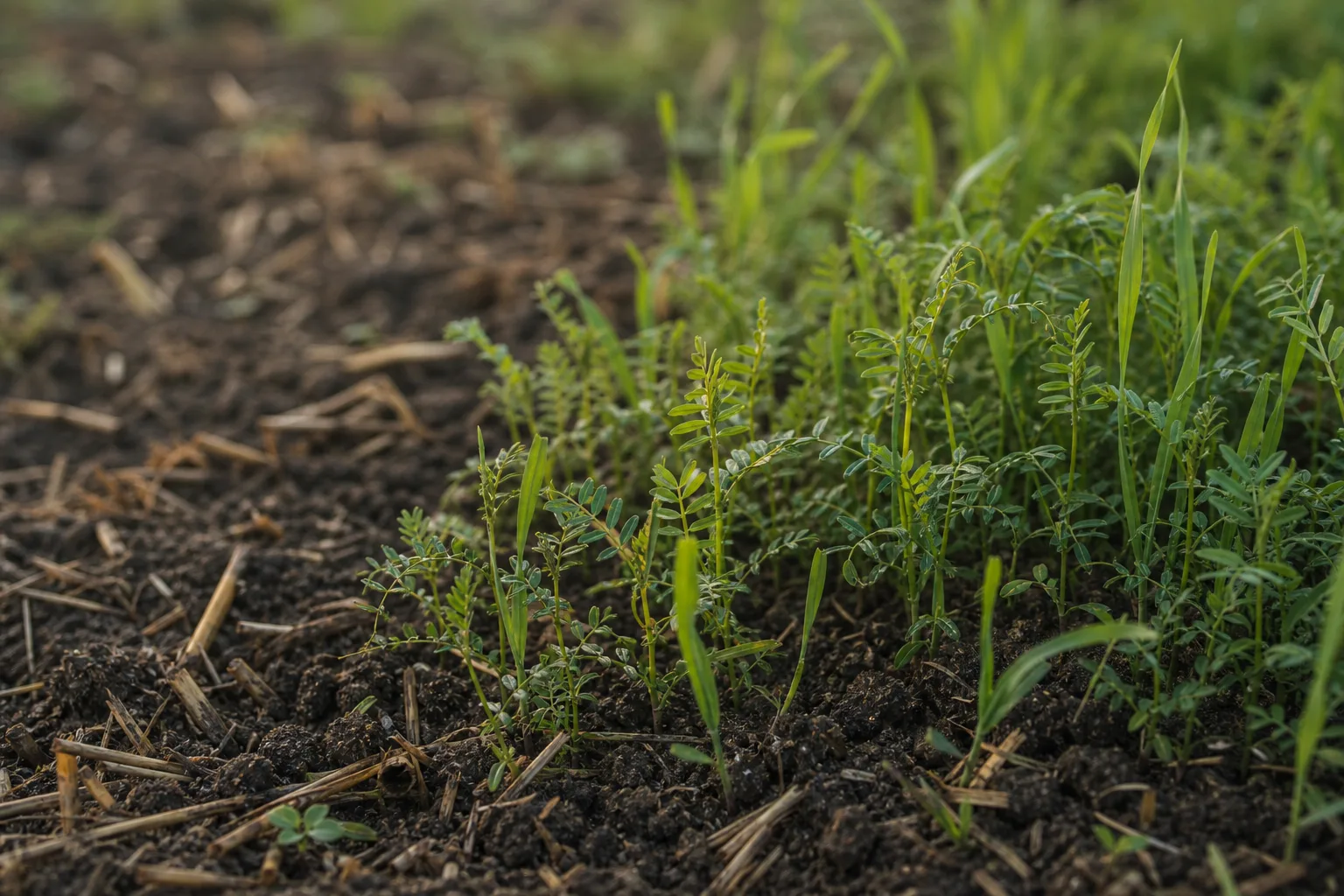
Pick your cover crop by the job you need done, not by the prettiest seed packet. Use a legume for nitrogen, a grass for biomass and weed suppression, and a deep-rooted radish or mustard for compaction, then terminate it before spring planting turns your bed into a jungle.
Which cover crop should I plant this fall?
The best fall cover crop depends on your main problem: hairy vetch, crimson clover, common vetch, or Austrian winter pea for nitrogen; rye, oats, barley, or annual ryegrass for biomass and weed control; and forage radish or mustard for compaction. In Central Texas, your planting date and bed depth matter as much as the species.
That is the whole decision in one breath. Choose one job first. Cover crops can do several things, but no plant does every job equally well, and pretending otherwise is how a small raised bed becomes a spring wrestling match.
For a fall garden in Austin, sow cool-season covers after summer vegetables come out and before the soil loses its warmth. A practical window is late September through November, adjusted for the first hard freeze and your available irrigation.
The Iowa State home garden cover crop guide also starts with the goal, recommending high-biomass plants for soil building, legumes for fertility, and fast-growing allelopathic species for weed control. That is the rule I use. Job first, seed second.
| Garden goal | Best options | Honest downside |
|---|---|---|
| Add nitrogen | Hairy vetch, crimson clover, common vetch, Austrian winter pea | Legumes can be slower to establish and may reseed or release nitrogen unevenly |
| Build biomass and suppress weeds | Winter rye, oats, annual ryegrass, barley | Grass residue can temporarily tie up nitrogen as it breaks down |
| Relieve compaction | Forage radish, forage turnip, mustard | Taproots need enough soil depth and may not fix hard caliche underneath |
| Combine benefits | Rye with hairy vetch, or oats with crimson clover | Mixed stands are harder to seed and terminate evenly |
Which cover crop adds the most nitrogen to a home garden?
Legumes are the right choice for adding nitrogen because hairy vetch, crimson clover, common vetch, Austrian winter pea, cowpea, and sunn hemp fix nitrogen in partnership with soil bacteria. For a fall garden, choose a cool-season legume and terminate it before flowering gets too far along.
Hairy vetch is my favorite nitrogen-focused option for a bed that will rest through winter. Crimson clover is easier to love in a smaller garden because it gives you a manageable stand and flowers attractively, although any flowering cover can become harder to cut cleanly.
Cowpea and sunn hemp belong in warm weather, not in the fall garden you are standing beside now. They suit a summer fallow period, while Austrian winter pea and crimson clover fit a cool-season schedule better.
Research guidance commonly lists legume seed rates around 5 to 10 pounds per acre, but a homeowner should not blindly pour an agricultural rate into a shallow raised bed. Use a lighter hand in a thin bed, scatter evenly, and rake seed into the top quarter inch of soil rather than burying it deeply.
Everyone says nitrogen is the prize. In practice, the timing is the prize. Mow or cut the legume before seed matures, then let the residue wilt on the surface for roughly two to three weeks before planting hungry spring crops. Fresh, succulent residue breaks down faster, but it can also create an untidy, uneven release.
Which cover crops make the most mulch and suppress weeds?
Winter rye, annual ryegrass, oats, spring barley, and wheat are strong choices for biomass, erosion control, and winter weed suppression. Their fibrous roots hold soil, and their dense tops shade bare ground, but all-grass residue can temporarily tie up nitrogen while it decomposes.
If your main fear is a bed full of winter weeds, I would choose winter rye over a delicate little cover that barely fills the soil. Rye establishes quickly and produces a thick mat. The trade-off is real: it can be stubborn to cut once it gets tall, and its residue can delay spring planting.
Oats are friendlier for a first attempt. They grow quickly, provide cover, and are more likely to winterkill than rye in a cold event. That easy termination is worth money in a small garden because you may not own a roller, flail mower, or the patience of a saint.
For a stronger weed-suppression push, buckwheat, winter rye, and mustard are fast-growing options with allelopathic properties. Buckwheat is a warm-season choice, so it is useful before a fall cover or during a summer gap, not as the main winter cover you sow in November.
A grass and legume mix is often my practical choice when you need both mulch and nitrogen. Rye with hairy vetch or oats with crimson clover gives you more balanced residue than either a grass-only or legume-only stand, though mixed seed is harder to terminate at one perfect moment. The Penn State cover crop selection guide makes the same useful point: match the species to compaction, soil structure, weed pressure, and the fallow period.
Can a cover crop break up compacted soil?
Forage radish, forage turnip, mustard, and other deep-rooted brassicas can help open compacted soil by sending taproots downward, but they need enough soil depth to work. They will not magically fracture solid limestone or repair a bed that stays waterlogged, and shallow raised beds should use them cautiously.
Forage radish is the boldest option here. Its taproot can leave channels as it decomposes, which may improve infiltration and aeration in compacted topsoil. The honest catch is that Austin caliche is not a personal challenge the radish can win. If the root hits rock at four inches, the plant tells you where the rock is and stops.
Sow radish, forage turnip, or mustard in late summer or early fall, ideally while the soil still has enough warmth for quick root growth. A 5 to 10 pounds per acre agricultural rate is a reference point, not permission to make a dense forest in a 6 inch raised bed.
Shallow beds need lower rates. Deep taproots can crowd edible roots, push against bed edges, or leave a rough surface that takes extra preparation in spring. For a bed over thin soil, choose oats or crimson clover instead and address compaction with a broadfork only where the soil is actually tight.
I learned this difference the hard way in Austin. Miami taught me that water could disappear through sandy fill before I finished the hose, but Central Texas clay holds water, cracks open by August, then sets like a brick. A cover crop helps structure over time. It does not replace fixing drainage, adding compost, or removing a buried slab.
Who are cover crops for, and who should skip them?
Cover crops suit gardeners with an empty bed for six to twelve weeks, enough irrigation for establishment, and a clear plan for termination before spring planting. Skip them in a tiny bed needed immediately, in shallow soil over rock, or if you cannot mow, cut, pull, or winterkill the stand on schedule.
This practice is for the person whose tomato bed is empty in November and whose next crop will not go in until February or March. It is also useful for a new yard where bare soil is eroding, crusting, or growing weeds faster than you can pull them.
It is not for every bed. If you have only a narrow 3 foot by 6 foot box and plan to plant lettuce in three weeks, cover crops cost more time than they return. Plant food instead, mulch the bare soil, and save the experiment for a bed with a real fallow window.
You also need a termination plan before sowing. Mowing is simple. Hand cutting works in a small plot. Rolling works best with enough plant height and a larger surface. Natural winterkill can handle oats in some years, but Austin weather does not promise the same freeze twice, especially after everyone still remembers February 2021.
If you want help choosing species for a particular bed, browse the plant database for growth habit and seasonal details. If the larger question is where the cover crop belongs in your yard, you can get a concept for your yard before buying seed and discovering your only sunny patch is already spoken for.
How should I plant and terminate a fall cover crop?
Clear old vegetable debris, loosen only the top inch, scatter seed evenly, rake it in, and water until seedlings establish. Mow, cut, or let the stand winterkill before it sets seed, then leave the residue as mulch for two to three weeks before transplanting spring crops into the bed.
Remove diseased plants first. A cover crop is not a compost pile with better public relations. Healthy residue can protect soil and add organic matter, but leaving diseased vegetable stems in place can carry problems into the next crop.
For small beds, broadcast seed by hand in two directions so thin spots are easier to see. Rake gently. Most small seed needs shallow contact, not a deep burial. Water lightly every day or two until germination, then shift to deeper watering as roots develop and temperatures cool.
The right termination date depends on what follows. Cut a legume before mature seed forms. Cut rye before it becomes difficult to manage and before its seed heads ripen. If the cover is still green and lush, give the residue time to wilt before placing transplants into it.
Do not plant straight into a thick, fresh mat and expect miracles. Thick residue can hold moisture, slow soil warming, and make seed placement awkward. That mulch is useful, but it needs a little time to settle, and your spring seedlings need soil contact, not a shag carpet.
What is the best cover crop mix for a small raised bed?
A rye and hairy vetch mix is the strongest all-purpose choice when you want winter cover, weed suppression, biomass, and some nitrogen. Oats with crimson clover are easier for a beginner because oats can winterkill, but every mix has a downside: different species mature and terminate at different speeds.
Choose rye with hairy vetch for a bed that can wait until late winter or early spring. Rye gives structure and mulch. Hairy vetch contributes nitrogen. Together, they offer a better carbon to nitrogen balance than an all-grass stand, which may temporarily immobilize nitrogen, or an all-legume stand, which can release it quickly.
Choose oats with crimson clover if easy spring cleanup matters more than maximum biomass. Oats may die after a hard freeze, while crimson clover can remain alive and require cutting. That is still a manageable trade if you can use hand shears or a string trimmer.
Keep mixes simple. Two species are enough for most home beds. More species sound impressive on a label, but they make seeding rates, termination timing, and spring diagnosis harder, especially if one plant thrives while another sulks.
For a shallow bed, reduce the total seed amount rather than applying a full rate of each species. Dense stands compete with themselves, create damp residue, and can smother the soil surface so thoroughly that spring planting becomes a chore.
Should I use a legume, grass, or brassica cover crop?
Use a legume when nitrogen is the priority, a grass when mulch and weed suppression matter most, and a brassica when topsoil compaction is the problem. If two goals matter equally, combine one grass with one legume, but avoid adding a brassica unless the bed has enough depth for its taproot.
This is the short answer I wish someone had given me before I killed my first cover crop by choosing a seed packet for its benefits list instead of my actual calendar. The plant did not fail. My plan did.
Ask yourself one question: what do you want to see improved by April? More nitrogen points toward crimson clover or hairy vetch. A protected surface points toward rye or oats. Better water movement through compacted topsoil points toward forage radish or mustard.
The choice also depends on how you garden next. If you direct sow tiny seeds, avoid an extremely thick rye mat. If you transplant tomatoes into warm soil, plan to cut the cover early enough for the bed to warm. If you are short on tools, choose oats or crimson clover over a tall rye stand.
There is no prize for the most complicated mix. The best cover crop is the one you can establish in fall and terminate before it becomes the boss of your spring garden.
When should I plant a cover crop in Austin?
In Austin, plant cool-season cover crops from late September through November, while the soil is still warm enough for germination and before winter growth slows. Plant warm-season covers such as cowpea, sunn hemp, buckwheat, sorghum-sudangrass, or millet in late spring or early summer instead.
Fall gives you a useful window after summer vegetables finish. Do not wait until the calendar says winter if the bed is already bare and erosion is washing soil toward the sidewalk. A cover crop needs time to germinate and root before cold weather limits growth.
Warm-season species belong to a different schedule. Sorghum-sudangrass and millet can build biomass during hot months, but they are the wrong tool for a cool November planting. They also need more growing room than a small raised bed usually offers.
In Central Texas, weather can swing. A warm October may be followed by a sharp freeze, then a mild January. Planting in fall gives the cover a chance to establish before those swings, but you still need to watch the bed rather than trusting a printed date.
Can cover crops cause problems in the next vegetable crop?
Yes, cover crops can cause spring problems if they are allowed to set seed, left too wet and thick, or terminated too close to planting. All-grass residue may temporarily tie up nitrogen, while volunteers can compete with vegetables, so mow or cut on time and allow residue to settle before planting.
Rye volunteers are not a moral failure. They are simply rye doing its job too successfully. Cut before seed heads mature, especially in a small bed where every volunteer competes directly with your beans, peppers, or squash.
Disease is another reason to remove old vegetable debris before sowing. Cover crop residue should protect soil, not hide a pile of tomato leaves that had a problem last season. Keep the cover choice separate from crop rotation decisions, and do not assume green growth erases disease pressure.
Fresh residue can also make spring planting awkward. Let it wilt for two to three weeks, then pull it aside for transplants or open a narrow planting strip. If the soil underneath is cold and wet, wait. A calendar cannot make a cold root zone behave like May.
A cover crop is a tool, not a virtue badge. Use it when it solves a real problem, and skip it when mulch, compost, or a shorter fall crop would serve the bed better.
How much cover crop seed should I use in a home garden?
Agricultural guidance commonly lists about 5 to 10 pounds per acre for legumes and brassicas and 20 to 30 pounds per acre for high-biomass grasses, but home gardeners should reduce rates for shallow beds and small spaces. Follow the seed label, measure the bed, and avoid doubling rates in a mixture.
The acre numbers are useful for comparing categories, not for tossing seed into a raised bed by feel. A shallow bed has less room for roots and less soil volume to buffer crowding. Dense cover can become damp, weak, and difficult to terminate.
For a mix, divide the intended total rate between the species rather than applying a full rate of rye plus a full rate of vetch. That is the mistake that gives you a thick green wall and a spring cleanup bill made of your own weekends.
Spread seed in two directions. Rake it into the surface. Water enough to establish it, especially if Austin gives you a dry fall, then reduce frequency as temperatures fall and roots move deeper.
Seed is rarely the expensive part. Labor is. Buy only what you can sow evenly and terminate on time, because an underseeded bed is easy to correct with mulch, while an overgrown cover can delay your next crop by several weeks.
What should I do with cover crop residue before planting vegetables?
Mow, cut, roll, or let the cover winterkill, then leave the residue on the soil as protective mulch. Wait about two to three weeks before planting into thick fresh material, and open a clear planting strip so vegetable roots contact soil instead of sitting in loose stems.
Short residue decomposes faster and is easier to manage. Tall rye can make excellent mulch, but it takes more effort to cut and may remain coarse into spring. Oats are less dramatic, which is often a blessing in a garden you tend by hand.
If the residue mats tightly after rain, lift or rake it lightly so the soil surface can breathe. Do not bury a huge volume of fresh material deeply in a small bed. Surface mulch gives you better control and makes volunteer plants easier to spot.
Before planting, check the soil with your hand. If it is cold, sticky, or sealed beneath the residue, wait a little longer or clear a wider strip. Your spring crop needs contact, warmth, and air around its roots.
The goal is not a perfect brown carpet. The goal is protected soil that is easier to plant than the bare, cracked clay you had before.
Is winter rye better than oats for a fall cover crop?
Winter rye is better for maximum biomass and aggressive weed suppression, while oats are better for easy termination and a simpler first attempt. Choose rye if you can cut it early and manage thick residue; choose oats if your bed is small, shallow, or needed for spring planting soon.
Rye wins the muscle contest. It establishes well, holds soil, and creates a strong mulch. The downside is that it keeps going, and a neglected rye stand can become difficult to mow once it is tall and headed.
Oats are gentler. A hard freeze may winterkill them, reducing spring labor and leaving a workable residue. The trade-off is less dependable winter survival and usually less biomass than rye.
Neither choice is automatically right for Austin. A mild winter may let oats persist, while a cold snap may knock them back. Planting date, irrigation, bed depth, and your spring schedule matter more than declaring one species universally best.
If you are standing in the garden with a bare bed today, I would choose oats for a short learning season and rye for a bed that will rest until late winter. Add crimson clover or hairy vetch only if nitrogen is truly part of the assignment.
Want a plan for your own yard?
Tell us the space and we will put a planting plan together for it. Start at get my concept, or browse what actually grows where you are over on plants.
Frequently asked questions
Which cover crop should I plant this fall?
The best fall cover crop depends on your main problem: hairy vetch, crimson clover, common vetch, or Austrian winter pea for nitrogen; rye, oats, barley, or annual ryegrass for biomass and weed control; and forage radish or mustard for compaction. In Central Texas, your planting date and bed depth matter as much as the species.
Which cover crop adds the most nitrogen to a home garden?
Legumes are the right choice for adding nitrogen because hairy vetch, crimson clover, common vetch, Austrian winter pea, cowpea, and sunn hemp fix nitrogen in partnership with soil bacteria. For a fall garden, choose a cool-season legume and terminate it before flowering gets too far along.
Can a cover crop break up compacted soil?
Forage radish, forage turnip, mustard, and other deep-rooted brassicas can help open compacted soil by sending taproots downward, but they need enough soil depth to work. They will not magically fracture solid limestone or repair a bed that stays waterlogged, and shallow raised beds should use them cautiously.
Who are cover crops for, and who should skip them?
Cover crops suit gardeners with an empty bed for six to twelve weeks, enough irrigation for establishment, and a clear plan for termination before spring planting. Skip them in a tiny bed needed immediately, in shallow soil over rock, or if you cannot mow, cut, pull, or winterkill the stand on schedule.
When should I plant a cover crop in Austin?
In Austin, plant cool-season cover crops from late September through November, while the soil is still warm enough for germination and before winter growth slows. Plant warm-season covers such as cowpea, sunn hemp, buckwheat, sorghum-sudangrass, or millet in late spring or early summer instead.
Can cover crops cause problems in the next vegetable crop?
Yes, cover crops can cause spring problems if they are allowed to set seed, left too wet and thick, or terminated too close to planting. All-grass residue may temporarily tie up nitrogen, while volunteers can compete with vegetables, so mow or cut on time and allow residue to settle before planting.
Free, no obligation
Ready to design your dream landscape? Start here.
Tell us where you are and we will start a free profile for you, with plants that actually survive your climate and a real sense of what the build would cost.