
Compost Tea: What Does the Research Support, and What Does It Not?
Compost tea may briefly increase microbial activity and make a small amount of nutrients available, but it is not a dependable fertilizer or disease cure. Aerated tea is the safer choice, while unaerated tea can turn anaerobic, smell foul, produce harmful compounds, and damage plants if you apply it too late.
September 26, 2026
By Diego Navarro
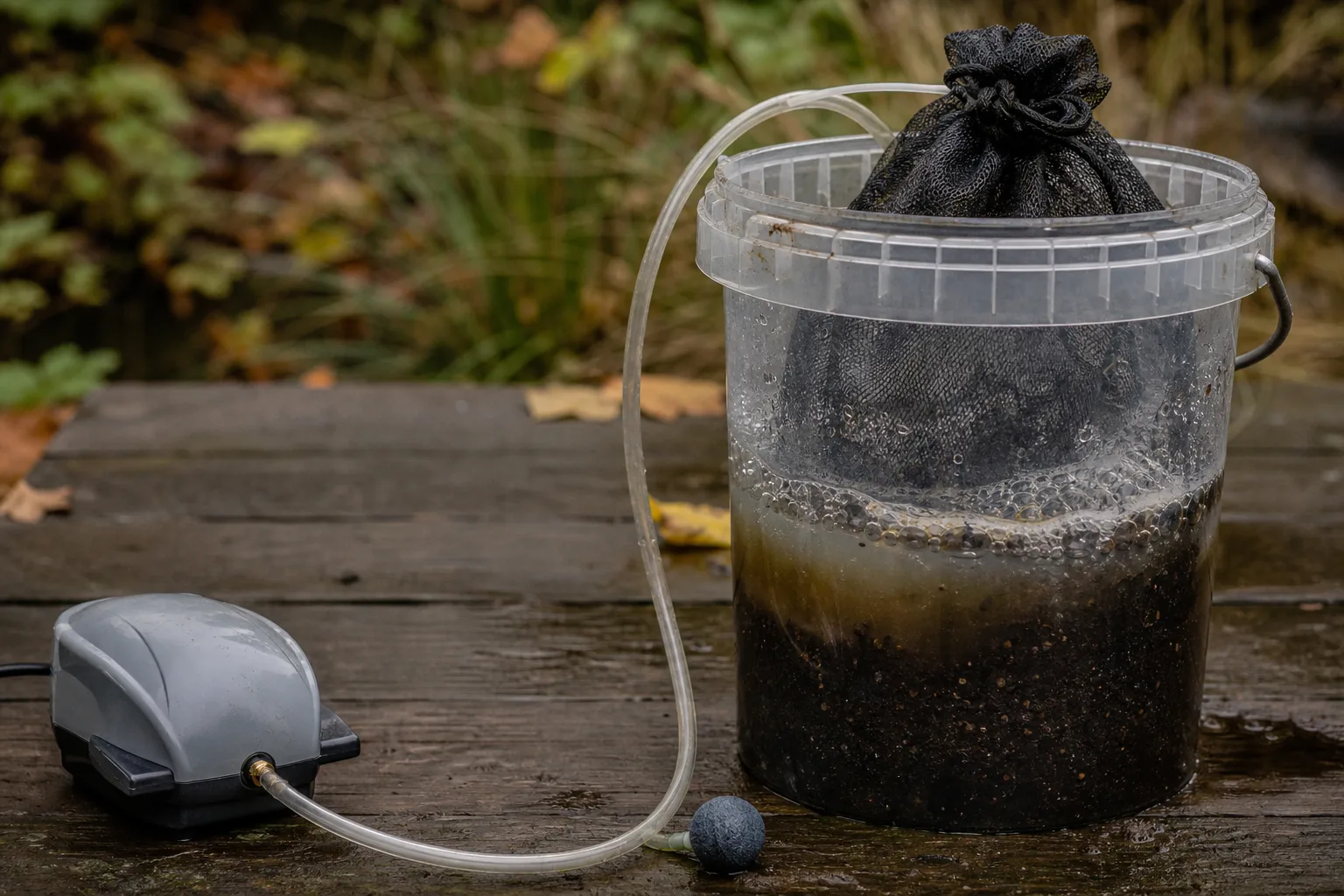
Is compost tea worth making this fall?
Compost tea is worth making only as a small, short-term soil supplement, not as a replacement for compost, mulch, or a measured fertilizer. The research supports temporary increases in microbial activity and modest nutrient availability, while disease-control and plant-growth promises remain much less dependable. I would make aerated tea for a container or established bed, then move on.
That position saves you money and disappointment. A bucket of finished compost spread over the soil gives you organic matter directly, while tea carries only a fraction of that material in water.
In Austin, fall is a sensible time to use a one-time drench because nights are cooling and beds are easier to work than they are in August. It is not a reason to start feeding every seven days. Your soil does not need a beverage subscription.
The practical benefit is strongest where you cannot easily mix in compost, such as a large container, a tree root zone, or a bed already packed with roots. This compost tea guidance also describes tea as more useful where adding solid compost is difficult than as a universal garden cure.
What does research actually support about compost tea?
Research supports short-term increases in soil microbial activity and modest improvements in nutrient availability after compost tea is applied. It does not reliably support claims that tea eliminates plant disease, replaces fertilizer, or produces consistently larger plants across gardens. Treat it as a minor input with narrow benefits, not as liquid compost or a miracle treatment.
The distinction matters because microbial activity is not the same thing as a healthy harvest. A soil test, adequate moisture, organic matter, and the right plant for the site still do the heavy lifting.
Foliar disease claims are especially oversold. Some gardening sources repeat the idea that properly made tea suppresses disease, but the research summary here says the evidence is limited, and this recipe review plainly says there is little scientific evidence that compost tea eliminates disease: read the evidence summary.
If your tomato has a fungal problem, spraying tea is not a dependable rescue plan. Remove badly affected leaves, improve spacing and airflow, water the root zone, and identify the actual disease before spending a Saturday bubbling a bucket.
Why is aerated compost tea the better option?
Actively aerated compost tea is the better option because continuous air favors fast-growing aerobic bacteria, fungi, and protozoa while reducing the chance of harmful anaerobic metabolites. Use mature compost or worm castings, clean non-chlorinated water, and an air pump for 12 to 24 hours. It still offers modest benefits, but it is the safer brewing method.
Aeration means air is being introduced through the water, not that you stirred the bucket twice. An aquarium pump with an air stone is the basic setup; the pump is an honest cost, usually around $15 to $35 for a small home system, and the noise is the trade-off.
Use only well-matured compost. Immature compost can contain unstable compounds, weed seeds, or material that has not finished breaking down, and no pump turns poor feedstock into good feedstock.
A small amount of molasses or kelp can provide food for microbes, but both are optional and both have a downside. Too much molasses can make the brew oxygen-hungry, while kelp costs more and does not turn tea into a complete fertilizer. The source recipe guidance recommends a small food source, not a syrupy bucket: see the aerated brewing method.
How do you brew aerated compost tea at home?
To brew aerated compost tea, fill a clean bucket with non-chlorinated water, place mature compost or worm castings in a porous bag, add only a small amount of molasses or kelp if desired, and run an air pump for 12 to 24 hours. Strain it, dilute it about 1 part tea to 10 parts water, and apply it the same day.
For a five-gallon batch, start with roughly 4 gallons of water so the bubbling does not splash over the rim. If your tap water contains chlorine, let it stand in an open container for several hours, or use rainwater that has been collected cleanly. Do not use water from a barrel with dead leaves, mosquito larvae, or a mystery film on top.
Put about 2 to 4 cups of finished compost or worm castings into a mesh bag that allows water to move through it. Worm castings are convenient and fine-textured, but they cost more than your own finished compost and do not provide a free pass on quality.
Run the pump continuously for 12 to 24 hours. A 12-hour brew is practical for an afternoon application, while 24 hours gives the microbes more time to multiply, but longer is not automatically better. Temperature, feedstock, oxygen, and cleanliness all change what is happening in the bucket.
Strain the finished liquid before it reaches a sprayer. A clogged nozzle is a small problem compared with a clogged drip emitter, and I have repaired enough emitters to stop pretending otherwise.
Can unaerated compost tea become dangerous?
Unaerated compost tea can become dangerous to plants because a sealed or stagnant brew may turn anaerobic, develop foul odors, produce harmful compounds, and damage roots or leaves while the mixture is still active. Static tea is not automatically poisonous, but the risk rises quickly with warmth, excess food, low oxygen, and delayed application.
Static tea means steeping compost without an air pump. If you choose it, keep the steep to 24 to 48 hours, use it immediately, and never seal the container while it is fermenting. The research summary specifically warns that non-aerated teas can generate toxins and harm roots or foliage.
Smell is your blunt field test. A clean earthy smell is acceptable; sour, rotten, sewage-like, or strongly alcoholic odors mean you should discard the batch. Do not dilute a bad brew and hope water fixes it. It does not.
Everyone says compost tea is gentle because it is natural. In practice, a natural mixture with low oxygen can be rough on tender roots, especially in a wet container where the root zone already drains slowly.
The fall weather in Central Texas can still give you an 80-degree afternoon in October, so do not assume a cool calendar makes a bucket safe. Shade the container, keep the brew moving if it is aerated, and apply it promptly.
How should you apply compost tea to plants?
Apply compost tea as a diluted soil drench around the root zone or as a strained foliar spray until leaves are wet, using it within 4 to 6 hours of brewing. Dilute about 1 part tea to 10 parts water, avoid daily applications, and never store the brew in a sealed container. Do not spray a questionable batch on edible leaves.
For a five-gallon batch, that ratio makes roughly 55 gallons of finished drench, which is more than most small gardens need. Make less rather than storing leftovers. A two-gallon batch is easier to use before the clock catches you.
A root-zone drench is my first choice because it avoids wetting foliage and keeps the application simple. Pour slowly around the plant, not against the stem, and stop once the top several inches of soil are evenly moist. Tea is not a substitute for irrigation during a dry spell.
Foliar spraying uses more equipment and carries more risk from clogged nozzles, leaf spotting, and poor timing. Spray early in the day, strain carefully, and avoid leaves that will sit wet overnight. The claimed disease-control benefit is not reliable enough to justify spraying every week.
If you are feeding containers, apply the diluted tea once, then wait at least three to four weeks before deciding whether another application is useful. The trade-off is that a single drench may do little visible work, but repeated applications can waste time and add excess moisture without fixing the soil.
Should you use compost tea or another soil amendment?
For lasting soil improvement, finished compost or a measured fertilizer is usually a better investment than compost tea because solid compost adds organic matter and fertilizer supplies a known amount of nutrients. Aerated tea makes sense when you need a liquid application in a container or established planting. Static tea is the option I would skip.
| Option | Best use | Honest downside |
|---|---|---|
| Aerated compost tea | A short-term microbial and nutrient supplement for containers, trees, or established beds | Needs an air pump, careful timing, and same-day use, with benefits that are usually modest |
| Static compost tea | A simple steep when no pump is available and the batch can be used within 24 to 48 hours | Can become anaerobic, smell foul, produce harmful compounds, and injure plants |
| Finished compost top-dress | Long-term organic matter and gradual nutrient support in open beds | Cannot be pushed through a sprayer or drip line, and poor compost may contain weed seeds or contaminants |
| Measured fertilizer | Supplying a known nutrient amount after a soil test or clear deficiency | Can burn plants or pollute runoff if overapplied, and it does not add organic matter |
Finished compost has its own trade-off: you need to carry it, spread it, and leave room for it on the bed surface. Still, for most garden beds, that work buys you more than a bucket of tea.
A fertilizer is more predictable because the label tells you what nutrients it contains. Its weakness is equally plain: it does not build soil structure, and excess fertilizer can damage roots or move into runoff.
If you want help choosing plants that fit your soil and fall conditions, use the plant database before you reach for a brew. A plant suited to your light, drainage, and deer pressure will usually outperform a struggling plant with a fancy drink.
Who is compost tea for, and who should ignore it?
Compost tea suits a gardener with mature compost, non-chlorinated water, a small container or established bed, and enough time to brew and apply it within the same day. Ignore it if you need a disease cure, a measured nutrient correction, or a low-maintenance soil plan. In those cases, compost, mulch, testing, or labeled fertilizer is the better tool.
Use aerated tea for a potted citrus, a mature tree where digging would cut roots, or a bed you cannot top-dress without disturbing plants. Even there, expect a temporary microbial bump, not a visible transformation by tomorrow morning.
Skip it for seedlings, saturated clay, or plants already showing root rot. Adding a wet liquid to soil that stays wet is not improving the situation. It is adding another wet thing.
You should also skip homemade tea if you cannot identify finished compost or control the brew temperature and timing. A pretty bucket does not prove a safe bucket.
I learned that kind of patience from my father’s twelve-foot strip of New Jersey clay, where tomatoes got what the soil could give and no amount of optimism changed the drainage. Down here, I still check the ground first, especially when Austin clay has been wet for three days and the shovel stops at eight inches.
If you want a practical layout based on your site rather than a generic recipe, you can get a concept for your yard and decide where compost, mulch, irrigation, and plants actually belong.
What are the most common compost tea questions?
Compost tea is not a daily plant food, not a dependable disease treatment, and not a replacement for finished compost or measured fertilizer. The safest home-garden approach is mature compost, non-chlorinated water, active aeration for 12 to 24 hours, dilution at about 1 to 10, immediate use, and disposal of any sour or rotten-smelling brew.
Is aerated compost tea better than static compost tea?
Aerated compost tea is better than static compost tea because continuous oxygen favors aerobic microbes and lowers the chance of harmful anaerobic compounds. Static tea can be used only with caution, for 24 to 48 hours, and immediately afterward. I recommend aerated tea because the pump reduces the main failure risk, though it does not make the benefits dramatic.
Can compost tea replace fertilizer?
Compost tea cannot reliably replace fertilizer because its nutrient content is variable and research supports only modest improvements in nutrient availability. Use a soil test and a labeled fertilizer when you need a known nutrient amount. Finished compost can support soil over time, but tea is a light supplement, not a complete feeding program.
Does compost tea cure plant disease?
Compost tea does not reliably cure plant disease because the available evidence for disease elimination is weak and inconsistent. Improve airflow, water at the soil, remove badly affected tissue, and identify the disease first. A foliar spray may wet the plant, but wetting a sick leaf is not the same as treating the cause.
How long should aerated compost tea brew?
Aerated compost tea should brew for 12 to 24 hours with continuous air from an aquarium-style pump. Use mature compost, clean non-chlorinated water, and only a small amount of molasses or kelp if you add a food source. Longer brewing is not automatically better, so strain and apply the batch within 4 to 6 hours.
How do you know compost tea has gone bad?
You know compost tea has gone bad when it smells sour, rotten, sewage-like, or otherwise putrid instead of clean and earthy. Discard it rather than diluting it, especially if it was static, warm, sealed, or left sitting beyond its planned use window. A bad smell signals that the brew may contain harmful anaerobic byproducts.
How often should you apply compost tea?
Apply compost tea occasionally, not daily, because the research supports short-term microbial activity rather than a permanent fertility effect. One diluted root-zone application in fall is reasonable, followed by a three-to-four-week wait before considering another use. If the soil needs regular feeding, use finished compost or a measured fertilizer instead.
Want a plan for your own yard?
Tell us the space and we will put a planting plan together for it. Start at get my concept, or browse what actually grows where you are over on plants.
Frequently asked questions
Is aerated compost tea better than static compost tea?
Aerated compost tea is better than static compost tea because continuous oxygen favors aerobic microbes and lowers the chance of harmful anaerobic compounds. Static tea can be used only with caution, for 24 to 48 hours, and immediately afterward. I recommend aerated tea because the pump reduces the main failure risk, though it does not make the benefits dramatic.
Can compost tea replace fertilizer?
Compost tea cannot reliably replace fertilizer because its nutrient content is variable and research supports only modest improvements in nutrient availability. Use a soil test and a labeled fertilizer when you need a known nutrient amount. Finished compost can support soil over time, but tea is a light supplement, not a complete feeding program.
Does compost tea cure plant disease?
Compost tea does not reliably cure plant disease because the available evidence for disease elimination is weak and inconsistent. Improve airflow, water at the soil, remove badly affected tissue, and identify the disease first. A foliar spray may wet the plant, but wetting a sick leaf is not the same as treating the cause.
How long should aerated compost tea brew?
Aerated compost tea should brew for 12 to 24 hours with continuous air from an aquarium-style pump. Use mature compost, clean non-chlorinated water, and only a small amount of molasses or kelp if you add a food source. Longer brewing is not automatically better, so strain and apply the batch within 4 to 6 hours.
How do you know compost tea has gone bad?
You know compost tea has gone bad when it smells sour, rotten, sewage-like, or otherwise putrid instead of clean and earthy. Discard it rather than diluting it, especially if it was static, warm, sealed, or left sitting beyond its planned use window. A bad smell signals that the brew may contain harmful anaerobic byproducts.
How often should you apply compost tea?
Apply compost tea occasionally, not daily, because the research supports short-term microbial activity rather than a permanent fertility effect. One diluted root-zone application in fall is reasonable, followed by a three-to-four-week wait before considering another use. If the soil needs regular feeding, use finished compost or a measured fertilizer instead.
Free, no obligation
Ready to design your dream landscape? Start here.
Tell us where you are and we will start a free profile for you, with plants that actually survive your climate and a real sense of what the build would cost.