
What Is the Best Companion Planting Chart for Forty Common Vegetables?
Use this practical companion planting chart to place forty common vegetables, herbs, and flowers together in a fall garden without guessing which neighbors help or hinder each other.
September 22, 2026
By Diego Navarro
How do I use this companion planting chart in a fall garden?
Use this companion planting chart by choosing one main crop, adding two or three listed companions, and keeping the listed antagonists out of that row. In fall, plan the bed you are standing beside now, mark the north edge, and make space before buying another plant. A crowded bed is still crowded with good intentions.
My position is simple: companion planting works best as organized spacing and crop mixing, not garden folklore. The chart gives you a reference you can actually build from, while the soil, water, sun, and timing still decide whether the crop produces.
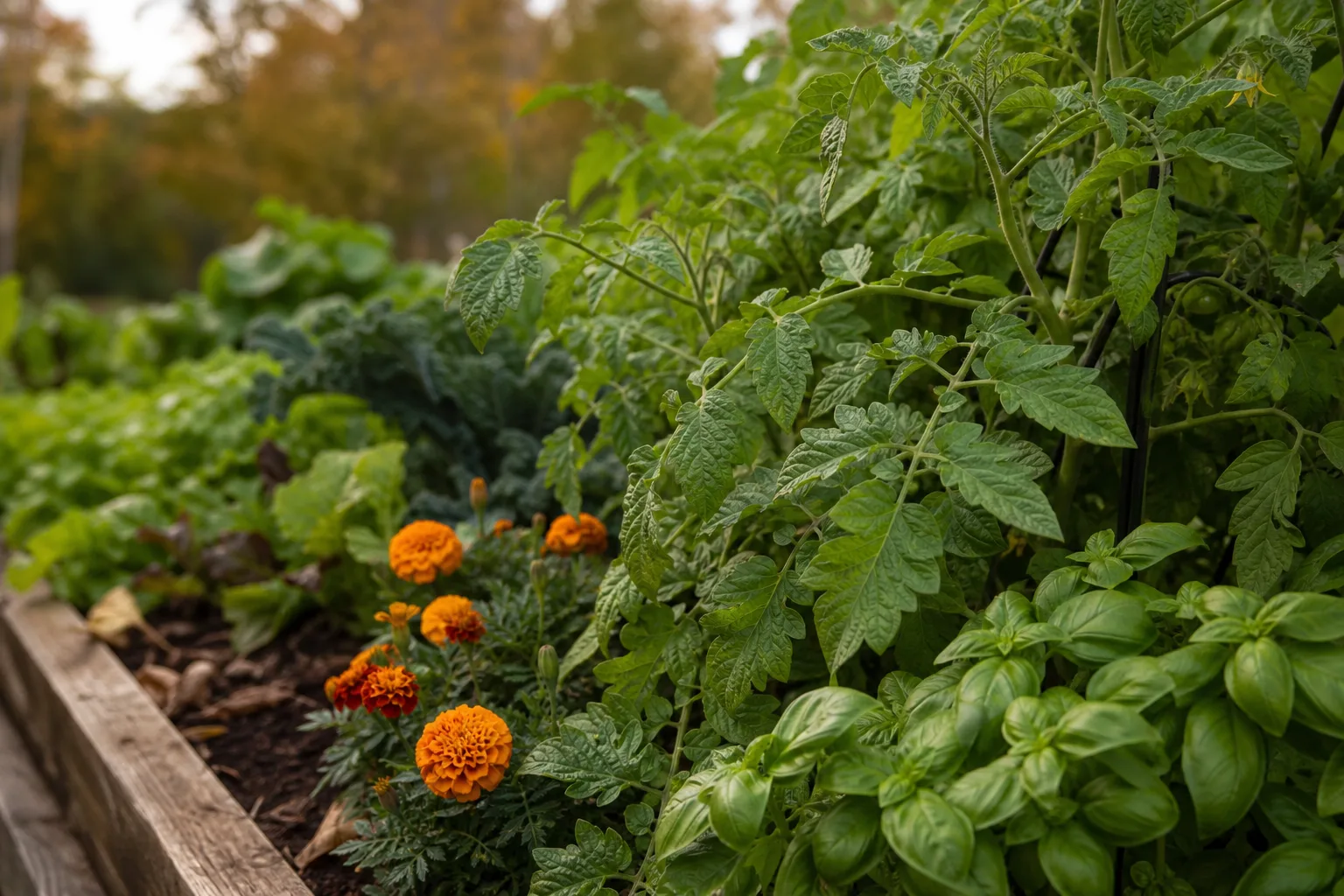
The research supports combinations such as tomato, basil, and marigold for pest reduction, and recommends mixing quick crops such as radish or lettuce between slower growers. Garden Truth also treats the pairing as a planning system rather than a guarantee.
For your bed today, write the main crop on a plant tag, circle two companions, and cross out the avoid list. If you are working in Central Texas, do that before you discover the limestone eight inches down and decide the bed needs to move.
What are the best companions for forty common vegetables?
The table below is a forty-crop reference for choosing neighbors, avoiding known conflicts, and understanding the tradeoff of each pairing. Use one main crop per section, then add companions that fit its light, height, water, and harvest timing instead of planting every suggested neighbor at once.
| Crop | Good companions | Keep apart from | Honest downside |
|---|---|---|---|
| Tomato | Basil, carrot, onion, marigold, nasturtium | Potato, cabbage, fennel | Tall plants can shade companions and need support. |
| Basil | Tomato, pepper, carrot, zucchini, marigold | Sage, rue | It needs warmth and can crowd a small bed. |
| Carrot | Onion, leek, tomato, pea, rosemary | Dill, parsnip | Slow seedlings leave open soil for weeds. |
| Onion | Carrot, lettuce, strawberry, beet, chamomile | Bean, pea | It competes poorly with vigorous legumes. |
| Garlic | Tomato, pepper, strawberry, rose, carrot | Bean, pea | Its harvest timing occupies bed space for months. |
| Lettuce | Carrot, radish, cucumber, onion, pea, dill, chive | Cabbage, broccoli | It bolts or turns bitter in heat. |
| Cabbage | Dill, mint, onion, bean, rosemary | Strawberry, tomato, pole bean | Large leaves take more room than seedlings suggest. |
| Broccoli | Dill, rosemary, sage, onion, bean | Strawberry, tomato, pole bean | It shades shorter companions as it matures. |
| Cauliflower | Bean, pea, dill, chive, celery | Strawberry, tomato | It is less forgiving of crowding than cabbage. |
| Kale | Bean, pea, cucumber, leek, radish, spinach, tomato | Strawberry | Mature leaves can overtake small plants. |
| Spinach | Bean, pea, cabbage, lettuce, tomato, strawberry | Potato | It struggles once taller crops remove too much light. |
| Pea | Carrot, radish, cucumber, corn, bean, strawberry | Onion, garlic | It needs a trellis or support in a small bed. |
| Bush bean | Corn, squash, cucumber, carrot, lettuce, strawberry, marigold | Onion, garlic, fennel | It is compact, but harvesting gets awkward when crowded. |
| Pole bean | Corn, cucumber, carrot, lettuce, radish, spinach, zucchini | Onion, garlic, fennel | Its trellis can shade the entire south side. |
| Corn | Bean, squash, cucumber, pea, melon | Tomato, potato | It consumes space and does not forgive poor pollination. |
| Summer squash or zucchini | Bean, corn, nasturtium, marigold, basil | Potato, melon | One plant can spread several feet. |
| Pumpkin | Corn, bean, marigold, nasturtium | Potato | Vines travel beyond the bed before you notice. |
| Cucumber | Bean, pea, radish, dill, marigold, lettuce, onion | Fennel, strongly aromatic herbs | Trellising saves ground but increases tying work. |
| Melon | Corn, bean, nasturtium, marigold | Potato | Vines need more room than a raised bed often has. |
| Pepper | Basil, carrot, onion, tomato, marigold | Fennel, kohlrabi | It is slow to establish and hates being crowded. |
| Eggplant | Bean, pea, marigold, basil, rosemary | Fennel | It needs sun and can shade low herbs. |
| Radish | Lettuce, carrot, pea, cucumber, spinach, bean | Hyssop | It is quick, but mature roots become pithy. |
| Beet | Onion, lettuce, cabbage, bean, garlic, rosemary | Pole bean | Beet tops need room even when roots are underground. |
| Turnip | Pea, bean, cabbage, onion, dill | Mustard-family crops | It is an early crop, so the bed may need replanting. |
| Swiss chard | Bean, carrot, onion, garlic, strawberry | Brassicas | Large leaves can shade nearby seedlings. |
| Parsley | Tomato, carrot, onion, asparagus, rose | Mint | It germinates slowly and needs patience. |
| Dill | Cabbage, cucumber, lettuce, carrot, onion | Carrot seedlings sown too early | It can self-sow where you did not plan it. |
| Fennel | Limited onion, coriander, dill | Most vegetables | It inhibits many neighboring vegetables, so isolate it. |
| Marigold | Tomato, pepper, squash, bean, almost all vegetables | None listed | It takes bed space that could grow food. |
| Nasturtium | Cucumber, squash, bean, radish, lettuce | Potato | It can sprawl and become a pest trap worth monitoring. |
| Borage | Tomato, strawberry, squash, cabbage | None listed | Its broad leaves occupy more space than expected. |
| Sunflower | Corn, cucumber, bean, squash | Potato | It casts substantial shade and competes for water. |
| Sweet potato | Bean, corn, marigold, nasturtium | Tomato | Its ground cover can swallow small plants. |
| Potato | Fava bean, garlic, kohlrabi, spinach, rosemary | Tomato, cabbage, corn, marigold | It shares disease concerns with related crops. |
| Strawberry | Onion, garlic, spinach, pea, chard | Cabbage, broccoli, cauliflower, kale | Runners spread into neighboring planting space. |
| Rosemary | Carrot, cabbage, broccoli, pepper, potato | None listed | Woody growth is awkward in a frequently replanted bed. |
| Sage | Broccoli, cabbage, rosemary, onion | Basil | It prefers a drier rhythm than many vegetables. |
| Celery | Cauliflower, cabbage, broccoli, onion | None listed | It needs steady moisture and is not a carefree filler. |
| Kohlrabi | Potato, lettuce, beet, carrot | Pepper | Its swollen stems need room at soil level. |
| Mint | Cabbage, lettuce, broccoli, cauliflower | Most spreading-bed situations | It escapes quickly unless confined in a pot. |
The chart consolidates the provided pairings, including the raised-bed combinations summarized by Vegega. “Good companion” means a useful neighbor in this reference, not a license to ignore disease, irrigation, or mature plant size.
Which companion planting combinations would I actually build?
I would build tomato, basil, and marigold together; carrot with onion or garlic; lettuce with radish and pea; and corn with beans and squash only where the bed has room. These combinations use the listed pest, shade, nitrogen, or ground-cover benefits while keeping the layout simple enough to water and harvest.
The tomato row is the classic for a reason, but basil does not perform magic tricks. It may help with aphids and flavor in the research summary, while marigold is associated with nematode and pest deterrence. The downside is that tomato eventually dominates the light, so give the row 18 inches or more where the mature crop requires it.
For a smaller bed, plant radishes between slower carrots or lettuce. Radish gives you a quick break-crop and helps open the soil, but pull it before the roots become woody and before its leaves crowd the slower crop.
If you want a vertical bed, use pole beans with corn or cucumber, but place that structure on the north side. Beans save ground space, which is useful. Their trellis also throws shade, which is less useful on the south side.
How should I arrange tall, short, and quick crops?
Place corn, sunflowers, and trellised beans on the north side of the bed, then put medium crops in the middle and short crops toward the south edge. Intermix quick radish or lettuce between slower crops, and place herbs or flowers at corners where they attract insects without blocking harvest access.
That north-side rule is the difference between a companion chart and a pile of plants. Taller crops need sun too, but their job in a mixed bed is to occupy the back edge, not turn the whole bed into afternoon shade.
Use companion rows such as tomato, basil, and marigold rather than scattering one plant everywhere. Rows are easier to drip irrigate, mulch, inspect, and remove when a crop finishes.
For most vegetables, allow 12 to 18 inches between plants. Give larger plants such as squash, pumpkin, melon, corn groupings, and sunflowers 2 to 3 feet where the mature spread requires it. A two-inch spacing mistake becomes a harvest problem six weeks later.
How much space and water should companion plants get?
Most companion vegetables need 12 to 18 inches of spacing, while large crops need 2 to 3 feet, and tall plants belong on the north side. Keep irrigation lines close to the root zone, inspect crowded leaves weekly, and do not let a flower or herb consume the space promised to a food crop.
In Austin, August does not negotiate, but a fall bed still deserves a layout that can be watered evenly. A drip line can put water where roots are, although it costs more to install than hand watering and its emitters need checking for clogs.
Use mulch only after the soil is adequately moist, and leave a small gap around stems. Mulch reduces exposed soil and helps retain moisture, but it can hide slugs, stem rot, or a leaking emitter if you never lift it.
Ask yourself a blunt question: can you reach the center of this bed without stepping into it? If the answer is no, the problem is spacing, not companionship. My father's twelve-foot strip of New Jersey clay taught me that early, although Central Texas limestone delivers the lesson with a rock bar.
Who is this companion planting chart for, and who should ignore it?
This chart suits a homeowner planning a raised bed, a fall gardener replacing finished crops, or a first-time grower who wants compatible neighbors in one place. Ignore the pairing advice if your bed has poor sun, compacted soil, no irrigation plan, or so little room that mature plants will overlap.
It is also useful for anyone who wants flowers in a food bed without treating them as decoration only. Marigold, nasturtium, borage, and sunflower have listed pest, pollinator, trap-crop, or shade roles, but each takes physical space and needs monitoring.
Do not use the chart to plant fennel in the middle of vegetables because it looks attractive there. The research identifies fennel as an inhibitor for most vegetables, with only limited pairings, so give it its own container or separate location. The tradeoff is extra watering and another place to maintain.
If the bed is still a sketch, you can get a concept for your yard before buying plants. If you are choosing unfamiliar crops, check the plant database for their mature size and site needs, then return to this chart for neighbors.
Is companion planting a guarantee of fewer pests?
No, companion planting is not a guarantee of fewer pests or larger harvests; it is a way to mix crops that may deter pests, attract beneficial insects, fix nitrogen, provide shade, or cover soil. You still need sound spacing, regular inspection, adequate water, and removal of failing plants.
Everyone says a marigold fixes the vegetable garden. In practice, one marigold cannot protect a tomato row from every insect, and it still competes for light and root space. The useful position is smaller and more honest: flowers add diversity, but they are part of the layout.
The same goes for basil and tomato flavor. The research summary includes improved taste as a reported benefit, but you should not crowd basil against a tomato stem and expect dinner to improve by decree. Leave room for airflow and harvesting.
Companion planting can also make mistakes harder to see. A dense bean, squash, and cucumber patch may use space efficiently, but it can hide damaged leaves, wet stems, and ripe produce. Efficient is not the same as easy.
What questions do gardeners ask about this chart?
These six questions cover the decisions that matter most while you are standing in a fall garden: which pairings to trust, how much room to leave, where tall crops belong, and which plants deserve isolation. The answers are short enough to use beside the bed and specific enough to prevent the usual crowding mistakes.
Can I plant tomatoes and basil together?
Yes, you can plant tomatoes and basil together, and this chart lists basil as one of tomato’s best companions. Add marigold if you have room, but leave enough space for the tomato’s mature spread and support. Basil may help with aphids and flavor, yet it cannot compensate for poor sun, crowded foliage, or irregular watering.
Should I keep fennel away from vegetables?
Yes, you should keep fennel away from most vegetables because the research summary identifies it as an allelopathic inhibitor with only limited useful pairings. Place fennel separately rather than risking a mixed row. The tradeoff is that an isolated plant needs its own space and irrigation, but that is cheaper than losing several neighboring crops.
How far apart should companion vegetables be planted?
Plant most companion vegetables 12 to 18 inches apart, and allow 2 to 3 feet for larger plants such as squash, pumpkin, melon, corn groupings, and sunflowers. Use the wider measurement whenever mature leaves or vines will overlap. Seedlings make every bed look spacious. They are lying to you.
Where should tall companion crops go in a raised bed?
Place tall companion crops such as corn, sunflowers, and trellised beans on the north side of a raised bed. This arrangement reduces their shade on shorter crops and follows the provided raised-bed planning guidance. A trellis still adds labor and can shade the bed if it is placed on the south side.
Can I plant onions and peas together?
No, keep onions and peas in separate companion sections because the chart lists onions as an avoid neighbor for peas, while onions are better paired with carrots, lettuce, strawberries, beets, and chamomile. Garlic has the same warning with peas. Give each crop a compatible row instead of forcing a mixed planting.
Are marigolds good companions for every vegetable?
Marigolds are listed as companions for almost all vegetables, especially tomatoes, peppers, squash, and beans, with no avoid list in this reference. Their tradeoff is space: each flower occupies room that could grow food and still needs water. Plant them at corners or row ends where they will not block access.
A chart does not replace observation. Walk the bed twice a week, pull a failing crop before it spreads trouble, and adjust the next planting based on what the soil actually did.
That is the whole practice. Plan the neighbors, then pay attention.
Want a plan for your own yard?
Tell us the space and we will put a planting plan together for it. Start at get my concept, or browse what actually grows where you are over on plants.
Frequently asked questions
Can I plant tomatoes and basil together?
Yes, you can plant tomatoes and basil together, and this chart lists basil as one of tomato’s best companions. Add marigold if you have room, but leave enough space for the tomato’s mature spread and support. Basil may help with aphids and flavor, yet it cannot compensate for poor sun, crowded foliage, or irregular watering.
Should I keep fennel away from vegetables?
Yes, you should keep fennel away from most vegetables because the research summary identifies it as an allelopathic inhibitor with only limited useful pairings. Place fennel separately rather than risking a mixed row. The tradeoff is that an isolated plant needs its own space and irrigation, but that is cheaper than losing several neighboring crops.
How far apart should companion vegetables be planted?
Plant most companion vegetables 12 to 18 inches apart, and allow 2 to 3 feet for larger plants such as squash, pumpkin, melon, corn groupings, and sunflowers. Use the wider measurement whenever mature leaves or vines will overlap. Seedlings make every bed look spacious. They are lying to you.
Where should tall companion crops go in a raised bed?
Place tall companion crops such as corn, sunflowers, and trellised beans on the north side of a raised bed. This arrangement reduces their shade on shorter crops and follows the provided raised-bed planning guidance. A trellis still adds labor and can shade the bed if it is placed on the south side.
Can I plant onions and peas together?
No, keep onions and peas in separate companion sections because the chart lists onions as an avoid neighbor for peas, while onions are better paired with carrots, lettuce, strawberries, beets, and chamomile. Garlic has the same warning with peas. Give each crop a compatible row instead of forcing a mixed planting.
Are marigolds good companions for every vegetable?
Marigolds are listed as companions for almost all vegetables, especially tomatoes, peppers, squash, and beans, with no avoid list in this reference. Their tradeoff is space: each flower occupies room that could grow food and still needs water. Plant them at corners or row ends where they will not block access.
Free, no obligation
Ready to design your dream landscape? Start here.
Tell us where you are and we will start a free profile for you, with plants that actually survive your climate and a real sense of what the build would cost.