
Chop and Drop: Can Comfrey, Tithonia, and Legume Shrubs Feed Your Soil?
Use the plants already growing in your garden as mulch instead of hauling every cutting away. Here is how I would use comfrey this fall, where tithonia and legume shrubs fit, and where this free fertilizer idea gets oversold.
October 2, 2026
By Diego Navarro
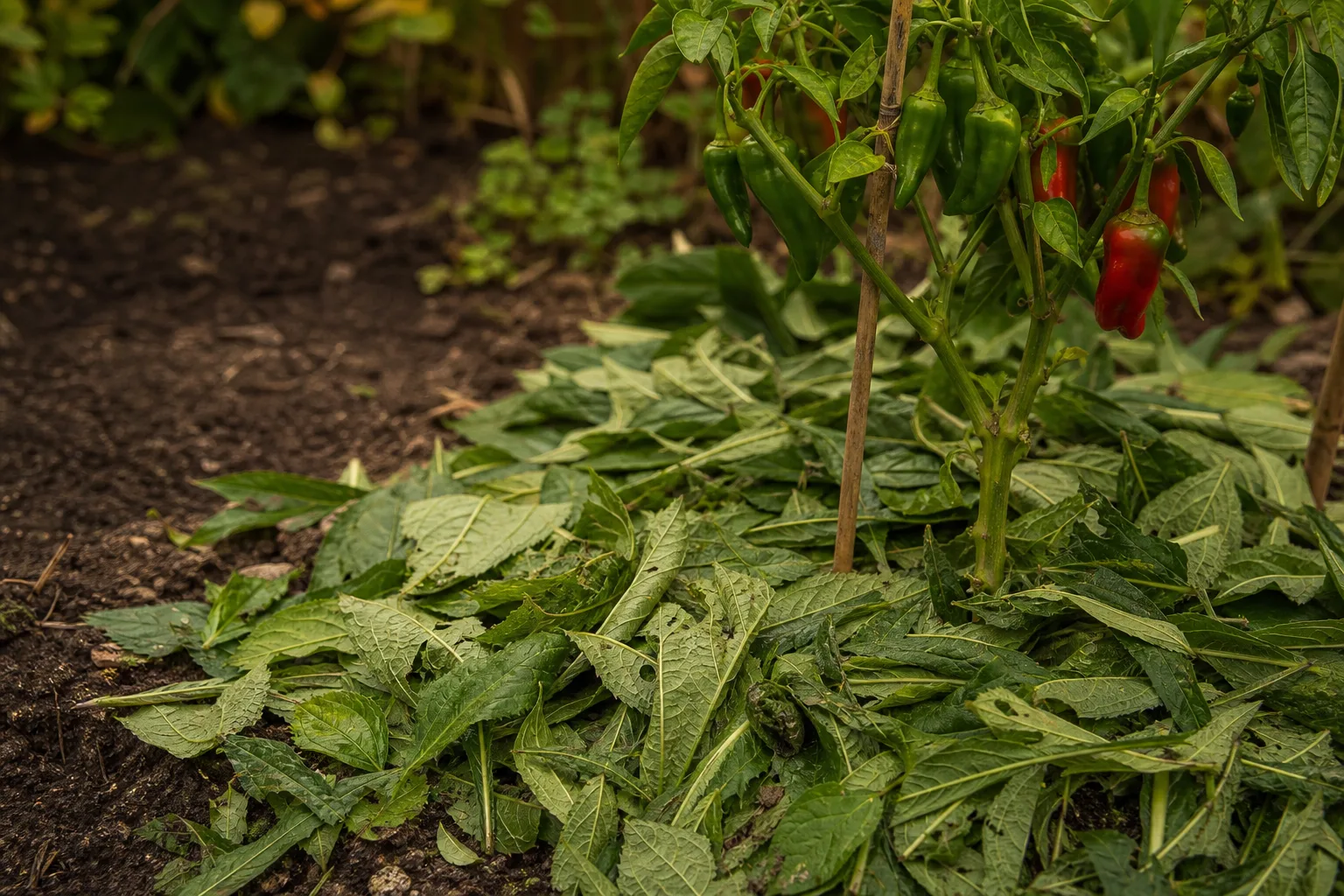
Chop and drop is worth doing this fall, and I would start with comfrey because it gives you a repeatable crop of mulch without hauling plant material away. Cut the leafy tops, leave the crown and 2 to 3 inches of stem, then lay the material around established vegetables, fruit trees, and other plants where it can cover soil and break down.
What is chop and drop fertilizer?
Chop and drop fertilizer means cutting leafy plant growth near the ground and leaving it on the soil as fresh mulch, where it decomposes and returns organic matter and nutrients to the garden. It is not a bottled fertilizer, and it does not work overnight. It is a slower soil-building practice that also covers bare ground.
The basic sequence is plain: grow a high-biomass plant, cut the top, and place the cuttings around another plant or over exposed soil. The material shades the surface, gives earthworms and microbes something to work on, and gradually becomes part of the soil.
A guide from GrowPerma describes comfrey, borage, and clover as useful chop-and-drop crops, with the cut material used around tomatoes and peppers. The same source says this mulch can retain 50 to 75 percent of soil moisture while suppressing weeds.
That does not mean you can throw leaves down once and cancel every other soil decision. In my Austin beds, bare soil in September is an invitation for heat, crust, and weeds. Cover helps. It is not magic compost wearing a green shirt.
What is chop and drop fertilizer?
Chop and drop fertilizer is fresh plant material cut from a living garden plant and left on the soil to decompose as mulch. It feeds soil organisms gradually, reduces exposed soil, and may reduce watering losses, but it is not a precise substitute for a measured fertilizer application when a soil test shows a specific deficiency.
Why is comfrey the best place to start?
Comfrey is the best place to start because the available guidance gives you a clear cutting height, season rhythm, and regrowth window: cut before or during flowering, leave 2 to 3 inches of stem, and expect the plant to regrow in about 3 to 4 weeks. Its tradeoff is that it needs dedicated space and repeated cutting.
Cut the leafy stems at ground level, but do not shave the crown flat. Leaving those 2 to 3 inches gives the plant enough remaining growth to return, according to Comfrey Shop. The same guidance recommends spreading the cuttings around vegetables, tomatoes, peppers, and fruit trees.
You can cut comfrey 3 to 5 times in a season under suitable growing conditions, and root cuttings are planted 2 to 3 inches deep with 2 to 4 feet of spacing in the growing guidance from Bell Garden Nashville. That spacing matters. A patch planted too tightly becomes a damp wrestling match when you try to harvest it.
The leaves are the useful part for this job. Thick stems take longer to collapse, so I would spread the material rather than pile it against a trunk or plant crown. Fresh comfrey mulch is free, but you still pay with bed space, water, and a few minutes with the shears.
How often can you cut comfrey for mulch?
You can cut comfrey about 3 to 5 times per season, leaving the crown and 2 to 3 inches of stem after each cut so it can regrow. A typical regrowth window is 3 to 4 weeks, though fall temperatures and shorter days can slow that return. The tradeoff is simple: more cuts require more dedicated growing space and water.
What should you do with comfrey in the fall?
In fall, cut comfrey when the leaves are still substantial and before the plant becomes a tangled, declining mass, then spread the cuttings in a loose layer around established plants and bare soil. Leave the crown intact, keep material off stems, and expect decomposition to slow as temperatures fall.
If you are standing in the garden now, inspect the patch first. Remove yellow, collapsing material, then use healthy leafy tops as mulch. Do not make a wet mound against a tomato stem, pepper stem, fruit tree trunk, or comfrey crown. A loose layer lets air and moisture move through it.
The wetter period of fall is a good time for chop and drop because moisture supports decomposition and soil building. Sources also identify borage, yarrow, clover, ginger, fava beans, and rye as high-biomass materials that can be chopped and dropped during wetter periods, though each has its own growing habit and downside.
For an Austin garden, I would place the cuttings around plants that are already established rather than burying them into black clay. Clay that stays wet can turn a thick layer of fresh material into a sour, slow mess. The soil does not need another argument.
Can tithonia replace comfrey as on-site fertilizer?
Tithonia may provide useful leafy biomass for chop and drop, but the supplied research does not provide specific guidance for its cutting height, regrowth time, spacing, or nutrient performance. I would trial it in a small area, use the cut leaves as mulch, and avoid treating it as a proven replacement for comfrey or a measured fertilizer.
This is where permaculture advice often gets ahead of its paperwork. The research supports chop and drop broadly with high-biomass plants, but it does not establish a tithonia schedule. I will not invent one because a tall plant in a warm climate can behave very differently from a perennial comfrey patch.
If you already have tithonia growing, cut a small portion first and observe how quickly it returns, how much material it produces, and whether the stems break down before winter. Keep the first layer thin and loose. The honest downside is uncertainty, not failure.
Tithonia also needs room if it grows tall and broad, and any plant that takes over the path has become a building problem instead of a soil solution. Valeria can draw a beautiful biomass hedge. I still have to get the wheelbarrow through it.
Is tithonia proven to be better than comfrey for chop and drop?
No, the supplied research does not prove that tithonia is better than comfrey for chop and drop. It supports the general use of high-biomass plants, but it gives no tithonia-specific cutting height, regrowth period, spacing, or nutrient comparison. Use tithonia as a small trial, while comfrey remains the more documented choice for this method.
Can legume shrubs feed garden soil through chop and drop?
Legume shrubs can be useful on-site biomass, but the supplied research does not give species-specific instructions for them, so I would use young leafy growth rather than thick woody branches and test a small section first. Their honest downside is slower decomposition when stems become woody, especially in a cool or dry fall bed.
The word “legume” does not guarantee a finished fertilizer. A shrub can make a lot of material, but a pile of hard branches is not the same thing as a soft leafy mulch. Chop the tender growth and keep woody pieces out of the first trial unless you can cut them small.
Watch the soil surface for several weeks. If the layer stays wet, mats together, or blocks water from reaching the soil, spread it thinner. If it disappears quickly, add another modest layer rather than dropping one giant heap all at once.
The research names clover and fava beans among high-biomass plants suited to chop and drop, but those are not the same as every legume shrub. That distinction matters. A related plant is not automatically a documented method.
Which chop-and-drop plant should you choose?
Choose comfrey if you want the most specific guidance, a repeatable 3 to 4 week regrowth window, and a plant that can be cut several times in a season. Choose tithonia or a legume shrub only if you already have space for a trial and accept less documented timing. Every option makes mulch, but not every option gives predictable results.
| Option | Best use | What to do this fall | Honest downside |
|---|---|---|---|
| Comfrey | Repeatable leafy mulch around established plants | Cut before or during flowering, leave 2 to 3 inches of stem, and spread the tops loosely | Needs dedicated space, water, and repeated cutting |
| Tithonia | A small biomass trial where it already grows | Cut part of the plant and observe breakdown and regrowth before expanding | The supplied research gives no specific schedule or nutrient comparison |
| Legume shrubs | Tender leafy material from an existing shrub | Use young growth and keep woody pieces limited | Woody stems decompose slowly and can mat together |
Who is chop and drop for, and who should ignore it?
Chop and drop suits gardeners with established beds, available biomass, and enough space to grow cutting plants without crowding food crops or paths. Ignore it for a brand-new bed that needs measured amendments, a planting with severe drainage problems, or a site where fresh mulch will touch crowns and trunks.
This method fits a homeowner who wants fewer trips to the compost pile and can watch the bed for two or three weeks. It also fits a garden with bare soil between established plants, where a loose mulch layer can suppress weeds and help retain moisture.
It is a poor first move if your soil is compacted, waterlogged, or contaminated by diseased plant material. Chop and drop does not repair a broken irrigation layout. In Central Texas, drip on a timer still matters because August does not negotiate, even though fall is kinder.
You should also skip a large-scale trial if you cannot spare 2 to 4 feet for comfrey spacing or if the planting would block a gate, walkway, or mower route. A soil-building plant that makes access impossible is just a very leafy fence.
Who should not use chop and drop this fall?
You should not use chop and drop as your main fall amendment if your bed stays waterlogged, your material is diseased, or you need to correct a measured nutrient deficiency precisely. The method suits healthy biomass and established plants, but it cannot replace drainage repairs, irrigation changes, or a targeted amendment when the soil requires one.
How thick should a chop-and-drop mulch layer be?
Spread fresh chop-and-drop material in a loose layer around established plants rather than packing it into a thick mound. The supplied research supports moisture retention, weed suppression, and decomposition, but it does not give one universal thickness, so start modestly, keep stems away from crowns and trunks, and watch the bed for two weeks.
I would begin with enough material to cover the soil without making a sealed mat. Leaves should overlap, but they should not form a wet blanket pressed against a stem. If the layer settles quickly, add more after several days.
Keep the cuttings on the soil surface. Do not dig a large quantity of fresh plant material into heavy black clay just because the bed looks hungry. Buried fresh material can decompose slowly where air movement is poor, while surface mulch gives you a chance to see whether the layer is drying, matting, or attracting unwanted attention.
The moisture benefit is one of the strongest practical reasons to try it. The research reports 50 to 75 percent soil moisture retention for comfrey mulch, but your result depends on sun, wind, soil texture, and how evenly the material covers the surface.
How do you start a chop-and-drop patch this fall?
Start with one small comfrey patch or one existing biomass plant, cut only part of it, and use the material around an established planting while you observe moisture, weeds, decomposition, and regrowth for 3 to 4 weeks. Expand only after the first trial behaves well in your soil and irrigation pattern.
Mark the trial with a short stake so you remember where the fresh mulch began. Check it after 7 days and again after 21 days. Look for material shrinking into the surface, soil that remains covered, and new comfrey growth if you made the cut correctly.
For plant selection, use the plant database to check mature size and site fit before giving a biomass plant a permanent place. The tradeoff is that research and planning take longer than tossing a plant into the nearest empty corner, but the shovel is less likely to find a problem later.
If the layout is still unclear, you can get a concept for your yard before planting a dedicated mulch patch. I would rather reserve a workable 2 to 4 foot strip than discover in spring that your fertilizer crop has swallowed the path.
Does chop and drop replace compost or fertilizer?
Chop and drop can reduce how much organic material you haul away and can feed soil organisms as fresh mulch decomposes, but it does not automatically replace compost or a targeted fertilizer. Use it to cover soil and recycle healthy biomass in place, then address drainage or confirmed nutrient shortages separately. It is a tool, not a complete soil test.
The first time I learned this was as a kid, watching my father work tomatoes in a twelve foot strip of New Jersey clay along the driveway. We saved what the garden could give us because the space was tight. Central Texas adds limestone, caliche, and a summer that can run five weeks over 100 degrees, so I keep the same principle but give the soil more respect.
Start with comfrey this fall if you have it. Trial the others slowly. That is enough for one season.
Want a plan for your own yard?
Tell us the space and we will put a planting plan together for it. Start at get my concept, or browse what actually grows where you are over on plants.
Frequently asked questions
What is chop and drop fertilizer?
Chop and drop fertilizer is fresh plant material cut from a living garden plant and left on the soil to decompose as mulch. It feeds soil organisms gradually, reduces exposed soil, and may reduce watering losses, but it is not a precise substitute for a measured fertilizer application when a soil test shows a specific deficiency.
How often can you cut comfrey for mulch?
You can cut comfrey about 3 to 5 times per season, leaving the crown and 2 to 3 inches of stem after each cut so it can regrow. A typical regrowth window is 3 to 4 weeks, though fall temperatures and shorter days can slow that return. The tradeoff is simple: more cuts require more dedicated growing space and water.
Is tithonia proven to be better than comfrey for chop and drop?
No, the supplied research does not prove that tithonia is better than comfrey for chop and drop. It supports the general use of high-biomass plants, but it gives no tithonia-specific cutting height, regrowth period, spacing, or nutrient comparison. Use tithonia as a small trial, while comfrey remains the more documented choice for this method.
Which chop-and-drop plant should you choose?
Choose comfrey if you want the most specific guidance, a repeatable 3 to 4 week regrowth window, and a plant that can be cut several times in a season. Choose tithonia or a legume shrub only if you already have space for a trial and accept less documented timing. Every option makes mulch, but not every option gives predictable results.
Who should not use chop and drop this fall?
You should not use chop and drop as your main fall amendment if your bed stays waterlogged, your material is diseased, or you need to correct a measured nutrient deficiency precisely. The method suits healthy biomass and established plants, but it cannot replace drainage repairs, irrigation changes, or a targeted amendment when the soil requires one.
Does chop and drop replace compost or fertilizer?
Chop and drop can reduce how much organic material you haul away and can feed soil organisms as fresh mulch decomposes, but it does not automatically replace compost or a targeted fertilizer. Use it to cover soil and recycle healthy biomass in place, then address drainage or confirmed nutrient shortages separately. It is a tool, not a complete soil test.
Free, no obligation
Ready to design your dream landscape? Start here.
Tell us where you are and we will start a free profile for you, with plants that actually survive your climate and a real sense of what the build would cost.