
Should You Renew Blueberry Canes on a Six-Year Cycle?
A blueberry bush stays productive when you remove about one-fifth of its oldest canes each winter and keep only two or three strong new replacements. Here is how to mark the right wood this fall, make the cuts in winter, and avoid turning a six-year renewal plan into a drastic haircut.
September 29, 2026
By Valeria Navarro
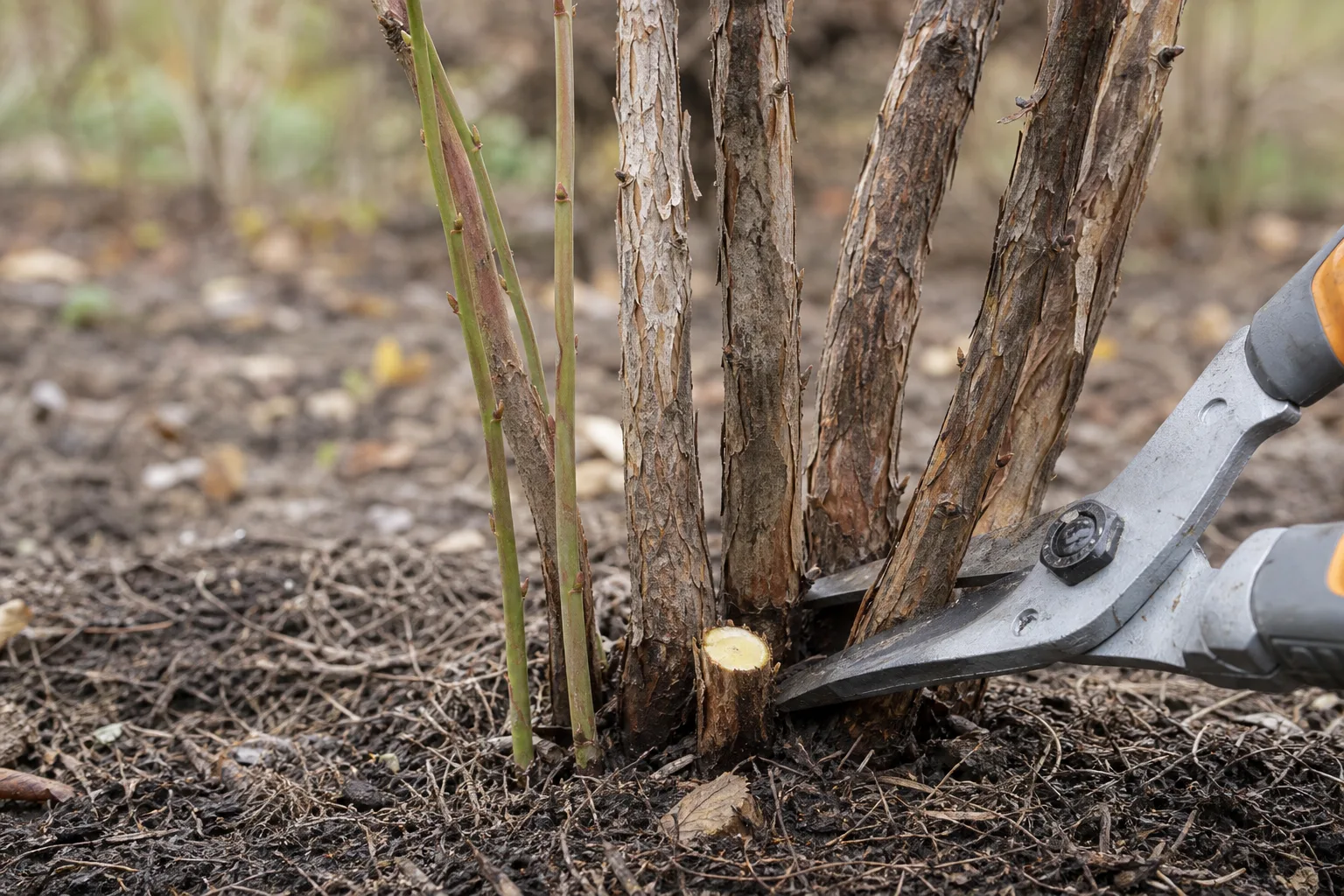
Should you remove one-fifth of a blueberry bush every winter?
Yes. Removing roughly one-fifth of the oldest, thickest blueberry canes each winter keeps the bush in a rolling six-year renewal cycle. Cut selected canes to the crown or to a strong lateral, then retain two or three vigorous new canes to replace them, so the plant stays productive without losing its whole crop at once.
That is the position I would take in a home garden. Do not wait until the blueberry is a woody, crowded puzzle and then attack it with loppers. A yearly rotation is calmer, easier to read, and kinder to your harvest.
The UConn guide sets the structure clearly: aim for about 18 canes on a mature plant, with two to three canes from each year of growth and none older than six years. Read the UConn pruning guide before you start if your bush has been neglected for a long time.
The trade-off is simple. You spend ten minutes each winter removing some potentially fruiting wood, but you avoid a tired bush full of old canes that make fewer, smaller berries. That is a good bargain.
What should you do to the blueberry bush this fall?
This fall, inspect and mark the oldest, thickest canes, but save the main cuts for winter. Remove nothing healthy just because the bush looks untidy today; instead, identify dead, weak, crossing, low-spreading, and overly tall wood so your winter pruning is deliberate rather than a guessing game.
Walk around the plant with clean hand pruners, a piece of tape, and a notebook. Mark the canes you believe are six years old or close to it. Do not mark every large cane. You are choosing about 20 percent of the canopy, not clearing the center because it feels crowded.
Look at the base first. Older canes are usually thicker and more weathered, while newer one-year canes are often slimmer and more vigorous. The blueberry pruning research summarized by Fred Hoffman also recommends removing dead, weak, crossing, and low-spreading wood along with the oldest canes.
Write down how many canes you have. If there are 18, your rough annual target is three removals and two or three strong replacements. If there are only nine, removing two may be enough. The fraction matters more than performing a dramatic, exact haircut.
How many blueberry canes should a mature bush have?
A mature blueberry bush should have about 18 canes, organized as roughly two or three vigorous canes from each of six years of growth. Each winter, remove the three oldest canes and keep only two or three strong new canes to replace them, while also removing damaged or badly placed wood.
That six-year math is the backbone of the system. Three canes per year multiplied by six years gives you about 18 canes. You do not need every cane to be identical, but you do need a steady flow of young wood.
If your bush has 25 canes, do not automatically leave 18 perfect-looking stems and call it done. First remove the oldest, then the dead and weak ones, then branches that cross through the middle or sprawl along the ground. A bush can have the right number and still have the wrong structure.
The downside of chasing a number is that you can become too fussy. Count the canes as a guide, not a religion. A vigorous bush with 16 well-spaced canes may be in better shape than one with 18 stems packed into a dark center.
Which blueberry canes should you remove first?
Remove the oldest and thickest canes first, especially those that are weak, crossing, low-spreading, or declining in fruit production. Cut an unwanted cane at ground level near the crown, or cut it back to a strong lateral when that keeps the bush better balanced and preserves useful structure.
Start with dead wood. It contributes nothing and makes the living branches harder to see. Next, remove a cane that lies low across the plant, crosses another cane, or crowds the center so tightly that the bush cannot hold an open shape.
Then choose the oldest healthy canes. The research summary reports that canes older than six years tend to produce smaller, less abundant berries, while UConn recommends removing the three oldest canes each year. That is why the thickest cane is not automatically the best cane to keep.
Make the cut cleanly and close to the crown when the entire cane is finished. If a strong lateral is positioned well, cut back to it instead. The trade-off is visual: a crown cut looks more severe, but it removes the old framework completely and gives new crown shoots room to matter.
Should you cut blueberry canes to the ground or to a lateral?
Cut a blueberry cane to ground level when the whole cane is old, weak, crossing, or poorly placed. Cut it to a strong lateral when the lower portion is sound and the lateral points outward into a useful gap, because that preserves productive wood without leaving an unwanted stub or crowded branch.
Ground-level renewal is the cleanest choice for a spent cane. Use it for the oldest thick stems that have occupied the same space for years. The goal is not merely to shorten them. The goal is to remove old structure and make room for new canes from the crown.
A lateral cut is more selective. Choose a strong side branch that points outward, not a thin twig aimed into the center. The side branch becomes the continuation of that cane, so it needs a good position and enough vigor to carry the structure.
Do not leave a short peg because you were nervous. That stub adds clutter and does not solve the crowding problem. You can be gentle with the plant without being vague with the cut.
How do you keep blueberry bushes from becoming too tall?
Head back blueberry bull-shoots that grow higher than the rest of the bush, cutting them to a strong side branch at a useful height. This keeps the plant manageable and encourages a more balanced framework, but the trade-off is that every heading cut removes part of that shoot’s potential fruiting wood.
A bull-shoot is a vigorous upright shoot that rises above the main shape. Leave every one untouched and the bush becomes tall, top-heavy, and harder to harvest. Cut every tall shoot blindly and you remove more productive wood than the six-year plan calls for.
Choose the tallest shoots that disrupt the plant’s shape. Head them back to an outward-facing lateral rather than chopping the tip in the middle of empty air. The lateral should be strong enough to continue the branch without bending into the center.
This is where restraint matters. Renewal pruning removes old canes. Heading back controls height. They are different jobs, and combining them carelessly can turn a normal winter session into an unnecessary hard prune.
What should you do if the blueberry bush has been neglected for years?
A neglected blueberry bush needs a staged renewal, not a nervous trim around the edges. Remove at least one-third of the canes, and possibly more when the plant is severely overgrown, then wait for new shoots to regenerate before returning to the two-to-three-canes-per-year replacement plan.
The UConn guide allows renewal pruning of at least one-third and up to all of the canes in a badly managed plant. That is a reset, not the normal annual routine. Do not use a severe renovation rule on a healthy bush that has been maintained.
For a neglected plant, start with dead, weak, crossing, and low-spreading wood. Then remove the oldest canes at the crown. Leave the strongest younger framework you can identify, and do not fill every open space with whatever shoot happens to remain.
After new shoots regenerate, select two or three vigorous canes from each year of growth. A hard reset costs you fruit in the short term, but leaving a crowded, aging bush untouched costs you harvest quality year after year.
Who is a six-year blueberry cane renewal cycle for?
This renewal cycle suits homeowners with an established blueberry bush that has several years of growth, a visible crown, and enough canes to select from each winter. It is not the right first move for a severely neglected plant, a very young plant, or anyone unwilling to sacrifice a small amount of old wood for better long-term structure.
Use the cycle on a bush that is producing but getting crowded. It also suits a gardener who wants a repeatable winter task instead of a once-in-a-decade rescue. Mark the oldest canes this fall, make the cuts in winter, and repeat next year.
Ignore the routine as your first step if the bush has very few canes, has been cut nearly to nothing, or has no clear young replacement growth. In that case, the renewal guidance is more appropriate: remove at least one-third only when a genuine reset is needed, then wait for new shoots before selecting replacements.
If you are planting or planning a new bed, do not force an 18-cane target onto a small young plant. The trade-off of keeping too many canes is crowding. The trade-off of removing too many is lost fruit and a long recovery.
What is the difference between annual renewal and hard rejuvenation pruning?
Annual renewal removes about one-fifth, or roughly three of 18 canes, every winter and keeps the bush in production. Hard rejuvenation removes at least one-third and potentially all canes from a neglected plant, sacrificing near-term harvest so new shoots can rebuild the framework.
| Pruning approach | Best use | What you remove | Honest downside |
|---|---|---|---|
| Six-year annual renewal | Established, maintained bushes | About one-fifth of the oldest canes each winter | Requires yearly observation and gives up some old fruiting wood |
| Hard rejuvenation | Severely neglected, overgrown bushes | At least one-third, and sometimes nearly all canes | Can sharply reduce fruit while new shoots regenerate |
| Selective shaping | Tall, crossing, low-spreading, or damaged wood | Problem branches and bull-shoots | Does not replace an aging cane population by itself |
Everyone says pruning means cutting back branches until the bush looks tidy. In practice, the better question is age: which canes are leaving the six-year window, and which two or three new canes will replace them?
I have killed plants by doing the dramatic thing because it felt decisive. In my Austin yard, that impulse gets punished quickly by alkaline clay, summer heat, and a February freeze that still lives in every gardener’s memory. Blueberry pruning rewards a pencil, a count, and a little humility.
What should you check before making winter pruning cuts?
Before winter pruning, check the cane count, identify the oldest wood, confirm that the plant has young vigorous replacements, and keep the bush’s soil conditions in range. UConn lists a blueberry soil pH target of 4.5 to 5.0, so pruning cannot repair a plant growing in unsuitable soil.
Take a photo this fall. It gives you a record of the canopy before leaves and winter weather change the view. Mark the canes you expect to remove, then reassess on the pruning day instead of cutting from memory.
Check the crown for new shoots. Keep two or three vigorous new canes from the current year, choosing ones that are upright and well distributed. Their trade-off is space: every replacement you keep occupies room, so weak or badly placed shoots should not survive just because they are young.
If you are unsure which blueberry varieties and growing conditions fit your yard, use the plant database before adding more bushes. For a whole-bed layout, you can also get a concept for your yard, but no design tool can replace choosing the right cane at the crown.
How should you repeat the blueberry renewal cycle next winter?
Repeat the cycle every winter by removing the oldest three canes from an approximately 18-cane mature bush, keeping two or three vigorous new canes, and clearing dead, weak, crossing, low-spreading, and overly tall wood. After six years, the oldest canes have been replaced and the bush keeps moving through the same rotation.
Make a simple six-row note in your garden journal. Label the current young canes by year, then update the note after each winter session. You do not need perfect records, but you do need enough memory to avoid keeping the same old cane because it still looks sturdy.
A strong cane can look impressive and still be past its best production years. The research-based rule is not “keep the biggest branches.” It is “keep a balanced age range, with no cane older than six years.”
That is the whole rhythm. Remove about one-fifth. Keep two or three new replacements. Cut the problem wood. Repeat. A blueberry bush does not stay young by magic, cariño. It stays young because you keep making room.
What are the most common questions about blueberry cane renewal?
The best answers are simple: prune in winter, remove the oldest wood first, keep two or three new canes, and use hard rejuvenation only for a genuinely neglected bush. These questions cover the decisions that usually stop gardeners at the crown with pruners in hand.
How often should you renew blueberry canes?
Renew blueberry canes every winter by removing roughly one-fifth of the oldest, thickest canes. On a mature bush with about 18 canes, that usually means removing three old canes and retaining two or three vigorous new canes as replacements, while also clearing dead, weak, crossing, and low-spreading wood.
How old should blueberry canes be before removal?
Remove blueberry canes as they reach about six years old, because older canes tend to produce smaller and less abundant berries. Track the age range rather than waiting for every cane to decline visibly, and remove the oldest three canes each winter from a mature, well-maintained bush.
Should blueberry canes be cut to the ground?
Blueberry canes should be cut to the ground when the entire cane is old, weak, crossing, or poorly placed. If the lower cane is sound and has a strong outward-facing lateral, cut back to that lateral instead, preserving useful structure without leaving a crowded, unproductive branch.
How many canes should a mature blueberry bush have?
A mature blueberry bush should have about 18 canes, with roughly two or three vigorous canes from each of six years of growth. Treat 18 as a useful target, not a rigid command, because dead, weak, crossing, and low-spreading wood should be removed even if that leaves fewer canes temporarily.
What should you do with a neglected blueberry bush?
A neglected blueberry bush should receive hard renewal pruning, removing at least one-third and potentially up to all of its canes when the plant is severely overgrown. After new shoots regenerate, return to the normal plan of keeping two or three vigorous canes from each year of growth.
When should you prune blueberry bushes?
Prune blueberry bushes each winter, after you have identified the oldest canes and before the next renewal cycle begins. Since you are standing in the garden in fall, use now to count and mark the wood, then make the structural cuts during winter rather than removing healthy canes impulsively today.
Want a plan for your own yard?
Tell us the space and we will put a planting plan together for it. Start at get my concept, or browse what actually grows where you are over on plants.
Frequently asked questions
How often should you renew blueberry canes?
Renew blueberry canes every winter by removing roughly one-fifth of the oldest, thickest canes. On a mature bush with about 18 canes, that usually means removing three old canes and retaining two or three vigorous new canes as replacements, while also clearing dead, weak, crossing, and low-spreading wood.
How old should blueberry canes be before removal?
Remove blueberry canes as they reach about six years old, because older canes tend to produce smaller and less abundant berries. Track the age range rather than waiting for every cane to decline visibly, and remove the oldest three canes each winter from a mature, well-maintained bush.
Should blueberry canes be cut to the ground?
Blueberry canes should be cut to the ground when the entire cane is old, weak, crossing, or poorly placed. If the lower cane is sound and has a strong outward-facing lateral, cut back to that lateral instead, preserving useful structure without leaving a crowded, unproductive branch.
How many canes should a mature blueberry bush have?
A mature blueberry bush should have about 18 canes, with roughly two or three vigorous canes from each of six years of growth. Treat 18 as a useful target, not a rigid command, because dead, weak, crossing, and low-spreading wood should be removed even if that leaves fewer canes temporarily.
What should you do with a neglected blueberry bush?
A neglected blueberry bush should receive hard renewal pruning, removing at least one-third and potentially up to all of its canes when the plant is severely overgrown. After new shoots regenerate, return to the normal plan of keeping two or three vigorous canes from each year of growth.
When should you prune blueberry bushes?
Prune blueberry bushes each winter, after you have identified the oldest canes and before the next renewal cycle begins. Since you are standing in the garden in fall, use now to count and mark the wood, then make the structural cuts during winter rather than removing healthy canes impulsively today.
Free, no obligation
Ready to design your dream landscape? Start here.
Tell us where you are and we will start a free profile for you, with plants that actually survive your climate and a real sense of what the build would cost.