
Which Biodynamic Practices Are Worth Adopting Without the Cosmology?
You can borrow the strongest practical parts of biodynamics without following lunar calendars or spiritual preparations. Build fertility from compost, livestock bedding, cover crops, crop rotation, and habitat, then let the soil tell you what still needs fixing.
September 26, 2026
By Diego Navarro
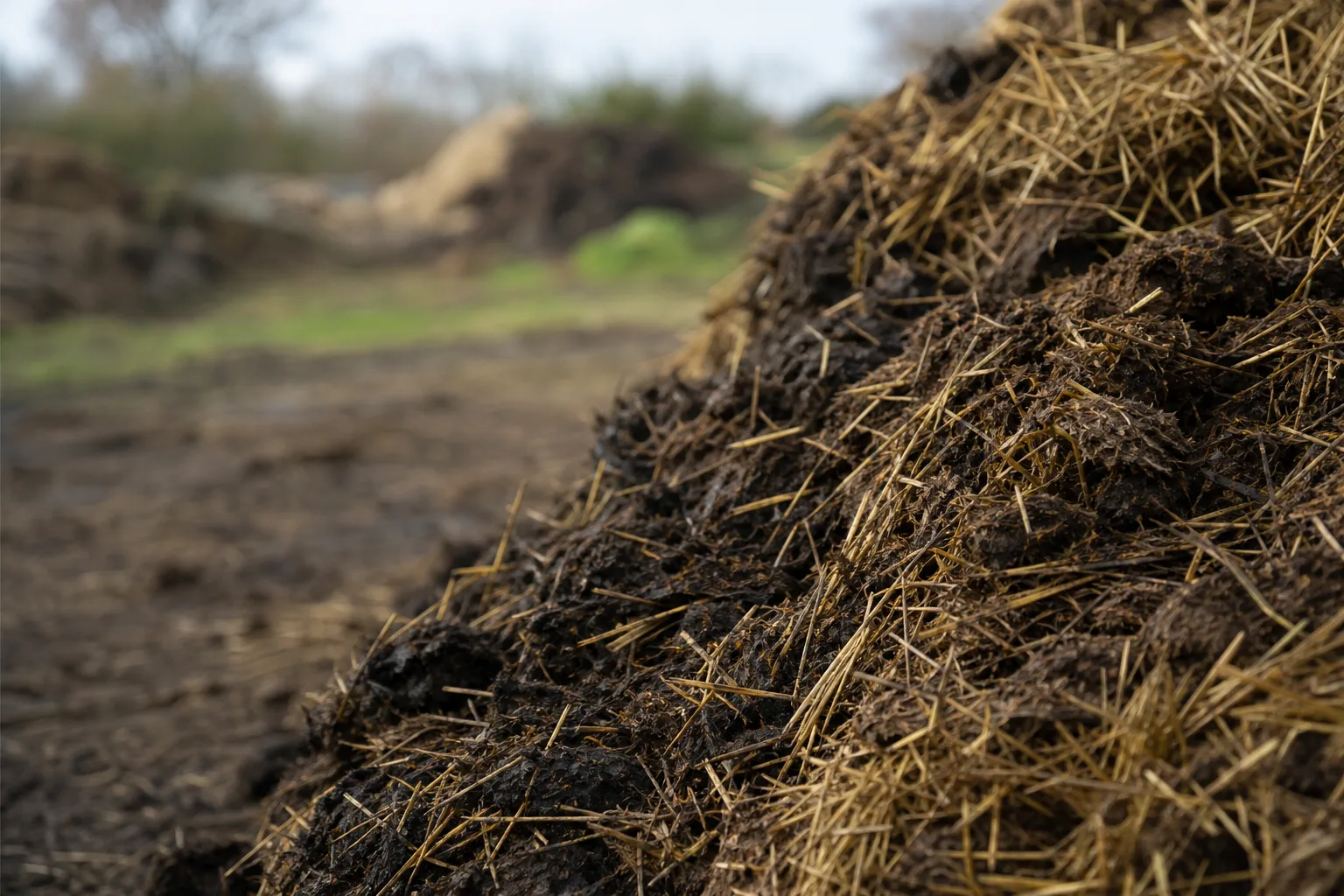
The biodynamic practices worth adopting without the cosmology are closed-loop composting, small-scale livestock integration, cover crops, crop rotation, and habitat for beneficial insects. Start this fall with a carbon-rich compost pile, a winter cover crop, and a plan to keep manure and bedding cycling through the garden. Skip lunar timing unless it matters to you.
Which biodynamic practices are worth adopting this fall?
The practical core of biodynamics is building fertility from materials already on your property: kitchen scraps, garden trimmings, livestock manure, bedding, cover crops, and mature compost. I would adopt that closed loop before buying preparations or studying a planting calendar, because it improves the soil with inputs you can inspect and manage.
The Biodynamic Association describes composting, animal integration, cover cropping, and crop rotation as connected parts of on-farm fertility. That is the part that holds up in a home garden, including one where the soil is black clay that moves a patio after one wet winter.
Standing in your garden now, in fall, choose one place for a compost bin, one bed for a winter cover crop, and one area that will remain undisturbed for insects. Do those three things before you worry about lunar timing.
My position is plain: fertility first, cosmology optional. A garden cannot eat a calendar.
How do I build a closed-loop compost pile?
Build compost with roughly one part green nitrogen-rich material to two or three parts brown carbon-rich material, keep it as damp as a wrung-out sponge, turn it every two to three weeks, and let it mature for six to twelve months. Finished compost should be dark, crumbly, and free of recognizable fresh scraps or bedding.
Green material includes kitchen scraps and fresh garden trimmings. Brown material includes dry leaves, straw, and aged plant stems. A pile made entirely of grass clippings turns sour and slimy, while a pile made entirely of dry leaves sits there like a polite brown wall.
For fall, make the first layer 6 inches of coarse stems or straw, then add 2 inches of scraps or fresh trimmings, followed by 4 to 6 inches of leaves. Repeat those layers until the pile is at least 3 feet wide and 3 feet tall, if you have enough material.
Turn the pile with a fork every 14 to 21 days. If it smells rotten, add dry leaves and turn it. If it stays dusty and cold, add water while turning it.
How much compost should I use, and when?
Spread 2 to 3 inches of finished compost over each square foot of bed before planting, then mix it into the upper few inches without burying it deeply. In fall, compost empty beds after removing spent crops, but use only mature compost because unfinished material can tie up nitrogen and attract pests.
That rate is generous for a home garden, so do not dump fresh manure directly around vegetables. Livestock manure belongs in the compost pile with straw or leaves, where it can mature for six to twelve months before becoming a top dressing.
In Central Texas, fall is a sensible time to add compost because the bed can sit under a winter cover crop instead of baking bare through August. Up in New Jersey, I learned to work around the first hard frost. Here, I build for the fifth week over 100 degrees.
Straw mulch over the composted bed helps retain moisture and feeds soil organisms as it breaks down, but straw can carry weed seed and may need replacing after one season. That is the honest trade.
Can chickens, ducks, or rabbits close the fertility loop?
A few chickens, ducks, or rabbits can help close the fertility loop by eating some garden-grown feed, producing manure, and contributing straw or leaf bedding to the compost. Keep them near the garden, but rotate their access through a movable paddock or chicken tractor every one to two weeks so manure is distributed instead of concentrated.
The Biodynamic Association fact sheet connects integrated animals, compost, and cover crops as ways to generate fertility on the farm. The practical version is not a romantic chicken wandering under tomatoes. It is a schedule, a gate, bedding, water, and somewhere for the manure to age.
Aim for at least half of the animals' feed to come from home-grown cover crops or other garden inputs if your space allows. That target makes the system more circular, but it also means you need enough area and time. Buying nearly all feed while calling the setup closed loop is mostly branding.
Chickens scratch weeds and pests out of fall beds, but they also scratch seedlings, mulch, and irrigation lines. Ducks eat differently and can be messy around water. Rabbits are quieter and their bedding is useful, but they do not graze a paddock like poultry.
What cover crops and rotation should I plant now?
Use a three-year rotation that moves from a nitrogen-fixing legume to a deep-rooted brassica to a grain or root crop, with winter rye or hairy vetch between seasons. Cover crops suppress weeds, add organic residues, and keep living roots in the soil, but they require timely mowing or cutting before they set seed.
A simple fall planting can combine winter rye with hairy vetch, or use clover where you want a lower-growing cover. Rye produces substantial dry material but can be difficult to remove by hand. Hairy vetch contributes nitrogen but can tangle into a stubborn mat if you wait too long.
Plant the winter mix in fall, then cut it before seed formation and leave the residue as mulch or add it to compost. Do not let a cover crop become a permanent resident by accident. Plants are very good at taking over jobs nobody assigned them.
Rotate the crop families across beds rather than planting the same heavy feeder in the same soil every year. The exact crops can change, but the sequence should keep a legume, a deep-rooted crop, and a grain or root crop moving through the garden.
How much space should I reserve for biodiversity?
Reserve at least 10 percent of the garden for biodiversity, using a wildflower border, pollinator shrubs, or a small pond. This area supports beneficial insects and adds resilience, but it is not decoration you can ignore, because weeds, stagnant water, and dense growth still need management.
Put the habitat where it will not interfere with irrigation, paths, or livestock movement. A 3-foot-wide border along a fence can provide the needed area in a small garden. Keep it planted through more than one season so insects have shelter when vegetable beds are being cleared.
A pond can support more life than a bare corner, but it requires water management and can become a mosquito nuisance if it stagnates. A wildflower border is simpler, though it can spill seed into paths and demand cutting once or twice a year.
If you are choosing plants for that border, use the plant database to check mature size and site conditions before you buy. A plant that outgrows the strip in two years is not habitat planning. It is future shovel work.
Who is this closed-loop system for, and who should ignore it?
This system suits homeowners with a sunny growing area, room for a compost bin, dependable access to leaves or straw, and enough time to turn material every two or three weeks. Ignore the livestock portion if local rules, neighbors, predators, or daily care make animals impractical, because compost and cover crops still deliver most of the benefit.
It fits a small backyard better than people expect if you scale the inputs honestly. A compact bin, worm bin, or two-bin setup can process kitchen scraps and trimmings, while a movable coop can serve a limited garden without turning the whole property into a farm.
It does not suit someone who travels for three weeks at a time and has no animal caretaker. Chickens need daily water and protection, and a neglected compost pile becomes a smell problem before it becomes soil.
You do not need a barn, an acre, or a spiritual commitment. You need a place for materials to go and a habit of returning them to the beds.
Which closed-loop setup is best for a home garden?
For most homeowners, I would choose a two-bin compost system, a winter cover crop, and no livestock until the compost routine works for one full season. A tumbler is tidy and quick to turn, while a worm bin handles kitchen scraps efficiently, but neither removes the need for enough carbon material and finished space.
| Setup | Best use | Honest downside |
|---|---|---|
| Two-bin compost system | Leaves, trimmings, scraps, and bedding | Needs floor space and regular turning |
| Compact compost tumbler | Small yards with limited ground space | Holds less material and can become too wet |
| Worm bin | Kitchen scraps and small amounts of bedding | Sensitive to heat, flooding, and overfeeding |
| Movable chicken coop | Manure, pest scratching, and grazing | Requires daily care, fencing, and predator protection |
| Rabbit pen | Quiet manure and bedding production | Does not graze garden cover crops across a paddock |
A two-bin system lets one pile mature while the other receives fresh material. A tumbler is easier to turn, but its capacity is limited, and a wet load can become a heavy drum you do not feel like moving.
A worm bin is useful in a shaded spot, especially for apartment-scale scraps, but it is not a replacement for a leaf pile. Worms process food waste; they do not manufacture all the brown material a garden needs.
If you want help sizing paths, beds, and the animal area, use the free tool to get a concept for your yard. Draw the compost access first. Valeria draws the pretty version, and I still have to get a wheelbarrow through it.
Do I need horn manure, horn silica, or lunar timing?
No, you do not need horn manure, horn silica, or lunar timing to use the practical fertility methods associated with biodynamics. Horn manure and horn silica are optional preparations, and the research supports adopting compost, animals, cover crops, crop rotation, and biodiversity without requiring a cosmic schedule.
Horn manure is cow dung packed into a horn and buried over winter, while horn silica uses ground quartz in a horn and is applied as a diluted spray. If you choose to try either, treat it as an optional experiment rather than the foundation of your soil program.
The broader biodynamic tradition includes spiritual and cosmic ideas, and AgriTopic explains that cosmic rhythms distinguish biodynamics from other sustainable farming approaches. That difference matters to people who practice it. It is not a requirement for making compost or rotating crops.
Everyone says the calendar is the heart of the system. In practice, a neglected compost pile and bare August soil will cause more trouble than planting on the wrong moon.
What should I do in the garden this week?
This week, clear spent crops, save healthy dry material for browns, start a compost pile, and plant a winter cover crop before the soil cools too far. Then mark a 10 percent biodiversity area and decide whether livestock care fits your actual schedule, not the farm you imagine having next year.
Put a simple thermometer and a water source near the compost if you can. The pile should stay moist, but not saturated. Turn it after two or three weeks, then continue at that interval while fresh material is still recognizable.
If you have animals, collect their bedding instead of spreading fresh manure on vegetable beds. Mix it with leaves or straw, label the start date, and wait six to twelve months before using it.
The closed loop is not a single purchase. It is a steady return of scraps, roots, bedding, and crop residue to the soil that grew them.
What are the best biodynamic practices to adopt without following the cosmology?
The best practices to adopt without following the cosmology are closed-loop composting, integrated livestock, cover crops, crop rotation, and biodiversity habitat. These methods build fertility from kitchen scraps, garden trimmings, manure, bedding, and plant residues while reducing reliance on imported fertilizer. Start with compost and cover crops before adding animals.
How long should home compost mature before I spread it?
Home compost should mature for six to twelve months before you spread it in the garden. Turn the pile every two to three weeks, keep it moist, and wait until the finished material is dark, crumbly, and no longer recognizable as fresh scraps, leaves, or manure. Fresh manure should not go directly around vegetables.
How much finished compost should I apply to garden beds?
Apply 2 to 3 inches of finished compost per square foot of bed before planting, then mix it into the upper few inches of soil. Use mature compost rather than fresh manure because unfinished material can tie up nitrogen and attract pests. A straw mulch over the bed helps retain moisture and feeds soil organisms as it breaks down.
Can chickens be part of a closed-loop home garden?
Chickens can be part of a closed-loop home garden if you rotate them through a movable paddock or chicken tractor every one to two weeks, provide daily water and protection, and compost their manure with straw or leaves. They scratch weeds and pests, but they can also damage seedlings, mulch, and irrigation lines.
What cover crops should I plant in fall for soil fertility?
Plant a fall cover crop such as winter rye, hairy vetch, or clover, using a mix that matches your space and removal ability. Rye provides substantial residue but can be difficult to remove, while hairy vetch can form a tangled mat. Cut cover crops before they set seed and leave or compost the residue.
Do I need biodynamic preparations or lunar timing?
You do not need biodynamic preparations or lunar timing to gain the practical benefits of biodynamic gardening. Horn manure and horn silica are optional experiments, while composting, livestock integration, cover crops, crop rotation, and habitat provide the main closed-loop fertility work. Build the soil system first, then decide whether the preparations interest you.
Want a plan for your own yard?
Tell us the space and we will put a planting plan together for it. Start at get my concept, or browse what actually grows where you are over on plants.
Frequently asked questions
What are the best biodynamic practices to adopt without following the cosmology?
The best practices to adopt without following the cosmology are closed-loop composting, integrated livestock, cover crops, crop rotation, and biodiversity habitat. These methods build fertility from kitchen scraps, garden trimmings, manure, bedding, and plant residues while reducing reliance on imported fertilizer. Start with compost and cover crops before adding animals.
How long should home compost mature before I spread it?
Home compost should mature for six to twelve months before you spread it in the garden. Turn the pile every two to three weeks, keep it moist, and wait until the finished material is dark, crumbly, and no longer recognizable as fresh scraps, leaves, or manure. Fresh manure should not go directly around vegetables.
How much finished compost should I apply to garden beds?
Apply 2 to 3 inches of finished compost per square foot of bed before planting, then mix it into the upper few inches of soil. Use mature compost rather than fresh manure because unfinished material can tie up nitrogen and attract pests. A straw mulch over the bed helps retain moisture and feeds soil organisms as it breaks down.
Can chickens be part of a closed-loop home garden?
Chickens can be part of a closed-loop home garden if you rotate them through a movable paddock or chicken tractor every one to two weeks, provide daily water and protection, and compost their manure with straw or leaves. They scratch weeds and pests, but they can also damage seedlings, mulch, and irrigation lines.
What cover crops should I plant in fall for soil fertility?
Plant a fall cover crop such as winter rye, hairy vetch, or clover, using a mix that matches your space and removal ability. Rye provides substantial residue but can be difficult to remove, while hairy vetch can form a tangled mat. Cut cover crops before they set seed and leave or compost the residue.
Do I need biodynamic preparations or lunar timing?
You do not need biodynamic preparations or lunar timing to gain the practical benefits of biodynamic gardening. Horn manure and horn silica are optional experiments, while composting, livestock integration, cover crops, crop rotation, and habitat provide the main closed-loop fertility work. Build the soil system first, then decide whether the preparations interest you.
Free, no obligation
Ready to design your dream landscape? Start here.
Tell us where you are and we will start a free profile for you, with plants that actually survive your climate and a real sense of what the build would cost.