
Which Beneficial Nematodes Should You Use for Soil Dwelling Pests?
Sc, Hb, and Sf are not interchangeable. Each one hunts different pests at a different soil depth, so your fall application works best when you match the nematode to the insect.
September 21, 2026
By Valeria Navarro
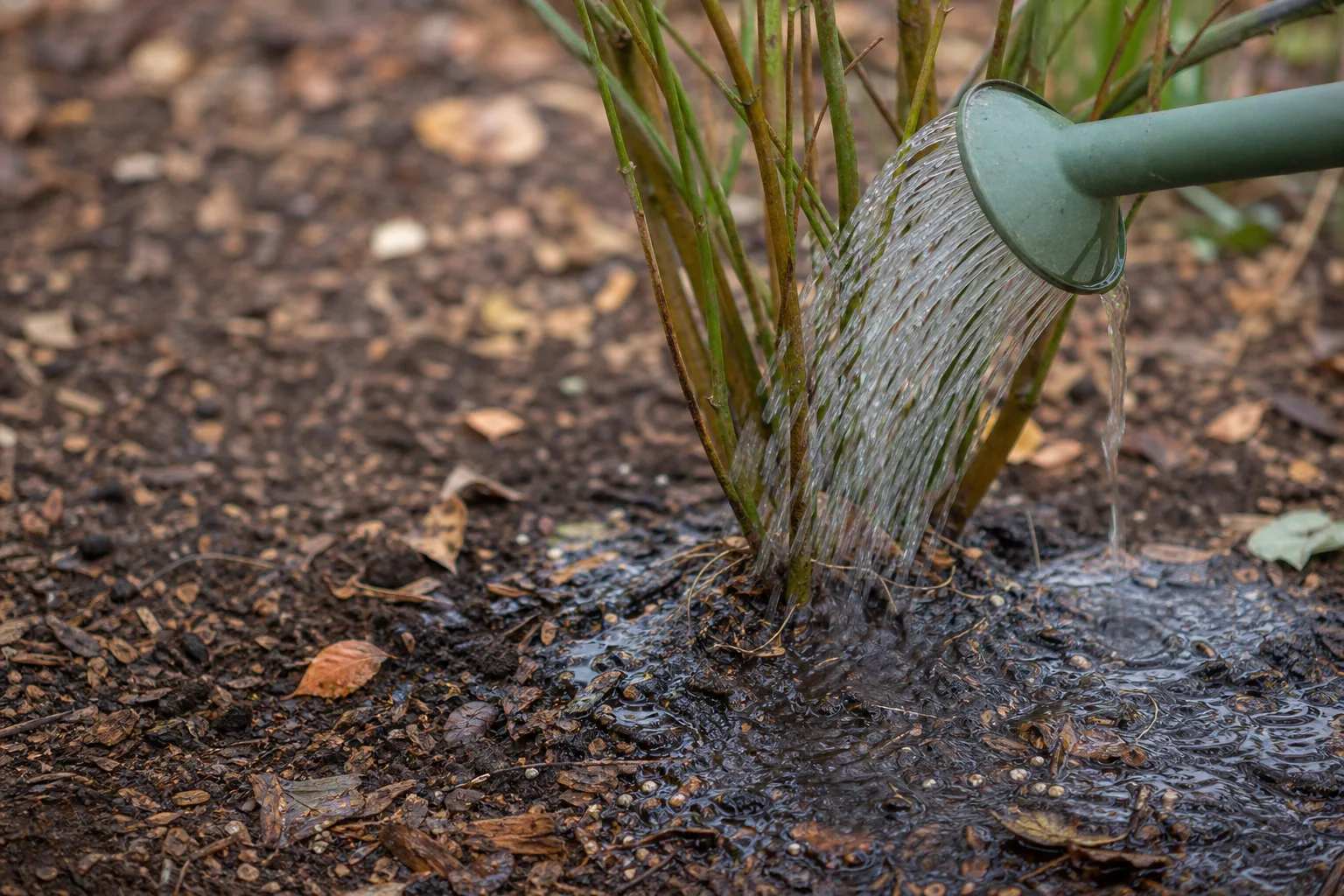
Which beneficial nematode should you use for soil dwelling pests?
Use Sc for surface moving caterpillar larvae, Hb for deeper grubs and beetle larvae, and Sf for shallow soft bodied larvae around fine roots. A three species blend is useful only when you have several pest types or cannot identify the culprit, because Sc, Hb, and Sf hunt in different parts of the soil rather than behaving like one interchangeable product.
That is the position I take in my Austin garden. Match first. Blend second. Tossing every nematode at every problem sounds generous, but it can cost you money without putting enough of the right species where the pest is hiding.
The three names are short, but the habits matter:
| Nematode | Best target and soil depth | Honest downside |
|---|---|---|
| Sc, Steinernema carpocapsae | Mobile cutworm, armyworm, flea, fly, and moth larvae near the top 2 to 3 inches | It is a poor choice for pests hiding deep in the root zone |
| Hb, Heterorhabditis bacteriophora | Japanese beetle, cucumber beetle, white grub larvae, and other deeper grubs | It misses many pests that stay close to the soil surface |
| Sf, Steinernema feltiae | Fungus gnat, thrips, root aphid, and other soft bodied larvae in the top 2 to 5 inches | It is not the strongest answer for large, deep beetle grubs |
A useful overview describes beneficial nematodes as microscopic predators that enter insect hosts rather than plant roots, and it identifies them as a biological option for soil pests. This overview of beneficial nematodes supports the basic idea, but your success still depends on timing, moisture, and the species you choose.
What does Sc control in the garden?
Sc, or Steinernema carpocapsae, is the surface ambush specialist. It stays near the top 2 to 3 inches of soil and is suited to mobile larvae such as cutworms, armyworms, flea larvae, fly larvae, and moth caterpillars wandering near the root zone.
Use Sc where you see seedlings clipped at the soil line, fresh caterpillar damage beside loose soil, or larvae moving through mulch after dark. It is a better fit for a shallow, active pest than for a grub buried under a lawn or a raised bed.
Sc needs a moist path through the soil. If the top layer dries into an Austin August crust, even a correctly applied dose has a hard time moving through the places where larvae travel. Fall helps because evenings are cooler, but the soil still needs a thorough watering before application.
Do not ask Sc to solve every caterpillar problem. It targets larvae in soil or near the root zone, not caterpillars feeding high in a tree canopy, and that distinction saves you from blaming the product for a mismatch.
What does Hb control below the soil surface?
Hb, or Heterorhabditis bacteriophora, is the deeper cruising species. It moves vertically through the soil profile and is most effective against Japanese beetle larvae, cucumber beetle larvae, white grubs, other soil borne grubs, and beetle pupae below the shallow surface layer.
Choose Hb when the damage suggests roots are being eaten from underneath. A lawn that lifts easily, a plant that wilts despite damp soil, or a bed with visible white grubs points you toward a deeper search, although you should dig and identify the pest before buying anything.
Hb is the species I would reach for first against a grub problem in a fall lawn or perennial bed. The trade off is straightforward: it is not the best use of your money for fungus gnat larvae sitting in the upper organic layer, and it will not magically travel through compacted clay that water cannot enter.
Central Texas soil makes this practical. Thin soil over limestone, caliche, and heavy clay can create hard boundaries. Loosen only the surface without shredding roots, water slowly, and apply enough liquid to move the nematodes into the intended zone.
What does Sf control near fine roots?
Sf, or Steinernema feltiae, prefers the upper 2 to 5 inches of soil. It hunts fungus gnat larvae, thrips larvae, root aphids, and other soft bodied larvae living around fine roots and organic matter, so it fits containers, seed starting areas, and shallow garden beds better than deep grub infestations.
If tiny flies rise from a pot after you water, Sf is the species that makes the most sense. It also fits a bed where young roots are being bothered by small larvae rather than large beetle grubs. The honest downside is that Sf will not replace Hb for a deep, heavy grub problem.
Keep the upper soil layer damp after applying Sf. Fungus gnat larvae often occupy the same moist organic zone where Sf works, but that moisture is also where drying can stop the treatment. Do not let the surface swing from soaked to hard and dry during the first two days.
I have killed enough basil in containers to respect this step. In Miami, sandy fill drained before I finished watering. Here, clay holds water, then sets like a brick, so I water gently and check the actual soil instead of trusting the weather app.
Who should use beneficial nematodes, and who should ignore them?
Beneficial nematodes suit gardeners who have identified a soil dwelling insect, can keep soil damp for 24 to 48 hours, and are willing to repeat treatment every 2 to 3 weeks during active pest pressure. Ignore them for leaf chewing insects high above the soil, dry beds you cannot irrigate, or a pest you have not actually found.
They are a sensible fall tool for lawns, vegetable beds, containers, and planting areas where you can direct a drench. They are less sensible for a homeowner hoping one application will control every insect until spring. Biology is helpful, not magic, mi cielo.
Before purchasing, inspect the soil. Dig 2 to 4 inches beside a damaged plant, check under mulch, and look for larvae or grubs. If you find nothing, photograph the damage and compare it with a reliable plant database before choosing a species.
This approach also suits people who want a nonchemical soil treatment, provided they follow the handling directions. It does not suit a bed that will dry out immediately, a site exposed to intense sun during application, or a gardener unwilling to read the label dose.
How should you apply beneficial nematodes in fall?
Apply nematodes to already moist soil in early morning or late evening, with air and soil temperatures above 13 degrees Celsius. Mix the specified amount into lukewarm water between 15 and 25 degrees Celsius, apply a fine drench, avoid direct sunlight and heavy rain, and keep the treated soil damp for 24 to 48 hours.
Fall is a good window because the garden is usually easier to keep moist than in midsummer, but do not apply just before a soaking storm. Heavy rain can move the treatment away from the target zone. A dry, bright afternoon is also wrong because sunlight and drying work against living organisms on the soil surface.
Store unopened nematodes in a cool, dark place between 4 and 10 degrees Celsius until you are ready to use them. Do not leave the package in a sunny shed, a hot car, or beside a heater. The organisms are living, so careless storage can turn a promising treatment into expensive water.
For an Austin fall application, I would water the bed first, wait until the soil is evenly damp, mix the solution, and drench after sunset. Then I would water lightly again if the surface begins drying, while avoiding runoff that carries the treatment out of the bed.
How many beneficial nematodes do you need?
Use about 5 million nematodes per square foot for a light infestation and 10 to 30 million per square foot for heavy pressure, following the product label when it gives a different rate. Reapply every 2 to 3 weeks while the pest remains active, because one drench does not provide season long control.
Measure the area before mixing. A bed measuring 4 feet by 8 feet is 32 square feet, so a light treatment based on 5 million per square foot requires 160 million nematodes across that bed. Do not guess from the size of the packet, because product sizes and concentrations vary.
The published product listings for HB, SC, and SF blends show packages sold in amounts such as 5 million and 30 million nematodes, which is why coverage math matters. These listed blend sizes are a useful reminder to compare the total number with your square footage, not just the package name.
Heavy pressure means more than seeing one damaged leaf. It means repeated injury, many larvae in a soil check, or a problem spreading through the bed. If you cannot find the pest, do not automatically buy the largest dose. Spend that money on diagnosis first.
Is a three species blend better than one species?
A three species blend is better when several soil pests are present at different depths, while a single species is better when you have identified one target and want the strongest match. Sc covers shallow mobile larvae, Hb reaches deeper grubs, and Sf works in the upper root zone, so the blend trades precision for wider coverage.
Here is how I would decide in real life:
- Choose Sc for cutworm or armyworm larvae moving near the surface.
- Choose Hb for white grubs, Japanese beetle larvae, or cucumber beetle larvae deeper in the soil.
- Choose Sf for fungus gnats, thrips, root aphids, and other small soft bodied larvae near fine roots.
- Choose a blend when two or more of those situations are happening in the same garden.
A blend can be convenient. It can also be wasteful if you buy it for one confirmed pest and two species have nowhere useful to hunt. Product listings often market HB, SC, and SF combinations for broad pest coverage, but broad coverage does not erase the depth differences between the organisms.
If the layout, drainage, and pest pattern are confusing you, you can get a concept for your yard before committing to repeated soil treatments. Good design cannot replace pest identification, but it can make irrigation and access easier, which helps a biological treatment work.
What are the most common application mistakes?
The most common mistakes are applying the wrong species, using dry soil, mixing with hot or cold water, treating in direct sunlight, and allowing the bed to dry during the first 24 to 48 hours. A second mistake is stopping after one application even though the pest remains active.
Do not apply to bone dry soil and hope rain fixes it. Do not leave mixed nematodes sitting in a bucket for hours. Mix with lukewarm water, use the solution promptly, and apply a fine drench that reaches the target depth without creating runoff.
Avoid heavy rain immediately after application. Avoid bright midday treatment. Avoid assuming every white larva is the same pest, because Hb, Sc, and Sf are not interchangeable simply because they are all beneficial nematodes.
The quick fall checklist is simple:
- Identify the insect or at least confirm larvae are in the soil.
- Match Sc, Hb, or Sf to the pest depth.
- Store the package at 4 to 10 degrees Celsius in darkness.
- Apply to moist soil with 15 to 25 degree Celsius water.
- Treat above 13 degrees Celsius in early morning or late evening.
- Keep the soil damp for 24 to 48 hours.
- Repeat every 2 to 3 weeks while pressure continues.
What are beneficial nematodes?
Beneficial nematodes are microscopic soil dwelling predators that attack insect hosts rather than plant roots. They are used to suppress soil pests such as grubs, caterpillar larvae, fungus gnat larvae, thrips larvae, and other susceptible insects without relying on chemical treatment, but they still require correct moisture, temperature, timing, and pest matching.
Which nematode kills fungus gnat larvae?
Steinernema feltiae, known as Sf, is the best match of the three for fungus gnat larvae in the upper 2 to 5 inches of soil. Apply it to moist soil around the fine roots, keep that layer damp for 24 to 48 hours, and repeat every 2 to 3 weeks while fungus gnats remain active.
Which nematode is best for white grubs?
Heterorhabditis bacteriophora, known as Hb, is the best match for white grubs and other deeper beetle larvae. Hb cruises vertically through the soil profile, so apply it as a moist drench where grubs are present, rather than choosing Sc or Sf simply because all three are sold as beneficial nematodes.
Can you apply beneficial nematodes in the fall?
Yes, you can apply beneficial nematodes in fall when temperatures are above 13 degrees Celsius and the soil is moist. Apply in early morning or late evening, avoid direct sunlight and heavy rain, and keep the treated soil damp for 24 to 48 hours so the nematodes can move through the target zone.
How often should beneficial nematodes be applied?
Apply beneficial nematodes every 2 to 3 weeks during the active pest period for the best chance of continued suppression. One treatment may not be enough because new larvae can appear after the first application, and dry soil, direct sunlight, or heavy rain can reduce how well the treatment reaches its target.
Do beneficial nematodes need moist soil?
Yes, beneficial nematodes need moist soil so they can move through the pore spaces toward insect hosts. Water the area before application, use a fine drench, and prevent drying for 24 to 48 hours afterward, while avoiding excessive runoff that can carry the treatment away from the roots or pest zone.
Want a plan for your own yard?
Tell us the space and we will put a planting plan together for it. Start at get my concept, or browse what actually grows where you are over on plants.
Frequently asked questions
What are beneficial nematodes?
Beneficial nematodes are microscopic soil dwelling predators that attack insect hosts rather than plant roots. They are used to suppress soil pests such as grubs, caterpillar larvae, fungus gnat larvae, thrips larvae, and other susceptible insects without relying on chemical treatment, but they still require correct moisture, temperature, timing, and pest matching.
Which nematode kills fungus gnat larvae?
Steinernema feltiae, known as Sf, is the best match of the three for fungus gnat larvae in the upper 2 to 5 inches of soil. Apply it to moist soil around the fine roots, keep that layer damp for 24 to 48 hours, and repeat every 2 to 3 weeks while fungus gnats remain active.
Which nematode is best for white grubs?
Heterorhabditis bacteriophora, known as Hb, is the best match for white grubs and other deeper beetle larvae. Hb cruises vertically through the soil profile, so apply it as a moist drench where grubs are present, rather than choosing Sc or Sf simply because all three are sold as beneficial nematodes.
Can you apply beneficial nematodes in the fall?
Yes, you can apply beneficial nematodes in fall when temperatures are above 13 degrees Celsius and the soil is moist. Apply in early morning or late evening, avoid direct sunlight and heavy rain, and keep the treated soil damp for 24 to 48 hours so the nematodes can move through the target zone.
How often should beneficial nematodes be applied?
Apply beneficial nematodes every 2 to 3 weeks during the active pest period for the best chance of continued suppression. One treatment may not be enough because new larvae can appear after the first application, and dry soil, direct sunlight, or heavy rain can reduce how well the treatment reaches its target.
Do beneficial nematodes need moist soil?
Yes, beneficial nematodes need moist soil so they can move through the pore spaces toward insect hosts. Water the area before application, use a fine drench, and prevent drying for 24 to 48 hours afterward, while avoiding excessive runoff that can carry the treatment away from the roots or pest zone.
Free, no obligation
Ready to design your dream landscape? Start here.
Tell us where you are and we will start a free profile for you, with plants that actually survive your climate and a real sense of what the build would cost.