
Backyard Design Near Me: What to Hire, What It Costs, and What to Ask
Looking for backyard design near me? Here is how to find the right local designer or landscape contractor, what a useful backyard plan should include, and what the work can cost before you sign anything.
September 27, 2026
By Diego Navarro
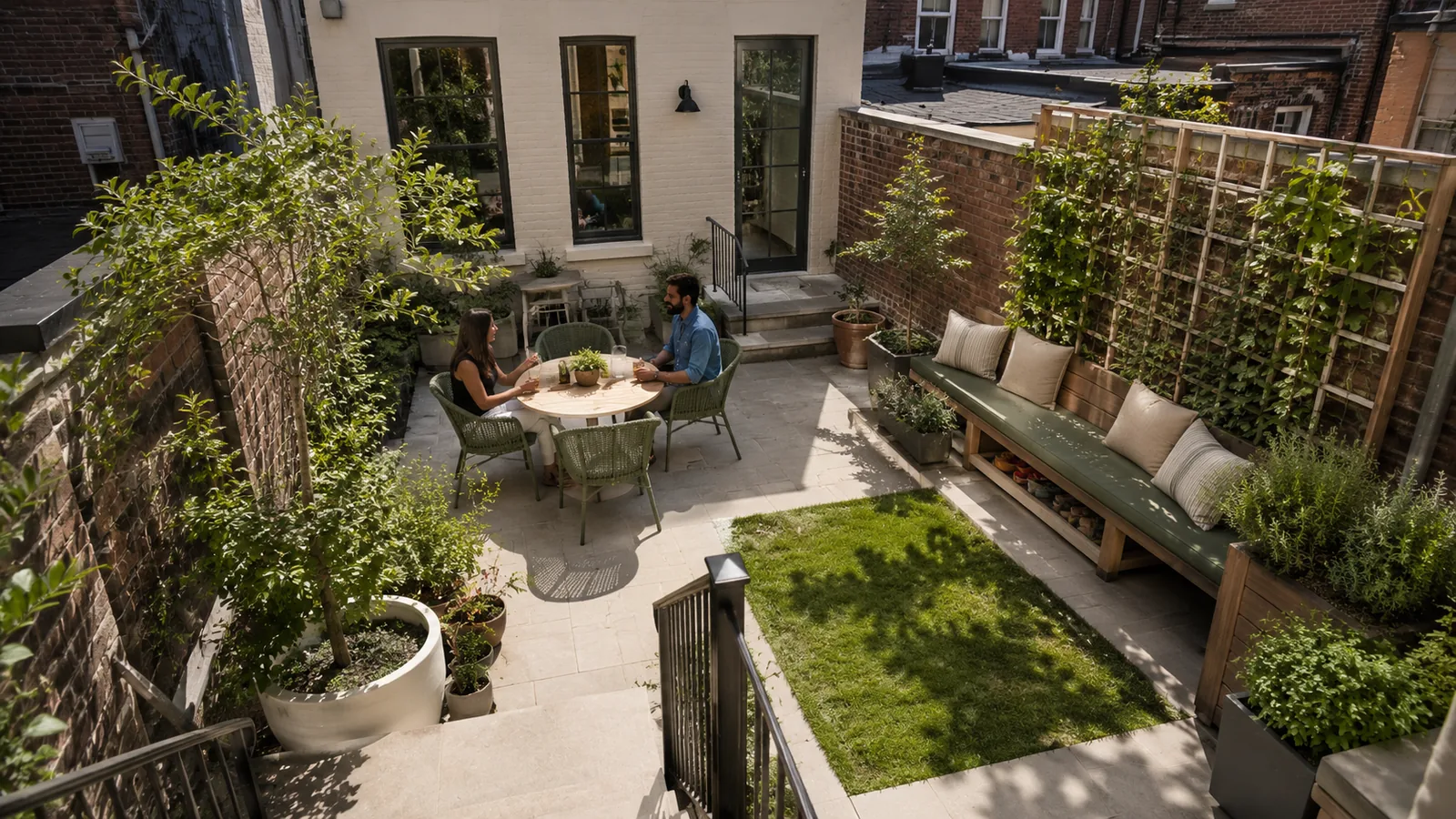
The best backyard design near you is not the prettiest picture online. It is a buildable plan from somebody who visits your yard, checks sun and drainage, prices the work clearly, and designs for how you actually live outside. In Central Texas, I would spend money on drainage and a useful patio before decorative planting.
What does backyard design near me usually cost?
Backyard design near you can cost roughly $500 to $3,000 for a design-only plan, while a contractor-built backyard often runs from $5,000 to $50,000 or more. The range is wide because a planting refresh is not the same job as a patio, drainage correction, retaining wall, irrigation system, and pergola together.
A basic consultation and sketch may take two to five hours and cost $150 to $600. A measured plan with planting notes, material selections, lighting locations, and construction details usually costs more, often $1,000 to $3,000 depending on the yard and designer.
For a built project, use these rough planning bands rather than treating them as a quote:
| Project approach | Typical planning range | Honest downside |
|---|---|---|
| Planting and bed refresh | $2,000 to $10,000 | It will not fix a failing patio or standing water |
| Patio, paths, planting, and irrigation | $10,000 to $30,000 | Excavation and access can push the number up quickly |
| Full backyard build with drainage, walls, shade, and lighting | $25,000 to $75,000+ | More subcontractors mean more scheduling and change-order risk |
Local costs rise if the yard needs grading, leveling, permits, or difficult access, and local professionals can help identify those costs before construction begins, according to Thumbtack's landscaping cost guidance. In Austin, a rock bar and two hours can be the difference between a simple planting bed and a small excavation project. The ground gets a vote.
How do I find backyard design near me?
Start with three local firms that both design and build, then add one independent landscape designer if you want competitive construction bids. Ask each one to visit the property, identify drainage and soil problems, explain the design fee, and show two completed projects with similar scale, access, and budget.
Search results are a starting point, not proof of craftsmanship. Look for contractors who work in your city regularly, carry appropriate insurance, communicate a written scope, and can explain who performs excavation, masonry, irrigation, electrical work, and planting.
You can also use our local pro directory to compare nearby landscape professionals, but still check references and contracts yourself. A directory helps you build a shortlist. It does not bless the work.
Ask for photos taken at least six months after installation. Fresh mulch hides a lot, including dead plants, uneven edging, and patios that were never properly compacted.
What should a backyard designer look at before making a plan?
A good designer should walk the property in morning, midday, and late afternoon, then record sun, shade, soil, slopes, puddling, utilities, access, views, and the places you naturally want to sit. The plan should respond to those conditions instead of copying a photograph from a different climate.
The research-backed starting point is to observe the yard at different times, test soil pH and nutrients, and mark low spots that puddle after rain, as recommended by James Landscaping's backyard design guide. In fall, you can still do this. The first heavy rain is free information.
In my own Austin yard, I learned this the stubborn way. I put a chair near the fence and sat there after lunch for several days, and the place I thought would be comfortable turned into a furnace by 3 p.m. The shade was on the other side. Valeria would say the drawing was elegant. The sun disagreed.
The site visit should also check hose bibs, irrigation valves, downspouts, gates, driveway width, tree roots, overhead lines, and where construction materials can enter. If nobody asks how a compact excavator or pallet of pavers reaches the backyard, the estimate is not finished.
How should I design my backyard for everyday use?
Design your backyard around one primary activity first, then place a patio or dining area near the house and divide the rest into clear zones for cooking, gardening, play, storage, or quiet sitting. Keep the middle open so the yard feels larger and people can move without walking through planting beds.
A seating area near the house, ideally facing southwest for afternoon light, is a useful starting rule from House & Garden's garden planning guide. In Texas, southwest exposure can also mean brutal late-day heat, so pair the orientation with shade instead of pretending the sun is polite.
Write down what you do outside in a normal week. If you grill twice a week, keep the cooking surface close to the kitchen and leave at least 36 inches for a walking route. If children play, reserve a simple, visible open area rather than filling every corner with ornamental features.
A decomposed granite path is affordable and drains well, but it can migrate into lawns and track into the house. Pavers create a cleaner walking surface, but they cost more and need a properly compacted base, especially over Central Texas black clay that swells and shrinks.
How do I design my backyard if it is small?
For a small backyard, design function first and atmosphere second: use one properly sized seating area, a narrow planting edge, vertical supports, and a clear route from the house. Trellises and fence-mounted herb walls can increase planting space, but they still need irrigation, access, and regular trimming.
The Gardenia small backyard guide recommends shaping the layout around use, layered planting, privacy, and flow rather than squeezing in every idea. That is right. A small yard with four competing destinations feels smaller than a small yard with one good place to sit.
Measure before shopping. A 10-by-12-foot dining patio leaves room for a table and chairs, but not much room for people to pass behind seated guests. A 30-inch planting strip can hold a narrow layered bed, while a 6-foot privacy hedge can consume a surprising amount of usable space over three years.
A vertical garden saves ground area, but its containers dry faster and need more frequent irrigation. A small pergola gives structure and shade, but posts consume floor space and footings may require digging through rock or concrete. Every clever solution sends an invoice somewhere.
Which plants and materials work best for a backyard near me?
Choose a limited group of hardy plants suited to your USDA hardiness zone, with native or drought-tolerant choices where practical, and repeat them in groups of three or more. Before buying, use the plant database to compare mature size, sun needs, water needs, and maintenance trade-offs.
The right plant is not simply the one that survives a nursery visit. It needs room at maturity, suitable drainage, and a watering plan that works in July and August. A drought-tolerant plant may need establishment water for its first one to two summers, and it may still fail in reflected heat beside a masonry wall.
Drip irrigation is my usual choice for planted beds because it delivers water slowly near the root zone and can run from a timer, but emitters clog and tubing becomes visible or damaged if it is installed carelessly. Plan an accessible shutoff and inspect the system monthly from May through September.
Mulch reduces exposed soil and can moderate moisture swings, but piled mulch against trunks or stems encourages rot and hides irrigation problems. Keep it about 2 to 3 inches deep and pull it several inches away from woody stems.
Who is backyard design near me for, and who should ignore it?
Backyard design near you suits homeowners who want a usable outdoor room, need help coordinating several trades, or have drainage, grade, access, or plant-selection problems that make guessing expensive. It is a poor fit for someone who only wants a few plants moved next weekend or who refuses to set a budget before requesting a plan.
Hire design help if you are combining a patio, cooking area, privacy screen, irrigation, lighting, and planting. Coordination matters because a fence, drain line, tree, and patio cannot all claim the same six feet of soil.
You may not need a formal designer for a straightforward 12-by-20-foot planting refresh with no grade change, wall, electrical work, or drainage issue. A consultation and hand sketch can be enough, provided you understand mature plant sizes and maintenance.
If water enters the house, a slope sends runoff toward the foundation, or a retaining wall is needed, do not treat it as a weekend layout problem. Hire somebody who can explain the drainage approach and refer structural or engineering questions to the right professional.
What separates a good backyard contractor from a bad one?
A good backyard contractor explains the sequence of work, measures the site, identifies unknowns, gives a written scope, and describes what happens if rock, buried concrete, drainage failure, or utility conflicts appear. A bad one gives a fast total price, promises a perfect lawn, and hopes the soil behaves out of politeness.
Before signing, ask for:
- Proof of insurance and the business license or registration required in your area.
- A written scope listing demolition, excavation depth, base material, concrete or paver thickness, drainage, irrigation, planting, cleanup, and warranty terms.
- A payment schedule tied to completed stages, not a large unexplained deposit.
- The allowance for materials that have not been selected yet.
- A process for written change orders before extra work begins.
- Two recent references and one project older than a year.
Ask who pulls permits when they are required. Ask who owns the design if you decide not to use that contractor for construction. Ask whether the warranty covers plant replacement, irrigation parts, settling, and workmanship separately.
In Austin, I also ask where excavated limestone and caliche go. Hauling it away costs money. Leaving it in a pile behind the shed is not a disposal plan.
What should I ask before signing a backyard design contract?
Before signing, ask what you will receive, how many revisions are included, what the contractor is responsible for, how drainage is handled, which materials are allowances, and what is excluded. Get the answers in the contract, because a friendly conversation disappears faster than a clean patio after the first rain.
Ask these questions in plain language:
How much does backyard design near me cost? Backyard design near you can cost about $500 to $3,000 for a design-only plan, while construction commonly ranges from $5,000 to $50,000 or more. The final price depends on site access, grading, drainage, paving, irrigation, walls, shade structures, lighting, planting, permits, and material choices, so request a written scope instead of relying on a square-foot guess.
Can you design my backyard and build it too? Many landscape contractors can design your backyard and build it too, but ask whether the design fee is separate, credited toward construction, or lost if you choose another builder. A combined firm can coordinate the work more easily, while an independent designer may give you more freedom to compare construction bids.
How do I know if a backyard contractor is reliable? You can judge a backyard contractor by checking insurance, written scope, references, construction sequence, payment schedule, warranty, and photos of projects at least six months old. A reliable contractor also explains site risks before taking a deposit and uses written change orders for work outside the original agreement.
Should I fix drainage before planting my backyard? Yes, fix drainage before planting your backyard if water ponds, flows toward the house, erodes soil, or saturates a planned patio area. Grading may solve a simple surface problem, while a French drain or rain garden may suit another site. Each has a trade-off, and none should be selected without observing where water travels.
Is a pergola worth it in a backyard design? A pergola can be worth it if you use the patio regularly and need a permanent shade framework, but it costs more than a shade sail and takes up space with posts and footings. A shade sail is cheaper and removable, but it needs strong anchors, careful tension, and replacement sooner than a well-built pergola.
How long does a backyard design and build take? A backyard design and build often takes 6 to 16 weeks from site visit to completion, excluding long permit delays and custom material lead times. Design may take 2 to 6 weeks, while construction can take 2 to 10 weeks depending on excavation, drainage, masonry, irrigation, planting, weather, and the number of crews involved.
Start with a measured concept, not a plant shopping list. You can get a concept for your yard before meeting contractors, then use it to explain your priorities and compare proposals without asking each person to guess what you mean.
Fall is a good time to stand in the yard with a tape measure and a notebook, because the heat has backed off enough to think and the first rain can expose the low places. Decide what needs to be built before deciding what needs to bloom. That order saves money.
Want a plan for your own yard?
Tell us the space and we will put a planting plan together for it. Start at get my concept, or browse what actually grows where you are over on plants.
Frequently asked questions
How much does backyard design near me cost?
Backyard design near you can cost about $500 to $3,000 for a design-only plan, while construction commonly ranges from $5,000 to $50,000 or more. The final price depends on site access, grading, drainage, paving, irrigation, walls, shade structures, lighting, planting, permits, and material choices, so request a written scope instead of relying on a square-foot guess.
Can you design my backyard and build it too?
Many landscape contractors can design your backyard and build it too, but ask whether the design fee is separate, credited toward construction, or lost if you choose another builder. A combined firm can coordinate the work more easily, while an independent designer may give you more freedom to compare construction bids.
How do I know if a backyard contractor is reliable?
You can judge a backyard contractor by checking insurance, written scope, references, construction sequence, payment schedule, warranty, and photos of projects at least six months old. A reliable contractor also explains site risks before taking a deposit and uses written change orders for work outside the original agreement.
Should I fix drainage before planting my backyard?
Yes, fix drainage before planting your backyard if water ponds, flows toward the house, erodes soil, or saturates a planned patio area. Grading may solve a simple surface problem, while a French drain or rain garden may suit another site. Each has a trade-off, and none should be selected without observing where water travels.
Is a pergola worth it in a backyard design?
A pergola can be worth it if you use the patio regularly and need a permanent shade framework, but it costs more than a shade sail and takes up space with posts and footings. A shade sail is cheaper and removable, but it needs strong anchors, careful tension, and replacement sooner than a well-built pergola.
How long does a backyard design and build take?
A backyard design and build often takes 6 to 16 weeks from site visit to completion, excluding long permit delays and custom material lead times. Design may take 2 to 6 weeks, while construction can take 2 to 10 weeks depending on excavation, drainage, masonry, irrigation, planting, weather, and the number of crews involved.
Free, no obligation
Ready to design your dream landscape? Start here.
Tell us where you are and we will start a free profile for you, with plants that actually survive your climate and a real sense of what the build would cost.