
The Avocado Test-Fruit Method: Pick One and Wait a Week
One avocado can tell you whether the rest of your fall crop is ready. Pick a representative fruit, let it soften for about a week, and use its texture, skin, aroma, and condition to decide whether to harvest the tree.
September 23, 2026
By Valeria Navarro
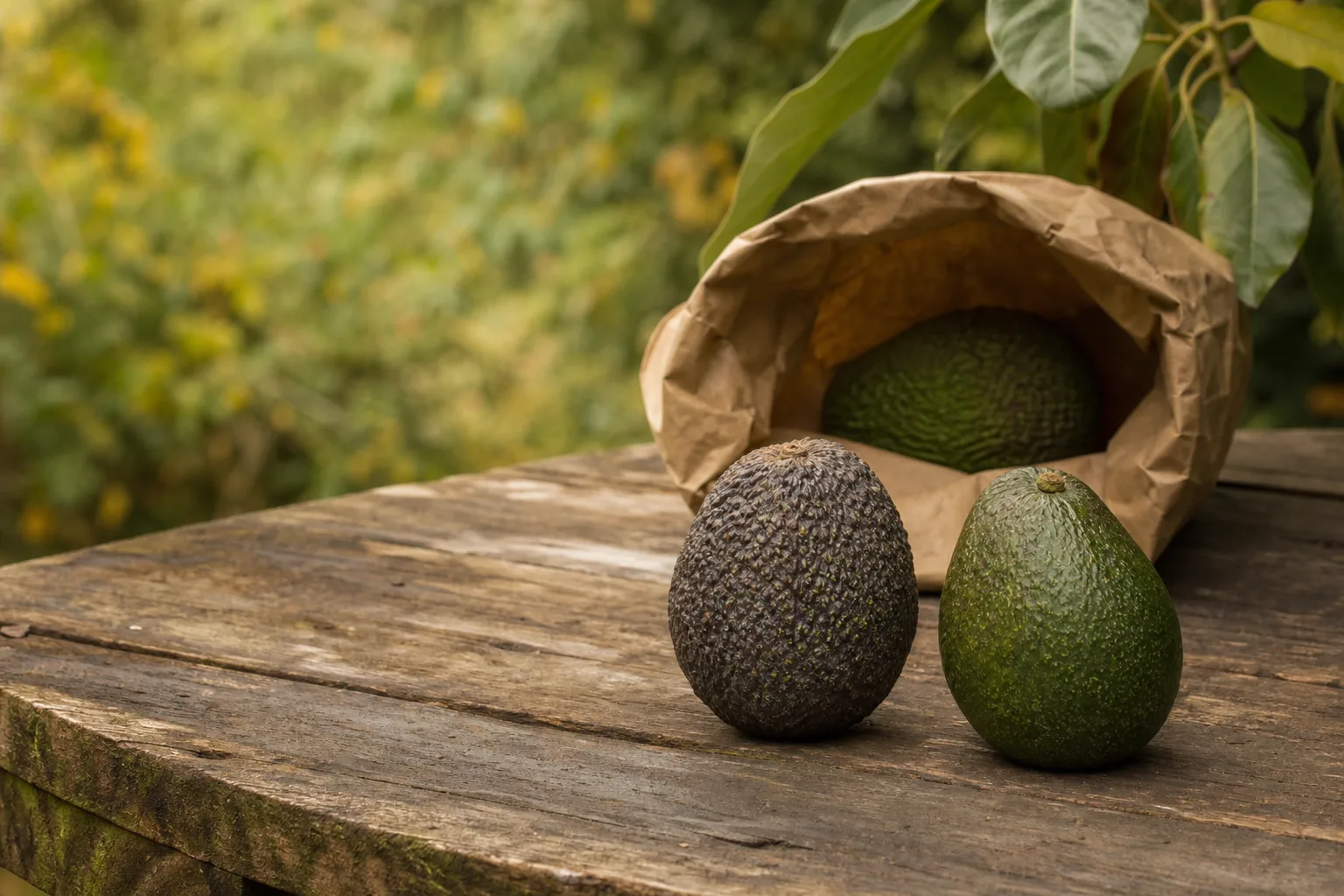
Pick one representative avocado from each tree and let it sit in a paper bag or warm room for about a week. If it softens evenly without shriveling, brown spots, or a rotten patch, harvest the rest within a few days, then keep fruit at room temperature for immediate use or refrigerate only after it is ripe.
How do I use the avocado test-fruit method this fall?
To use the avocado test-fruit method, pick one mature-looking avocado from each tree, place it in a paper bag or warm room, and wait about seven days. If it softens evenly and stays free of shriveling and brown spots, the rest of that tree’s crop is mature enough to harvest.
Do this now, while you are standing in the garden, not after every fruit has dropped or turned mushy. Choose one fruit from a normal-looking branch, record the date, and keep it away from direct sun, heaters, and a cold refrigerator.
The test is about eating quality, not just size. A large avocado can still be immature, and a green-skinned avocado can be ready because some varieties remain green when ripe. The skin color rule is useful, but it is not the boss. Some avocado varieties stay green even when ripe.
Which avocado should I pick as the test fruit?
Pick a sound, average-sized avocado from each tree, preferably one that has the dull green or slightly brownish skin expected for that variety. Avoid the smallest fruit, the largest fruit, and anything with a large brown blemish, soft wound, or insect damage because a damaged sample can spoil before the healthy crop does.
Use clean hand pruners if the stem is difficult to reach, and leave a short piece of stem attached if you can. The pruners save your fingers and the branch, but they add a cleaning step, so wipe the blades before moving to another tree.
Do not choose the fruit that is already soft. That is not a test. It is a confession from the avocado that it has been waiting longer than you have.
If your tree has fruit in very different sizes or colors, test one from each obvious group. That takes more fruit, but it costs less than harvesting the whole tree too early and discovering a basket of hard, disappointing avocados.
How long should an avocado test fruit sit?
Let the test fruit sit for about one week, usually five to seven days, in a paper bag or a warm indoor room. Check it once each day after day four. The best result is an avocado that gradually yields to gentle pressure across the whole fruit rather than collapsing at one spot.
A paper bag keeps the fruit together and makes checking easy, but it can hide moisture if a damaged avocado begins to rot. A warm room gives you better visibility, but the fruit may ripen a little less evenly if it sits near a sunny window, stove, or heating vent.
Do not put an unripe test fruit in the refrigerator. Cold storage delays maturation and can alter the final texture, which means you might blame the tree for a storage mistake. This is the part where I remember Miami, where sandy fill could drain before I finished watering. Austin clay holds on, and fruit needs the same kind of patient observation rather than a hurried fix.
Write “picked,” “day four,” and “day seven” on a scrap of paper. The tiny record matters if you grow more than one tree or harvest at different times next fall.
What signs show that an avocado test fruit passed?
The test fruit passed when it softens evenly under gentle pressure, keeps a clean surface without shriveling or brown spots, and develops a mild, slightly floral aroma. The skin should look dull green to slightly brownish for the variety, though skin color alone cannot prove readiness.
Press with your whole hand, not one fingertip. A single fingertip can bruise the skin and create the very brown spot you are trying to diagnose. The fruit should yield slightly, not feel hollow, wet, or collapsed.
Smell the stem end. A mild, slightly floral aroma supports readiness; a sour or fermented smell means the fruit is overripe or damaged. A fruit with no aroma at day seven may simply need more time, but it has not passed this test yet.
Research on tree fruit uses softening, aroma, and skin changes as maturity clues, and notes that fruit picked before full maturity can ripen indoors at room temperature. NC State Extension lists softening and fruity, floral aroma among useful ripeness indicators. For avocado, I use those clues together because no single color chart can handle every variety.
When should I harvest the rest of the avocado crop?
Harvest the rest of the crop within a few days after the test fruit softens evenly without shriveling or brown spots. Start with sound fruit that matches the test avocado in size and appearance, then leave visibly smaller, damaged, or very different fruit for another test rather than assuming the entire tree ripens as one unit.
This is where many gardeners rush. Everyone says, “Pick them when they look big.” In practice, size tells you less than the seven-day indoor test because fruit can look finished on the tree and still refuse to soften properly on the counter.
Harvest gently into a shallow basket. Do not pile heavy fruit more than two layers deep, and do not toss avocados into a bucket. The basket takes more trips, but it reduces bruising, and bruised fruit can develop brown internal damage before you see it outside.
You can also check a few fruits across the tree rather than stripping one branch first. If the tree has a mix of conditions, harvest the matching mature group and repeat the test with the lagging group in five to seven days.
Should I use a paper bag, a warm room, or a refrigerator?
Use a paper bag or a warm room for the one-week maturity test, not a refrigerator. A paper bag is convenient, while a warm room lets you inspect the fruit more easily; refrigeration is for slowing ripe fruit after the test, because cold storage can delay unripe fruit and change its texture.
| Option | Best use | Honest downside |
|---|---|---|
| Paper bag | A contained five-to-seven-day test | It can hide moisture and speed spoilage in damaged fruit |
| Warm room | Easy daily inspection of one test fruit | Sun, heat, or a vent can make softening uneven |
| Refrigerator | Slowing ripe fruit for later use | It delays unripe fruit and may alter texture |
Keep the test between normal indoor temperatures rather than trying to make it hot. A warm room means ordinary living-space warmth, not a greenhouse, car, porch in direct sun, or oven-adjacent counter.
After the crop is ripe, refrigeration buys you time. It does not rescue fruit that never matured properly, and it does not repair brown spots, shriveling, or bruising.
Who is this test-fruit method for, and who should ignore it?
This method suits homeowners with one or a few avocado trees who want to avoid harvesting an entire crop too early. It is especially useful when fruit color is confusing, the tree carries mixed-size avocados, or you are unsure whether a fall harvest is ready. Ignore a single test when fruit clearly comes from different maturity groups.
Use it if you can wait seven days and check the sample daily. That small pause saves a whole harvest from becoming a countertop science experiment with no edible ending.
Do not rely on one sample if the tree has widespread storm damage, large brown blemishes, fruit that has already shriveled, or clear signs of uneven development. Test more than one fruit, or harvest only the sound group first.
This is also not a good fit if you need every avocado immediately for a party tomorrow. Pick the best-looking mature fruit, accept that the rest may not be ready, and do not force the process with cold storage or excessive heat. Fruit has its own calendar. Rude, but accurate.
What should I do with avocados after the test passes?
Once the test fruit passes, keep harvested ripe avocados at room temperature if you plan to eat them soon, or refrigerate them to slow further ripening. Inspect each fruit before storage, because one bruised or brown-spotted avocado can soften faster and affect the fruit packed against it.
Use the room-temperature fruit first. A bowl on the counter makes checking simple, but it also asks you to pay attention every day. If the fruit feels firm, leave it out. If it yields evenly, plan to use it soon.
Refrigerate only fruit that is already ripe or nearly ready for your intended use. Cold storage is a pause button, not a maturity button. Unripe fruit belongs at room temperature until it begins to soften.
For next year, record the date the test fruit was picked and the date it passed. Garden notes are not glamorous, but neither is throwing away a crop because you trusted a color chart more than your own fruit.
If you are adding another tree or planning the harvest area, compare varieties and site conditions in our plant database before buying. If the tree is part of a larger yard decision, you can also get a concept for your yard before you commit to paths, paving, or a thirsty planting bed.
What questions do gardeners ask about the avocado test-fruit method?
The avocado test-fruit method is simple, but the timing can feel slippery in fall. These direct answers cover the questions I hear most often about choosing a sample, judging softness, using cold storage, and deciding whether one fruit can represent a whole tree.
How long should I wait after picking the avocado test fruit?
Wait about five to seven days, then check the fruit daily. It is ready as a test when it softens evenly without shriveling, brown spots, or a rotten patch. A fruit that remains completely firm after one week has not passed, while one that collapses at a damaged spot is not a reliable sample.
Can I use an avocado that is still green as the test fruit?
Yes, you can use a green avocado if it is sound and typical of the variety. Some avocado varieties remain green when ripe, so green skin alone does not mean the fruit is immature. Choose a fruit with a dull surface, no large blemish, and an average size, then judge it by indoor softening and condition.
Should I refrigerate an unripe avocado to slow it down?
No, keep an unripe avocado at room temperature for the test. Refrigeration can delay maturation and alter texture, making the result harder to interpret. After the avocado has softened evenly and reached eating readiness, refrigeration can slow further ripening for a short period, but cold storage cannot fix fruit picked too early.
What does a bad avocado test fruit look like?
A bad test fruit stays hard, shrivels, develops large brown spots, or softens only around one damaged area. It may also smell sour or fermented instead of mildly floral. Discard that sample from your decision and test another sound avocado, because damage can make a healthy crop appear immature or overripe.
How many avocados should I test from one tree?
Start with one representative avocado from each tree. Test more if the tree has clearly different fruit sizes, colors, damage levels, or branch conditions. One good sample can guide a uniform crop, but mixed groups deserve separate tests five to seven days apart so you do not harvest the lagging fruit too soon.
How soon should I harvest the rest after the test fruit softens?
Harvest matching, sound fruit within a few days after the test fruit softens evenly. Begin with avocados that resemble the sample in size and skin condition. Leave smaller, damaged, or noticeably different fruit for another test rather than stripping the whole tree at once, because one tree can carry fruit at different stages.
Want a plan for your own yard?
Tell us the space and we will put a planting plan together for it. Start at get my concept, or browse what actually grows where you are over on plants.
Frequently asked questions
How long should I wait after picking the avocado test fruit?
Wait about five to seven days, then check the fruit daily. It is ready as a test when it softens evenly without shriveling, brown spots, or a rotten patch. A fruit that remains completely firm after one week has not passed, while one that collapses at a damaged spot is not a reliable sample.
Can I use an avocado that is still green as the test fruit?
Yes, you can use a green avocado if it is sound and typical of the variety. Some avocado varieties remain green when ripe, so green skin alone does not mean the fruit is immature. Choose a fruit with a dull surface, no large blemish, and an average size, then judge it by indoor softening and condition.
Should I refrigerate an unripe avocado to slow it down?
No, keep an unripe avocado at room temperature for the test. Refrigeration can delay maturation and alter texture, making the result harder to interpret. After the avocado has softened evenly and reached eating readiness, refrigeration can slow further ripening for a short period, but cold storage cannot fix fruit picked too early.
What does a bad avocado test fruit look like?
A bad test fruit stays hard, shrivels, develops large brown spots, or softens only around one damaged area. It may also smell sour or fermented instead of mildly floral. Discard that sample from your decision and test another sound avocado, because damage can make a healthy crop appear immature or overripe.
How many avocados should I test from one tree?
Start with one representative avocado from each tree. Test more if the tree has clearly different fruit sizes, colors, damage levels, or branch conditions. One good sample can guide a uniform crop, but mixed groups deserve separate tests five to seven days apart so you do not harvest the lagging fruit too soon.
How soon should I harvest the rest after the test fruit softens?
Harvest matching, sound fruit within a few days after the test fruit softens evenly. Begin with avocados that resemble the sample in size and skin condition. Leave smaller, damaged, or noticeably different fruit for another test rather than stripping the whole tree at once, because one tree can carry fruit at different stages.
Free, no obligation
Ready to design your dream landscape? Start here.
Tell us where you are and we will start a free profile for you, with plants that actually survive your climate and a real sense of what the build would cost.