
Apple Spur Pruning Versus Renewal Pruning: Which One Should You Use?
Spur-bearing and tip-bearing apple trees need different cuts. Learn what to do this fall, how to identify your tree, and why pruning the wrong type can remove next year’s apples.
September 27, 2026
By Diego Navarro
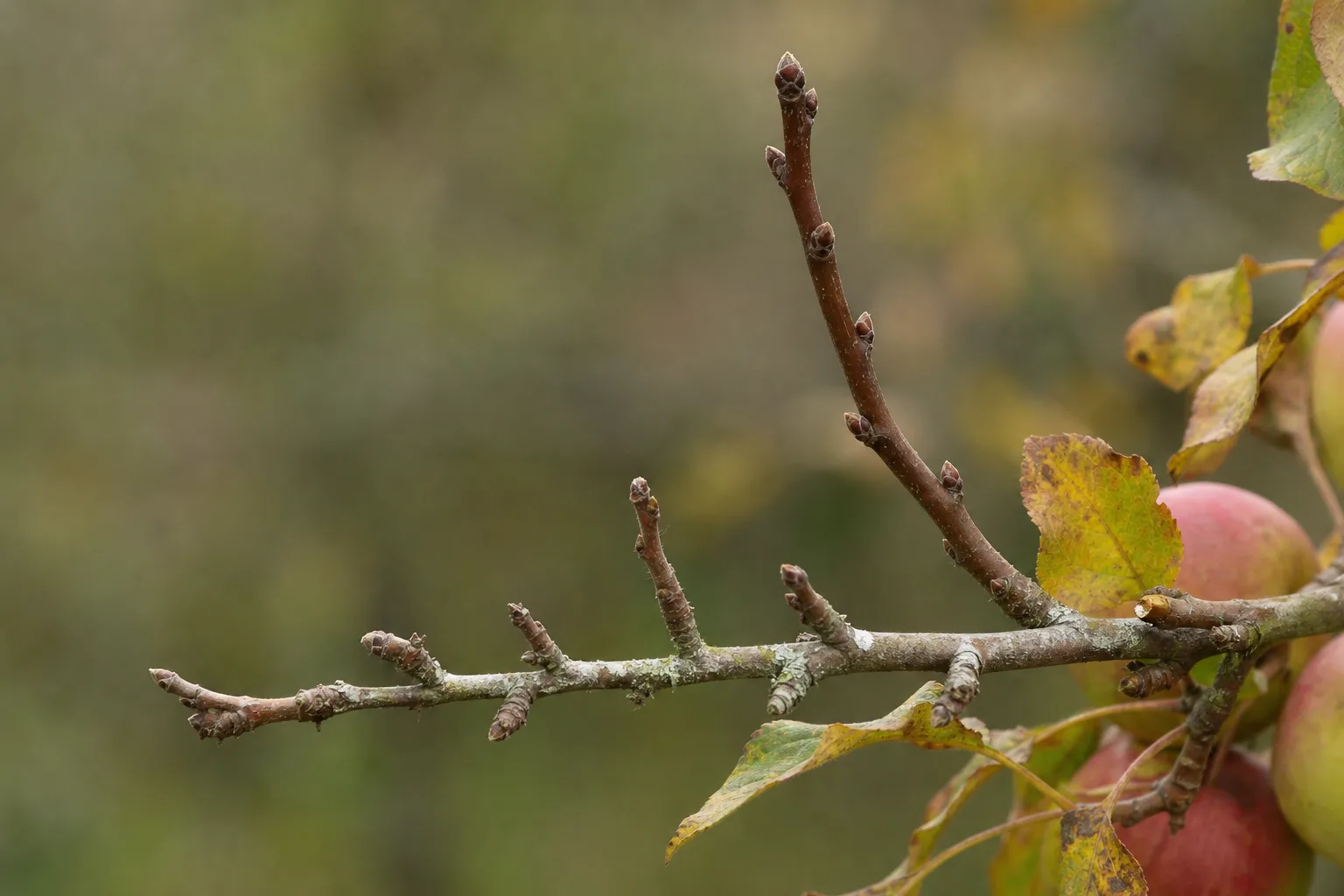
What should I do to an apple tree this fall?
This fall, do not make the main pruning cuts on an apple tree unless you are removing clearly dead, broken, or diseased wood. Identify whether the tree bears on short spurs or shoot tips, mark the likely fruiting wood, and wait until late winter after leaf fall, while the tree is fully dormant, for structural pruning.
Stand under the canopy with a notebook, not a saw. Look for short, stubby fruiting spurs on older branches, or longer shoots that carried fruit only at their ends.
I learned this lesson on my father's twelve foot strip of clay in New Jersey, where every branch looked simple until the first hard frost showed what was alive. In Central Texas, the calendar is less polite, so I inspect in November and usually prune in January or February, before spring growth starts.
Remove only wood that is obviously dead, broken, diseased, or rubbing another branch. The tradeoff is that waiting leaves an untidy tree for a few months, but cutting early can remove buds you still need and makes it harder to read the tree's structure.
If a branch is dead, cut back to healthy wood without leaving a long stub. Clean cuts matter more than making the tree look finished today. It can wait.
How do spur-bearing and tip-bearing apples differ?
Spur-bearing apples make fruit on short, permanent spurs along older branches, so they need light thinning that preserves those spurs. Tip-bearing apples make fruit at the ends of longer shoots, so they need renewal pruning that cuts old fruiting shoots back to two to four buds and encourages new fruiting wood.
Spur-bearing examples include Red Delicious, Golden Delicious, Cox's Orange Pippin, and many heritage varieties, according to this overview of apple pruning. Their advantage is a compact, even fruiting zone and less annual cutting. Their downside is that a hard cut can remove several years of useful spurs.
The supplied pruning guidance places McIntosh, Gala, Honeycrisp, and Fuji among tip-bearing apples. Their longer shoots need replacing over time, but renewal pruning removes some visible fruiting wood each winter, so a heavy-handed cut can reduce the next crop.
Do not treat the words as interchangeable. Spur pruning preserves the little fruiting points already present. Renewal pruning deliberately sacrifices older fruiting shoots to produce younger ones.
The wider pruning terms are also used in grape training, where a spur may retain one to four nodes and a cane may retain eight to fifteen nodes, as explained by NC State Extension. That source concerns grapevines, not apples, but the useful distinction is the same: short retained growth versus longer wood selected for replacement.
How do I prune a spur-bearing apple?
Prune a spur-bearing apple lightly in late winter by removing dead, diseased, crossing, and crowded branches, keeping three to five well-spaced scaffold branches, and preserving the short fruiting spurs. Where a spur needs shortening, cut it back to two or three healthy buds rather than stripping the branch bare.
First choose the framework. Keep three to five strong scaffold branches spaced around the trunk, with enough vertical separation that one branch does not sit directly above another. The tradeoff is that removing a competing branch may cost a few flowers this spring, but a crowded framework stays shaded and is harder to harvest.
Next remove branches that cross, point into the center, or grow straight down. Keep the cuts moderate. A spur-bearing tree is not asking for a haircut every year, and the short spurs are the crop-producing parts you are trying to retain.
If a spur has become long, damaged, or crowded, shorten it to two or three healthy buds. Do not cut every spur to the same point just because the numbers are tidy. A tree is not a spreadsheet, although it will punish spreadsheet behavior.
Spur pruning reduces labor and keeps fruiting wood at a fairly uniform height, which is one reason it works well in a home garden. The honest downside is that old spurs can become less productive, and removing too many at once leaves a tree with plenty of leaves but fewer apples.
How do I renew a tip-bearing apple?
Renew a tip-bearing apple in late winter by cutting the previous year's fruiting shoots back to short stubs with two to four healthy buds, then thinning excess shoots so new growth develops from those renewal points. The aim is to replace old tip-fruiting wood without leaving a dense bundle of competing shoots.
Find last year's longer shoots first. A fruiting shoot may have carried an apple at its tip, leaving a small scar or a cluster of buds near the end. Cut that shoot back to two, three, or four healthy buds, depending on the spacing and strength of the branch.
Choose outward-facing buds when you can. New growth from an outward bud is less likely to fill the center, though the tradeoff is that bud direction is not perfectly predictable and a vigorous tree may still send up shoots you need to remove next winter.
Thin out extras rather than shortening every shoot. If three new shoots emerge within a few inches of one another, keep the best-positioned one and remove the other two at their base. Renewal pruning fails when the tree is left with a thicket of replacement wood.
This method encourages fresh fruit-bearing shoots for the coming season, but it costs you some immediate fruiting wood. Cut too far back and you may get strong leafy growth with no useful crop. Cut too little and the old tip-bearing wood stays in charge.
How can I tell which type of apple tree I have?
You can identify the pruning type by examining where apples formed last season: spur-bearing trees carry fruit on short, stubby spurs along older branches, while tip-bearing trees carry fruit at the ends of longer shoots. If the tree is young or bare, use its variety name, nursery tag, or last season's photographs before cutting.
Start with a branch about pencil thickness and inspect its side growth. A spur is short, knobby, and permanent-looking, often only a few inches long. A tip-bearing shoot is longer and more flexible, with fruit or a fruit scar near its end.
Ask yourself one practical question: did the apples hang from little bumps along the branch, or mostly from the ends of long twigs? The answer points you toward spur pruning or renewal pruning. If you cannot tell, make only sanitation cuts this winter and gather better evidence through the next growing season.
Variety names help, but labels are not always reliable. The supplied guidance lists Red Delicious and Golden Delicious as spur-bearing, while it lists McIntosh, Gala, Honeycrisp, and Fuji as tip-bearing. Each named variety has a tradeoff beyond pruning type, so a label is a clue, not permission to cut blindly.
Take a close photograph now, especially after leaves drop. Mark two or three fruiting shoots with weatherproof tags, then compare where blossoms and fruit develop next year. Ten minutes of observation can save an hour of regrettable pruning.
Who is spur or renewal pruning for?
Spur pruning suits homeowners with an established apple tree that has short fruiting spurs, a manageable canopy, and a goal of steady harvest with limited annual labor. Renewal pruning suits homeowners with a confirmed tip-bearing tree and enough patience to replace old shoots gradually. Neither method suits a tree you have not identified yet.
Choose spur pruning if your tree already has a clear framework and fruiting spurs within reach. It is especially useful where you want a uniform picking height and do not want to tie or manage long fruiting shoots every winter. Its downside is that neglected, aging spurs may need more selective replacement later.
Choose renewal pruning if fruit formed at shoot tips and the canopy has become a tangle of old, long branches. It gives you a way to keep young fruiting wood coming, but it takes more judgment and usually more annual labor than light spur pruning.
Ignore both detailed systems for now if the tree is newly planted, badly damaged, or impossible to identify. Remove broken wood, establish a basic framework over several seasons, and do not try to correct every defect in one afternoon.
For Central Texas yards, also account for heat, drought, and deer pressure. A correct pruning system cannot rescue a tree that goes six weeks without deep watering in August. The branches still need water, apparently.
Which pruning method should you choose?
Choose spur pruning for a confirmed spur-bearing apple because preserving existing fruiting spurs gives the most dependable home-garden result with less labor. Choose renewal pruning only for a confirmed tip-bearing apple because its fruiting wood must be replaced. The wrong method can remove next year's crop or leave old, unproductive wood in place.
| Pruning method | Best choice for | Main cuts | Honest downside |
|---|---|---|---|
| Spur pruning | Spur-bearing apples | Remove dead, crossing, and crowded wood; shorten selected spurs to two or three buds | Heavy cuts remove permanent fruiting spurs and may reduce the crop for several seasons |
| Renewal pruning | Tip-bearing apples | Cut old fruiting shoots to two to four buds; thin excess replacement shoots | It removes visible fruiting wood and demands more yearly judgment |
Everyone says pruning means cutting out the old stuff. In practice, spur pruning keeps much of the old wood because those short spurs are the fruiting system. Renewal pruning removes selected old shoots because the tree needs fresh ones.
I would rather see a homeowner make five correct cuts than fifty enthusiastic ones. Identify the bearing habit first, then make the smallest set of cuts that improves light, spacing, and renewal.
What tools and cuts should you use in late winter?
Use clean, sharp hand pruners for small shoots, loppers for branches that are too thick for a comfortable hand cut, and a pruning saw for larger limbs. Make each cut just outside the branch collar or selected bud, keep the tool steady, and avoid leaving stubs. The tradeoff is that good tools cost more, but crushed cuts heal poorly and create extra repair work.
For spur pruning, hand pruners usually handle the two or three bud cuts. For renewal pruning, the same tool handles young shoots, but older fruiting branches may require a saw. Do not twist a lopper through wood it cannot cut cleanly.
Cut on a dry day in January or February if your local winter stays mild, and avoid pruning during a hard freeze. In Austin, I watch the forecast instead of trusting the calendar because a warm week can wake a tree early, followed by a cold night that makes every fresh cut look like a poor decision.
Keep the canopy open enough for light to reach interior fruiting wood. The downside of excessive opening is sunburned limbs and too much vigorous regrowth, so remove competing branches selectively rather than hollowing out the whole tree.
If a limb is diseased, cut well back into sound wood and remove the debris from the site. Do not turn one pruning session into a bonfire of questionable branches beside the tree.
What mistakes ruin apple pruning?
The most damaging mistakes are pruning in fall, confusing spur-bearing wood with expendable shoots, shortening every branch to the same length, and removing too much canopy in one year. A safe plan is to identify the bearing habit, make sanitation cuts first, preserve or renew the correct fruiting wood, and stop before the tree looks radically different.
Fall pruning is tempting because the leaves are down and the structure is visible. Yet the guidance here calls for dormant-season pruning in late winter after leaf fall, so use autumn for inspection and marking rather than major cuts.
Another mistake is copying a friend's pruning routine. Their Golden Delicious may need light spur pruning while your Fuji, listed here as tip-bearing, needs renewal cuts. Trees can stand beside each other and still disagree about the job.
Do not strip the center until you can see the permanent framework. Removing every inward-growing shoot can expose bark, encourage vigorous water sprouts, and reduce fruiting wood. The tradeoff of leaving one questionable branch until next winter is small compared with removing the wrong one today.
If you want to compare mature forms and likely bearing habits before choosing a tree, use the plant database. If the existing tree is crowded or the whole yard needs a plan around it, you can get a concept for your yard before you start moving branches and paving stones around.
What are the most common questions about apple pruning?
The short answers below cover the decisions that matter this fall: whether to cut now, how many buds to leave, how much framework to keep, and what to do when the tree's bearing habit is uncertain. Read the answer that matches your tree, then make only the cuts you can identify with confidence.
Should I prune my apple tree in fall?
Should I prune my apple tree in fall? No, use fall to inspect, identify fruiting wood, and remove only clearly dead, broken, or diseased branches. Make the main spur or renewal cuts in late winter while the tree is dormant. Waiting may leave the tree looking rough for a few months, but it protects buds and makes the framework easier to read.
How many buds should I leave on a spur-bearing apple?
How many buds should I leave on a spur-bearing apple? Leave two or three healthy buds when shortening a selected spur, while keeping the other useful fruiting spurs intact. Do not shorten every spur automatically. The tradeoff is simple: a careful cut maintains fruiting height, while aggressive shortening can remove the permanent sites where the next crop forms.
How many buds should I leave on a tip-bearing apple?
How many buds should I leave on a tip-bearing apple? Leave two to four healthy buds on each selected renewal shoot after cutting back the previous year's fruiting growth. Thin excess shoots so the new wood has room. Leaving too many shoots creates crowding, while cutting below healthy buds can produce vigorous leaves without enough fruiting structure.
What if I cannot identify my apple tree?
What if I cannot identify my apple tree? Make only sanitation cuts this winter and wait for the next season's flowers and fruit to show whether apples form on short spurs or shoot tips. Take photographs, keep the plant label if you have it, and do not guess. A year of observation costs less than removing the wrong fruiting wood.
Should I keep three to five scaffold branches?
Should I keep three to five scaffold branches? Yes, a home-garden apple should usually be thinned toward three to five well-spaced scaffold branches, provided those branches are healthy and form a balanced framework. The tradeoff is that removing extra limbs may reduce flowers briefly, but keeping a crowded structure makes light, harvest, and future pruning harder.
Is renewal pruning harder than spur pruning?
Is renewal pruning harder than spur pruning? Yes, renewal pruning usually takes more judgment because you must identify old tip-fruiting shoots, leave two to four buds, and thin the replacement growth. Spur pruning is simpler once the tree is confirmed as spur-bearing, but it still fails if you remove the short spurs that carry the crop.
Want a plan for your own yard?
Tell us the space and we will put a planting plan together for it. Start at get my concept, or browse what actually grows where you are over on plants.
Frequently asked questions
Should I prune my apple tree in fall?
Should I prune my apple tree in fall? No, use fall to inspect, identify fruiting wood, and remove only clearly dead, broken, or diseased branches. Make the main spur or renewal cuts in late winter while the tree is dormant. Waiting may leave the tree looking rough for a few months, but it protects buds and makes the framework easier to read.
How many buds should I leave on a spur-bearing apple?
How many buds should I leave on a spur-bearing apple? Leave two or three healthy buds when shortening a selected spur, while keeping the other useful fruiting spurs intact. Do not shorten every spur automatically. The tradeoff is simple: a careful cut maintains fruiting height, while aggressive shortening can remove the permanent sites where the next crop forms.
How many buds should I leave on a tip-bearing apple?
How many buds should I leave on a tip-bearing apple? Leave two to four healthy buds on each selected renewal shoot after cutting back the previous year's fruiting growth. Thin excess shoots so the new wood has room. Leaving too many shoots creates crowding, while cutting below healthy buds can produce vigorous leaves without enough fruiting structure.
What if I cannot identify my apple tree?
What if I cannot identify my apple tree? Make only sanitation cuts this winter and wait for the next season's flowers and fruit to show whether apples form on short spurs or shoot tips. Take photographs, keep the plant label if you have it, and do not guess. A year of observation costs less than removing the wrong fruiting wood.
Should I keep three to five scaffold branches?
Should I keep three to five scaffold branches? Yes, a home-garden apple should usually be thinned toward three to five well-spaced scaffold branches, provided those branches are healthy and form a balanced framework. The tradeoff is that removing extra limbs may reduce flowers briefly, but keeping a crowded structure makes light, harvest, and future pruning harder.
Is renewal pruning harder than spur pruning?
Is renewal pruning harder than spur pruning? Yes, renewal pruning usually takes more judgment because you must identify old tip-fruiting shoots, leave two to four buds, and thin the replacement growth. Spur pruning is simpler once the tree is confirmed as spur-bearing, but it still fails if you remove the short spurs that carry the crop.
Free, no obligation
Ready to design your dream landscape? Start here.
Tell us where you are and we will start a free profile for you, with plants that actually survive your climate and a real sense of what the build would cost.