
Can Air Layering Root Mango, Citrus, Fig, and Rubber Plants From Cuttings?
Air layering can rescue difficult-to-root branches because they keep receiving water and carbohydrates from the parent plant while roots form. Here is the practical fall decision for mango, citrus, fig, and rubber plants, including the branch size, moss wrap, timing, and warning signs I would use in a Central Texas garden.
September 29, 2026
By Diego Navarro
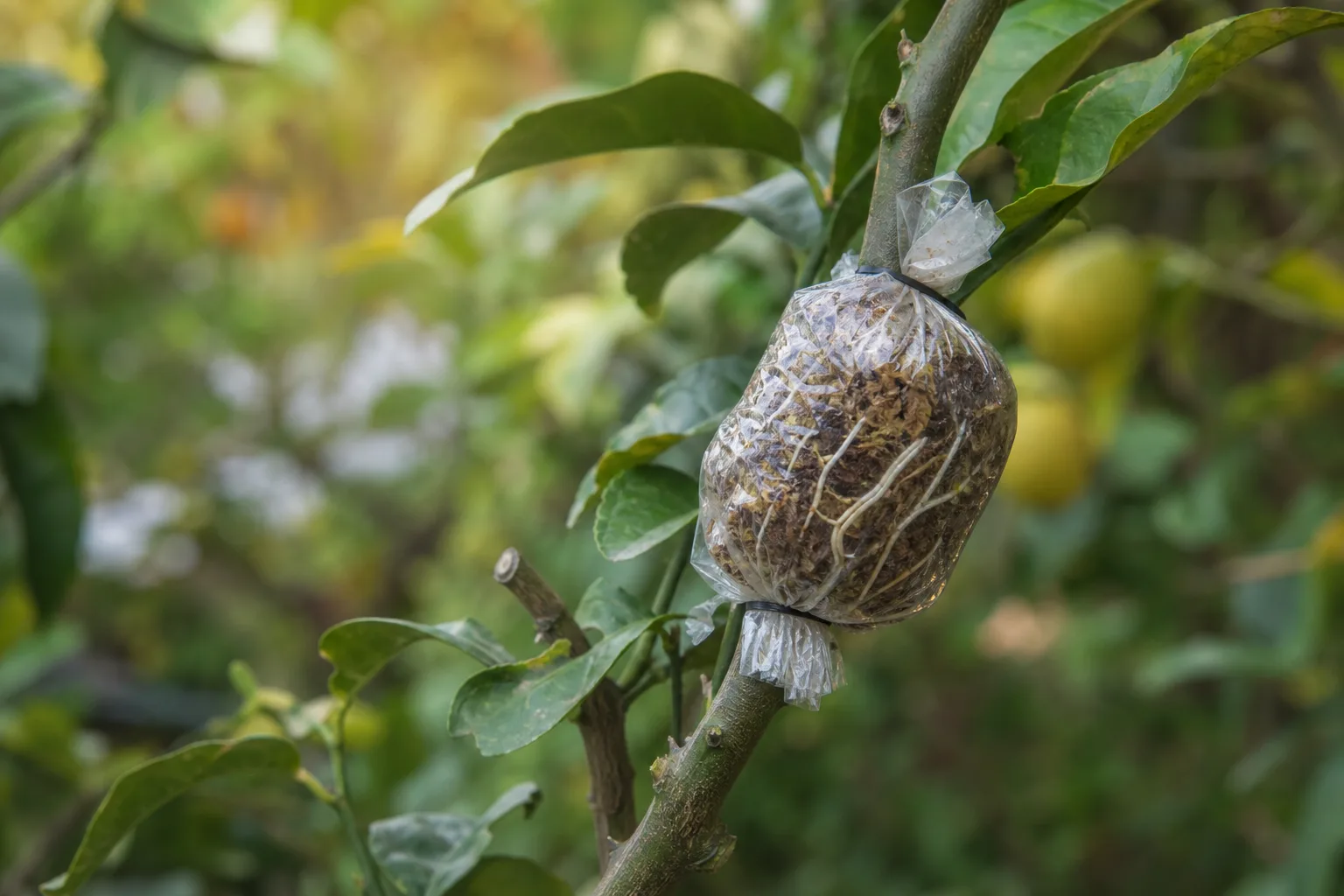
Can air layering root a branch that will not grow from a cutting?
Yes, air layering is the propagation method I would choose for a difficult-to-root branch because it stays attached to the parent plant while new roots form, receiving water and carbohydrates during the slow part. That usually gives air layering a higher success rate and less transplant shock than removing a cutting first. The technique is especially useful for difficult-to-root trees and shrubs.
A cutting is detached on day one. If it wilts before roots appear, the experiment is over, and the branch has no one to blame but us.
Air layering reverses that risk. You create a wound on a living branch, surround it with moist sphagnum moss or a similar medium, and seal the area so moisture stays in place.
The branch still belongs to the parent until the moss ball is filled with roots. Then you cut below the rooted section and pot it as a new tree, which is the basic sequence described by this propagation guide.
Should you start an air layer in fall?
For a mango, citrus, fig, or rubber plant in Central Texas, I would not start a new air layer outdoors in late fall unless the plant is protected from cold and the branch will keep actively growing. Begin the preparation now, choose the branch, and plan the actual layer for spring when the plant can support root growth for several weeks.
That is not me being dramatic about autumn. Fall gives you a shrinking window, especially with mango and rubber plants that dislike cold conditions, while the sources specifically support figs and citrus more strongly than mango or rubber.
If your plant is indoors, in a greenhouse, or in a warm enclosed porch, you have more room to proceed. Keep the wrapped branch from drying out and inspect it every 7 to 10 days.
For an outdoor Austin plant, I would wait until March or April, when the branch is pushing fresh growth. A rooted branch needs enough time to establish before the next stressful season, and an underdeveloped root system is a known risk with plants produced by air layering. The California Rare Fruit Growers resource specifically warns about underdeveloped roots in air-layered plants.
Which plants are good candidates for air layering?
Figs and citrus are the strongest choices in your list because air layering is widely used for both, especially when a mature branch is difficult to root as a cutting. Mango and rubber plants may be attempted, but the supplied research does not give detailed guidance for either, so I would label those layers as trials rather than reliable recipes.
Fig is my first pick. It is a practical candidate for arching branches, and the method is commonly used on figs and certain fruit trees. The trade-off is that a layered fig can still leave you with a small root system under a large leafy top, so do not rush it into a big pot.
Citrus is also a reasonable candidate, with the same warning about root development. I would choose a healthy pencil-thick branch rather than a soft shoot, and I would accept that the branch may take longer than a cutting would if the weather turns cool.
Mango has a useful branch to work with, but the research supplied here does not establish a detailed mango air-layering schedule. Rubber plants are in the same category for this article. You can test the method, but do not sacrifice the only branch you care about.
You can compare plant habits and mature sizes in our plant database before choosing a branch. The boring plant is often the one that survives.
How do you make an air layer without cutting off the branch?
Choose a healthy branch, make a small wound or remove a ring of bark, pack moist sphagnum moss around the exposed area, and seal it with plastic wrap so the moss stays damp. Keep the branch attached while roots form, then cut below the rooted section and pot it once roots fill the moss ball.
I would use a branch about 6 to 12 inches below its tip and roughly pencil thickness, around 1/4 to 1/2 inch across. That gives you enough stem to work on without making the new top unnecessarily heavy.
First, remove leaves and side shoots from a 3-inch section. Make a clean shallow wound, or remove a complete ring of bark about 1/4 inch wide. Do not crush the wood beneath it. A damaged stem is not a clever shortcut.
Press damp, not dripping, sphagnum moss around the wound. Wrap it in clear plastic, close both ends tightly, and cover the bundle with foil or another opaque layer if strong sun strikes it. The plastic holds moisture, while the cover reduces heat buildup.
The roots need air as well as water. Purdue’s propagation guidance explains that roots need air to live. A waterlogged moss ball can look wonderfully busy and still fail quietly.
How long should an air layer stay attached to the parent plant?
Leave the branch attached until roots fill the moss ball, not merely until you see one white root through the plastic. Check the layer every 7 to 10 days, keep the moss moist, and expect the timing to vary with plant, temperature, and growth activity rather than obeying one exact calendar date.
For a spring layer on a healthy fig or citrus branch, I would inspect it after four weeks and expect the process to take several more weeks. That is a working estimate, not a promise from the tree.
Do not unwrap the moss every few days to admire progress. Open one side only when the moss has dried, the wrap has slipped, or you need to confirm whether roots are developing.
The decision point is root coverage. When fine roots have filled the moss ball, cut the branch just below the layer with clean pruners and pot it immediately. If there are only two thin roots, leave it attached and give it more time.
My father's tomatoes grew in a twelve-foot strip of New Jersey clay, where patience meant waiting for April. Here in Texas, patience also means not trusting a green branch in September. The branch can be alive and still not be ready.
What should you do after cutting off a rooted air layer?
After roots fill the moss ball, cut below the layered section, keep the root ball intact, and pot the new plant in a container only slightly larger than that root mass. Water it thoroughly, place it in bright but protected light, and reduce stress while the small root system takes over from the parent branch.
Do not pull the moss away to inspect every root. The moss is part of the fragile root package until the plant has settled into its container.
Use a pot with drainage and avoid burying the stem deeper than it was inside the moss wrap. A giant container holds more wet medium around a small root system, which is a fine way to turn a successful layer into a soggy lesson.
For the first few weeks, protect the new plant from hard sun and drying wind. The top may have more leaves than the new roots can support, so moderate the canopy if it wilts repeatedly rather than flooding the pot.
I would not fertilize immediately. Let the plant show steady new growth first, then follow the container plant's label and light requirements. The research warns about underdeveloped roots, and a new layer is not a mature tree just because it has a mature-looking branch.
Who is air layering for, and who should ignore it?
Air layering suits a gardener with a healthy parent plant, a reachable branch, several weeks of inspection time, and a willingness to wait for a real root ball before cutting. Ignore it for a damaged plant, a branch you cannot keep moist, or a fall project exposed to cold that you cannot protect.
This method is for the person who wants a clone of a particular fig or citrus branch and can leave that branch attached. It is also reasonable for an indoor rubber plant or protected mango experiment when the parent plant has several healthy branches.
It is not for someone who needs ten new plants cheaply by next weekend. Cuttings can make more starts from less material, though they often fail on difficult species because they must root after being detached.
You should also skip a first attempt on the only valuable branch of a rare plant. Try a second branch, mark the date, and learn what the plant does before gambling the whole specimen.
If you want a rough layout for a protected propagation corner, you can get a concept for your yard, but the concept still needs a place where you can inspect the wrap without knocking it loose. Drawers and diagrams do not water moss.
Which propagation method should you use for these plants?
For a difficult branch, I would choose air layering over cuttings because the parent continues supplying water and carbohydrates while roots form. Use cuttings when you have abundant material and can accept failures, and reserve grafting for a separate skill set rather than treating it as a faster version of air layering.
| Method | Best use here | Honest downside |
|---|---|---|
| Air layering | One valuable fig or citrus branch that resists cuttings | It is slow, uses a branch for weeks, and can produce an underdeveloped root system |
| Cuttings | Many inexpensive starts from flexible plant material | The detached piece can wilt or fail before roots form |
| Grafting | Combining a desired top with a different root system | It requires a compatible rootstock and more precise technique than this home method |
The source material describes air layering as slower than cuttings but often more successful because the branch remains attached. That is the trade I would make for one branch I truly want.
Grafting may solve a different problem, such as pairing a desired variety with a useful root system, but it is not my recommendation for the reader standing beside a branch today. Start with the method that keeps the branch alive while it roots.
A layer also gives you one plant, not a nursery row. That limitation is honest, and sometimes one good fig is exactly enough.
What are the most common air-layering mistakes?
The common failures are choosing a weak branch, drying the moss, soaking the moss, cutting before roots fill the ball, and exposing the new plant to more top growth than its roots can support. Correct those five points and you give the layer its best chance without pretending the method is guaranteed.
A loose plastic wrap lets moisture escape. A tight wet bundle with no inspection lets rot hide. Check the wrap every 7 to 10 days and adjust only what needs adjusting.
Removing bark incompletely can let the branch reconnect across the wound. If you ring the branch, make the exposed section continuous, then keep the wood beneath it clean rather than gouging into it.
Do not use a yellowing, pest-damaged, or drought-stressed branch because air layering does not repair a weak parent. The attached branch has an advantage, not a miracle subscription.
Can I air layer a fig in fall?
Can I air layer a fig in fall? Yes, but in an exposed Central Texas garden I would usually wait until March or April, because a fall layer has less active growing time before cold weather. If the fig is protected and growing steadily, you can try a healthy branch, keep the moss damp, and wait for roots to fill the ball before cutting.
Is air layering better than cuttings for citrus?
Is air layering better than cuttings for citrus? It is often the better choice for one difficult citrus branch because the branch stays attached to the parent and continues receiving water and carbohydrates while roots form. Cuttings are more efficient for making many plants, but each detached cutting can fail before it develops roots.
Can mango plants be air layered?
Can mango plants be air layered? You can attempt air layering on mango, but the research supplied here does not provide detailed mango-specific guidance, so I would treat it as an experiment rather than a dependable recipe. Choose a healthy branch, protect the layer from cold, and do not use the plant's only valuable branch.
Can rubber plants be air layered?
Can rubber plants be air layered? You can try the same basic process on a rubber plant, but the supplied research does not give detailed rubber-plant instructions or success rates. Use a healthy branch on a protected plant, keep the moss moist but aerated, and wait for a filled root ball before separating it.
How wet should sphagnum moss be for air layering?
How wet should sphagnum moss be for air layering? Sphagnum moss should be evenly moist but not dripping, because roots need air as well as water. Squeeze out excess water before wrapping the wound, inspect the bundle every 7 to 10 days, and re-moisten it only if the moss has started to dry.
When can I cut an air-layered branch?
When can I cut an air-layered branch? Cut the branch only after roots fill the moss ball, not when you see one or two roots at the edge. Make the cut below the layered section, keep the moss and roots together, and pot the new plant promptly so the exposed roots do not dry.
Want a plan for your own yard?
Tell us the space and we will put a planting plan together for it. Start at get my concept, or browse what actually grows where you are over on plants.
Frequently asked questions
Can I air layer a fig in fall?
Can I air layer a fig in fall? Yes, but in an exposed Central Texas garden I would usually wait until March or April, because a fall layer has less active growing time before cold weather. If the fig is protected and growing steadily, you can try a healthy branch, keep the moss damp, and wait for roots to fill the ball before cutting.
Is air layering better than cuttings for citrus?
Is air layering better than cuttings for citrus? It is often the better choice for one difficult citrus branch because the branch stays attached to the parent and continues receiving water and carbohydrates while roots form. Cuttings are more efficient for making many plants, but each detached cutting can fail before it develops roots.
Can mango plants be air layered?
Can mango plants be air layered? You can attempt air layering on mango, but the research supplied here does not provide detailed mango-specific guidance, so I would treat it as an experiment rather than a dependable recipe. Choose a healthy branch, protect the layer from cold, and do not use the plant's only valuable branch.
Can rubber plants be air layered?
Can rubber plants be air layered? You can try the same basic process on a rubber plant, but the supplied research does not give detailed rubber-plant instructions or success rates. Use a healthy branch on a protected plant, keep the moss moist but aerated, and wait for a filled root ball before separating it.
How wet should sphagnum moss be for air layering?
How wet should sphagnum moss be for air layering? Sphagnum moss should be evenly moist but not dripping, because roots need air as well as water. Squeeze out excess water before wrapping the wound, inspect the bundle every 7 to 10 days, and re-moisten it only if the moss has started to dry.
When can I cut an air-layered branch?
When can I cut an air-layered branch? Cut the branch only after roots fill the moss ball, not when you see one or two roots at the edge. Make the cut below the layered section, keep the moss and roots together, and pot the new plant promptly so the exposed roots do not dry.
Free, no obligation
Ready to design your dream landscape? Start here.
Tell us where you are and we will start a free profile for you, with plants that actually survive your climate and a real sense of what the build would cost.